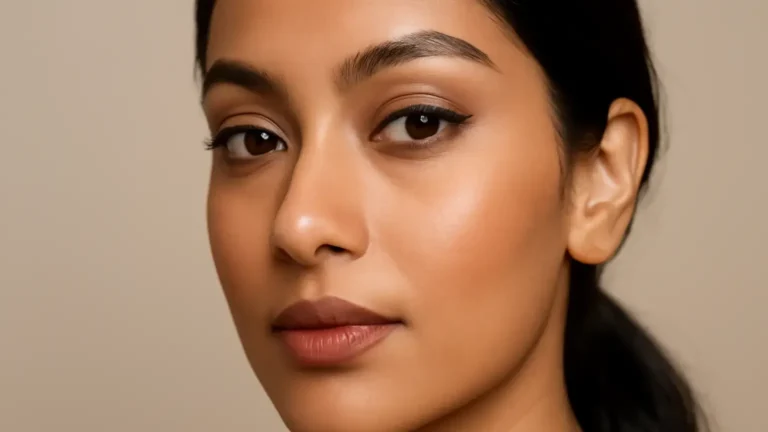
Makeup basics for primer are simpler when you choose for the day ahead: a mattifying formula suits humid commutes and oily T-zones, while a hydrating or luminous one helps dry skin look smoother. This guide is for anyone comparing primer textures, finishes and foundation pairings in India. The key decision is not whether primer is universally necessary, but whether it solves a specific issue without adding an extra layer your skin does not need.
What primer actually does
Primer is a makeup-preparation layer placed between skincare and foundation. Its job depends on its formula: it may reduce the look of texture, add slip, hold makeup in place, soften shine, or give the skin a more even-looking surface. It does not replace moisturiser, sunscreen or skin treatment, and it cannot permanently change pores or skin texture.
The right primer should improve one or two practical concerns without making foundation feel heavy. In Indian weather, that often means balancing finish with humidity. A product that looks polished in an air-conditioned room may feel slippery during a hot commute, while a very matte formula can make dry patches more visible in winter.
Think of primer as optional problem-solving rather than a compulsory first step. If your foundation already sits comfortably, lasts well and looks even over skincare, adding primer may offer little benefit.
Makeup basics for primer: choose by finish first
Finish describes how the skin appears after the product settles. Skin feel describes how it behaves while you wear it. They are related but not identical: a primer can look dewy while feeling lightweight, or look matte while feeling thick and powdery.
Mattifying primer for shine and humid days
A mattifying primer is designed to reduce visible shine and help makeup look fresher for longer. It can be useful on the forehead, nose and chin, especially for oily skin or a long outdoor day. Look for a formula that feels thin rather than one that leaves a dry, tight film.
Use a small amount only where you need oil control. Applying a strong mattifying layer across the cheeks can emphasise flakiness and make foundation look flat. For many people, targeted application gives a more natural result than full-face mattification.
Hydrating and dewy primer for comfort
A hydrating primer can make dry or dehydrated-looking skin feel more comfortable under makeup. It usually gives the base a fresh, flexible appearance rather than a powdery one. A dewy finish works well for daytime skin tints, sheer foundations and occasions where a healthy-looking glow is preferred.
Hydration does not mean applying a thick, slippery layer. Allow moisturiser and sunscreen to settle first, then press a pea-sized amount of primer over areas that need extra comfort. Too many wet layers can cause foundation to move or pill.
Illuminating primer for controlled radiance
An illuminating primer contains light-reflecting ingredients that make the skin appear more radiant. It suits dull-looking makeup, festive occasions and sheer base products. For a subtle effect, mix a small amount with foundation or tap it onto the high points of the face instead of covering the entire face.
On visibly oily areas, a very luminous layer may look like excess shine after a few hours. Combining a matte primer on the T-zone with an illuminating product on the cheeks can create balance.
Pore-blurring and smoothing finishes
A pore-blurring primer usually has a soft-focus or smoothing feel that helps makeup sit more evenly over the appearance of pores and fine texture. It is most effective when pressed lightly onto the area rather than rubbed back and forth. The aim is to visually soften texture, not fill it permanently.
Silicone-rich formulas are often associated with this smooth slip, but texture varies by product. A silicone-based primer can pair well with a compatible silicone-rich foundation, although the ingredient label alone does not guarantee a perfect match.
Match primer to skin feel and skin type
Skin type is a useful starting point, but daily skin feel matters more. A person with combination skin may need different choices in summer and winter, or on the cheeks versus the T-zone.
- Dry skin: Choose a hydrating or softly luminous formula, and prep with a suitable moisturiser. Avoid using a strongly mattifying product over flaky areas.
- Oily skin: Try a lightweight mattifying or pore-smoothing formula on areas that become shiny. Avoid assuming that a thick, dry-feeling product will automatically improve wear.
- Combination skin: Use targeted layering: mattifying primer through the centre of the face and a hydrating formula on the cheeks if needed. This is often more effective than searching for one extreme formula.
- Normal or balanced skin: Choose based on the desired finish, event and foundation texture. A water-based primer may be enough for a light everyday base.
- Sensitive-feeling skin: Keep the routine short, check the ingredient list and patch test a new product before an important event. Fragrance and multiple active-feeling layers may not suit everyone.
For dry skin makeup, the main goal is flexibility and comfort. For combination skin makeup, the better strategy is usually placement rather than applying more product everywhere.
Check foundation compatibility before layering
Foundation compatibility affects whether primer improves the base or causes pilling, separation and uneven coverage. A simple rule is to pair textures that behave similarly: a water-based primer often feels natural under a lightweight water-based foundation, while a smoothing silicone-based primer may work better with a foundation that has a similarly silky slip.
This is a useful guide, not an absolute law. Formulas contain many ingredients, so testing the actual combination is more reliable than guessing from the first ingredient alone.
A three-minute pairing test
- Apply your normal skincare and let it settle.
- Place a small amount of primer on one side of the face or jaw.
- Apply the foundation in a thin layer over both primed and unprimed areas.
- Wait a few minutes, then check for pilling, patchiness, separation or unusual shine.
- Observe the base again after a few hours, especially in heat or humidity.
If the product rolls into little flakes, reduce the amount, increase waiting time between layers or test a different pairing. Rubbing instead of pressing can also disturb the layer underneath.
Choose according to climate, occasion and wear time
Climate can change the best primer choice even when your skin type stays the same. In humid weather, lightweight layers and targeted oil control are often more comfortable than a rich, glowing formula. In dry winter air, a flexible hydrating base may prevent foundation from looking tight.
| Situation | Useful direction | What to avoid |
|---|---|---|
| Hot, humid commute | Light mattifying primer on the T-zone; thin foundation layers | Heavy full-face glow products |
| Long wedding or festive event | Targeted smoothing or gripping primer after testing compatibility | Trying an untested new combination on the day |
| Dry indoor air | Hydrating primer on the cheeks with comfortable skincare | Over-powdering textured areas |
| Quick everyday makeup | One reliable primer only if it solves a real concern | Several overlapping prep layers |
| Sheer, natural base | Water-based or softly luminous formula | Very heavy pore-filling texture |
A gripping primer can be useful when you want a base to hold onto foundation, tint or concealer for a longer event. Apply a thin layer and let it become slightly tacky according to the product directions before blending makeup. Too much can make the base drag or become uneven.
When skipping primer gives a better base
Primer is not necessary for every routine. You may get a better result without it when your moisturiser and sunscreen already leave a smooth surface, your foundation lasts comfortably, or additional layers make the base look thick. Skipping primer can also help when a foundation is already designed to provide smoothing, glow or long wear.
Try this simple comparison: on one side of the face, apply skincare followed by foundation; on the other, use primer between skincare and foundation. Compare both sides in natural light and after a few hours. Keep the side that looks more even and feels more comfortable, not automatically the side with more products.
Primer may be worth keeping for a specific occasion, such as a humid outdoor event, a long workday or a makeup look where visible pores and shine need extra management. It does not have to be an everyday commitment.
Common primer mistakes to avoid
- Using too much: A thin layer usually performs better than a thick coat. Start with a pea-sized amount for the face and add only where required.
- Ignoring skin prep: Primer cannot compensate for uncomfortable, unmoisturised skin. Keep skincare suitable and allow each layer to settle.
- Choosing only by marketing words: “Glow”, “blur” and “long wear” describe goals, not guarantees. Assess texture, finish and how it works with your base.
- Applying one formula everywhere: Multi-priming is useful only when different zones have genuinely different needs.
- Rubbing after the primer sets: Press and blend foundation gently to preserve the surface underneath.
- Testing on the event day: Check the pairing in the climate and lighting where you expect to wear it.
Stop using a new cosmetic if it causes persistent burning, swelling or a concerning reaction, and seek medical advice for severe or ongoing symptoms. A patch test can reduce, but cannot eliminate, the risk of irritation.
Quick decision guide
Choose a mattifying primer when shine and humid wear are your main concerns. Choose a hydrating primer when comfort and flexible coverage matter more. Choose an illuminating primer for controlled radiance, a pore-blurring formula for visible texture, and a gripping formula for a tested long-wear routine. If your base already looks smooth and lasts well, skip primer.
The most useful makeup basics for primer come down to a short checklist: what does your skin feel like today, what finish do you want, how long will you wear the makeup, what is the climate, and has the primer been tested with your foundation? Answer those questions before buying another layer.
Products that may help with this routine
Choose only what fits your skin, hair or personal needs. Use the links below to view current options on Amazon India.
Frequently Asked Questions
How do I choose makeup primer for dry skin?
Choose a lightweight hydrating or softly luminous primer, apply it over settled moisturiser, and use a thin layer only where skin feels dry. Test it with your foundation to avoid pilling.
What is the best primer for oily skin in humid weather?
A lightweight mattifying or pore-smoothing primer can help on the T-zone, but targeted application is usually more comfortable than covering the entire face. Pair it with thin foundation layers.
Can you skip primer before foundation?
Yes. You can skip primer when skincare and foundation already create a smooth, comfortable base. Compare primed and unprimed sides and keep the option that wears better.
Which primer finish suits combination skin?
Combination skin often benefits from a matte or smoothing finish on the T-zone and a hydrating finish on the cheeks. Applying products by zone is more useful than forcing one finish everywhere.
Is primer necessary for everyday makeup?
No. Primer is optional and is most useful when it addresses a specific concern such as shine, texture, dryness or wear time. A simple skincare-and-foundation routine may look more natural.
How do I match primer with foundation?
Start by pairing similar textures, such as a water-based primer with a lightweight water-based base or a silky silicone-based primer with a compatible smooth foundation. Always test the actual combination because formulas vary.