Makeup basics for foundation become easier when you match coverage to the occasion, not just the shade. For everyday Indian weather, a light or buildable base usually looks comfortable; festivals may need medium coverage, while weddings can call for targeted full coverage and longer wear. This guide is for beginners and regular makeup users who want a practical choice based on skin type, finish, undertone, tools and how long the base must last.
Start with the occasion, not the heaviest formula
Foundation is designed to even out the appearance of the complexion, not erase every natural feature. The most useful foundation makeup basics are simple: decide how much correction you need, how long the makeup must last and what finish will feel comfortable in the conditions.
For office days, college, errands and relaxed daytime plans, a skin tint or sheer-to-light formula can soften uneven tone without feeling like a mask. If you want more correction around the nose, cheeks or chin, choose a medium coverage foundation or a formula described as buildable coverage. Apply it only where needed instead of automatically using a thick layer everywhere.
Festivals often involve heat, movement and photographs. A medium, buildable base is usually a useful middle ground. It can even the complexion while still allowing skin to look like skin. For weddings, receptions or stage-lit events, a long-wear foundation may be appropriate, especially when paired with carefully placed concealer and setting makeup. Full coverage foundation is not automatically better; it is most useful when you genuinely want stronger correction or need a more polished photographic finish.
Understand coverage levels before you buy
Sheer and light coverage
Sheer coverage lets freckles, small marks and some redness remain visible. Light coverage gives a little more evening-out while retaining a fresh appearance. These options suit minimal makeup, warm days and people who dislike a noticeable base. A skin tint often sits in this category, although formulas vary.
Medium coverage
Medium coverage can reduce visible unevenness while remaining flexible for daily use. Look for a product that can be applied in a thin layer and built up around areas that need extra attention. This is often the easiest starting point for beginners because it works across casual plans, festive makeup and many daytime events.
Full coverage
Full coverage gives the strongest visual correction, but it can emphasise dry patches, fine texture or excess product if preparation and application are rushed. Use a small amount first, then add coverage only to selected areas. For many people, medium foundation plus concealer gives a more natural result than full coverage over the entire face.
How to choose foundation coverage for your skin and routine
Coverage is only one part of the decision. Consider these practical questions:
- How much visible correction do you want? If you only need tone evening, choose light coverage. If you want to disguise more noticeable discolouration, choose medium or targeted full coverage.
- How does your skin feel during the day? Foundation for oily skin often feels more comfortable with a lightweight, oil-controlling or soft-matte formula. Foundation for dry skin usually benefits from flexible, moisturising textures and careful skin preparation.
- Will you be outdoors? A breathable formula and thin layers are generally more comfortable in Indian heat. Do not rely on foundation alone for sun protection; use a separate broad-spectrum sunscreen as part of your daytime routine.
- How often will you touch up? If you can refresh your makeup, a lighter formula may be enough. If you need the base to stay present for many hours, consider long-wear foundation, but test its comfort and appearance before an important event.
- Will flash photography be used? Test the complete makeup in indoor and outdoor light. The final appearance depends on the formula, sunscreen, powder, lighting and how much product is applied.
Choose the finish and undertone together
Coverage describes how much the product conceals; finish describes how it looks on the skin. A matte finish reduces visible shine and may suit foundation for oily skin, but an overly flat formula can look heavy if applied generously. A dewy or radiant finish can give foundation for dry skin a fresher appearance, although it may need strategic powder in the T-zone. A natural finish foundation is a useful compromise when you want neither obvious shine nor a very flat look.
Undertone matching is separate from choosing how light or deep a shade appears. Undertones are commonly described as warm, cool or neutral, while some people have an olive cast. Compare a few shades along the jawline, allow the product to settle and check it in daylight. The best match should blend into both the face and neck rather than looking noticeably pink, yellow, grey or orange.
Foundation can oxidise slightly as it mixes with skin oils and other products, so check the shade after several minutes. If your face and neck differ in depth because of sun exposure, prioritise a cohesive match rather than trying to make the face dramatically lighter. A makeup professional can help with shade selection when you are between tones or unsure about your undertone.
Foundation application tools: what each one does
Your foundation application tools affect coverage, speed and finish:
- Fingers: Useful for skin tints and light formulas. The warmth of your hands can help spread a thin layer, but wash your hands first.
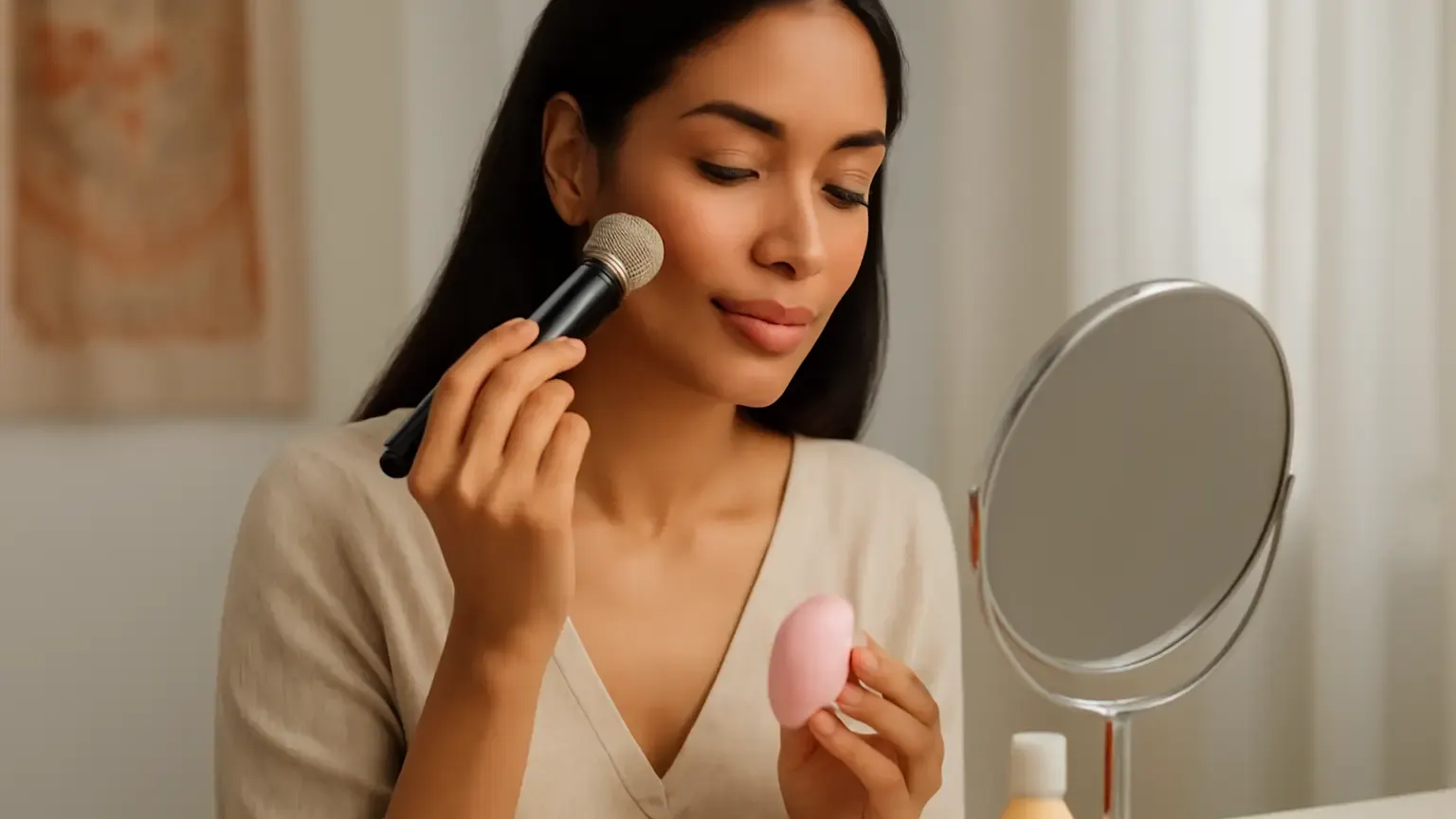
- Flat or buffing brush: A brush can provide efficient, even application. A buffing motion may give more coverage, while light strokes can keep the finish sheer.
- Damp beauty sponge: A slightly damp sponge can press product into the skin and soften excess coverage. It generally uses more product than fingers, so begin with a small amount.
Whichever tool you use, apply foundation from the centre of the face outward, where redness and unevenness often need more attention. Blend around the jawline, hairline, nostrils and ears when appropriate. Clean reusable tools regularly and do not share them, especially if anyone has active irritation or a contagious skin concern.
Layering for a polished but believable base
Good layering is more effective than one thick application. Begin with clean, comfortable skin, followed by moisturiser suited to your needs. In the daytime, allow sunscreen to settle before applying primer or foundation. Primer is optional: use it when it addresses a specific concern such as excess slip, visible pores or makeup longevity, rather than treating it as a mandatory step.
Place a small amount of foundation on the centre of the face and blend outward. Wait briefly, then assess the result in natural light. Add a second thin layer only to areas that still need coverage. Use concealer selectively for marks or under-eye darkness, because covering the entire face with maximum product can make texture more noticeable. Cream and liquid layers usually sit more smoothly when they are allowed to settle before powder.
For festivals, powder mainly where makeup tends to move, such as the sides of the nose, forehead and chin. For weddings or long events, use a compatible setting product sparingly and carry a compact or blotting sheets for touch-ups. Press away excess oil instead of repeatedly adding powder, which can create a thick appearance.
Wear expectations in everyday makeup, festivals and weddings
No foundation remains unchanged through heat, sweat, oil, facial movement and fabric contact. Long-wear claims describe a product’s design, not a guarantee for every person or climate. Humidity, skincare, sunscreen, application thickness and touching the face all influence how long the base looks fresh.
For everyday makeup, prioritise comfort and easy removal. A light layer that fades naturally is often more practical than a heavier base that separates. For festivals, use a thin, buildable base, waterproof or resistant eye products where needed, and targeted powder. For weddings, test the complete routine at least once: skincare, sunscreen, primer, foundation, concealer, powder, blush and setting spray. Take photos in the lighting you expect, and check whether the base settles into lines or changes colour.
Makeup should be removed gently at the end of the day. If a product repeatedly causes burning, swelling or persistent irritation, stop using it and seek advice from a qualified dermatologist or doctor, particularly if symptoms are severe or do not settle.
Common foundation mistakes to avoid
- Choosing a shade by testing only on the hand, which may not match the face or neck.
- Using full coverage when a smaller amount of medium coverage and concealer would meet the need.
- Skipping skin preparation, then blaming the foundation for flakes or patchiness.
- Applying too much product around the hairline and jaw instead of blending the edges.
- Setting the entire face heavily before observing where shine or movement actually occurs.
- Trying a new shade, formula or skincare combination for the first time on the wedding day.
A simple foundation decision checklist
Before purchasing, answer four questions: What occasion is this for? How much correction do I want? Which finish feels right for my skin and climate? Can I find a close undertone and depth match? Then select the lightest coverage that meets your goal, build it in thin layers and test the complete routine before relying on it for a long event.
The most dependable makeup basics for foundation are not about owning the heaviest formula. They are about choosing appropriate coverage, matching the undertone, using suitable foundation application tools and accepting realistic wear. When these decisions work together, everyday makeup can stay comfortable, while festival and wedding looks can be strengthened exactly where required.
Products that may help with this routine
Choose only what fits your skin, hair or personal needs. Use the links below to view current options on Amazon India.
Frequently Asked Questions
What coverage is best for everyday makeup in India?
Light or buildable medium coverage is usually practical for everyday makeup in India. It can even out the complexion without feeling heavy, especially in warm or humid weather. Add concealer only where more correction is needed.
How do I choose foundation coverage for a wedding?
Choose medium, buildable coverage for most weddings and add a second thin layer or concealer selectively. Consider a long-wear foundation if the event is lengthy, then test the complete routine in the expected lighting before the occasion.
Is medium coverage foundation better than full coverage?
Neither is universally better. Medium coverage is often more flexible and natural for daily or festive makeup, while full coverage can suit stronger correction or a highly polished event look. The best option depends on the desired finish, skin texture and wear time.
How can I make foundation last in humid weather?
Use comfortable skincare, allow sunscreen to settle, apply a thin layer of foundation and set only areas prone to shine or movement. Blot excess oil before adding more powder, and test the full routine before an important event.
How do I match foundation undertone?
Compare shades along the jawline and check them in daylight after allowing them to settle. Choose the shade that blends naturally into both the face and neck, while considering whether your undertone is warm, cool, neutral or olive.