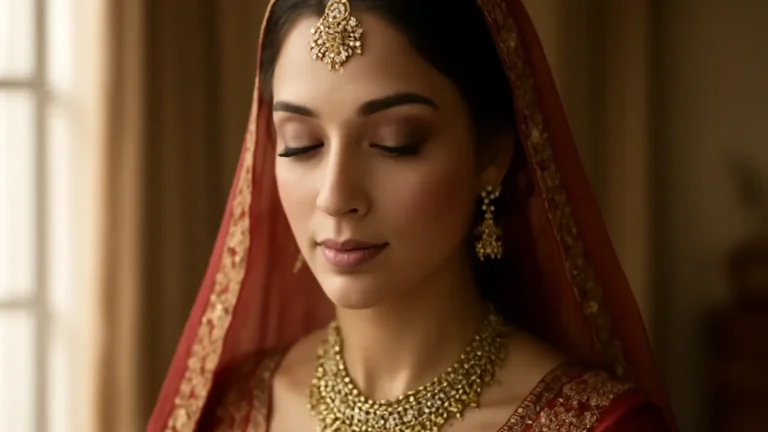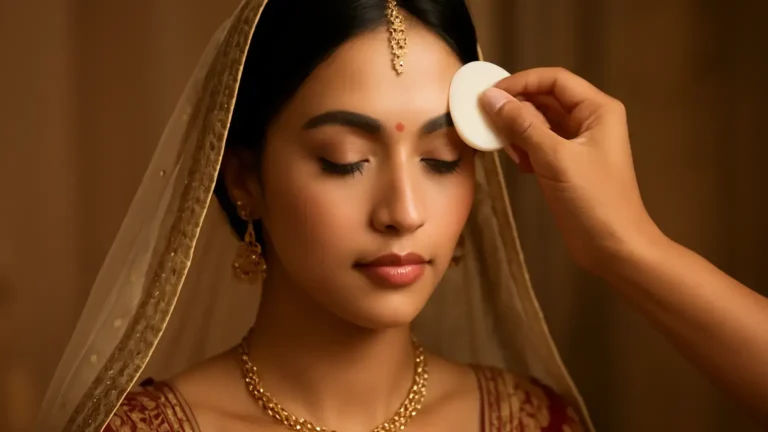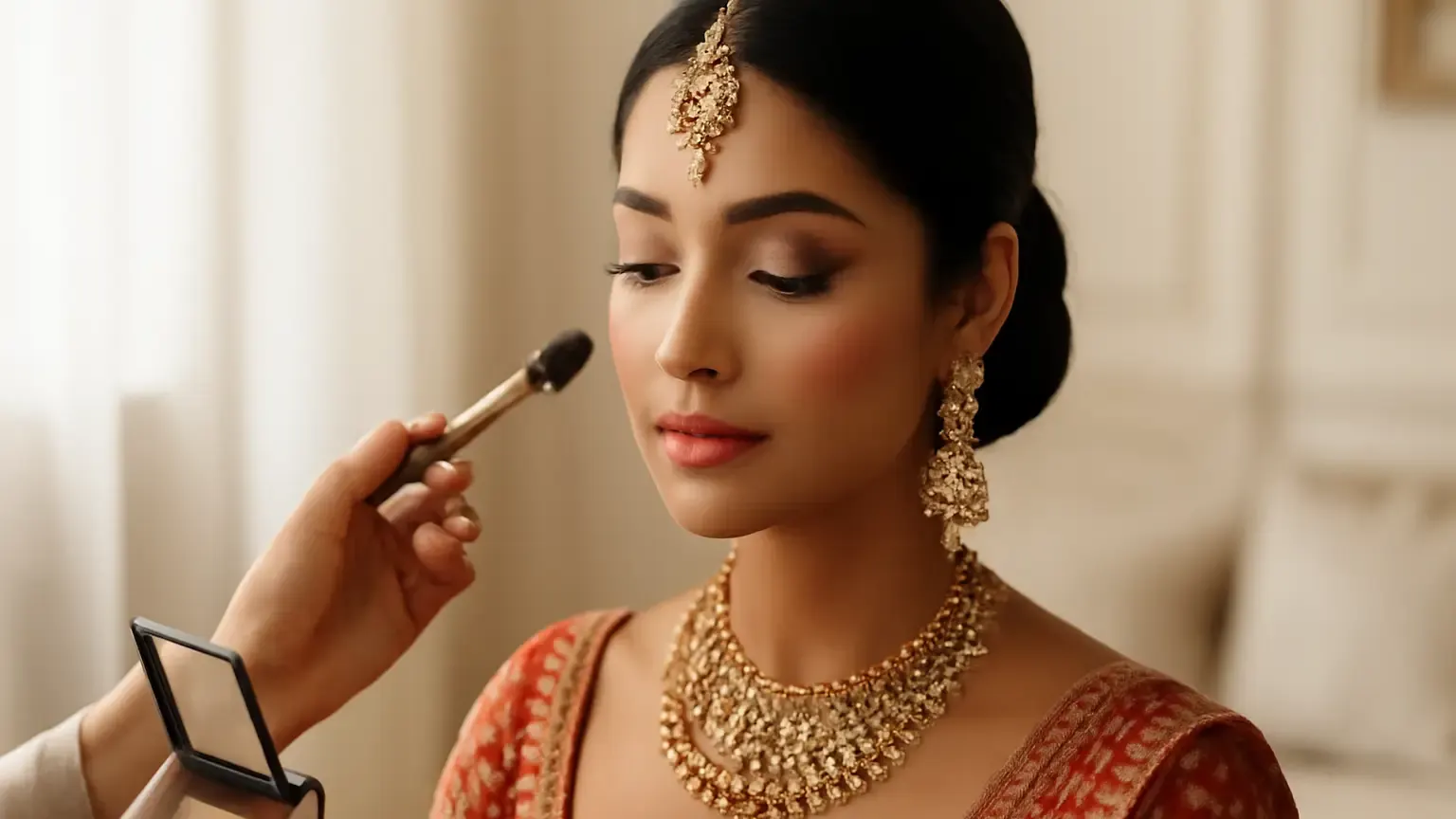
Bridal makeup for combination skin works best when each area gets a different finish: light hydration on the cheeks, targeted oil control across the T-zone and thin, buildable coverage everywhere. This plan is for brides facing shine around the nose and forehead but dryness or tightness on the cheeks, especially during long Indian wedding events. The goal is not a heavy matte mask; it is comfortable coverage that stays even through ceremonies, photographs, travel and carefully planned touch-ups.
Combination skin is not one uniform surface. The forehead, nose and chin may become shiny while the cheeks feel normal, dry or slightly tight. Treating the whole face with a strong mattifying product can make the cheeks look flat and emphasise texture. Treating the whole face with rich hydration can shorten makeup wear around the T-zone.
A successful bridal plan therefore relies on zone-based preparation. The T-zone needs controlled moisture, a suitable primer and careful powder placement. The cheeks need enough hydration for a flexible base. Both areas need thin layers, enough setting time and touch-ups that remove excess oil without disturbing the complexion.
Start with a bridal makeup trial, not a wedding-day experiment
Schedule a bridal makeup trial several weeks before the wedding, ideally at a similar time of day and in conditions that resemble the event. Wear the base for at least four to six hours if possible. Check the forehead, sides of the nose, cheek texture and areas where jewellery, a dupatta or a mask may rub.
During the trial, assess four things:
- Whether the T-zone becomes shiny, patchy or separated.
- Whether the cheeks feel tight or show dry-looking texture.
- How the complexion appears in daylight, indoor light and flash photography.
- Whether the formula remains comfortable after several hours rather than only looking fresh at application.
Do not test several unfamiliar skincare products immediately before the ceremony. Keep the routine familiar and make changes one at a time. If you have persistent redness, irritation, painful breakouts or unexplained sensitivity, consult a dermatologist rather than trying to conceal an active concern with extra layers.
Build a combination skin makeup routine by zone
Prepare the cheeks for comfort
After gentle cleansing, apply a lightweight moisturiser to the cheeks and any area that tends to feel tight. Allow it to settle before makeup. A thin layer is usually more useful than a heavy cream, which can cause the base to move or look uneven under warm conditions.
If the cheeks are visibly dehydrated, press in a small amount of moisturiser rather than rubbing repeatedly. Avoid adding multiple new serums on the wedding morning. The objective is a smooth, comfortable surface—not maximum skincare layering.
Control the T-zone without drying the face
For T-zone oil control, use less moisturiser around the centre of the forehead, nose and chin if those areas already feel comfortable. This does not mean leaving them completely bare. A balanced, light layer can help makeup sit more evenly.
Use a mattifying primer only where shine and makeup breakdown are most likely: usually the sides of the nose, the centre of the forehead and the chin. Press it into the skin instead of spreading a thick film across the entire face. If the nose is particularly prone to separation, wait for the primer to set before applying foundation.
A hydrating primer may be better for the outer cheeks if moisturiser alone does not provide enough slip. It should support flexibility, not leave a wet layer. Using different primers on different zones is often more effective than searching for one product that performs identically everywhere.
Choose and apply a long-lasting foundation in thin layers
The right long-lasting foundation should offer buildable coverage, a finish that suits your skin’s natural texture and enough flexibility for facial movement. A very dry, fast-setting formula may highlight the cheeks, while an overly emollient base may fade quickly around the nose. Ask your makeup artist to compare a small selection during the trial rather than choosing by online shade appearance alone.
Shade matching should be checked along the jaw and viewed in natural light. Consider the neck and décolletage if they will be visible. A slightly sheer first layer often looks more natural in photographs than one thick application.
Use foundation layering strategically
- Apply a thin layer over the centre of the face and blend outward.
- Allow the base a short moment to settle before assessing coverage.
- Add a second, smaller layer only over redness, pigmentation or areas needing more evening out.
- Use a damp sponge or a clean brush to press, rather than drag, product around the nose and textured areas.
This approach to foundation layering keeps the complexion lighter on the cheeks while giving the T-zone enough coverage. Concealer can then be reserved for specific areas. Apply under-eye concealer in a thin amount, concentrating it where darkness is most visible rather than coating the whole under-eye with a heavy layer.
Balance cream and powder products
Cream and powder products can work together when applied in the right order. Place cream blush or bronzer over the set base only if the formula blends cleanly and does not disturb the foundation. Then use a small amount of powder to secure high-movement or high-shine areas.
For a combination skin bridal makeup look, avoid automatically powdering the whole face heavily. Start with the sides of the nose, the centre of the forehead, the chin and any crease where makeup tends to collect. Leave some natural dimension on the cheeks unless they genuinely need setting.
A finely milled translucent powder can help reduce surface shine, but it should be pressed in sparingly. Excess powder can appear dry in close-up images and may combine with sweat or oil into a thicker film. Ask for a flash photograph during the trial to check whether the overall finish remains natural.
Make the wedding-day routine practical for Indian weather
Heat, humidity, outdoor rituals and repeated movement can change how makeup wears. No routine can guarantee a completely unchanged base throughout a long event, but thoughtful preparation can reduce avoidable breakdown. Keep the room cool while makeup is applied when possible, and allow skincare and primer to settle before the base goes on.
A humidity-proof makeup strategy is less about applying the heaviest available products and more about controlling layers. Use compatible skincare, avoid unnecessary cream beneath areas that become oily, and set strategically. A makeup setting spray can help bring powder and complexion layers together, but it should complement—not replace—good primer placement and thin application. Follow the product’s directions and allow it to dry without touching the face.
For outdoor ceremonies, discuss sunscreen timing with your makeup artist. A familiar, makeup-compatible sunscreen may be appropriate for daytime events, but introducing a new formula on the wedding morning is risky. Depending on the schedule, venue and photography needs, your artist can help plan the order of skincare, sun protection and makeup.
Plan touch-ups before the first ceremony
Good touch-ups remove oil and restore selected areas; they do not involve repeatedly adding foundation over the entire face. Before reapplying anything, gently press a tissue or blotting paper over the nose, forehead and chin. Do not rub, as friction can lift the base.
A useful wedding day touch-up kit may include:
- Blotting papers or clean tissues for surface oil.
- A small amount of the same powder used during application.
- A pressed concealer or complexion product for a local correction.
- Lip colour, lip balm and a small mirror.
- Cotton buds for collecting product from the inner corners of the eyes or lip edges.
- A few tissues and any artist-approved setting mist.
After blotting, press—not sweep—a small amount of powder over the T-zone. If foundation has worn away, use a tiny amount of concealer or base only on that spot. Around the cheeks, refresh sparingly. Layering fresh product over perspiration or oil without blotting is one of the quickest ways to create a visibly thick patch.
Common mistakes to avoid
- Using a mattifying primer everywhere: This may make comfortable cheeks look dry and can emphasise texture.
- Applying one thick foundation layer: It can crease, separate and look heavier in photographs than thin, targeted layers.
- Skipping the wear test: A base that looks excellent for 30 minutes may not suit a six-hour ceremony.
- Over-powdering early: Heavy powder can become cakey as the day progresses, especially in warm venues.
- Touching up without blotting: New product needs a clean surface to sit evenly.
- Changing skincare on the wedding morning: Unfamiliar ingredients can trigger irritation or alter how makeup wears.
A simple decision guide for your artist
If your cheeks feel tight after cleansing, prioritise gentle moisturising and a flexible base there. If your nose becomes shiny quickly but your cheeks remain comfortable, use targeted mattifying primer and powder rather than a full-face matte system. If the base separates around the nose, investigate the amount and compatibility of skincare, primer and foundation before adding more powder. If dryness appears under the eyes, reduce product quantity and use a precise concealer application.
Bring reference photographs from your trial in daylight and flash, and tell your makeup artist how long the event will last, whether it is indoors or outdoors, and when touch-ups will be possible. These details affect product placement more than a generic label such as “matte” or “dewy”.
Takeaway: bridal makeup for combination skin should be zone-specific
The most dependable bridal makeup for combination skin uses light hydration where the face needs comfort, targeted oil control where makeup tends to move, and thin foundation layers that can be corrected without becoming heavy. Test the plan in advance, set only the areas that require it and prepare a small touch-up kit. This creates a polished, breathable finish that is easier to maintain across a long wedding day.
Products that may help with this routine
Choose only what fits your skin, hair or personal needs. Use the links below to view current options on Amazon India.
Frequently Asked Questions
How do you do bridal makeup for combination skin?
Prepare the face by zone: moisturise the cheeks lightly, use mattifying primer only on oily areas, apply buildable foundation in thin layers and set the T-zone more than the cheeks. Test the full routine before the wedding and blot before making touch-ups.
What is the best primer placement for combination skin bridal makeup?
Place mattifying primer on the forehead, sides of the nose and chin if those areas become shiny. Use a lightweight hydrating primer or moisturiser on drier cheeks, and avoid applying a thick primer layer across the entire face.
How can I stop T-zone oil during bridal makeup?
Use familiar skincare, allow each layer to settle, apply targeted mattifying primer and press a small amount of powder onto the forehead, nose and chin. During the event, blot first and powder only where shine has returned.
Which foundation is best for combination skin on a wedding day?
Choose a foundation with buildable coverage and a finish that remains comfortable on the cheeks while resisting quick separation around the nose. The best choice depends on your shade, texture, climate and trial wear, so test it for several hours before the event.
What should I keep in a bridal makeup touch-up kit?
Pack blotting papers or tissues, the same pressed powder used for the makeup, a small concealer or base product, lip colour, lip balm, cotton buds and a mirror. Blot oil before applying any complexion product.
Is bridal makeup for combination skin suitable for humid Indian weddings?
Yes, when the routine is adapted to the weather with controlled layers, targeted primer, selective powder and planned touch-ups. Humidity can still affect wear, so a trial in comparable conditions is important.