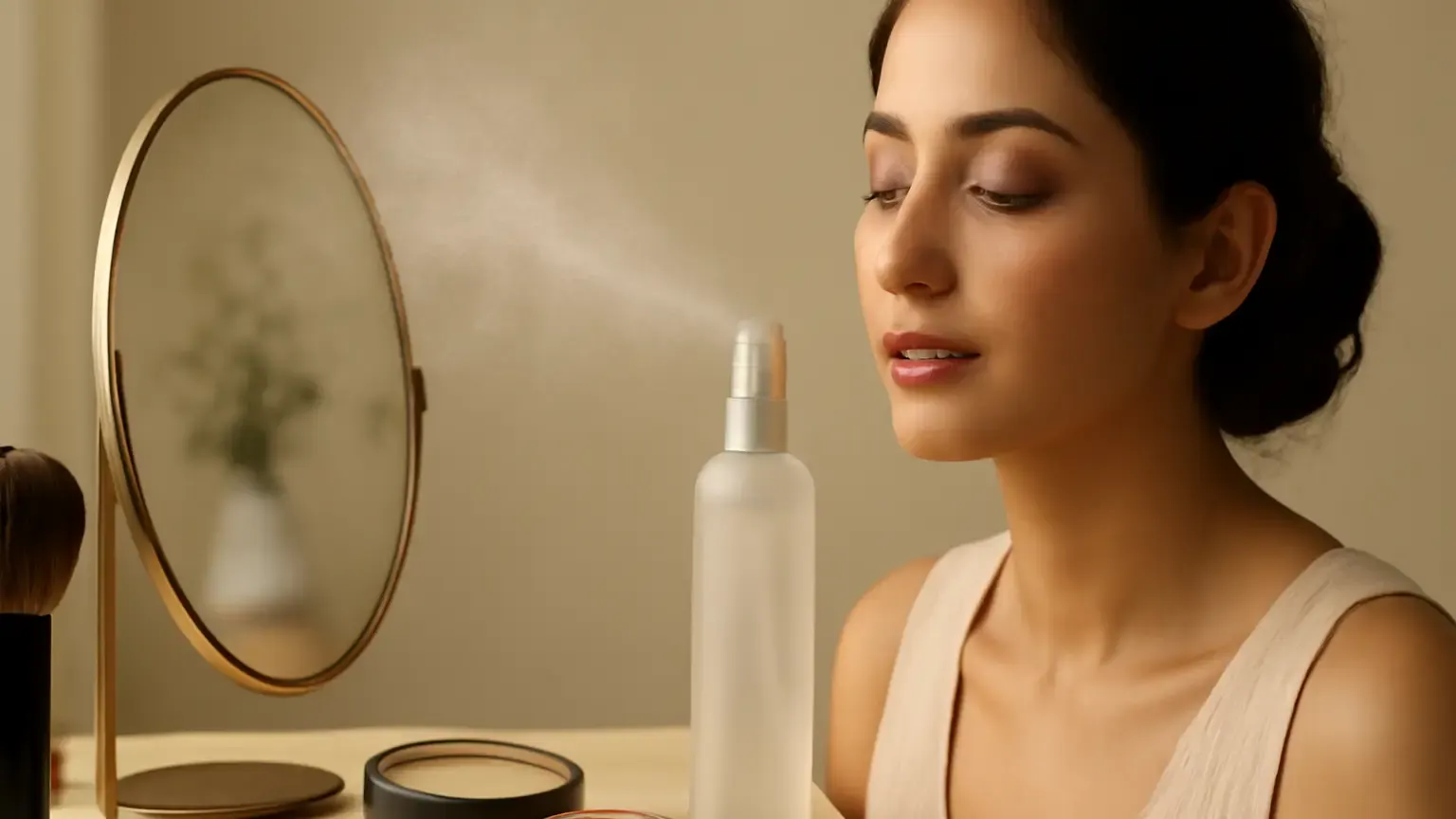
makeup basics for setting spray start with one useful rule: use a setting spray after makeup to blend and improve wear, while a fixing spray is the stronger choice when humidity, transfer or a long day is the main concern. This guide is for beginners and anyone refining a routine, with clear advice on powder versus cream products, matte versus dewy finishes, spray quantity and the right order for Indian weather.
Setting spray is the final mist used to help makeup look more cohesive and stay comfortable for longer. It is not a substitute for moisturiser, primer or well-prepared skin, and it cannot prevent every foundation from fading. Its real benefit is that it can soften a visibly powdered surface, reduce the look of separate makeup layers and add a little extra wear time.
What setting spray actually does
Most setting sprays contain a light liquid base, conditioning ingredients and, in some formulas, film-forming polymers. Once the mist dries, these ingredients can create a flexible layer over makeup. The result may be better resistance to light rubbing, a more blended appearance and less obvious powderiness.
Formula claims vary, so “setting spray” is not a completely standard category. Some products are mainly refreshing or hydrating, while others have stronger hold. A hydrating setting spray may suit dry or dehydrated skin but offer limited oil control. A product designed for a matte makeup finish may reduce shine, yet feel tight if used heavily.
Setting spray vs fixing spray: the practical difference
The difference between setting spray vs fixing spray is usually one of strength and intended wear, not a universal industry rule. Setting spray is commonly used to merge layers and improve the everyday finish. Fixing spray generally contains more noticeable film-forming ingredients and is marketed for stronger, longer-lasting hold.
| Product | Best use | What to expect |
|---|---|---|
| Setting spray | Daily makeup, powder-heavy looks and finish adjustment | A softer, more blended appearance with moderate wear support |
| Fixing spray | Events, humid conditions, long workdays or performance makeup | More hold and possible resistance to light transfer, depending on the formula |
Read the label and test the product rather than assuming that a “fixing” claim will suit everyone. Stronger sprays can contain more alcohol or a heavier film, which may feel uncomfortable on sensitive, dry or easily irritated skin. Avoid spraying onto broken or inflamed skin, and stop using a product if it stings persistently.
Setting spray before or after makeup?
For most people, the answer to setting spray before or after makeup is after makeup. Apply it once complexion, colour and powder are complete. This lets the mist settle the visible layers and gives the final look a more unified finish.
There are exceptions. A light mist before makeup can be useful as an extra hydration step if the product is labelled for that purpose and your skin tolerates it. However, it should not replace makeup prep. Apply moisturiser and sunscreen as appropriate, allow them to settle, then use primer only if you need its specific benefit.
A fixing spray can also be used in stages for a demanding look: a light layer after cream products, another after powder and a final mist at the end. This is optional, not a requirement for everyday makeup. Too many wet layers can disturb concealer, make foundation patchy or leave the surface tacky.
How to use setting spray makeup without overdoing it
- Finish the makeup first. Check concealer, blush, bronzer and powder before reaching for the bottle.
- Shake if the label instructs you to. This helps distribute ingredients that may settle in the container.
- Hold it at a comfortable distance. Around 20–30 cm from the face usually gives a fine mist. Follow the product directions if they specify another distance.
- Close your eyes and mouth. Spray in a light X and T pattern, or use two to four brief sprays rather than one concentrated blast.
- Let it dry naturally. Do not immediately rub, fan aggressively or press a sponge into wet makeup.
How much setting spray should I use? Start with the minimum that covers the face lightly. More product does not automatically mean more longevity. If the spray leaves large droplets, your hand is too close, the nozzle is uneven or you are using too much at once.
How spray behaves with powder and cream makeup
Powder makeup
Spray is especially helpful after powder makeup. A fine mist can take away the dry, dusty look that sometimes appears after setting foundation, concealer, blush and bronzer. If you are asking, “Can you use setting spray over powder makeup?”, yes: wait until the powder is placed, mist lightly and allow it to dry.
Spray will not fix a thick layer of powder underneath. Use less product in the first place, press powder only where needed and remove excess with a clean, fluffy brush. This is often a better way to make powder makeup look less cakey than adding several wet layers.
Cream makeup
With cream blush, bronzer or contour, apply the cream product first and blend it fully. A light setting mist can help the layers settle before you add a small amount of powder. If you spray heavily while cream makeup is still mobile, you may create streaks or move the colour.
For a balanced makeup setting routine, keep cream products thin, set only areas that crease or become oily and use the spray at the end. A mist does not turn a non-setting cream into a completely transfer-proof product.
Choosing a spray for your makeup finish and skin needs
For a dewy makeup finish
Choose a lightweight, hydrating formula if your goal is a dewy makeup finish. Mist mainly across the cheeks and outer face if the centre of the face becomes shiny quickly. Avoid products that feel oily if your foundation already reflects a lot of light.
For a matte finish or oily skin
A spray marketed as suitable for setting spray for oily skin may include oil-control ingredients or a stronger film. Use it over a thin, well-blended base, particularly around the nose, forehead and chin. It supports a matte makeup finish but does not replace suitable skin preparation or carefully placed powder.
For dry or sensitive-feeling skin
Look for a comfortable, fragrance-conscious formula and consider an alcohol-free setting spray if alcohol-heavy products feel drying for you. “Alcohol-free” is not automatically better for everyone, and it does not guarantee that a product will suit sensitive skin. Patch-test near the jaw or use a small amount before a full event makeup look.
Common mistakes that shorten makeup wear
- Spraying too close: Large droplets can create spots, streaks and uneven foundation.
- Using it as skin preparation: A spray cannot replace moisturiser, sunscreen or primer where those steps are needed.
- Applying before blending: Wetting unsettled blush or concealer can move the pigment.
- Layering too much powder and spray: This may make texture more visible rather than improving long-lasting makeup.
- Ignoring the finish: A very mattifying spray can fight a luminous base, while a glossy mist can make an oily T-zone look heavier.
- Touching the face while wet: Let the film dry before putting on glasses, a mask or jewellery.
A simple routine for better wear
For an everyday look, begin with comfortable makeup prep, then apply a thin base, cream colour products and targeted powder. Finish with two to four fine sprays of setting spray. Choose a fixing spray instead when the priority is stronger hold for a wedding, long commute, outdoor event or particularly humid day.
If transfer is your concern, remember that transfer-resistant makeup depends on the base formula, application thickness, skin oil, friction and drying time. Spray can help, but a scarf, mask or frequent face touching may still remove makeup. Blot oil gently instead of repeatedly adding powder or spray.
Takeaway
The essentials of makeup basics for setting spray are simple: use setting spray mostly at the end to blend and support wear; choose fixing spray when you need a stronger film; mist from a distance; and match the formula to your finish, skin comfort and weather. Start with a small amount and build only when the product remains comfortable and even.
Products that may help with this routine
Choose only what fits your skin, hair or personal needs. Use the links below to view current options on Amazon India.
Frequently Asked Questions
How do you use setting spray makeup correctly?
Complete your makeup, hold the bottle about 20–30 cm away, close your eyes and mist lightly in an X and T pattern. Use roughly two to four brief sprays, then let the face dry without rubbing.
Should setting spray be used before or after makeup?
For most routines, setting spray should be used after makeup. A light pre-makeup mist is optional only when the formula is suitable for that use and your skin tolerates it; it does not replace moisturiser or primer.
Is setting spray better than fixing spray?
Neither is universally better. Setting spray is usually more comfortable for everyday makeup and helps merge powder layers, while fixing spray is generally preferable when you need stronger hold for humidity, events or long wear.
How much setting spray should I use?
Start with two to four fine sprays from about 20–30 cm away. The face should receive a light, even mist rather than visible droplets. Extra layers can make makeup wet, sticky or patchy.
Can you use setting spray over powder makeup?
Yes. Apply powder first, remove excess with a brush, then mist lightly. The spray can reduce a dusty appearance, but it cannot fully correct an overly thick powder layer.
What is the best setting spray for oily skin?
Look for a formula labelled for oil control or a matte finish, and apply it mainly to the forehead, nose and chin. Test comfort and wear because a very strong formula may feel tight or emphasise dry texture.


