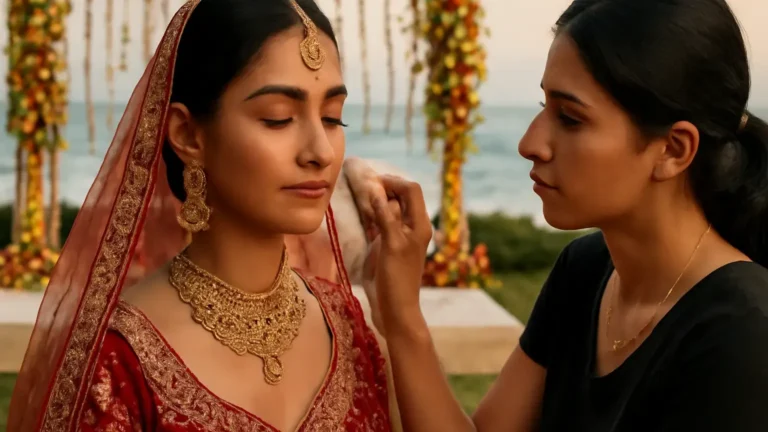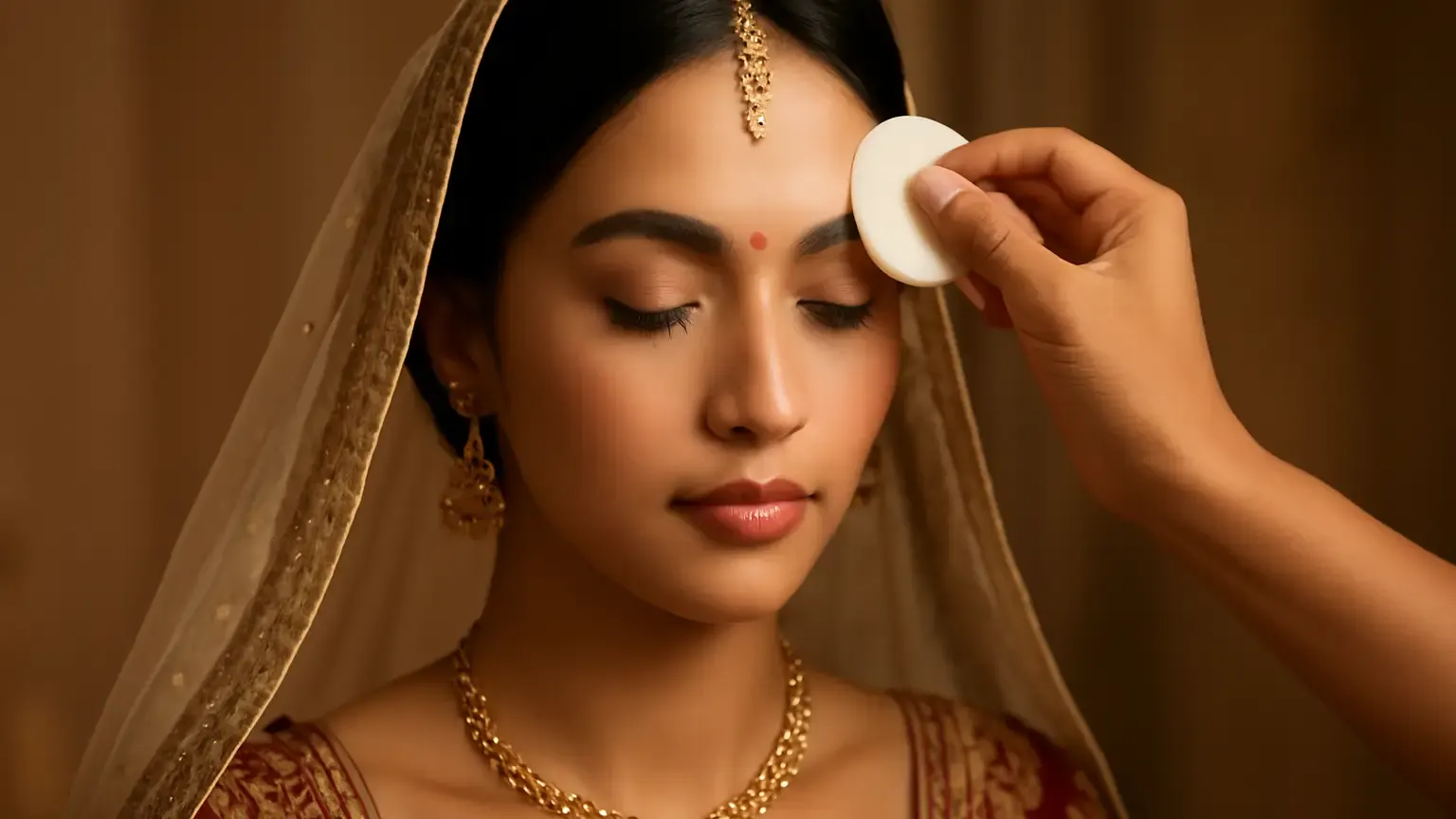
Bridal makeup for oily skin works best when shine is managed, not covered with heavy powder. This guide is for brides getting married in warm or humid Indian conditions who need a flexible plan for the ceremony, photographs and reception. Test the full look beforehand, use light layers, powder only high-shine zones and prepare a small touch-up kit so the finish stays polished without looking flat or cakey.
Start with a bridal makeup trial, not a last-minute product swap
A proper bridal makeup trial is a wear test, not just a preview of colours. Schedule it at a similar time of day to the wedding, preferably on a day when you can wear the makeup for six to eight hours. Ask the artist to recreate the likely ceremony and reception conditions: indoor lighting, outdoor heat, photography flashes, a veil, jewellery and the amount of movement involved.
Take photographs after application, after two to three hours and at the end of the test. Look for shine around the nose and forehead, foundation collecting beside the mouth, separation on the chin, creasing around the eyes and colour changes caused by oxidation. A finish that looks slightly too matte in person may photograph well, while a very luminous base can become visibly oily under strong lights.
Also test whether the base transfers onto a mask, dupatta or veil edge. If irritation, persistent redness or unusual breakouts develop, stop using the new product and ask a dermatologist for appropriate advice. A trial is the safest place to discover a reaction, not the wedding morning.
Build the right skin prep for oily skin
Good skin prep for oily skin should make the surface comfortable and even without adding several rich layers. The morning routine can be simple:
- Cleanse gently to remove overnight oil, without scrubbing or using a harsh, unfamiliar formula.
- Apply a lightweight moisturiser to areas that feel tight. Oily skin can still become dehydrated, and skipping moisturiser may leave the base looking uneven.
- Use a sunscreen that you have already tested if the event is during daylight. Allow it to settle fully before makeup.
- Press a small amount of oil-control primer into the forehead, sides of the nose, inner cheeks and chin if those are your usual shine zones.
Primer should be targeted rather than spread thickly over the whole face. Too much silicone-rich or mattifying product can pill beneath foundation, particularly when layered over sunscreen. Give each product a few minutes to settle and remove visible excess with a clean tissue before the base is applied.
Choose a thin, flexible bridal makeup base for oily skin
The most reliable bridal makeup base for oily skin is usually built in thin layers: spot concealer where coverage is needed, a light application of foundation elsewhere, and a second small layer only where the first has not covered enough. This approach is more durable than applying a thick coat everywhere because oil has less product to break apart.
Foundation decisions that matter
Ask for a long-wear foundation with a natural-matte or soft-matte finish rather than choosing solely by the word “matte”. A very dry formula may emphasise texture, while an overly emollient one may move around the nose and mouth. Match the shade to the face, neck and visible chest area in daylight, then check it under the venue’s artificial lighting. A small trial amount can reveal whether the formula darkens after it mixes with skin oils.
Use a damp sponge for a thinner veil or a dense brush for more controlled coverage, but avoid repeatedly buffing the same area. Stippling and pressing help preserve the layers underneath. Keep the complexion finish balanced: a softly perfected centre with a little natural dimension at the high points often looks better than a completely flat mask in close-up photographs.
Set strategically for ceremonies, photos and receptions
Powder is most useful where movement and shine are predictable. Press translucent loose powder lightly over the eyelids, around the nostrils, under the eyes if they crease, the upper lip and the centre of the forehead. Use a small puff or compact brush and remove the excess after a minute. Do not automatically bake the entire face; heavy powder can emphasise fine lines and become patchy as the event progresses.
For blush, a cream-to-powder blush can provide comfortable colour with less surface slip when applied in a restrained layer. If the artist uses a cream product beneath powder blush, the two formulas should be tested together. Keep highlighter away from areas that already become shiny, especially the nose and inner cheeks. Strategic radiance photographs more naturally than uncontrolled oil.
Finish according to the base rather than misting repeatedly. A mattifying setting spray may help reduce a powdery appearance and support wear, but it is not a substitute for correct application. Spray from the recommended distance, let it dry without touching the face and test for tightness or patchiness during the trial. A general makeup setting spray may suit a bride who wants a more natural finish; the decision should follow the climate, base and comfort level.
Control transfer without making the makeup look heavy
Transfer usually happens where makeup meets fabric, skin folds or frequent touch. Let the complexion settle before putting on jewellery, a veil or a dupatta. When dressing after makeup, use a clean scarf or disposable face shield over the face if the outfit allows it, and ask the makeup artist to protect the hairline and ears from foundation marks.
For lips, choose a comfortable transfer-resistant lipstick and test it with the actual glass or cup you expect to use. Long-wear formulas can feel dry, so apply balm earlier in the routine, remove excess, and use a thin lipstick layer rather than piling on product. Blot once, then add a controlled second layer if needed.
Eye makeup needs a separate wear test. Waterproof eye makeup is useful for emotional ceremonies, humidity and long photography sessions, but waterproof does not mean rub-proof. Check that eyeliner and mascara do not migrate to the lower lash line after several hours. If you have sensitive eyes or wear lenses, only use products you have already tolerated.
Plan touch-ups instead of trying to prevent every shine
Oil production during a long wedding is normal. The aim is to refresh the makeup, not repeatedly cover it. Ask a trusted person, makeup artist or bridesmaid to carry a small kit containing blotting papers, a pressed powder that matches the base, lipstick, cotton buds and a tiny mirror. Keep tissues available, but press rather than wipe.
- Blot the forehead, nose, upper lip and chin with one sheet at a time. Do not drag it across the cheeks.
- Inspect the base before adding anything. If it is intact, leave it alone.
- Use a small amount of powder only on newly shiny areas, pressing it in instead of sweeping over the whole face.
- Repair separation with a pin-sized amount of concealer on a clean cotton bud, then tap the edges until they blend.
- Refresh lips after food, drinks and photographs, and check the inner corners of the eyes before the reception.
Schedule the first check before the main photographs, another after the ceremony and a final one before the reception entrance. This timing is more useful than waiting until the entire base has broken down.
Common mistakes that shorten wear
- Trying several new products together: You cannot identify which item causes pilling, irritation or excess shine.
- Over-powdering at the start: A thick layer can crack, look pale under flash and become difficult to repair later.
- Using a very rich moisturiser or facial oil immediately before makeup: These may be comfortable for some skin types but can reduce grip in oil-prone zones.
- Choosing full coverage as the only solution: Coverage level and longevity are different decisions. Thin, well-set layers often wear more gracefully.
- Ignoring the venue: A base that works in an air-conditioned room may need different preparation for an outdoor pheras ceremony or a humid reception.
- Wiping away shine: Rubbing removes foundation along with oil and creates a patch that is harder to blend.
Make the final decision based on the whole event
For an outdoor ceremony, prioritise sunscreen compatibility, humidity tolerance and a dependable touch-up person. For a long indoor reception, focus on flash-friendly texture, comfortable eye makeup and a lipstick plan that survives meals. If you move between hot and air-conditioned spaces, avoid an extreme matte finish that feels tight in one environment and still becomes shiny in another.
Bring reference photos from your trial, the products used, your shade information and a simple timeline to the makeup artist. Mention whether you tend to touch your face, tear easily, wear glasses or have a veil that rests near the cheeks. These details affect technique more than a generic promise of “long wear”.
Takeaway
The strongest bridal makeup for oily skin plan combines tested products, restrained prep, thin base layers, targeted powder and scheduled blotting. It should keep the complexion fresh enough for close photographs while remaining comfortable through the ceremony and reception. Choose formulas for your climate and skin behaviour, test the complete routine, and treat touch-ups as part of the makeup design rather than an emergency fix.
Products that may help with this routine
Choose only what fits your skin, hair or personal needs. Use the links below to view current options on Amazon India.
Frequently Asked Questions
What is the best bridal makeup for oily skin in humid weather?
A reliable approach is gentle skin prep, a targeted oil-control primer, thin layers of long-wear foundation, powder on high-shine areas and a planned blotting routine. Test the complete look in similar heat and humidity before the wedding.
How should I prep oily skin before bridal makeup?
Cleanse gently, use a lightweight moisturiser where needed, apply a tested sunscreen for daytime events, allow each layer to settle and press oil-control primer only onto areas that usually become shiny.
What foundation is best for oily skin bridal makeup?
Look for a tested long-wear foundation with a natural-matte or soft-matte finish. The best choice depends on your texture, climate, shade match and how the formula wears after several hours, so assess it during a full bridal trial.
How can I stop bridal makeup from transferring?
Let the base settle before dressing, use thin layers, set areas that contact fabric, choose a tested transfer-resistant lipstick and protect the face when putting on a veil or dupatta. Avoid rubbing during touch-ups.
How do I touch up oily bridal makeup?
Press blotting papers on the forehead, nose, upper lip and chin first. Then add a small amount of matching pressed powder only where shine remains. Do not wipe or layer fresh foundation over an oily surface.
How can I make bridal makeup last through a reception?
Complete a six- to eight-hour trial, choose products suited to the venue, schedule checks before photographs and after the ceremony, and have a trusted person carry blotting papers, powder, lipstick and cotton buds.