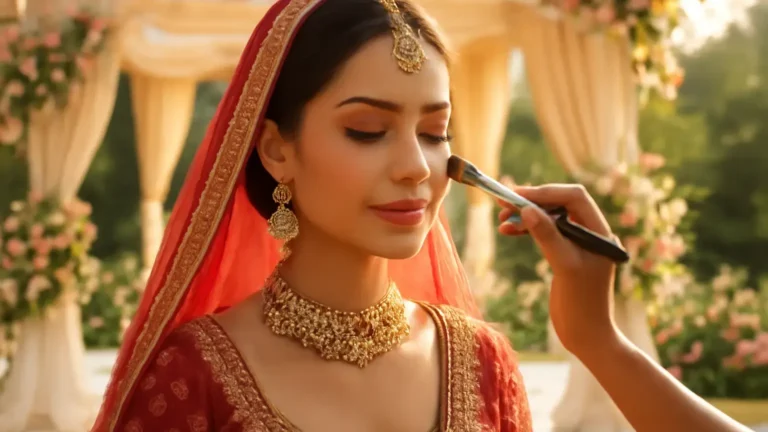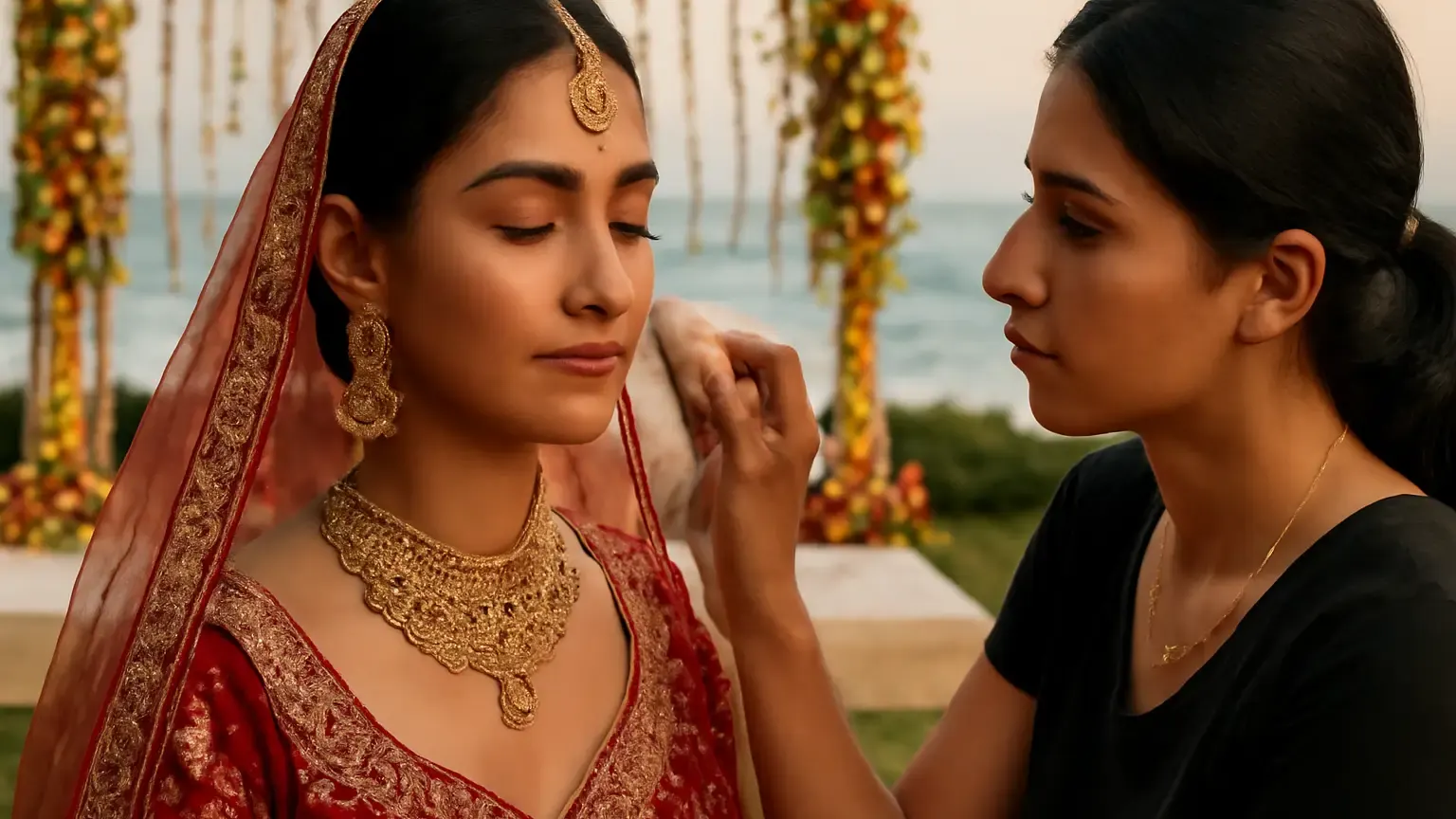
Bridal Makeup for Humid Venues works best when the trial tests the whole plan, not just the first ten minutes of the look. This guide is for brides marrying in coastal, monsoon or hot indoor locations who need a flexible base that stays comfortable and photographs well. Use six checks to assess skin preparation, thin layers, powder placement, eye products and touch-up timing before choosing your artist or finalising the products.
Humidity changes how makeup behaves. Heat and perspiration can make a rich base feel heavy, encourage shine around the nose and forehead, soften cream products and cause eyeliner to transfer. A successful bridal trial therefore needs to imitate the conditions of the wedding as closely as practical. It should answer a simple question: can the look remain fresh and adjustable without becoming thick, tight or overly matte?
Why a humid-venue trial needs more than a pretty finish
A trial is a decision-making appointment, not only a preview photograph. Ask the artist to record the products used, the order of application and any changes made during the appointment. If your ceremony is outdoors, near the sea or during an Indian monsoon month, request a realistic wear test rather than an immediately perfected finish.
The aim of humidity-resistant makeup is not to make skin completely immovable. No cosmetic can prevent all perspiration. Instead, the routine should allow moisture to be lightly blotted, shine to be controlled in selected areas and makeup to be refreshed without disturbing the entire base. This is usually more comfortable and more natural-looking than applying heavy layers from the start.
Six trial-day checks for Bridal Makeup for Humid Venues
1. Check how the skin preparation settles
Begin with clean, familiar skincare rather than an experimental facial, peel or strong active product close to the wedding. Good bridal skin preparation should leave the face comfortable and hydrated, but not slippery. A lightweight moisturiser can support a smoother base; the amount should reflect your skin type and the venue.
Wait several minutes before primer and foundation. Look for pilling, excessive surface oil or areas that become tight. If your skin is sensitive or prone to persistent redness, discuss suitable products with a dermatologist well before the event rather than testing multiple new formulas on the trial day.
2. Check the base in thin, buildable layers
Ask for a sheer first layer of a long-lasting bridal foundation, followed by targeted coverage only where needed. Thin layers tend to flex better with facial movement and are easier to repair after blotting. Concentrated coverage can be reserved for blemishes, pigmentation or under-eye darkness instead of spreading full coverage over every area.
Assess the base in daylight, warm indoor light and with flash photography. The colour should match the face, neck and visible chest area as appropriate, while the undertone should remain believable in photographs. A foundation that looks perfect in one yellow-lit room may appear too pale, orange or grey elsewhere.
3. Check the dewy-versus-matte balance
Dewy versus matte bridal makeup is not an all-or-nothing decision. In humidity, a softly natural finish often photographs better than a completely glossy face or an entirely flat, powder-heavy one. Keep gentle luminosity on the high points if you like it, but control shine around the sides of the nose, centre forehead, chin and any area that becomes oily first.
Wear the trial for at least two to three hours if possible. Notice whether the base separates, gathers beside the nose, settles into lines or becomes uncomfortable. Blot once with tissue or blotting paper and observe whether the makeup lifts. This test is more useful than judging the finish immediately after application.
4. Check powder placement, not just the powder itself
Translucent setting powder should be used strategically. A light press through the T-zone, around the nostrils and beneath the eyes may improve durability, while leaving every cheek heavily powdered can remove dimension. Ask the artist to show you the result before more powder is added.
Check the face under flash. Too much powder can create a dry texture or a pale cast, especially when combined with some sunscreens and flash photography. If you need a very matte finish for an outdoor ceremony, confirm how the artist will preserve some skin-like texture on the cheeks and avoid repeatedly layering powder over sweat.
5. Check eye-product placement and transfer resistance
Waterproof bridal eye makeup should be tested where it matters: the upper lash line, lower lash line, inner corner and crease. Humidity, watery eyes and movement can make mascara or liner migrate. Ask whether the product is water-resistant or waterproof, and whether it can be removed comfortably after the event.
Wear the eye look while looking down, smiling and blinking normally. Check for crease transfer after a few hours. If you use contact lenses or have easily irritated eyes, mention this before the trial. False lashes should also be tested for comfort, adhesive sensitivity and how they look in both close-up and full-face photographs.
6. Check the touch-up plan and the person responsible
A bridal makeup touch-up kit should be small and purposeful. A practical selection may include blotting paper or soft tissues, a small amount of the base product, cotton buds, a lip product, a compact or pressed powder and any approved lash or liner essentials. Do not rub a sweaty face and then add more foundation; blot first, correct only the affected spot and press rather than drag.
Decide who will carry the kit and who can help you use it. If your artist stays through the ceremony or reception, ask when they will inspect the makeup. If they leave after application, request clear instructions and a labelled list of products. A touch-up plan is especially valuable for bridal makeup for beach weddings in India, where wind, salt air, heat and bright light may affect comfort as well as longevity.
How to test humid weather bridal makeup at the trial
Try to schedule the appointment at a time that resembles the wedding’s heat or activity level. You do not need to create unsafe discomfort, but a short walk, a warm room or normal household movement can reveal more than sitting still under a fan. Avoid deliberately steaming the face or using extreme heat.
Take photographs after application, after two hours and after a gentle blot. Include close-ups, a full-face image and pictures taken with flash. Compare texture, colour, creasing and shine rather than looking only at whether the makeup has “stayed on”. The best humid weather bridal makeup may look slightly more natural after settling, not frozen in place.
Choosing products and an artist for a coastal or monsoon wedding
When discussing products, prioritise compatibility with your skin and the artist’s process over labels such as “24-hour” or “sweat-proof”. A primer may help with grip or oil control, but it cannot compensate for an unsuitable moisturiser or an overly thick foundation. A fixing mist can finish the look, yet it should be selected for comfort, fragrance preference and eye sensitivity as well as hold.
During the bridal makeup artist consultation, share the venue, start time, ceremony length, photography schedule, outfit changes and whether you will be outdoors. Ask what happens if the base needs repair, whether the same artist handles the touch-up and how much time is required between makeup and getting dressed. An artist who explains adjustments clearly is often a better fit than one who promises that nothing will move.
Common mistakes that reduce flexibility
- Adding too much skincare: several rich layers can make foundation slide before the ceremony begins.
- Using full coverage everywhere: this can make later corrections more visible and may look heavy in close-up images.
- Powdering the whole face repeatedly: powder over moisture can create texture instead of improving wear.
- Testing only in studio lighting: daylight and flash reveal colour and texture differences.
- Trying unfamiliar products immediately before the wedding: give new formulas adequate time to prove they are comfortable for you.
- Ignoring the lips: choose a lip colour and texture that can be reapplied quickly after food, greetings and photographs.
A concise decision checklist before you book
Choose the plan if the base remains comfortable after a realistic wear period, looks consistent in daylight and flash, and can be refreshed with blotting and small corrections. Confirm that the eye products do not transfer, the powder is placed only where needed and the artist can explain every product category without making absolute promises.
For brides who prefer visible glow, request controlled luminosity rather than a wet finish. For brides who prioritise maximum oil control, ask for a soft-matte approach with skin-like cheeks. If you have very dry, reactive or persistently uncomfortable skin, seek individual advice from a qualified dermatologist before changing your skincare routine.
Takeaway
The strongest Bridal Makeup for Humid Venues plan is flexible: prepared skin, thin base layers, selective powder, tested eye products and a simple touch-up routine. Use the six trial-day checks to judge comfort and repairability as carefully as colour and photographs. A base that can be lightly adjusted will usually serve a long Indian wedding day better than one designed only to look perfect at the moment of application.
Products that may help with this routine
Choose only what fits your skin, hair or personal needs. Use the links below to view current options on Amazon India.
Frequently Asked Questions
How do you make bridal makeup last in humid weather?
Use comfortable, well-set skin preparation, apply foundation in thin buildable layers, powder only high-shine areas, test eye products for transfer and blot before touching up. A realistic wear test at the bridal trial is more useful than relying on product claims.
What is the best base for bridal makeup in humid venues?
The best base is one that matches your undertone, feels comfortable and remains even after heat, movement and light blotting. A thin, buildable foundation with targeted concealer is often more flexible than a heavy full-coverage layer, but the final choice should be tested on your skin.
Is bridal makeup for beach weddings in India different from regular bridal makeup?
It may need more attention to humidity, wind, bright light, perspiration and touch-ups. Test transfer-resistant eye products, control shine selectively and prepare a small kit for blotting and targeted corrections rather than adding heavy powder everywhere.
What should you check at a bridal makeup trial?
Check skin preparation, thin-layer coverage, finish after two to three hours, powder placement, eye-product transfer, flash photography and the practical touch-up plan. Also assess comfort, colour in daylight and whether the artist explains product and timing decisions clearly.
What should you carry in a bridal makeup touch-up kit?
Carry blotting paper or soft tissues, a small amount of the base product, cotton buds, lip colour, compact or pressed powder and any approved lash or liner essentials. The kit should match the products used at the trial and be handled by a trusted person.