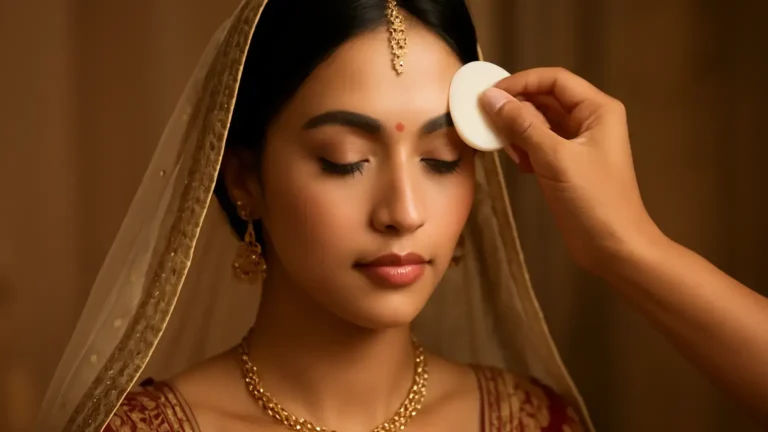
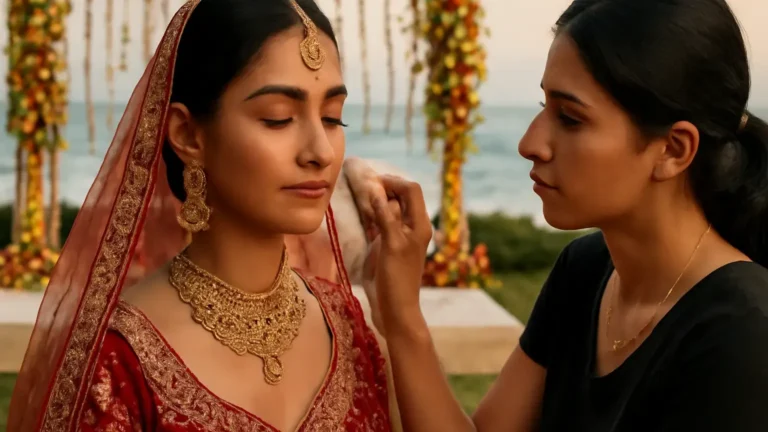
Bridal makeup for mehendi functions should look fresh in hard daylight, hold up through humidity and close-up photographs, and stay comfortable while your hands are being decorated. This guide is for brides planning a daytime mehendi or pre-wedding celebration: choose breathable, buildable complexion coverage, softly defined waterproof eyes, controlled cream blush and a lip colour that will not easily transfer. The best result is polished definition—not a heavy reception-style face.
A mehendi celebration asks more of bridal makeup than a quick festive look. You may move between sunlight and shade, greet guests at close range, pose while the henna artist works, and spend several hours with your hands occupied. Bright daylight also reveals texture, excess powder and mismatched base more clearly than a dim banquet hall.
What makes bridal makeup for mehendi functions different?
Mehendi makeup is usually lighter and more mobile than a wedding-day base, but it still needs enough structure for photographs. The aim is balanced definition: even-looking skin, visible eyes, fresh cheeks and a lip shade that complements the outfit without competing with the henna.
Daylight bridal makeup should be checked in natural light, particularly around the jawline, hairline and under-eye area. A base that looks perfect beneath warm indoor bulbs can appear too pale, grey or overly yellow outdoors. Ask your artist to assess the complexion near a window or in open shade before the final setting step.
Build a breathable, photography-ready complexion
Start with preparation, not layers
Cleanse gently, apply a familiar moisturiser and allow it to settle before primer or complexion products. If you use sunscreen during the day, choose one you have already worn comfortably and allow adequate setting time. Avoid introducing a new exfoliant, facial, peel or active product immediately before the event; the goal is predictable skin, not an experimental glow.
A makeup trial is the right place to test how your skincare, primer and base interact. It also helps identify whether you need colour correction for visible discolouration or simply a thin layer of foundation. Good preparation reduces the temptation to compensate with excessive coverage.
Choose coverage that can be built selectively
For the best base makeup for daytime mehendi, use a lightweight base makeup formula across the face and add concealer only where more coverage is useful. This keeps the skin looking dimensional in close-up portraits. Set the centre of the face, around the nose and beneath the eyes with a fine layer of powder; leave naturally comfortable areas less powdered if they do not become shiny.
Humidity can make a base feel heavy, while too much powder can emphasise dry texture. A sweat-resistant makeup routine should mean controlled layers and careful setting, not a thick mask. If you are prone to shine, mattify the T-zone and keep the cheek area softly natural so the face does not look flat in daylight.
Use eye definition that survives movement and photographs
Natural bridal eye makeup can be enhanced with a neutral brown, muted rose, bronze or soft plum palette, depending on your outfit and undertone. Keep the deepest colour close to the lash line and blend the edges thoroughly. This gives definition in photographs without making the eyes look overly dramatic for a daytime ceremony.
Waterproof eye makeup is particularly practical if you expect heat, watering eyes, emotional moments or long wear. A waterproof pencil or gel liner can be used along the upper lash line, while waterproof mascara helps prevent marks beneath the eyes. Even so, waterproof does not mean indestructible: rubbing, oil and repeated touching can still disturb it.
Consider the mehendi design, jewellery and outfit before choosing shimmer. Fine satin or restrained metallic texture can catch daylight attractively; chunky glitter may look uneven in close-ups. Keep loose particles away from the area where the artist will work, and avoid placing makeup products or brushes near wet henna.
Balance blush, highlight and lip colour
Let blush bring back dimension
Cream blush gives a fresh finish and can suit a daytime celebration, but it should be applied in a thin layer and set lightly if the weather is humid. A muted peach, rose, coral or berry tone can be chosen according to the outfit and complexion. Blend upward rather than placing an intense stripe in the centre of the cheek.
If you prefer longevity, layer a small amount of powder blush over cream blush. This cream-to-powder approach creates colour that remains visible in photographs while keeping the finish less dry than several layers of powder alone.
Choose a practical lip formula
For the question, “What lipstick should a bride wear for a mehendi ceremony?”, the useful answer is a shade you can comfortably reapply and a formula that does not easily mark cups, clothing or the artist’s gloves. Rose, terracotta, warm nude, coral and soft berry are versatile options, but the right choice depends on the outfit and the strength of the eye makeup.
A transfer-proof lipstick can be helpful, especially after the first thin layer has set. Blot once, refine the edges with a matching pencil and carry the lipstick rather than relying on a shade that becomes uncomfortable when dry. Avoid applying a thick glossy layer immediately before the henna begins, since it can transfer more easily when you greet people or drink.
Plan around the henna application
Mehendi-friendly makeup includes practical scheduling. Ideally, finish complexion and eye makeup before the henna artist starts, while keeping the hands and wrists free from face products, oil and rich hand cream. Tell the artist which hand will be used for sipping water or managing your phone, and arrange essentials within easy reach.
Do not rest your hands against your cheeks after henna has been applied. A friend or family member can help with water, jewellery, messages and outfit adjustments. If the design requires your arms to remain still for a long period, ask the makeup artist to complete any work that involves leaning close to the face beforehand.
Use a clean tissue or cotton bud for small corrections, not a large amount of remover near fresh henna. The henna artist and makeup artist should each have a clear, hygienic working area. This simple separation reduces accidental smudging and keeps tools away from wet design paste.
Make the look last without making it heavy
To understand how to make bridal makeup last in daylight, think in thin, compatible layers. Prepare the skin, apply targeted complexion coverage, set areas that move or shine, and finish with a setting spray for brides if it suits your tested routine. Hold the spray at the recommended distance and let it dry naturally rather than pressing the face with hands.
Build a bridal makeup touch-up kit with lipstick, a compact or blotting papers, cotton buds, a small mirror and tissues. Blot shine before adding powder; otherwise, powder can collect over oil and look thick. Refresh the lip colour after drinks or food, and use a cotton bud to clean any mascara or liner that has migrated.
Keep the kit with a trusted person because both hands may be occupied. Avoid adding foundation repeatedly throughout the function. Strategic correction generally looks more natural than trying to recreate the full base.
Common mistakes to avoid
- Choosing a base only under indoor lighting: daylight can expose a shade mismatch or excessive brightness.
- Using too much highlighter: strong reflection can distract from the eyes and make texture more noticeable in close-ups.
- Skipping a trial: wear time, oxidation, comfort and flash response are difficult to predict from a product label alone.
- Trying a new facial or active skincare product: unfamiliar routines may leave the skin uncomfortable before an important event.
- Layering every long-wear product: several drying formulas can cause tightness, cracking or a visibly thick finish.
- Ignoring the hands: keep skincare, makeup and accessories organised so wet henna is not accidentally touched.
Who this approach suits—and when to adjust it
This wearable plan suits brides having a daytime mehendi, haldi-adjacent celebration, garden event or intimate pre-wedding gathering. It works especially well for pastel outfits, floral jewellery and ceremonies with frequent close-up portraits. Brides who usually prefer full coverage can still follow the same structure: use fuller coverage only where needed, then keep blush, eyes and powder controlled.
If the event continues into evening, ask whether the look needs a planned transition. A deeper lip, additional liner or more defined outer corner can be added later rather than starting with a heavy face in daylight. Those with persistent irritation, swelling or a concerning skin reaction should pause cosmetic experimentation and consult a qualified dermatologist or doctor.
Concise takeaway
The strongest bridal makeup for mehendi functions is breathable, carefully placed and tested in the light where it will be photographed. Prioritise a buildable base, waterproof eye makeup, softly layered blush, comfortable transfer-conscious lip colour and a small touch-up plan. That combination gives the bride definition and durability while keeping the face fresh beside intricate henna work.
Products that may help with this routine
Choose only what fits your skin, hair or personal needs. Use the links below to view current options on Amazon India.
Frequently Asked Questions
How do you do bridal makeup for a mehendi function?
Prepare with familiar skincare, use buildable complexion coverage, define the eyes with water-resistant or waterproof products, add softly layered blush and choose a comfortable lip colour. Complete makeup before henna application, keep the hands free from face products and carry a compact touch-up kit.
What is the best base makeup for daytime mehendi?
A lightweight, buildable base is usually the most adaptable choice for daytime mehendi. Apply it evenly, add concealer only where needed and set the T-zone, under-eyes and other areas prone to movement or shine. Always check the shade in natural light during the trial.
What lipstick should a bride wear for a mehendi ceremony?
Choose a rose, coral, terracotta, warm nude or soft berry shade that suits the outfit and can be reapplied comfortably. A transfer-resistant formula can help, but avoid a thick glossy layer immediately before greeting guests or beginning the henna application.
How can I make bridal makeup last in daylight?
Use familiar skincare, apply thin compatible layers, set high-movement areas lightly and finish with a tested setting spray. Blot before powdering during touch-ups, refresh lipstick after eating or drinking, and avoid repeatedly adding foundation.
Should brides wear waterproof eye makeup for mehendi?
Waterproof eye makeup is useful for heat, humidity, watering eyes and long wear. Waterproof liner and mascara can reduce smudging, but they still need gentle application and should not be rubbed if the eyes become uncomfortable.