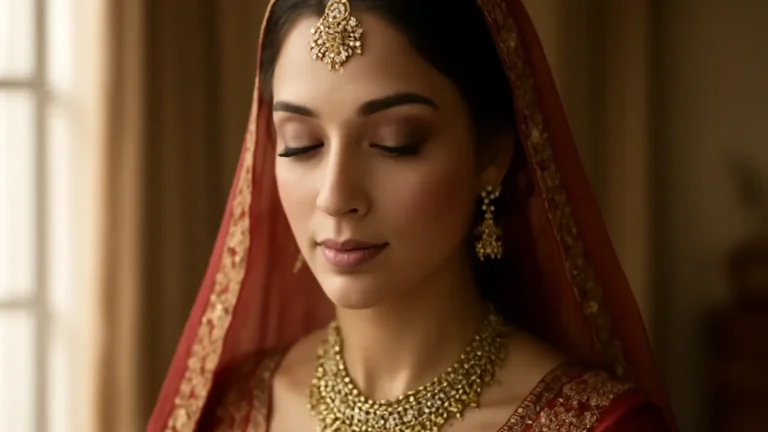
Bridal makeup for long ceremonies needs timed maintenance, not a heavy first layer. This plan is for brides facing early rituals, heat, hugs, meals and late photographs; it shows when to blot, what to refresh and what to leave alone. The key decision is simple: build a thin, well-set base, then carry a small kit for targeted corrections instead of repeatedly adding foundation across the face.
A wedding ceremony can begin before sunrise and end with photographs long after the final ritual. In India, the challenge may include humidity, warm mandaps, tears, dupattas brushing the face, repeated greetings, meals and hours under bright lights. Good wedding makeup for long functions is therefore a system: preparation, controlled layering, protection of transfer-prone areas and short touch-up windows.
Start with a bridal makeup timeline, not a last-minute appointment
Ask your makeup artist to work backwards from the first important ritual and the final photography block. A useful bridal makeup timeline includes the following checkpoints:
- Night before: Keep skincare familiar and gentle. Avoid experimenting with peels, strong exfoliants or a new facial close to the wedding.
- Two to three hours before the first ritual: Complete skincare and makeup early enough for the products to settle, but not so early that the face spends hours exposed before the ceremony.
- Before leaving for the mandap: Check the hairline, nose folds, chin, eyelids and the area beneath the lower lip. These zones often collect product or moisture first.
- After the main rituals: Blot and correct only what has moved. This is usually the best time to refresh complexion makeup.
- Before portraits: Make a deliberate photography check under the actual lighting. Restore lip definition, smooth visible creases and remove shine without flattening the whole face.
Share the full schedule with the artist, including travel, pheras, reception entry, meals and family portrait timings. A morning wedding followed by an evening reception may need a planned second look rather than endless small repairs.
Build a long-lasting bridal base in thin, flexible layers
A durable base is not necessarily a thick one. Begin with clean, moisturised skin and allow each skincare layer to settle. Use primer selectively: a smoothing formula where texture is visible, and a more oil-controlling formula around the nose, forehead and chin if those areas become shiny.
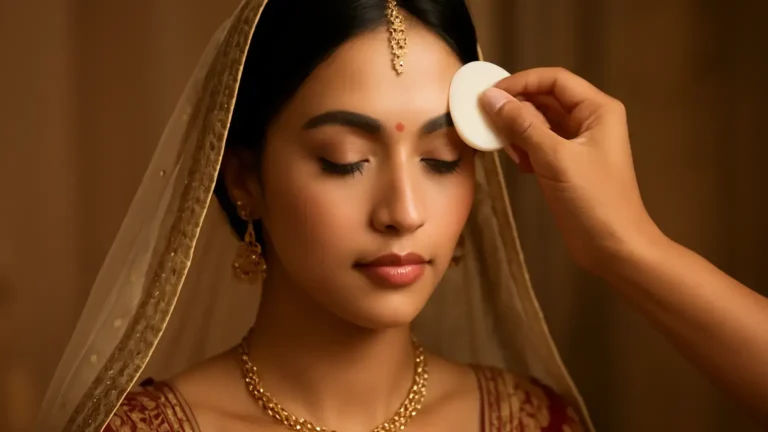
A long-lasting bridal base should match the skin’s needs rather than cover every area equally. Apply complexion product in light layers, pressing it into the skin with a damp sponge or suitable brush. Too much foundation around the mouth and under the eyes is more likely to crease, separate or transfer onto clothing.
Use under-eye concealer only where darkness or discolouration needs correction. Keep the layer thin near smile lines and the inner corners, where movement is constant. Set strategic areas with a finely milled powder, then finish with a makeup setting spray suited to the products and skin type. Let the spray dry naturally; rubbing or fanning aggressively can disturb the surface.
Protect the areas most likely to transfer
Transfer is usually caused by friction, moisture, excess product or contact with fabric—not by one “bad” product alone. Before the veil or dupatta is placed, ask the artist to inspect the forehead, temples, cheeks, jawline and the outer edges of the lips.
- Veil and dupatta line: Keep the base thin where fabric will rest. A light dusting of powder can reduce tackiness, but too much may make the area look dry in photographs.
- Nose and upper lip: Blot oil, press on a small amount of complexion product only if coverage has lifted, and set again. Avoid rubbing, which spreads foundation.
- Jawline and neck: Check that complexion shades blend cleanly and that jewellery or a collar is not repeatedly scraping the product.
- Eyes: Choose waterproof eye makeup for tears, humidity and long wear, but still carry cotton buds for pinpoint clean-up. Waterproof does not mean indestructible.
- Hands and hugs: Allow skincare, base and setting products to dry before greeting guests closely. This lowers the chance of face-to-face transfer.
For humidity-proof makeup, prioritise breathable layers, controlled powdering and a planned blotting break. No formula can prevent all movement in extreme heat, so the practical goal is graceful correction.
Keep lips comfortable and camera-ready
Lips often need the most frequent attention because speaking, sipping, eating and smiling remove colour faster than normal wear. Before makeup, gently remove loose dryness with a soft damp cloth if needed, then apply a familiar balm and give it time to absorb. Excess balm can make colour slide.
Ask for a lip liner close to the chosen lipstick shade and colour inside the lip area before applying lipstick. A transfer-proof lipstick can improve staying power, but it may feel drying; comfort matters during a long ceremony. A creamy formula with a compact for reapplication may be a better choice for some brides.
Do not repeatedly layer lipstick over food, oil or an old balm. First press the lips with tissue, add a small amount of colour to the centre and blend towards the edges. Re-establish the liner only where it has faded. Keep a separate straw if it helps protect the colour between touch-ups, but do not force yourself to drink uncomfortably.
The five-minute touch-up routine
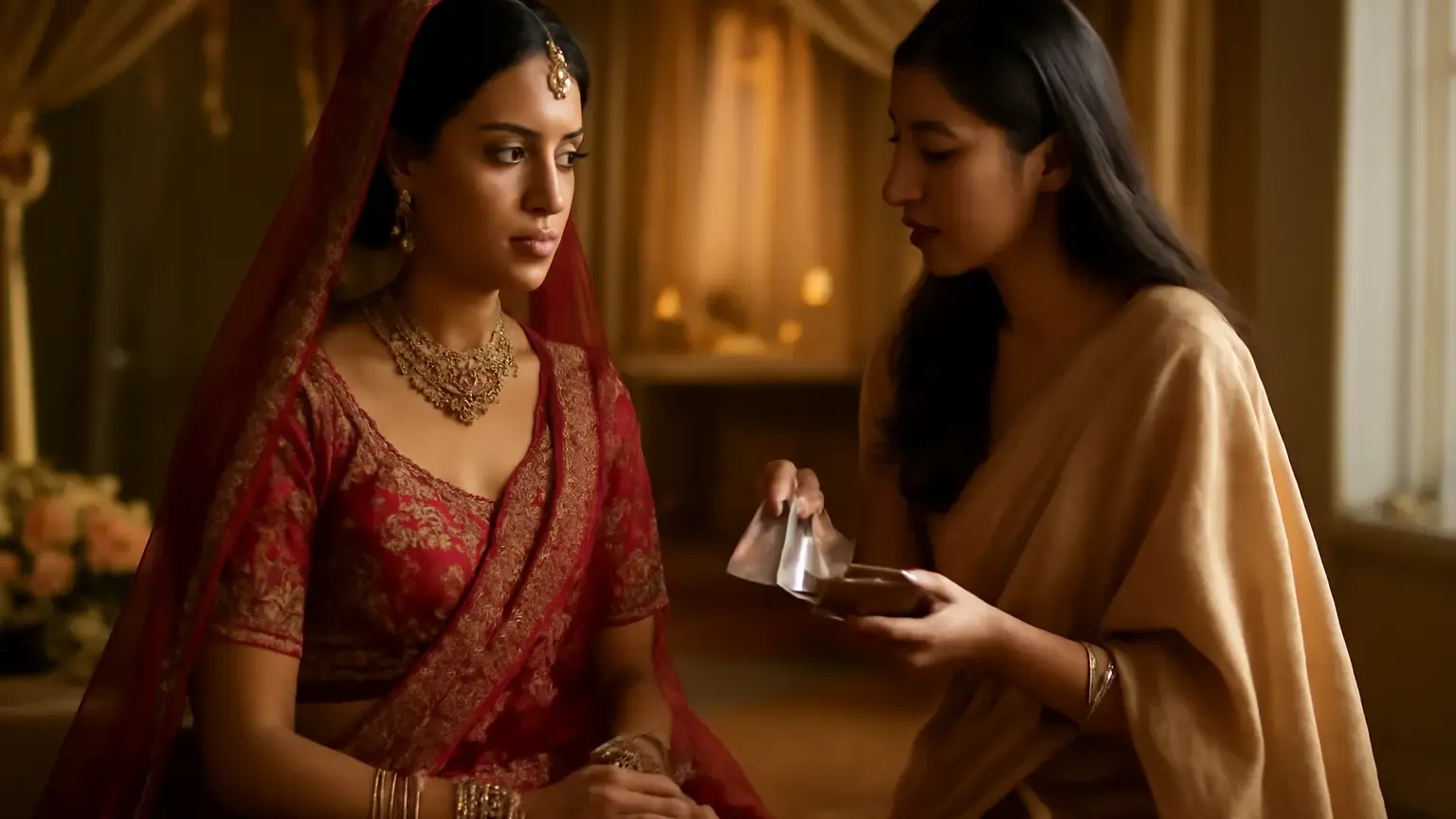
A useful touch-up should remove excess shine and repair only the areas that need it. Ask a trusted person—such as a bridesmaid or family member—to hold the kit and check your face in natural light when possible.
- Pause and inspect: Look for shine, lifted coverage, creased concealer, smudged liner and faded lip colour. Do not automatically powder the entire face.
- Blot first: Press makeup blotting sheets or a clean tissue onto the nose, forehead and chin. Lift the sheet away rather than dragging it across the skin.
- Repair edges: Use a cotton bud to clean the outer eye corner or lip edge. If foundation has separated, tap on a tiny amount of concealer or foundation with a clean fingertip or sponge.
- Set selectively: Apply a little powder to freshly corrected or shiny areas. Avoid building powder over dry cheeks or textured patches.
- Refresh features: Reapply lipstick, check the blush balance and use a clean spoolie if brows or lashes need separation. A light mist of setting spray is optional after corrections.
For most schedules, plan a quick check before the main ceremony, after the most emotional rituals, after eating and immediately before portraits. This answers when should a bride touch up makeup: before visible wear becomes distracting, not every hour by habit.
Pack a focused bridal makeup touch-up kit
A small bridal makeup touch-up kit is more useful than a full vanity bag. Pack products in labelled pouches and test the tools before the wedding day. Include:
- the exact lipstick, liner and balm used for the look;
- blotting sheets and clean tissues;
- a small pressed powder or the artist’s recommended setting powder;
- a mini concealer or a small amount of foundation in a clean container, if the artist approves;
- cotton buds, a compact mirror and a clean sponge or small brush;
- water, a straw if preferred, and a few plain tissues for meals;
- lash adhesive only if false lashes are being worn and the artist has shown the bridesmaid how to use it safely.
This is also the practical core of a bridal emergency kit. Add safety pins, fashion tape, hair pins and a stain-removal wipe for the outfit, but keep non-makeup items in a separate pouch so the cosmetics remain clean.
What to avoid on the wedding day
Several well-intentioned habits shorten wear. Do not introduce a new sunscreen, serum, facial oil or exfoliant on the morning of the wedding. Do not scrub a patch that has lifted, spray perfume directly near the face, or use a powder puff that has been passed between several people.
Avoid touching the face to check whether makeup is still present. Avoid repeated full-base applications, which can create heaviness and visible texture. If tears occur, let them gather briefly and press them away from the inner corner with a tissue; wiping across the eye is more likely to disturb liner and concealer.
For persistent burning, swelling, rash or significant discomfort, remove the suspected cosmetic when practical and seek medical advice. Beauty touch-up advice is not a substitute for care from a dermatologist or doctor.
Choose the plan according to your ceremony
For a short indoor ceremony, a well-prepared base, lip product and blotting sheets may be enough. For a long outdoor function, prioritise oil control for bridal makeup, waterproof eye products, breathable layers and a dedicated helper. For a bride moving from rituals to a reception, schedule a proper reset: remove excess shine, repair the complexion selectively, refresh the lips and reassess the eye area under evening lights.
Photography also changes the decision. Wedding photography makeup should look even in close-ups without becoming thick in person. Ask for photographs in both daylight and artificial light during the trial, and test the exact foundation, concealer, powder and flash conditions where possible. The best makeup for long wedding ceremonies is the look that remains comfortable, recognisably you and easy to repair.
Takeaway
Successful bridal makeup for long ceremonies depends on a thin, well-set base, protected transfer zones and scheduled, targeted touch-ups. Blot before adding product, refresh the lips after meals, and let one trusted person manage a compact kit. That approach preserves comfort and polish from the first ritual to the final photographs.
Products that may help with this routine
Choose only what fits your skin, hair or personal needs. Use the links below to view current options on Amazon India.
Frequently Asked Questions
How do you make bridal makeup last all day?
Start with familiar skincare, use thin layers suited to your skin type, set oil-prone areas selectively, choose waterproof eye makeup and plan blotting and lip checks throughout the ceremony. Avoid repeatedly adding foundation over shine or sweat.
What should you carry in a bridal makeup touch up kit?
Carry the exact lipstick and liner, balm, blotting sheets, tissues, pressed powder, a small concealer or approved foundation, cotton buds, a compact mirror and a clean sponge or brush. A trusted helper can manage the kit.
When should a bride touch up makeup?
Check before the main rituals, after emotional or outdoor portions, after eating and immediately before photographs. Blot first, then repair only lifted or shiny areas instead of powdering the entire face.
What is the best makeup for long wedding ceremonies?
The best option is a breathable, well-set look with thin complexion layers, waterproof eye makeup, comfortable lip colour and products tested during the bridal trial. The ceremony location, humidity, lighting and outfit contact should guide the final choices.
How can a bride stop makeup from transferring onto her dupatta?
Keep the base thin where fabric touches the face, allow skincare and makeup to dry fully, set the area lightly and minimise friction. Blot moisture rather than rubbing, and inspect the dupatta line before photographs.