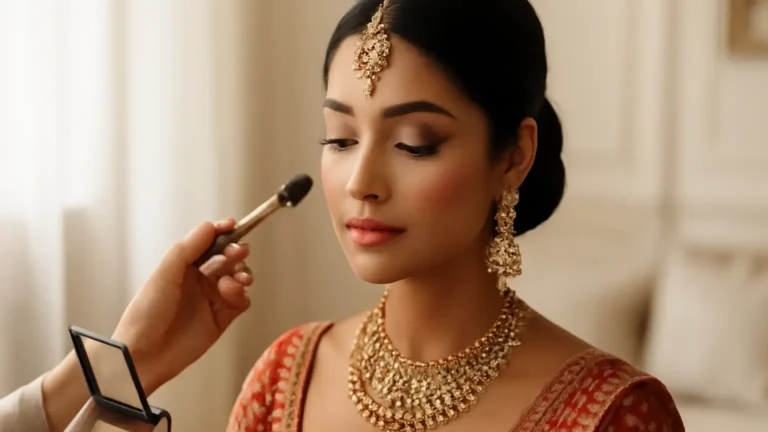
Bridal makeup for dry skin works best when moisture is added in light, settled layers—not when a heavy cream is piled underneath foundation. This guide is for brides whose base tends to look tight, flaky or patchy, especially in air-conditioned venues or dry winter weather. The key decision is to pair comfortable skin prep with a thin, flexible base, cream colour products and powder only where shine or creasing actually needs control.
Dry skin does not automatically mean your wedding makeup must be glossy, fragile or short-lived. A fresh finish comes from controlling the amount and order of every layer. Too little preparation can leave foundation catching on dry patches; too much rich skincare can make the base slide, separate or crease.
Start with calm, settled skin
The most important part of skin prep for wedding makeup happens before primer. Keep the routine familiar in the days before the event rather than introducing a strong exfoliant, peel or unfamiliar facial product close to the ceremony. New products can cause unexpected irritation, texture or sensitivity.
A simple pre-makeup routine
- Cleanse gently, or rinse with water if your skin is already clean and comfortable.
- Apply a lightweight hydrating layer if you normally use one.
- Use a moisturiser suited to your skin and the venue. A richer formula may suit a cool, dry room, while a lighter one can feel more comfortable in humid weather.
- Apply sunscreen for a daytime wedding when appropriate, allowing it to settle fully before makeup.
- Wait for the skincare to absorb, then press away excess slip with a clean tissue if needed.
This approach to hydrating skincare before makeup supports comfort without leaving a wet film. Pay extra attention to the sides of the nose, around the mouth and any area that usually feels tight. Avoid rubbing these zones, since friction can lift softened flakes and make the base uneven.
Choose primer according to the problem
A primer is not compulsory, but the right moisturising primer can create a more even surface and help foundation move over dry areas. Choose a thin, flexible texture rather than a thick balm if your base tends to separate. Apply it mainly where you need it; the whole face does not always require the same formula.
- For tightness: choose a comfortable, moisturising primer over the cheeks and forehead.
- For visible texture: use a smoothing primer sparingly on the area, pressing it in rather than massaging repeatedly.
- For an oily T-zone: keep rich primer away from the centre of the forehead, nose and chin, or use a more balancing product only there.
- For a mixed complexion: use different textures in different zones instead of forcing one primer to do every job.
Allow primer to settle for a few minutes. If it pills when touched, the skincare and primer may be incompatible, or too much product may have been applied. This is exactly the kind of detail to identify during a bridal makeup trial.
Build a thin, flexible base
The most reliable long-wear bridal base for dry skin is usually created through thin layers, not a single heavy coat. Start with a small amount of foundation in the centre of the face and blend outward. Add coverage only where redness, pigmentation or a blemish still shows.
Application method
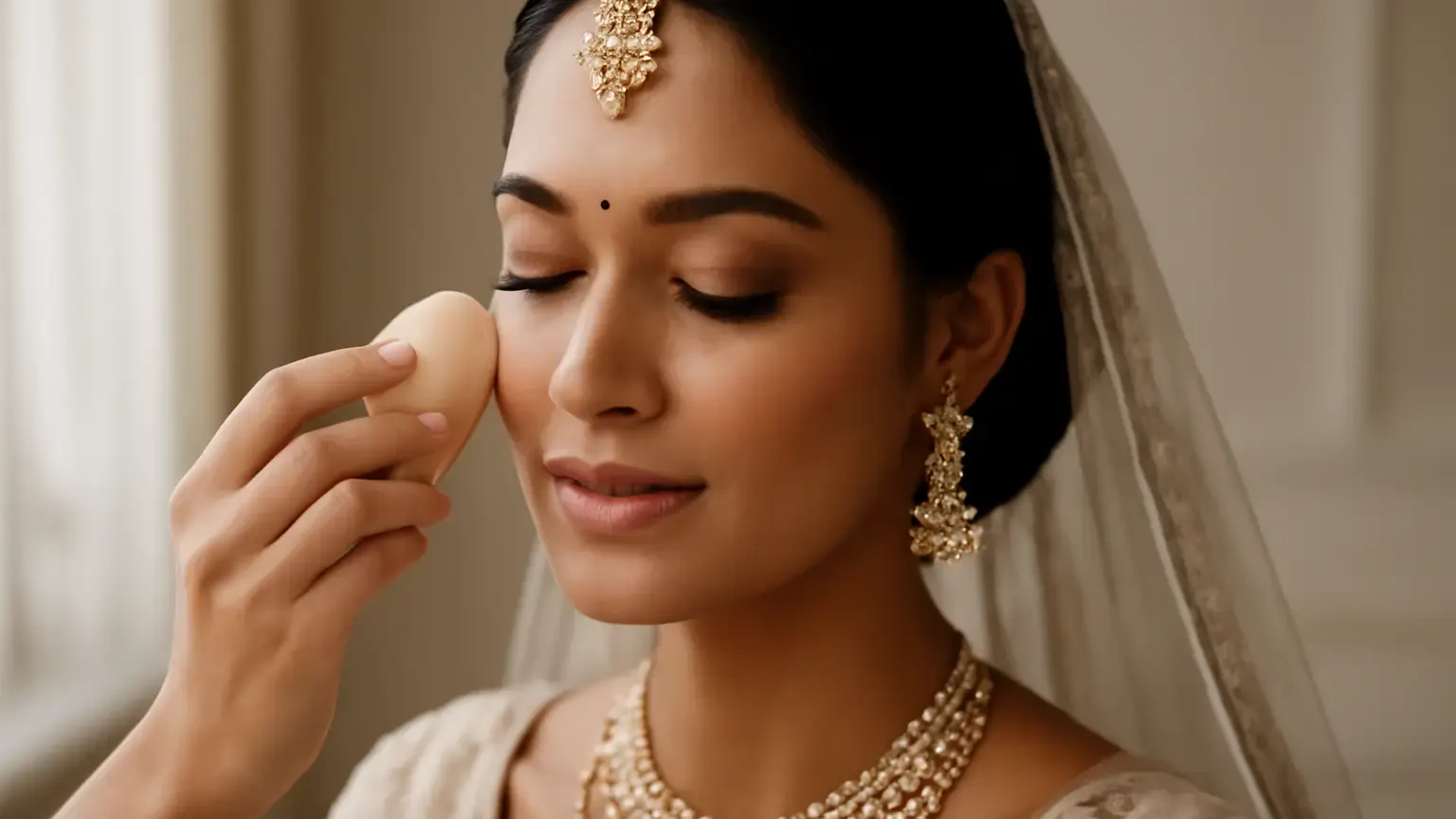
- Use a damp, well-squeezed sponge or a soft brush, depending on the finish you prefer.
- Press and bounce over the skin instead of dragging across dry patches.
- Let the first layer settle before deciding whether more coverage is necessary.
- Use concealer precisely rather than adding extra foundation everywhere.
- Check the base in natural light, indoor light and a phone camera before continuing.
A dewy foundation for dry skin can look beautiful, but “dewy” should not mean wet or overly slippery. Look for a formula that remains comfortable after it sets and matches your undertone and depth. Very emollient formulas may need careful setting in warm Indian weather, while an extremely matte formula can emphasise rough texture.
Do not repeatedly buff an area that has begun to catch. Pause, add the smallest amount of moisturiser or a suitable prep product to that spot, allow it to settle, then reapply foundation with pressing motions. If flaking is persistent or accompanied by significant redness, itching or discomfort, speak with a dermatologist rather than trying to cover the problem with more makeup.
Use cream textures for colour and glow
On dry skin, cream products often blend more naturally than dry powders placed over a fresh base. A cream bronzer, blush or contour can add dimension without creating a visibly dusty layer. Use modest amounts and build slowly; rich formulas can move if they are overworked.
A cream blush is especially useful for a soft bridal flush. Place it slightly higher on the cheeks if you want a lifted effect, then press the edges with a clean sponge. For luminosity, tap a small amount of liquid highlighter on the high points of the cheekbones, bridge of the nose or cupid’s bow. Avoid applying it over prominent texture or in areas where the photographer’s light may exaggerate shine.
Powder blush or bronzer can still be used if you prefer its colour range or longevity. Apply it lightly after the base has settled, ideally with a soft brush and minimal repeated strokes.
Set strategically, not from habit
Powder is useful for controlling movement and creasing, but applying it heavily across the face can make dry skin look flat and textured. The better question is not “Should I powder?” but “Where does makeup need help staying in place?”
With setting powder for dry skin, concentrate on the inner corners, sides of the nose, around the mouth, under the eyes if concealer creases, and any area that will be touched often. Use a small fluffy brush or a lightly loaded puff. Press, then remove excess rather than layering repeatedly.
Leave the high points of the cheeks and other comfortable areas less powdered if you want a fresh finish. If your venue is humid, use a little more powder in the T-zone; if it is cold or strongly air-conditioned, reduce powder on already tight zones. A light setting spray can help the layers look more connected, but it cannot replace good preparation or make an incompatible base last all day.
Test both finish and wear time at your trial
A wedding trial should answer practical questions, not just show how the makeup looks for the first 20 minutes. Ask for the planned skincare, primer, foundation, colour products and setting method—or bring products you already know suit you.
Photograph the makeup near a window, under indoor lighting and with flash. Wear it for several hours, ideally including a meal, conversation and some movement. Note whether the foundation flakes, gathers around the mouth, creases under the eyes, fades from the nose or feels tight. Also check how the finish changes after a few hours; some bases become more luminous as natural oils appear.
Test the actual wedding conditions where possible. A summer outdoor ceremony, a monsoon-season event and a winter indoor function place different demands on makeup. The trial should establish whether you need a more nourishing moisturiser, a lighter primer, a different foundation texture or more targeted powder—not simply more product.
Pack a practical touch-up kit
A makeup touch-up kit should correct specific problems without encouraging you to add layers over every fading area. Useful items may include clean cotton buds, a small concealer, a pressed powder or blotting tissue, lip colour, a small mirror and a few tissues. If your artist recommends a particular product for your base, follow that plan rather than mixing several formulas.
When the nose or chin becomes shiny, blot first and powder only if needed. When a small area looks dry, do not scrub it with a tissue. Press gently, soften the edge with a clean sponge or fingertip, and add a tiny amount of base if necessary. Lip colour usually needs the most frequent attention, especially after food and drinks.
Common mistakes to avoid
- Trying a new facial immediately before the wedding: keep last-minute skin changes conservative.
- Applying thick cream beneath foundation: excess slip can cause pilling and separation.
- Using one heavy layer for full coverage: thin layers generally look more flexible and natural in photographs.
- Powdering the entire face heavily: this can emphasise texture and remove the fresh finish.
- Ignoring the neck and hairline: blend carefully so the complexion looks consistent.
- Skipping a long wear test: a beautiful first-hour finish does not prove all-day comfort.
Quick takeaway
The best bridal makeup for dry skin combines settled moisture, a problem-specific primer, thin foundation layers, cream colour products and selective powder. Use the trial to test the finish in photographs and the wear over several hours. That evidence will help you decide what to adjust, so your wedding-day base looks fresh without relying on excessive product.
Products that may help with this routine
Choose only what fits your skin, hair or personal needs. Use the links below to view current options on Amazon India.
Frequently Asked Questions
How do you do bridal makeup for dry skin?
Start with familiar, lightweight hydration and let each skincare layer settle. Apply a suitable primer only where needed, build foundation in thin layers, use cream blush and bronzer, then powder only areas prone to creasing or movement. Test the complete routine for several hours before the wedding.
What is the best primer for bridal makeup for dry skin?
The best primer is one that addresses your specific concern without leaving a heavy or slippery film. Choose a comfortable moisturising primer for tightness, a smoothing formula for texture, or a targeted balancing primer for an oily T-zone. Test it with your chosen foundation because product compatibility matters.
How can you stop foundation flaking on dry skin?
Use familiar moisturising skincare, allow it to absorb, avoid over-exfoliating, and apply foundation with pressing rather than dragging motions. Build coverage in thin layers. If flaking comes with persistent irritation, itching or redness, consult a dermatologist instead of adding more makeup.
What makeup products suit dry skin for a wedding?
Flexible foundation, a moisturising or smoothing primer, cream blush, cream bronzer and a small amount of liquid highlighter can suit dry skin well. Powder is still useful, but apply it selectively under the eyes, around the nose, mouth or other areas that crease.
How can you make bridal makeup last on dry skin?
Use settled skincare, compatible primer and foundation, thin layers, targeted concealer and selective powder. Complete a long wear trial in conditions similar to the wedding, then carry a small touch-up kit for shine, creasing and lip colour rather than adding heavy layers.
Where should you apply powder on dry skin for bridal makeup?
Apply powder mainly where makeup moves or creases: the inner corners, under-eyes if necessary, sides of the nose, around the mouth and the centre of the face. Leave comfortable cheek areas less powdered when you want a fresh, dimensional finish.