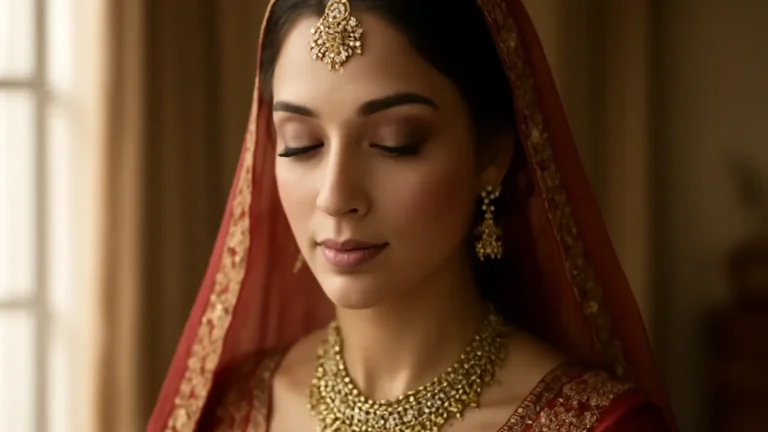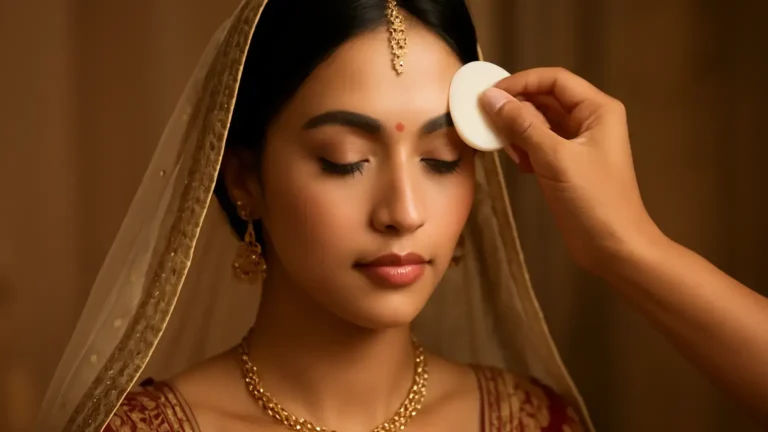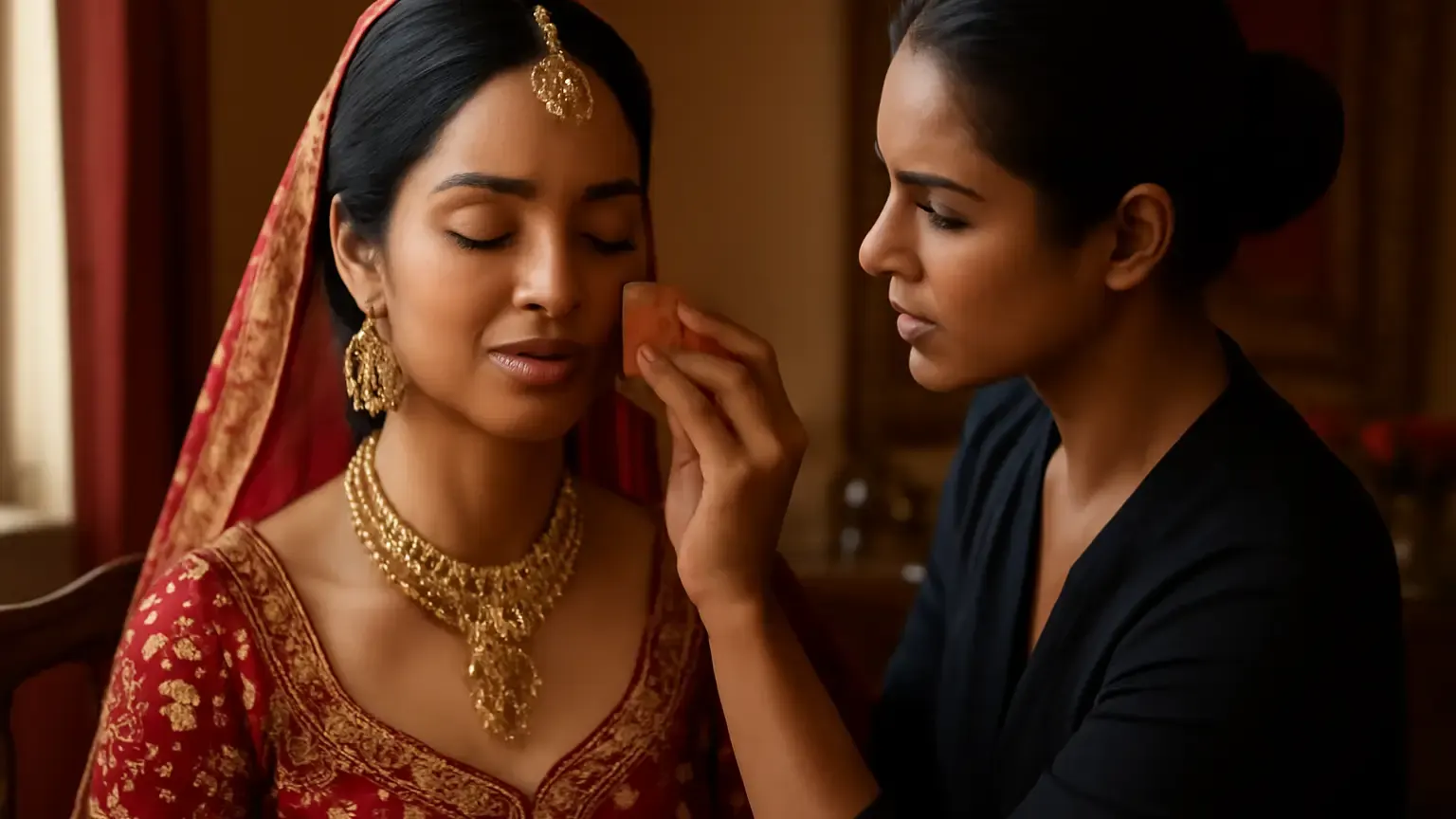
Bridal makeup for dry skin works best when hydration, thin cream layers and selective powdering are planned together. This guide is for brides dealing with tightness, visible flakes or foundation that catches around the nose and mouth. The practical goal is not an unrealistically poreless finish; it is a comfortable, even base that photographs well, holds through Indian wedding rituals and can be refreshed without piling on more product.
What makes dry skin bridal makeup different?
Dry skin often has less visible surface oil, so makeup may look uneven when the skin is dehydrated, textured or covered with loose flakes. Heavy foundation does not solve that problem. It can collect around dry patches, emphasise fine lines and become uncomfortable as the day progresses.
A successful bridal makeup base for dry skin depends on three decisions: how the skin is prepared, how much coverage is applied and where powder is actually necessary. The finish can be radiant without being greasy, and long wear can be achieved without coating the entire face in powder.
Keep expectations realistic. Professional makeup can soften the appearance of texture, but it cannot erase natural pores, expression lines or every dry patch in close-up photographs. Good preparation and controlled application create a more convincing result than simply choosing the fullest-coverage foundation.
Start with a calm, tested skin prep routine
Begin with the bride’s familiar moisturising skincare, not an ambitious new routine introduced just before the wedding. On the morning of the event, cleanse gently if needed, then apply a lightweight hydrating layer followed by moisturiser. Give each layer a few minutes to settle so the surface feels supple rather than wet or slippery.
If the skin is visibly rough, do not scrub aggressively or peel it immediately before makeup. Strong exfoliation can leave the face more sensitive and may make foundation sit worse. A consistent routine in the weeks before the wedding is more useful than a last-minute rescue treatment.
- Use a moisturiser suited to the bride’s usual comfort and climate.
- Pay attention to the corners of the nose, mouth and areas beneath the eyes.
- Apply sunscreen for daytime functions when it is part of the bride’s normal routine, allowing it to settle before makeup.
- Test any new moisturiser, primer or complexion product well before the ceremony. A sensitive skin patch test is sensible when a bride is prone to reactions.
A hydrating primer can help create slip and reduce the look of surface dryness, but it is not a replacement for moisturiser. Choose one that layers comfortably with the foundation rather than selecting it only because the label says “glow.” Too many emollient layers can cause sliding, especially in humid Indian weather.
Choose foundation by texture, finish and wear needs
For many brides, a flexible satin or natural-radiant formula is easier to manage than an extremely matte or intensely glossy base. A dewy foundation can flatter dry skin, but excessive shine may become noticeable under strong lights or in photographs. The right choice depends on the venue, weather, ceremony duration and how much coverage is required.
| Need | More suitable approach | Watch out for |
|---|---|---|
| Visible uneven tone | Medium, buildable coverage in thin layers | Applying full coverage everywhere before assessing the first layer |
| Dryness around the mouth | Local moisturising and a smaller amount of foundation | Rubbing repeatedly over the same patch |
| Long ceremony in humidity | Comfortable natural finish with targeted setting | Heavy powder across the whole face |
| Photography and close-ups | Trialled formula that matches the neck and chest | Unverified sunscreen or base products that may reflect light |
Ask the makeup artist to test the foundation in daylight and in the type of lighting likely at the venue. A formula that looks beautiful under a studio lamp may appear too pale, shiny or textured outdoors. The bridal trial should also check how the base looks after several hours, not only immediately after application.
Build coverage with thin cream layers
Apply foundation from the centre of the face outward, using a damp sponge or a suitable brush according to the artist’s technique. Press rather than scrub over areas that flake. Start with a thin layer, wait briefly, then add coverage only where redness or discolouration remains.
Use concealer strategically. A creamy under-eye concealer can brighten the inner corner and cover specific darkness, but placing a thick layer beneath the entire eye may crease and highlight dryness. The same principle applies to blemishes or pigmentation: spot conceal where needed instead of increasing the coverage of the whole base.
Cream colour products usually integrate naturally with a hydrated complexion. A small amount of cream blush placed high on the cheeks can add freshness without requiring a thick layer of powder blush. Cream bronzer or contour can also be used sparingly, provided the products are compatible and blended before the base sets.
Layer compatibility matters. If the foundation starts lifting, pilling or separating, the problem may be the combination of skincare, primer and base rather than dry skin alone. During the trial, change one product or one quantity at a time so the cause is easier to identify.
Powder only where the makeup needs support
Yes, powder can be used in dry skin bridal makeup, but broad, automatic powdering is rarely the best choice. Set areas that crease, transfer or become shiny: the sides of the nose, the centre of the forehead, the chin, eyelids or beneath the eyes if necessary. Leave naturally dry cheek areas more flexible.
This targeted powder placement preserves skin-like dimension while helping the makeup withstand touching, garlands and long rituals. Press a small amount of finely milled powder with a soft puff or brush; do not repeatedly sweep over textured patches.
Set cream blush lightly only when the event conditions demand extra hold. In a dry indoor venue, layering powder over every cream product may make the cheeks look flat and parched. In hot, humid weather, a little more setting at the T-zone may be reasonable, but it should still be assessed in the mirror and camera preview.
Make long-wear makeup comfortable to refresh
Long-wear makeup is not the same as immovable makeup. A comfortable base that fades gradually can look better than an overly rigid one that cracks in expression areas. Ask the artist how the formula is intended to wear and whether it can be repaired without removing the entire complexion.
A suitable setting spray may help powders and creams look more cohesive. It should be misted according to the product instructions and allowed to dry naturally. Spraying repeatedly throughout the day is not a substitute for removing excess oil or addressing a separated patch.
For a reception or multi-function wedding day, prepare a small makeup touch-up kit containing a clean sponge or cotton buds, the lip colour, a little concealer, a compact powder for selected areas and tissues or blotting paper. Blot first if there is shine, then add the smallest amount of product needed. Adding foundation directly over sweat or oil usually creates a thicker, less even patch.
Common mistakes to avoid before the wedding
- Trying an intense facial or exfoliant immediately before the event: the skin may become reactive or more visibly dry.
- Choosing an ultra-matte base for all-day security: it can exaggerate texture and require more corrective powder.
- Using too much moisturiser under makeup: a slippery film can cause pilling or separation.
- Ignoring the neck and hairline: a well-matched face can still look disconnected from the rest of the complexion.
- Assuming more product means better photographs: excess layers may be more obvious in close-ups.
- Skipping a full wear test: the trial should include movement, photographs, different lighting and several hours of wear.
If dryness is persistent, painful, cracked, intensely itchy or accompanied by a concerning reaction, seek advice from a qualified dermatologist rather than relying on makeup changes alone. Beauty preparation should not aggravate an ongoing skin concern.
A practical bridal trial checklist
Schedule the trial early enough to change the foundation, primer or application plan if necessary. Bring reference photographs taken in natural light, explain the ceremony timeline and mention whether the day will involve outdoor travel, heat, humidity, tears or frequent photographs.
- Arrive with clean skin and the usual moisturiser routine completed, unless the artist gives different instructions.
- Record the products and shades used, including the foundation, concealer, powder and setting spray.
- Take photographs near a window, indoors and with flash if flash photography is expected.
- Check the base after two to four hours for tightness, separation, creasing and unwanted shine.
- Practise one touch-up so the bride knows what to blot, what to reapply and what to leave alone.
The final plan should prioritise comfort as well as coverage. A slightly more natural finish that remains even and flexible is often more flattering than a heavily powdered face that looks dry as the day continues.
Concise takeaway
The most reliable bridal makeup for dry skin begins with familiar, well-settled hydration, a tested foundation and thin cream layers. Use concealer only where needed, powder the areas that require control and refresh by blotting before adding product. This approach keeps the base fresh, photograph-ready and realistic about natural skin texture.
Products that may help with this routine
Choose only what fits your skin, hair or personal needs. Use the links below to view current options on Amazon India.
Frequently Asked Questions
What is the best bridal makeup for dry skin in India?
A comfortable natural or satin-finish base, well-tested moisturising skincare, thin buildable coverage and targeted powder usually work well. The artist should adjust the plan for local heat, humidity, venue lighting and the length of the wedding functions.
How do you prep dry skin before bridal makeup?
Use the bride’s familiar gentle cleanse, hydrating layer and moisturiser, then allow each product to settle. Avoid aggressive exfoliation or untested facials immediately before the event, and patch test new products well in advance.
Which foundation is best for dry skin bridal makeup?
There is no single best formula for every bride. Look for a comfortable, buildable foundation with a natural, satin or softly radiant finish, then confirm the shade, texture and wear during a full bridal trial in relevant lighting.
How do you stop bridal makeup looking flaky on dry skin?
Prepare the skin consistently, avoid scrubbing before makeup, apply less foundation over rough areas and press products instead of rubbing. Targeted powdering and a compatible primer can help, while excessive layers often make flakes more visible.
Can you use powder on dry skin for bridal makeup?
Yes. Use a small amount only where makeup creases, transfers or becomes shiny, such as the T-zone, eyelids or under-eyes when needed. Leaving dry cheek areas less powdered helps retain a natural finish.
What should you carry in a bridal makeup touch-up kit?
Carry the lip colour, tissues or blotting paper, a little concealer, a small amount of powder and a clean sponge or cotton buds. Blot first and reapply only where the makeup has genuinely faded or separated.