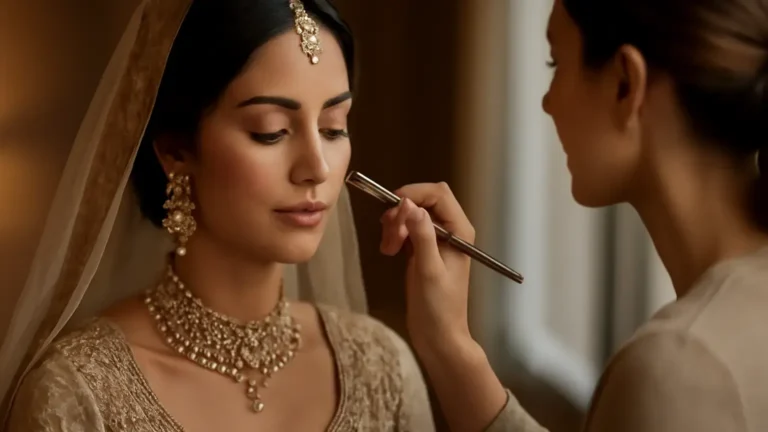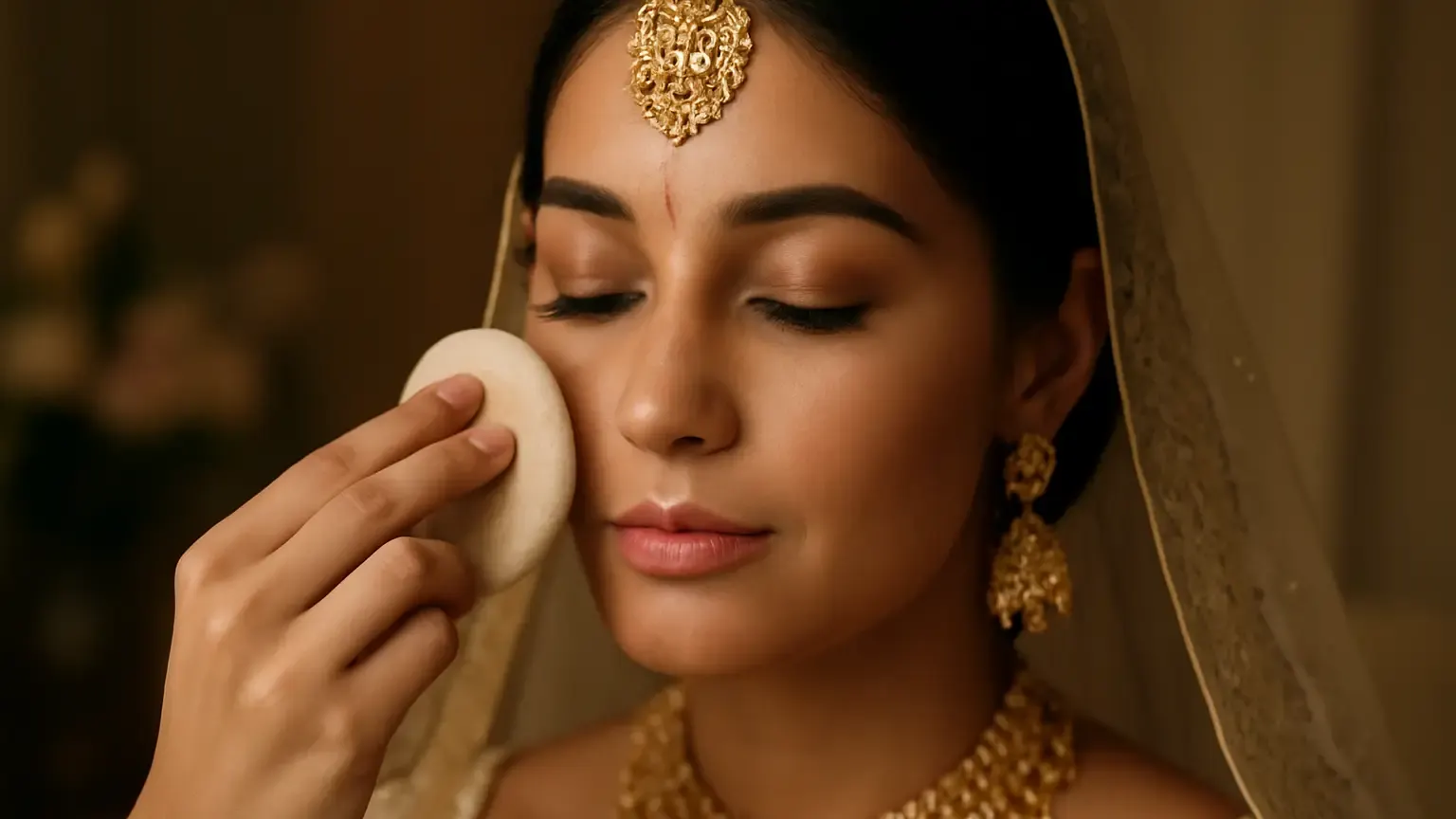
Bridal makeup for combination skin works best when each area gets a different job: hydrate dry cheeks, control the T-zone and set only where shine appears. This guide is for brides facing oily forehead and nose with normal or drier cheek areas, especially during long Indian wedding functions. The key decision is not choosing the most matte foundation; it is building a flexible base that stays comfortable, photographs naturally and can be refreshed without becoming cakey.
Combination skin often needs two different makeup strategies on the same face. The forehead, nose and chin may become shiny, while the cheeks feel tight or show texture. A bridal base has to manage both without making the whole complexion flat or uncomfortable.
For a long wedding event, think in zones rather than applying one product in the same quantity everywhere. Prep selectively, place primer only where it helps, choose a foundation finish that can be adjusted, and keep a small touch-up kit ready. These seven choices make bridal makeup for combination skin more predictable.
1. Choose targeted skin preparation instead of one heavy moisturiser
Skin preparation for bridal makeup should be even but not identical across the face. Start with a gentle cleanse suited to your usual routine, then apply a lightweight moisturiser to the cheeks and any area that feels dry. Use a smaller amount on the forehead, nose and chin if those zones become oily quickly.
Give skincare a few minutes to settle before makeup. If the surface still feels slippery, gently press away excess product with a clean tissue. Avoid introducing strong exfoliants, unfamiliar facials or new active skincare immediately before the wedding. A smooth-looking base is easier to achieve when the skin is calm and familiar products have already been tested.
2. Place primer by zone, not by habit
A mattifying primer can be useful on the sides of the nose, centre forehead and chin, but it does not need to cover the cheeks. A hydrating primer may suit areas that look dull or feel tight, provided it does not leave a slippery layer that causes foundation to move.
Apply a thin layer and allow it to set. Too much primer can create pilling or make foundation separate, especially when several skincare and makeup layers are placed underneath. If you are unsure which primer is best for combination skin bridal makeup, test the exact products together on one side of your face during a trial rather than judging each product alone.
3. Select a foundation finish that can handle photographs and movement
A long-lasting foundation with a natural or soft-matte finish is often a practical starting point for a bride with combination skin. It offers more control than a very glossy formula while avoiding the dry, mask-like look that a fully matte base can create on the cheeks. A dewy foundation finish can work if your dry areas need comfort, but shine should then be managed with targeted powder rather than more foundation.
Match the shade to the face, jawline and neck in daylight where possible. Remember that foundation may look slightly different after it settles, so assess it after several minutes. Apply a thin first layer, add coverage only around redness or uneven tone, and leave natural skin dimension visible. Heavy all-over coverage is more likely to gather around the nose and emphasise cheek texture during a long ceremony.
4. Use concealer where coverage is needed, not everywhere
Use under-eye concealer sparingly and select a texture that does not feel dry after setting. Place it mainly in the shadowed inner and lower areas rather than creating a thick triangle beneath both eyes. For blemishes or redness, a small amount of concealer after foundation can provide more precise coverage than adding another full layer.
Let each area guide the amount of product. If your cheeks are comfortable and even, leave them lightly covered. If the nose creases easily, press product into the area with a small brush or sponge and remove excess before powdering. This approach helps the bridal base for combination skin remain flexible when you smile, speak and move through several functions.
5. Set the T-zone while keeping the cheeks alive
T-zone oil control is usually more reliable when powder is placed precisely. Use a small brush or puff to press a finely milled setting powder over the forehead, sides of the nose, around the nostrils and chin. Keep the layer light on the cheeks unless those areas also become shiny.
Setting powder for oily skin does not mean powdering the entire face heavily. Pressing is generally more controlled than repeatedly sweeping, which can disturb the base. Check the finish under natural light and, if flash photography is expected, ask the makeup artist to assess the face with a camera rather than relying only on a mirror. The ideal result is controlled shine, not a visibly dry surface.
6. Build colour with thin cream and powder layers
A small amount of cream blush can give the cheeks a fresh look before a light powder blush is added for structure and staying power. This layering is optional; it should not become a thick stack. Choose the placement and intensity with your outfit, lighting and personal preference in mind.
For bridal makeup for combination skin, keep richer cream products away from areas that break down quickly unless they are deliberately set. Blend blush into the complexion rather than leaving a strong edge that becomes harder to correct later. The same thin-layer principle applies to contour and highlighter. Texture becomes more noticeable when too many creamy products are layered over a dry patch.
7. Plan touch-ups and test the complete routine
A bridal makeup touch-up kit should solve likely problems without carrying a full vanity. Useful options include blotting papers, a small pressed powder, a clean cotton bud, lipstick or lip colour, a tiny concealer if your artist recommends it, tissues and a compact mirror. Blot first, then add a minimal amount of powder only where shine remains. Adding powder directly over oil can make the T-zone look thick.
Ask a trusted person or your makeup artist to keep the kit accessible rather than placing it at the bottom of a large bag. If the wedding involves heat, travel, outdoor photography or multiple ceremonies, plan a short check between events. A quick blot-and-press refresh is usually more natural than rebuilding the entire base.
How to run a useful bridal makeup trial
A makeup trial checklist should cover more than shade matching. Bring a reference photo of your outfit or jewellery, note the ceremony timing, and tell the artist whether you will be outdoors, in a warm venue or under strong lights. Share any known sensitivity or products you normally avoid. Do not test unfamiliar skincare or makeup on the wedding morning.
Wear the complete look for several hours if possible. Take photographs in daylight, indoor light and with flash. Notice whether the foundation separates around the nose, whether the cheeks feel tight, whether concealer settles into lines and how the finish looks after natural movement. Ask what the artist would change for a longer event rather than assuming the first application is final.
A trial is also the right time to test your touch-up sequence: blotting paper first, powder second, and colour products only when needed. If makeup repeatedly causes burning, swelling or significant discomfort, remove it and seek appropriate medical advice; persistent or concerning skin symptoms should be discussed with a dermatologist.
Common mistakes to avoid
- Using a strong matte base everywhere: it may control shine but can make dry cheeks appear rough.
- Applying primer in a thick full-face layer: more product does not automatically mean longer wear.
- Skipping the settling test: a foundation can change appearance after application.
- Powdering before blotting: this may trap excess oil and create a heavier-looking surface.
- Trying a new routine on the wedding day: familiarity is safer and easier to troubleshoot.
- Ignoring the event schedule: makeup for a short indoor ceremony may need different touch-up planning from makeup worn through a full day.
Quick decision guide for a balanced bridal base
- If your cheeks feel tight, prioritise light hydration there and choose a natural finish.
- If your nose becomes shiny quickly, use a small amount of mattifying primer and targeted powder.
- If you dislike a matte look, choose a natural or softly luminous foundation and control shine only in the centre of the face.
- If your wedding includes several functions, prioritise a tested long-wear routine and a simple touch-up plan over maximum initial coverage.
- If you are hiring a makeup artist, judge the trial after several hours and in photographs, not only immediately after application.
Takeaway
The best bridal makeup for combination skin is zone-specific: moisturise where skin feels dry, control oil only where it appears, build coverage in thin layers and test the whole routine before the wedding. A natural-looking finish is easier to maintain when the base is comfortable from the start and your touch-up products are planned in advance.
Products that may help with this routine
Choose only what fits your skin, hair or personal needs. Use the links below to view current options on Amazon India.
Frequently Asked Questions
How do you prepare combination skin for bridal makeup?
Cleanse gently, apply lightweight moisturiser mainly where skin feels dry, use zone-specific primer, allow each layer to settle and avoid unfamiliar skincare close to the wedding. Test the complete routine during a trial.
Which primer is best for combination skin bridal makeup?
There is no single best primer for every bride. A mattifying primer can suit the T-zone, while a hydrating primer may be more comfortable on dry cheeks. Apply each only where needed and test the products together.
What is the best foundation finish for a combination skin bride?
A natural or soft-matte finish is often a versatile choice because it controls excess shine without making drier cheeks look flat. A dewy finish can also work when shine is managed with precise powder.
How can you stop bridal makeup from separating on the T-zone?
Use thin skincare and primer layers, allow them to settle, apply foundation sparingly around the nose and forehead, and press powder only where needed. During touch-ups, blot oil before adding powder.
What should you carry in a bridal makeup touch-up kit?
Carry blotting papers, a small pressed powder, tissues, a compact mirror, lip colour and a clean cotton bud. A small concealer may be useful if recommended by your makeup artist.
How early should you do a bridal makeup trial?
Schedule the trial early enough to adjust the finish, shade, products and application plan before the wedding. The exact timing depends on your artist, but the full look should be tested several hours before the event whenever possible.