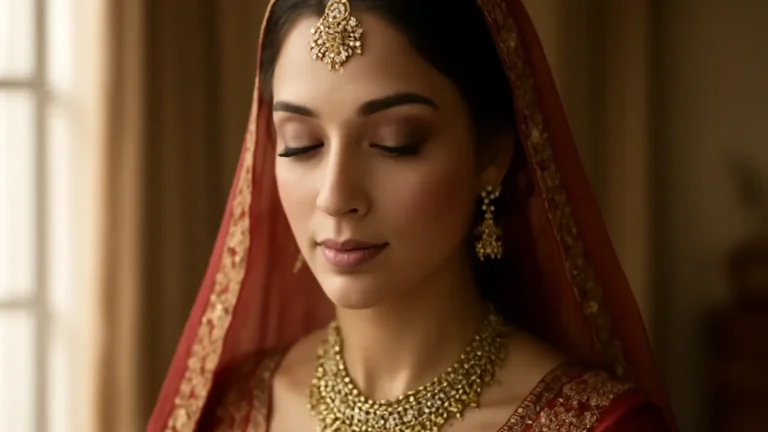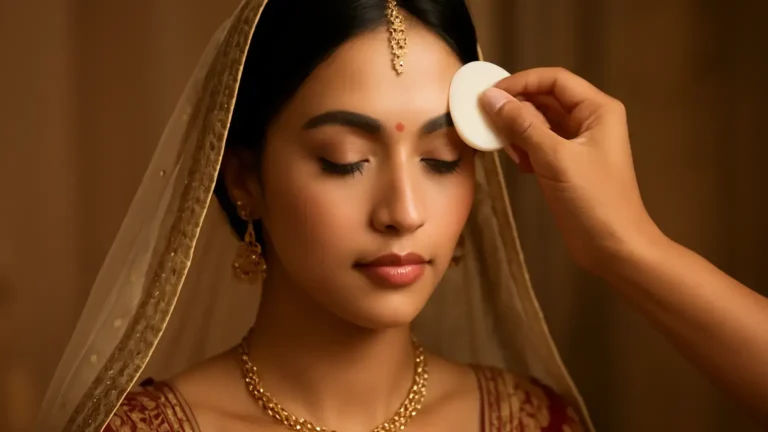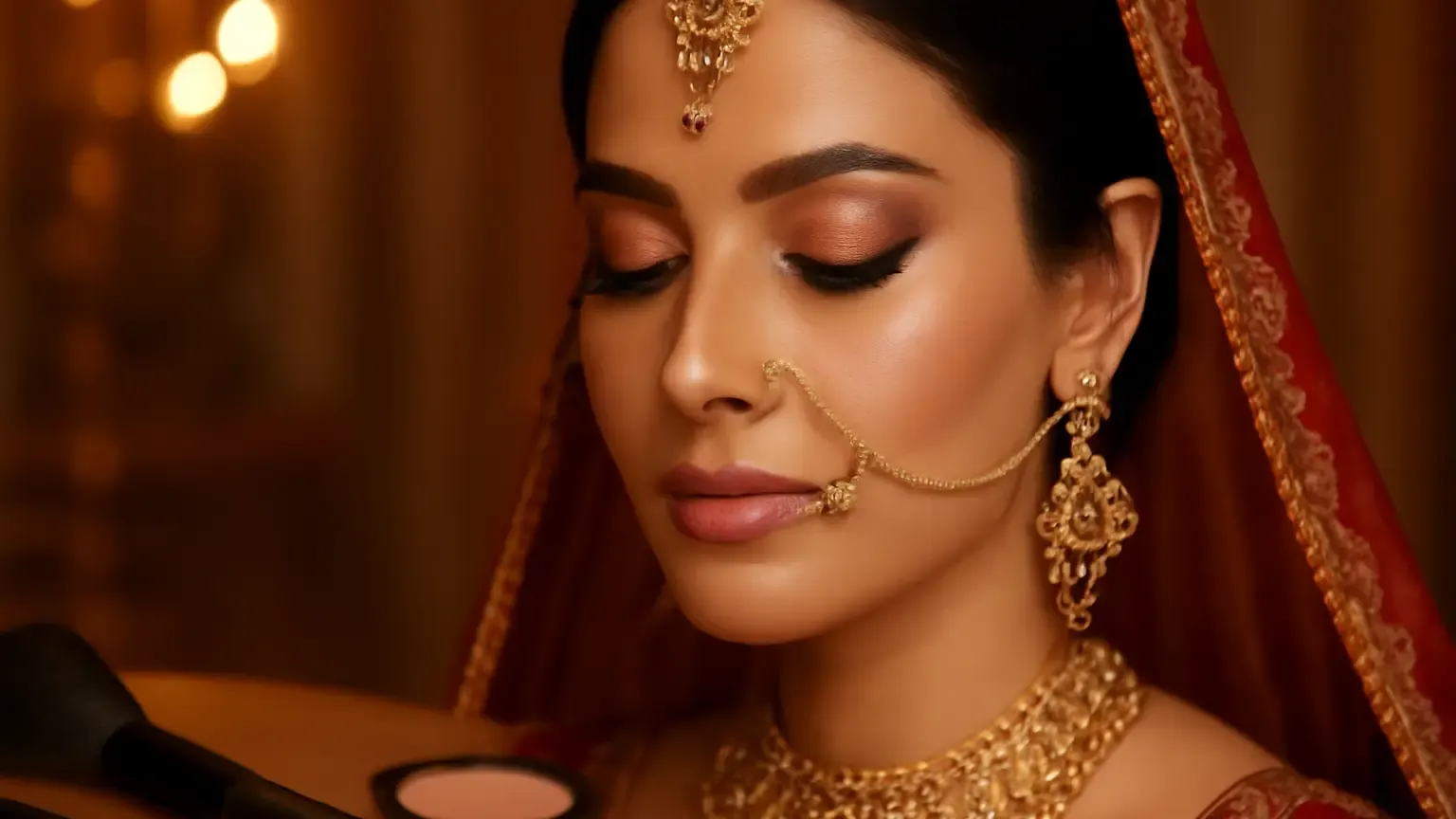
Bridal makeup for combination skin works best when the face is treated in zones: control shine on the forehead, nose and chin, while keeping the cheeks and under-eyes comfortable. This guide is for brides managing an oily T-zone with normal, dry or textured cheek areas. The key decision is not choosing the most matte product everywhere; it is layering targeted hydration, foundation and powder so the base stays even through ceremony photos, dancing and a long Indian wedding day.
Combination skin can look beautifully balanced at the start of an event and noticeably uneven a few hours later. The centre of the face may become shiny, while the cheeks begin to feel tight or show texture. Under-eye concealer can crease independently of both areas. A successful bridal base therefore needs different amounts of moisture, grip and powder rather than one heavy formula spread across the entire face.
Start with zone-specific bridal skin prep
Good bridal skin prep is about creating a calm, smooth surface—not applying every product available. Begin with a gentle cleanser, then use a lightweight moisturiser suited to your usual skin comfort. Give each layer a few minutes to settle before adding makeup. If a new product causes stinging, redness or unusual discomfort, do not use it for the wedding look.
Prep the T-zone differently from the cheeks
- Forehead, nose and chin: Apply a thin layer of lightweight moisturiser. If these areas become oily quickly, press on an oil-control primer only where shine usually appears.
- Cheeks: Use a comfortable moisturiser or a thin layer of hydrating primer if the skin looks dull or feels tight. Avoid dragging the product over the face; press it in instead.
- Under-eyes: Use a small amount of eye-area moisturiser, allow it to absorb, and remove excess slip with a clean tissue before concealer.
Do not over-powder during prep. Powder belongs after complexion products, and too much early mattifying product can make foundation catch on dry patches. For an important event, test this routine with the actual jewellery, dupatta or veil placement so you can check rubbing around the jaw and sides of the face.
Choose a foundation strategy, not just a foundation finish
For combination skin bridal makeup, a flexible, buildable formula is usually easier to control than a very thick full-coverage base. Look for a long-wear foundation that gives the coverage you need without forcing the cheeks into a flat matte finish. A natural-matte or satin formula can be balanced with targeted preparation and a restrained powder step.
How to apply the bridal base for combination skin
- Apply a thin first layer from the centre of the face outward, using a damp sponge or a well-blended brush.
- Leave the T-zone relatively light. Add coverage only where redness, pigmentation or blemishes remain visible.
- Use a second, small amount on the cheeks if necessary rather than making the first layer thick everywhere.
- Check the jawline and hairline in natural light. Blend down the neck only as needed, keeping fabric and jewellery in mind.
A foundation that appears slightly darker or more orange after several hours may be oxidising. Test the intended shade on the jaw on a non-event day and observe it after it has set. Photos taken with flash also reward an even, well-blended base more than excessive product. Avoid layering several high-coverage products simply to make the complexion look “bridal”; this can increase separation around the nose and mouth.
Compare concealer placement for the under-eyes and face
Concealer should solve a specific concern rather than cover the whole under-eye in a thick triangle. A crease-proof concealer with a comfortable, flexible finish is generally more useful for long ceremonies than a very dry formula. Use a tiny amount at the inner corner, the darkest area and any remaining spot, then blend the edges.
Keep under-eye makeup thin and set strategically
Allow skincare to settle first. Look straight ahead and smooth any natural folds before setting. After concealer has been blended, wait briefly, remove visible creasing with a clean fingertip or small brush, and press on a minimal amount of finely milled powder. Baking a thick layer under the eyes can emphasise lines and make the area look heavy in close photographs.
For facial blemishes or redness, use a small flat brush and tap rather than swipe. Match the concealer to the foundation for spot coverage; use a subtly brighter shade only where you genuinely want lift. This keeps the complexion dimensional while maintaining coverage around the nose and chin.
Use powder where shine appears, not where glow belongs
The right setting powder for oily skin is not necessarily the right amount of powder for combination skin. Press a small quantity through the T-zone, around the nostrils and onto areas that will touch the veil or hands. Leave the high points of the cheeks more softly finished if they are comfortable and smooth. This preserves controlled dewy bridal makeup without allowing the centre of the face to look greasy.
Use a puff for targeted pressing and a clean fluffy brush to remove excess. Pressing helps powder adhere; sweeping aggressively can move foundation. If the nose becomes oily quickly, powder in two light passes rather than one thick coat: one after foundation and one only if the area still needs control. Keep powder away from peach fuzz and dry cheek texture unless there is a clear reason to apply it.
Seal the complexion for heat, movement and photography
A makeup setting spray can help the powder and complexion layers look more integrated, but it cannot replace suitable prep or unlimited shine control. Hold it at the distance recommended on the product and mist evenly. Let it dry without touching the face. If the wedding is outdoors or in humid conditions, prioritise thin layers and transfer-resistant formulas rather than trying to waterproof a heavy base.
After the spray dries, inspect the face under indoor light, daylight and phone flash. Look for a grey cast, visible powder on the cheeks, foundation at the hairline and separation beside the nose. Make corrections before the first event begins. A makeup trial should include at least several hours of wear, meals, conversation and realistic movement—not only a quick photograph immediately after application.
Build a practical bridal makeup touch-up kit
A long event is easier when touch-ups remove oil instead of repeatedly adding coverage. Pack a small bridal makeup touch-up kit containing blotting paper or clean tissue, a compact powder, a cotton bud, a small concealer if needed, lip colour and a mirror. A trusted family member or makeup artist can keep it accessible without disturbing the bride during rituals.
Long-event touch-up routine
- Blot first: Press paper over the forehead, nose and chin. Do not rub, as rubbing can lift foundation.
- Repair only what moved: Use a cotton bud around the nostrils or mouth, then tap a tiny amount of concealer or foundation over the area.
- Powder selectively: Reapply to the T-zone and contact points, not automatically across the cheeks.
- Refresh the eyes and lips: Remove any mascara fleck or creased product before adding more. Reapply lip colour after food and drinks.
- Check before photographs: Look at the nose, chin, under-eyes and hairline first; these areas reveal movement most quickly.
For very long ceremonies, one thoughtful touch-up is usually better than continuous powdering. Excess layers can turn shine into visible texture. If a veil, mask, collar or jewellery rubs against the skin, fix the affected patch with a clean tool and minimal product rather than pressing a full layer over it.
Common mistakes that make combination-skin bridal makeup uneven
- Using a rich cream everywhere: This can shorten wear in the T-zone while leaving the cheeks comfortable only temporarily.
- Mattifying the entire face: An all-over matte finish may highlight dry patches and make the complexion look flat.
- Skipping the trial: A product can feel fine for one hour and separate after heat, humidity or natural oil appears.
- Applying too much under-eye concealer: More product tends to collect in folds rather than improve longevity.
- Touching up without blotting: Powder over oil can create a thick, uneven surface.
- Ignoring formula compatibility: Excessively different textures or too many layers can pill. Use small amounts and allow each layer to settle.
How to choose the final finish
Choose a more satin finish when the cheeks are normal to dry, photographs are close-up, or you prefer skin to retain dimension. Choose stronger T-zone control when the ceremony is outdoors, the weather is humid, or your nose and forehead become shiny quickly. Most brides with combination skin benefit from a balanced result: softly set through the centre, natural on the cheeks and thinly concealed under the eyes.
Takeaway: balance beats heavy coverage
The most reliable bridal makeup for combination skin uses targeted prep, a buildable foundation, precise concealer and selective powder. Control the T-zone without drying the cheeks, keep the under-eye layer thin, and use blotting before every touch-up. Test the complete routine in realistic conditions before the wedding so the final look is comfortable, even and ready for a long day of rituals and photographs.
Products that may help with this routine
Choose only what fits your skin, hair or personal needs. Use the links below to view current options on Amazon India.
Frequently Asked Questions
How to do bridal makeup for combination skin?
Prep the face in zones: use lightweight hydration on the cheeks and a small amount of oil-control primer on the T-zone. Apply a thin, buildable foundation, spot-conceal where needed, set the centre of the face selectively and leave the cheeks less powdered.
What is the best primer for combination skin bridal makeup?
The best approach is often two primers rather than one: a lightweight oil-control primer on the forehead, nose and chin, and a hydrating primer or comfortable moisturiser on the cheeks. Test both during a full makeup trial before the wedding.
Which foundation is best for combination skin for a wedding?
Choose a tested, buildable long-wear foundation with a natural-matte or satin finish. It should provide enough coverage without being so dry that it catches on the cheeks or so rich that it breaks down quickly in the T-zone.
How do I stop bridal makeup from getting oily in the T-zone?
Use light skincare, apply oil-control primer only to oily zones, keep foundation layers thin, press powder through the forehead, nose and chin, and blot before reapplying powder. Heavy layers can make shine and texture more noticeable.
How can I make concealer last under the eyes all day?
Use minimal eye-area moisturiser, allow it to settle, apply a small amount of flexible concealer only where darkness is strongest, smooth creases before setting and press on a very thin layer of finely milled powder.
What should a bridal makeup touch-up routine include for a long wedding?
Blot the T-zone first, repair only areas that moved, reapply powder selectively, refresh the lips and inspect the under-eyes, nose and hairline before photographs. Carry blotting paper, compact powder, cotton buds, lip colour and a mirror.