Makeup for textured skin looks freshest when you reduce excess product rather than trying to cover every bump. This routine is for anyone dealing with visible pores, fine lines, dry patches or acne marks who wants a comfortable base for India’s changing heat and humidity. Prep only where needed, use a thin layer of foundation, conceal selectively, and keep powder away from areas that should still look naturally skin-like.
Texture is a normal feature of real skin, but the wrong combination of rich skincare, heavy foundation and all-over powder can make it look more noticeable. The aim is not to create a completely flat surface. A better goal is an even-looking complexion with enough dimension to remain fresh in daylight and comfortable over several hours.
This approach to makeup for uneven skin texture works across dry, combination and oily skin types. It is especially useful when you notice foundation collecting around pores, separating over flaky areas or becoming thick after repeated touch-ups. The six techniques below are simple, but the order matters.
1. Prepare the skin without piling on skincare
Good skin preparation for textured skin creates a more even surface, but more layers do not automatically make makeup smoother. Start with clean, comfortable skin. Apply a lightweight moisturiser suited to your skin, concentrating on dry areas rather than coating the entire face in a thick layer.
If you use sunscreen, allow it to settle before applying makeup. In a warm or humid Indian climate, five to ten minutes can help reduce slipping and pilling. Do not scrub, pick or aggressively exfoliate immediately before makeup; that can leave the skin looking red and make dry patches catch more product.
- For dry patches, press a small amount of moisturiser into the area and wait before applying base.
- For an oily T-zone, use less moisturiser and avoid adding facial oil underneath foundation.
- For visible flakes that persist or become uncomfortable, keep the routine gentle and consider professional advice rather than trying to sand them away with makeup.
A useful test is to touch the skin lightly. It should feel hydrated but not wet, sticky or slippery. That is the surface your primer and base need to work with.
2. Place primer only where it solves a problem
Primer should be targeted, not automatically spread in a thick mask. A hydrating primer can help areas that feel tight, while a pore-blurring primer may visually soften the look of enlarged pores around the nose and inner cheeks. These products improve the appearance of texture; they do not permanently change the skin’s surface.
How to choose and apply it
Use a rice-grain-sized amount at first and press it into the area with fingertips. Avoid vigorous rubbing, which can move the skincare underneath and create little rolls. If your cheeks need hydration but your forehead becomes shiny, use different amounts in each zone instead of applying one formula everywhere.
Give the primer a short moment to settle. If foundation immediately slides, pills or forms tiny clumps, the issue may be too many products, incompatible textures or insufficient drying time. Removing one layer is often more effective than adding another.
3. Build a thin foundation layer from the centre outward
A lightweight foundation with buildable coverage is usually easier to keep fresh than a very full-coverage formula applied heavily. Begin at the centre of the face, where redness or uneven tone may be most noticeable, and blend towards the jaw and hairline. The outer face often needs less product.
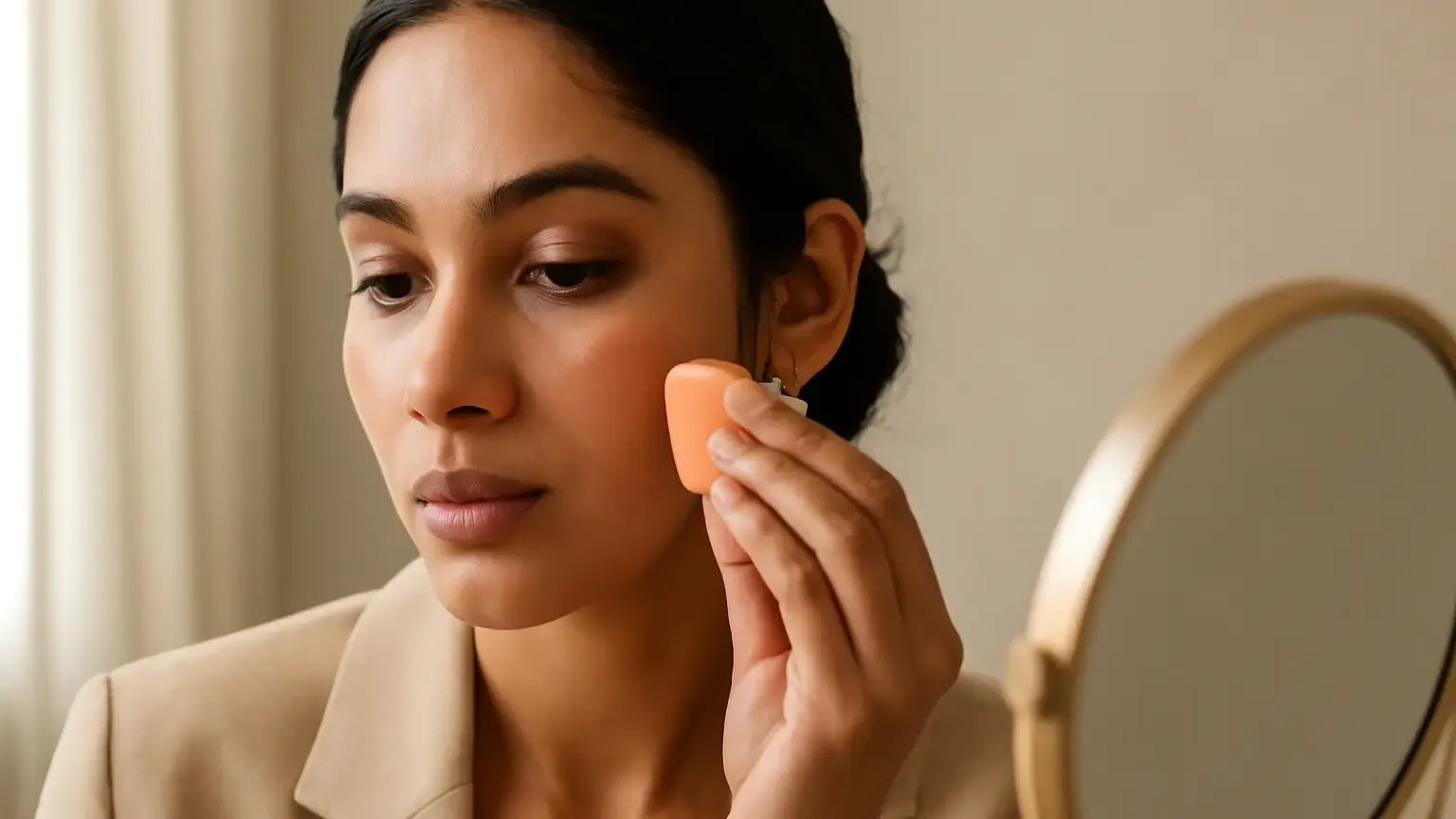
Use a small amount—roughly half a pump or less, depending on the formula—and spread it in a thin veil. A damp sponge can soften and press the base into the skin, while a flexible foundation brush can distribute liquid formulas efficiently. Both are useful makeup application tools; the best choice is the one that lets you use less product without leaving streaks.
- Dot a small amount on the centre of the forehead, nose, cheeks and chin.
- Blend one zone at a time instead of dotting a full face and allowing it to set unevenly.
- Press over pores with the sponge or use short, light brush strokes rather than repeatedly buffing.
- Pause and inspect the skin before adding more. Texture often looks better once the base has settled.
For a smooth makeup base for textured skin, the finish should remain slightly skin-like. A fully opaque layer may hide discolouration temporarily but can emphasise raised areas, fine lines and movement around the mouth.
4. Conceal marks instead of increasing foundation everywhere
Selective concealing keeps the overall base thin. Apply a small amount of concealer only to a blemish mark, dark area or patch of redness that still shows through foundation. Let it sit briefly, then tap the edges so the centre retains coverage.
If a mark is distinctly red or brown, a tiny amount of appropriate colour correction may help before concealer. Keep the corrector limited to the discoloured spot; using it over a broad area adds unnecessary layers. This technique is more reliable than adding a second coat of foundation to the whole face.
For under-eyes, use less product than you think you need and keep the thickest part away from the deepest lines. Look straight ahead while the concealer settles, then remove any crease with a clean fingertip or small brush before setting just that area. This is the practical advantage of spot concealing: coverage goes where it earns its place.
5. Use cream colour in thin, blended layers
Cream products can make the complexion look more connected and less powdery, but they still need restraint. A little cream blush tapped high on the cheeks can bring back dimension after foundation. A small amount of cream bronzer around the temples, cheek perimeter and jaw can add warmth without creating a hard, dry-looking contour.
Apply cream colour after foundation and concealer, unless the product’s instructions suggest otherwise. Tap it on with fingers, a sponge or a clean brush, and avoid dragging it across areas where the base is thin. If the colour becomes too strong, use the same tool that applied your foundation to soften the edges.
Choose a satin or softly luminous formula if you want a dewy makeup finish. Very wet formulas may move in humidity, while extremely matte cream products can look heavier when layered over dry patches. The right choice depends on your skin and the weather, so test the finish in natural light rather than judging it under a bright bathroom bulb.
6. Powder strategically, not automatically
Powder can improve wear, but all-over powder is one of the quickest ways to make texture look dry or pronounced. Focus on setting powder placement: press a small amount around the sides of the nose, centre of the forehead, chin, under-eyes or any area that becomes shiny or creases.
Use a small fluffy brush for a light veil or a puff for precise pressing. Remove excess product before it reaches the face. Avoid sweeping powder repeatedly over pores, cheeks or dry patches. If you prefer a luminous complexion, leave the high points and outer cheeks mostly unpowdered.
For long days, carry blotting paper or a clean tissue instead of adding several layers of powder. Press, do not rub. A light mist can help take away a powdery appearance, but it should not be used to rescue a base that has already become thick. At that point, gently press the area with a damp sponge or clean fingertips and add only a pinpoint of concealer if needed.
Common mistakes that make texture more visible
- Applying too much primer: A thick smoothing layer can separate foundation instead of helping it grip.
- Using a full face of heavy foundation: Coverage should be concentrated where tone needs evening, not where skin already looks clear.
- Buffing continuously: Repeated friction can lift the base and gather it around pores.
- Powdering before cream products are blended: This may create patchiness and make later colour harder to diffuse.
- Choosing a finish only by trend: Matte, satin and luminous formulas suit different skin needs, climates and comfort preferences.
- Touching up without removing oil: New product over shine usually becomes thicker. Blot first, then add the smallest amount necessary.
How to adapt the routine to your skin and occasion
For dry or flaky skin, prioritise moisturiser, use a thin hydrating primer and keep powder to the centre of the face. For combination skin, divide the face into zones: a little pore-blurring primer and powder on the T-zone, with more natural skin showing on the cheeks. For oily skin, a lightweight base and targeted powder can be more comfortable than a dense matte layer that eventually cracks.
For daytime, sheer foundation, spot concealing and cream colour often look most natural. For an event, keep the first layer thin and add coverage only after checking it in daylight or with a phone camera. Flash-friendly makeup still benefits from controlled powder, particularly under the eyes and around the nose, but avoid a heavy pale layer that can look stark.
Quick takeaway
The most dependable method for makeup for textured skin is targeted rather than heavy: hydrate where needed, prime only problem zones, apply a lightweight foundation in one thin layer, conceal marks individually, add cream colour sparingly and powder only where shine or creasing requires it. Texture will not disappear—and it does not need to—but a controlled base can look fresher, softer and more like skin.
Products that may help with this routine
Choose only what fits your skin, hair or personal needs. Use the links below to view current options on Amazon India.
Frequently Asked Questions
How do I apply makeup for textured skin without it looking cakey?
Use light skincare, apply primer only where needed, start with a thin layer of lightweight foundation and add coverage through spot concealing. Wait between layers and powder only shiny or crease-prone areas.
What is the best primer for uneven skin texture?
The best choice depends on the area: use a hydrating primer for tight or dry patches and a pore-blurring primer sparingly around visible pores. Applying less product usually gives a smoother result than layering primer across the entire face.
How can I make foundation look smooth on textured skin?
Begin with well-set moisturiser and sunscreen, use a small amount of buildable foundation, and press it in with a damp sponge or short brush strokes. Stop adding product once the tone looks even.
Should you use powder on textured skin?
Yes, but use it selectively. Press a small amount around the nose, forehead, chin or under-eyes if those areas become shiny or crease. Avoid applying a thick layer over dry patches and textured cheeks.
Can cream blush work on textured skin?
Yes. Choose a thin, blendable cream blush and tap it onto the cheeks rather than dragging it across the base. A satin finish often gives dimension without making the complexion look overly powdery.
What is the best foundation technique for textured skin?
The most reliable technique is centre-out application: place a small amount where you need coverage, blend towards the edges, press over visible pores and add a second pinpoint layer only where necessary.