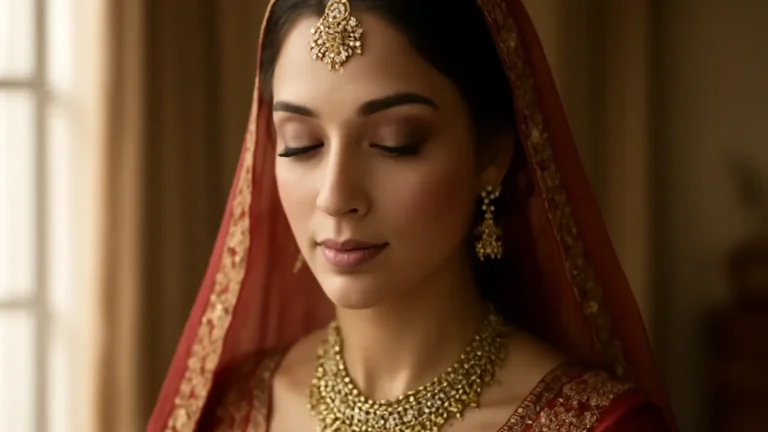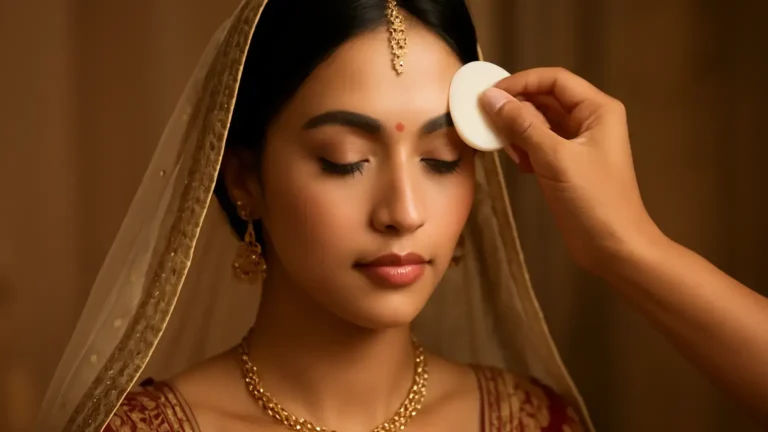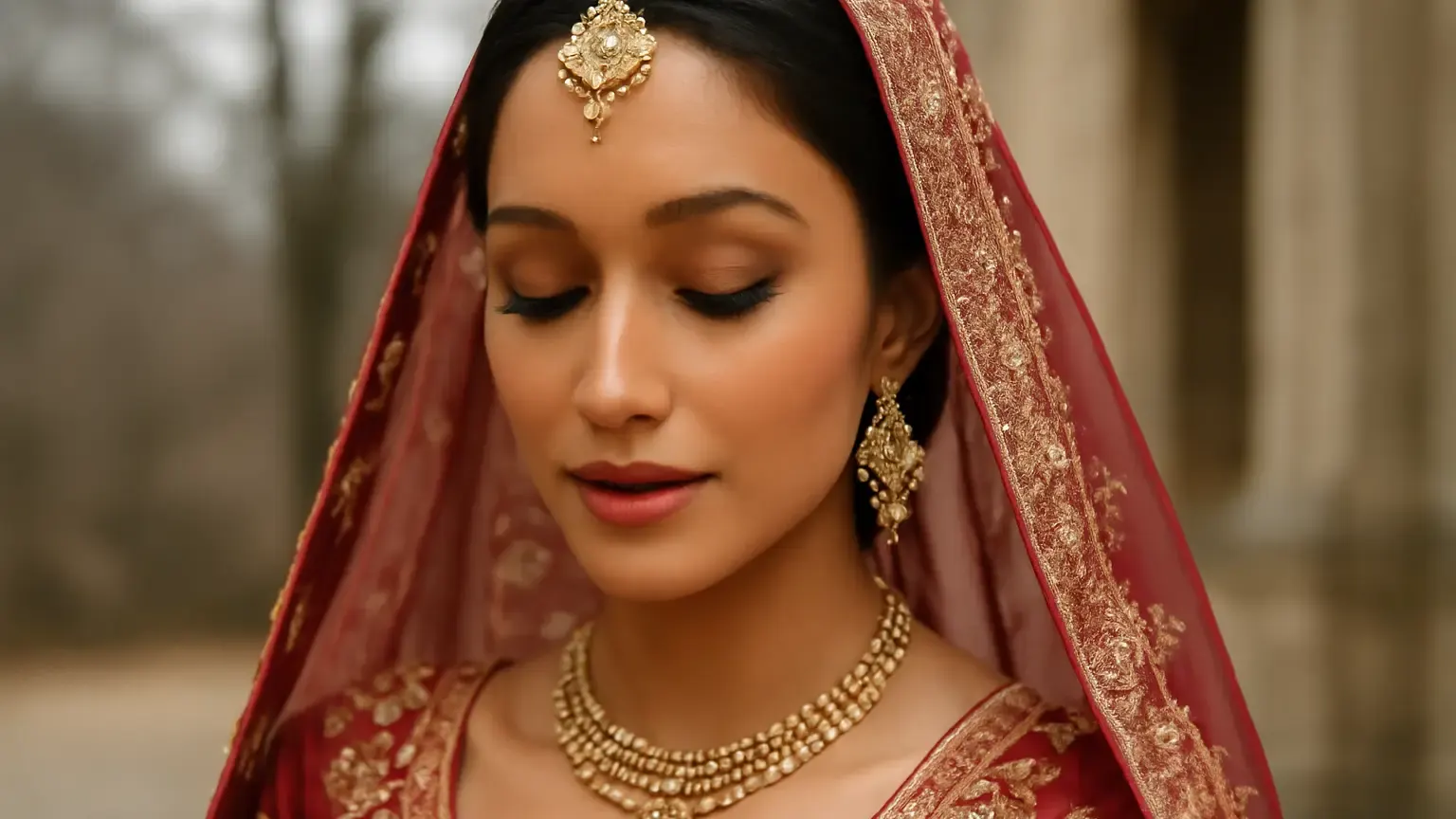
bridal makeup for winter weddings stays fresh through long ceremonies when the base is moisturised but not overloaded: use familiar winter skin prep, let each layer settle, apply a thin flexible foundation, and touch up by blotting before powdering. This practical approach helps the complexion remain comfortable through cold outdoor photos, heated indoor venues, veil friction and several hours of rituals without looking heavy or dry.
Why winter wedding makeup needs a different plan
Cold air can leave the surface of the skin feeling tight, while wind, indoor heating and frequent face wiping may make makeup appear patchy. At the same time, a heavily moisturised face can cause foundation to slide, separate around the nose or transfer onto a dupatta. The goal is a balanced base: sufficiently moisturised underneath, thin and well-pressed makeup in the centre, and controlled shine only where it is likely to develop.
This matters particularly for North Indian winter weddings, where a bride may move between a chilly baraat or outdoor photo session and a warm, crowded banquet hall. The best finish is not automatically fully matte or very glossy. It should suit the bride’s natural skin behaviour, the lighting, the outfit and the ceremony schedule.
Start with winter wedding skin prep
Good winter wedding skin prep begins days before the event, not with an aggressive facial on the morning of the ceremony. Keep the routine familiar and avoid introducing strong exfoliants, peels or unfamiliar products close to the wedding. If your skin is persistently itchy, painful, swollen or unusually inflamed, consult a dermatologist rather than attempting to cover the concern with extra makeup.
A simple preparation routine
- Cleanse gently: Use a familiar cleanser that removes residue without leaving the face tight. Rinse thoroughly and pat, rather than rub, the skin.
- Moisturise in a measured layer: Apply a comfortable moisturiser to slightly damp skin, giving extra attention to the sides of the nose, mouth and any visibly dry areas.
- Allow absorption: Wait several minutes before primer or makeup. If the face still feels greasy, press lightly with a tissue instead of adding powder over wet skincare.
- Use sunscreen for daytime events: For outdoor daytime functions, choose a familiar sunscreen that sits well under makeup. Allow it to settle before the base is applied.
For the question, “What skincare should a bride do before winter wedding makeup?”, the practical answer is gentle cleansing, consistent moisturising and tested products. This is the foundation of effective winter skincare before makeup. Do not try to repair dry skin overnight with multiple new layers.
When a primer helps
A hydrating primer for dry skin can be useful when the complexion feels tight after moisturiser has settled, but it is not a substitute for basic skin preparation. Apply a small amount only where needed and test it with the chosen foundation during the bridal trial. Too many emollient layers may reduce adhesion, especially around the nose and mouth.
Choose the base by skin behaviour and finish
A long-lasting bridal foundation is useful only when it matches the skin and the event. Long wear does not require a thick coat. A thin, buildable formula generally looks more natural in photographs and is easier to refresh later. Ask your makeup artist to test the shade in daylight, especially if the ceremony moves between indoor and outdoor spaces. Check the shade after it has settled as well, since foundation oxidation can alter its appearance.
Dewy, satin or matte?
| Finish | Best suited to | What to watch |
|---|---|---|
| Soft dewy | Normal to dry skin and softer daytime photography | Too much skincare or highlighter may make the T-zone look slick |
| Satin | Most skin types and mixed indoor lighting | Still needs targeted powder around the nose and under-eyes |
| Soft matte | Oilier areas, humid venues or brides who prefer low shine | Can emphasise flakes if skin prep is insufficient |
So, is dewy or matte makeup better for a winter wedding? Neither is universally better. A satin base with selective glow usually offers the safest middle ground: comfortable on dry areas, controlled in photographs and less likely to look flat under strong venue lighting. Dewy bridal makeup can look beautiful, but glow should come from controlled product placement rather than a thick layer of skincare or highlighter.
Layer cream products without making the base slide
Cream textures can give winter makeup a healthy, flexible appearance, but layering should be deliberate. Apply complexion makeup in thin amounts, then place cream blush for brides on the high points of the cheeks and blend the edges before it sets. If you need extra colour, add a second very light layer instead of pressing on a large amount at once.
A useful order is moisturiser, primer where needed, foundation or skin tint, concealer, cream blush or bronzer, a small amount of powder, then powder colour only if extra longevity is required. This cream-to-powder approach helps the products merge with the complexion while giving the ceremony enough transfer resistance.
Do not powder the entire face heavily just because the wedding is long. Press a small amount around the nostrils, smile lines, centre forehead and chin. Leave the outer cheeks more flexible if they tend to feel tight. A setting spray for bridal makeup can be applied according to the product instructions after the complexion is complete, but it should complement good layering rather than compensate for excessive product.
For ceremonies that move between cold air, indoor heating and changing crowd conditions, think of this as humidity and temperature-proof makeup in a practical sense: flexible layers, targeted setting and realistic touch-ups. No finish is completely unaffected by weather, friction or repeated touching.
Make eye and lip makeup ceremony-ready
Waterproof wedding makeup is especially helpful for kajal, mascara and liner when the bride expects happy tears, cold wind or long photography sessions. Waterproof does not mean indestructible: rubbing the eyes, oily lids and repeated wiping can still disturb the look. An eye primer or a very light veil of powder on the lids may improve wear, provided it does not make the area feel dry.
For lips, start bridal lip care before the wedding. Use a familiar lip balm regularly, gently remove loose flakes with a soft damp cloth only when needed, and avoid vigorous scrubbing just before lipstick. On the day, blot excess balm before applying lip colour. A lip liner can create a neat outline, while a thin first layer of lipstick, blotting and a second layer often wears more evenly than one thick application.
Carry the exact lip colour, or a small decanted amount approved by the makeup artist, rather than relying on a random similar shade. Avoid applying gloss directly over a long veil or dupatta period if transfer is a concern.
Build touch-ups around the ceremony schedule
A touch-up works best when it removes the problem instead of adding makeup over it. Before the ceremony, ask when the bride will have access to a mirror, whether she will be outdoors, and how often the veil or dupatta will touch her cheeks. This determines what belongs in the makeup touch-up kit and keeps the plan manageable.
- Blotting papers or a clean tissue for surface oil
- The lip colour and a small lip balm
- A cotton bud for cleaning mascara or liner transfer
- A small pressed powder for the centre of the face
- A compact mirror
- A few tissues and, if approved by the artist, a tiny amount of concealer
For a shine-related touch-up, blot first and powder second. For a dry patch, do not immediately layer powder; ask the makeup artist whether a minute amount of moisturiser or a damp sponge is more suitable. For a separated area, press it gently with a clean sponge rather than dragging a brush across the face. This is also the practical answer to how to prevent flaky makeup during a winter wedding: correct the texture gently instead of burying it under more powder.
Common mistakes that shorten makeup wear
- Trying a new facial immediately before the wedding: Unfamiliar treatments can make the surface unpredictable.
- Using too much facial oil: Oil may feel comforting in cold weather but can affect primer and foundation adhesion.
- Building coverage everywhere: Extra layers often crease and separate more visibly than a thin base with targeted concealer.
- Skipping a trial: A trial reveals whether the chosen products suit the bride’s skin, photography, outfit and schedule.
- Using powder to fix flaking: Powder can make dry texture more noticeable. Improve the underlying moisture balance first; this is the core of flaky makeup prevention.
- Ignoring friction: Veils, jewellery, masks and frequent hugging can remove makeup from specific areas, so those zones need realistic expectations.
A practical plan for the wedding day
When asking how early to do skincare before bridal makeup, begin with enough time for the moisturiser and sunscreen, if used, to settle. The makeup artist should work backwards from the first photography call or ceremony, allowing time for hair, outfit, jewellery and a calm final check. Avoid rushing the base immediately before the bride must leave for photos.
At the trial, test the actual foundation shade, blush intensity and lip combination in daylight and venue-style lighting where possible. Mention whether the bride will have a long pheras ceremony, outdoor rituals, a late-night reception or travel between venues. These details affect the amount of powder, the need for waterproof formulas and the size of the touch-up plan.
Concise takeaway
The most dependable bridal makeup for winter weddings combines familiar winter skin prep, a thin satin or softly luminous base, controlled cream layering, comfortable lip care and targeted touch-ups. Choose products for the bride’s skin behaviour and ceremony conditions—not simply because they promise maximum coverage or shine. A well-planned base should look fresh from the first photograph through the final ritual, while still feeling like skin.
Products that may help with this routine
Choose only what fits your skin, hair or personal needs. Use the links below to view current options on Amazon India.
Frequently Asked Questions
How do I make bridal makeup last in a winter wedding?
Use familiar moisturising skin prep, allow each layer to settle, apply a thin buildable base, set only areas that crease or become shiny, and blot before powdering during touch-ups.
What is the best base for dry skin in winter bridal makeup?
A comfortable, buildable satin or softly luminous foundation usually works well when applied over moisturiser that has absorbed. Avoid heavy powder and test the complete routine before the wedding.
What skincare should a bride do before winter wedding makeup?
Keep the routine gentle and familiar: cleanse, moisturise, use daytime sunscreen when appropriate and avoid new peels or aggressive exfoliation close to the event.
How can I prevent flaky makeup during a winter wedding?
Prepare consistently in advance, moisturise dry areas, wait for skincare to settle and avoid applying powder over visible flakes. Press makeup in thin layers rather than rubbing.
What should be in a bridal makeup touch-up kit for long ceremonies?
Pack lip colour, lip balm, blotting papers or tissues, pressed powder, cotton buds and a compact mirror. Add concealer only if the makeup artist recommends it.
Is dewy or matte makeup better for a winter wedding?
Neither finish is universally best. A satin base with selective glow usually balances dry winter areas, photography and shine control, while the final choice should reflect the bride’s skin behaviour and venue conditions.