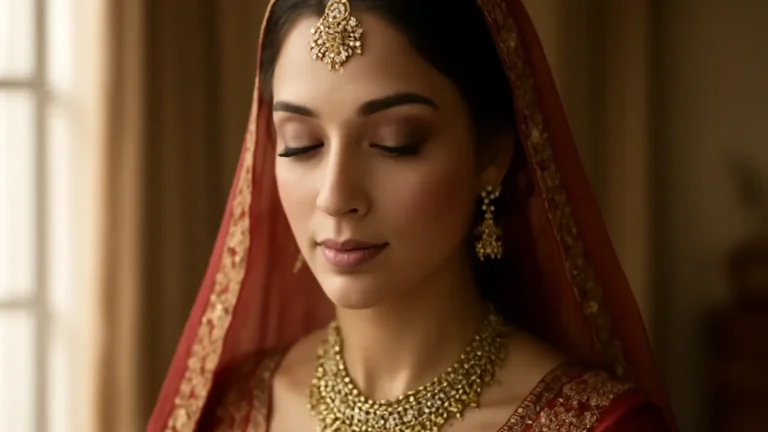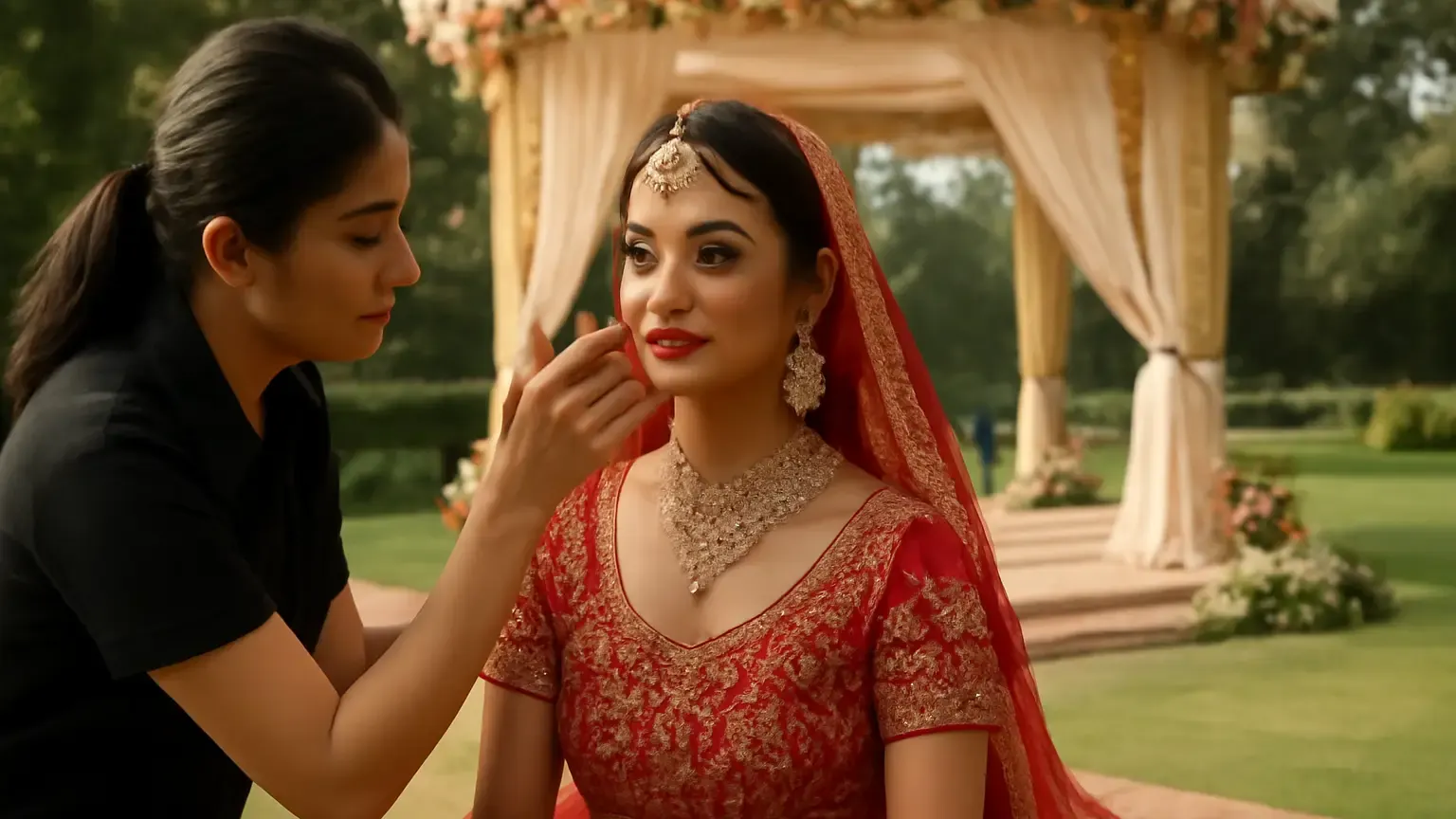
Bridal makeup for outdoor pheras should be tested in the same daylight, heat and ceremony timing you expect on the wedding day. This guide is for brides marrying in gardens, courtyards, beaches or open mandaps who want a fresh, photograph-ready finish without a heavy mask. The key decision is balance: use thin, well-prepped layers, place powder only where shine develops, define the eyes carefully and carry a small kit for controlled touch-ups.
Outdoor pheras create a beautiful setting, but they also expose makeup to changing light, humidity, perspiration, wind and long gaps between rituals. A look that appears flawless under a salon’s warm lights can seem too pale, too shiny or overly textured in open daylight. The goal is not to make every part of the face completely matte. It is to create a flexible base that stays comfortable, reads naturally in photographs and can be refreshed without piling on more product.
Start with a daylight makeup trial
The most useful trial for bridal makeup for outdoor pheras is not limited to the makeup chair. Ask your artist to complete the look at approximately the same time of day as the pheras, then step outside for photographs and a short wear test. Check the face in direct sun, open shade and the camera preview. Each setting reveals something different: direct sun highlights texture, shade shows whether the base looks dull, and photographs reveal flashback, uneven coverage or disappearing definition.
A daylight makeup trial should also include the jewellery, blouse or dupatta colour where possible. Warm gold, bright red and vivid pink can change how foundation and blush appear. Take front-facing and side photographs rather than judging only in a mirror. Wait at least two to three hours before deciding whether the finish becomes oily, tight or patchy.
Build a breathable bridal base
Good bridal base makeup begins before foundation. Cleanse gently, apply a familiar moisturiser and allow it to settle. If your skin becomes shiny quickly, use an oil control makeup product only through the centre of the face rather than spreading a dry, mattifying layer over the cheeks. If the venue is humid, a lightweight makeup primer for humid weather can help makeup sit more evenly, but it should be tested in advance rather than introduced on the wedding morning.
Choose coverage according to what actually needs evening out. A sheer-to-medium, buildable foundation often looks more natural outdoors than one thick layer of full coverage. Spot-conceal redness or pigmentation instead of applying extra foundation everywhere. Press the base into the skin with a damp makeup sponge or a suitable brush, then inspect the jawline and hairline in daylight. The shade should blend into the face and neck without a visible edge.
Dewy or matte: make the choice by location
The dewy vs matte bridal makeup decision depends on climate, timing and your natural skin behaviour. A fully dewy finish can turn visibly greasy under hot sun, while a flat matte finish may emphasise dryness and look heavy in photographs. For most outdoor ceremonies, a soft satin finish is a practical middle ground: keep a little natural dimension on the high points of the face and powder the areas that crease or shine.
Apply cream blush sparingly before setting the base, then add a small amount of powder blush if more staying power is needed. Cream products can look fresh, but too many emollient layers may move in heat. Avoid thick highlight over the nose, upper lip and forehead, where perspiration can already create shine.
Set for perspiration without making the face cakey
Sweat-proof makeup is mainly about thin layers, suitable placement and realistic touch-ups; no cosmetic can stop perspiration completely. Let skincare and each makeup layer settle before adding the next. Lightly press translucent powder under the eyes, around the nostrils, across the centre of the forehead and on the chin. Leave the outer cheeks less powdered if you want the complexion to retain softness.
A setting spray for weddings can help unify powder and liquid layers, but it should be misted from the recommended distance and allowed to dry without touching the face. It is not a substitute for skincare preparation or a suitable base. Ask your artist whether the chosen products are compatible: some combinations can separate when layered heavily or when exposed to water and sweat.
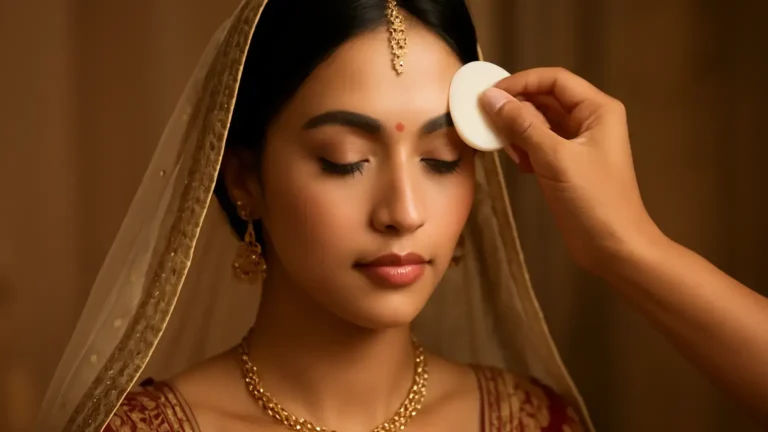
During the ceremony, blot rather than wipe. Press blotting paper or a clean tissue against shiny areas, then use a small amount of pressed powder only where needed. Rubbing can lift foundation, disturb blush and leave uneven marks that are harder to repair.
Define eyes for daylight and photographs
Sunlight and outdoor photography can make soft eye makeup disappear, but very dark, thick shapes may look harsh in daylight. Use a balanced combination of neutral brown, rose, bronze or muted plum tones that suits the outfit and jewellery. Concentrate depth at the lash line and outer corner, blending edges carefully so there are no obvious blocks of colour.
Waterproof eye makeup is useful when the ceremony is hot, emotional or exposed to wind. Consider water-resistant mascara, a reliable eyeliner and an eye primer if these products have already been worn successfully. Waterproof does not mean transfer-proof in every condition, so check the lower lash line after a few hours. If your eyes are sensitive, do not experiment with a new formula immediately before the wedding. A makeup artist should also keep applicators clean and avoid sharing eye products.
For a softer result, place a dark brown or charcoal pencil close to the upper lashes and smudge it slightly rather than drawing an extremely thick black line. Individual or lightweight strip lashes can add definition, but test the lash band, adhesive and comfort well before the event.
Make lips last through rituals and photographs
A long-lasting bridal lipstick performs better when the lips are smooth and properly lined. In the days before the ceremony, avoid aggressive scrubbing or unfamiliar treatments. On the day, apply a comfortable lip balm, allow it to absorb and remove excess before using lip colour. Outline and lightly fill the lips with a matching liner, apply lipstick in a thin layer, blot gently and add a second layer if required.
Choose a finish you can comfortably wear for several hours. Very dry liquid formulas may last well but can emphasise flakes or feel tight. Satin or transfer-resistant formulas may offer a more wearable compromise. Ask for the exact shade and product to be placed in your kit, because a quick reapplication after water, food or a ritual is easier when the colour is familiar.
Pack a compact bridal touch-up kit
A practical bridal touch-up kit should solve common problems without carrying your entire vanity. Keep it with a trusted bridesmaid or family member rather than in a distant room. Pack:
- Blotting paper or thin tissues for sweat and excess oil.
- The lipstick and lip liner used for the final look.
- A small pressed powder and a clean puff for the centre of the face.
- A cotton bud for correcting lipstick edges or minor eyeliner transfer.
- A small concealer only if your artist recommends one for targeted repairs.
- A compact mirror, hair pins and a few tissues for moisture around the eyes.
Do not keep adding foundation over damp or oily skin. First blot, let the area settle and then repair only the patch that needs attention. This keeps the finish lighter and avoids a visibly layered base by the end of the pheras.
Common outdoor bridal makeup mistakes
- Testing only under warm salon lights: this can hide shade mismatch and excess shine.
- Using heavy powder everywhere: it can emphasise texture and become patchy as the face warms.
- Trying new skincare or actives just before the wedding: unfamiliar products may alter how makeup sits.
- Choosing coverage before considering heat: a thick base may feel uncomfortable and require more correction.
- Ignoring the neck, ears and hairline: exposed areas can look disconnected in close photographs.
- Skipping a wear test: only real time can show how the chosen base, eye products and lip colour behave together.
A simple decision checklist for the wedding morning
Before the artist begins, confirm the ceremony time, whether the mandap is in direct sun or shade, the expected travel and the length of the reception afterward. Tell the artist if you usually sweat around the upper lip, nose or hairline, or if your eyes water outdoors. These details help determine where to prime, powder and add definition.
For a hot, humid venue, prioritise a thin satin base, targeted powder, water-resistant eye products and a replenishable lip colour. For a cooler evening ceremony, you may keep more glow and use less powder. For a windy beach or open lawn, secure the hair and avoid loose face products that can migrate into the eyes. The best plan is the one tested in conditions that resemble the actual event.
Takeaway
Successful bridal makeup for outdoor pheras comes from preparation rather than maximum product. Test the look in daylight, match the base to your neck, build coverage gradually, keep shine control localised and choose eye and lip formulas that have survived a trial. Carry a small touch-up kit and blot before repairing. This approach keeps the complexion fresh, defined and comfortable while preserving the natural atmosphere of an outdoor ceremony.
Products that may help with this routine
Choose only what fits your skin, hair or personal needs. Use the links below to view current options on Amazon India.
Frequently Asked Questions
How do you make bridal makeup last in an outdoor wedding?
Test the complete look in similar daylight and heat, prepare the skin with familiar products, apply thin buildable layers, powder only high-shine areas and use a suitable setting spray. Blot perspiration before touching up instead of adding powder over damp skin.
What is the best foundation for outdoor bridal makeup?
The best foundation is one that matches the face and neck, offers the coverage you need without a thick layer and remains comfortable during a wear test. A buildable satin or natural-matte formula is often easier to manage outdoors than an extremely dewy or heavily matte base.
How can you prevent bridal makeup from melting in heat?
Use lightweight, well-set layers; keep rich skincare and excess primer away from areas that become oily; set the centre of the face strategically; and carry blotting paper and pressed powder. Makeup cannot stop perspiration, so controlled touch-ups are more reliable than applying a very heavy base.
What should you carry in a bridal touch-up kit?
Carry the lipstick and lip liner used for the look, blotting paper or tissues, pressed powder with a clean puff, cotton buds, a compact mirror and any small concealer or other product your makeup artist specifically recommends.
How should you test bridal makeup in daylight?
Schedule the trial at a similar time to the pheras, then view the makeup in direct sun, open shade and photographs. Check the foundation at the jawline, the amount of shine after two to three hours, eye transfer and whether blush and lip colour remain visible.
Is waterproof eye makeup necessary for outdoor pheras?
It is useful when heat, humidity, wind or tears are likely, especially for mascara and eyeliner. Test water-resistant products beforehand because waterproof formulas can feel different or be harder to remove, and sensitive eyes should not be exposed to unfamiliar products just before the wedding.