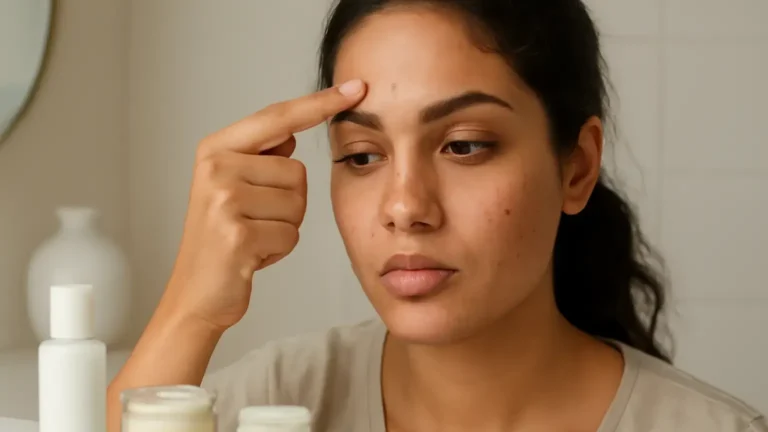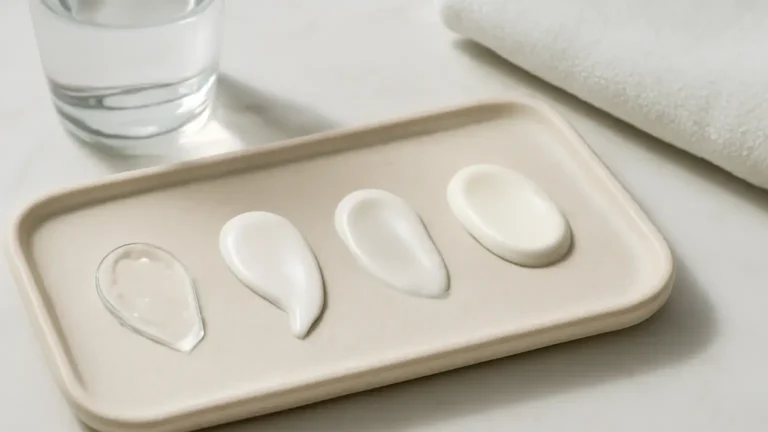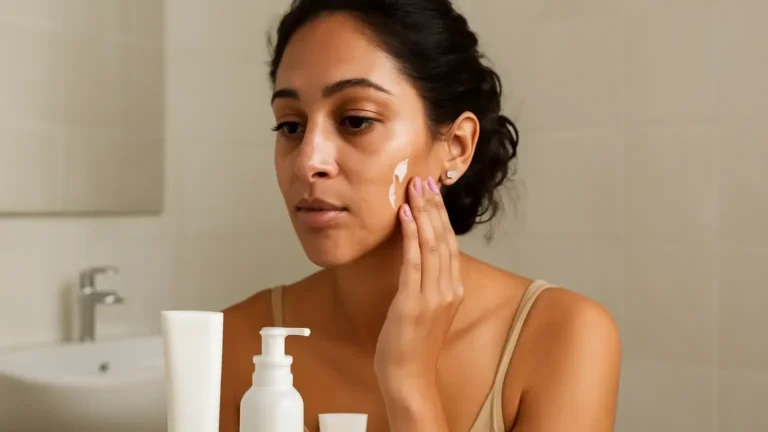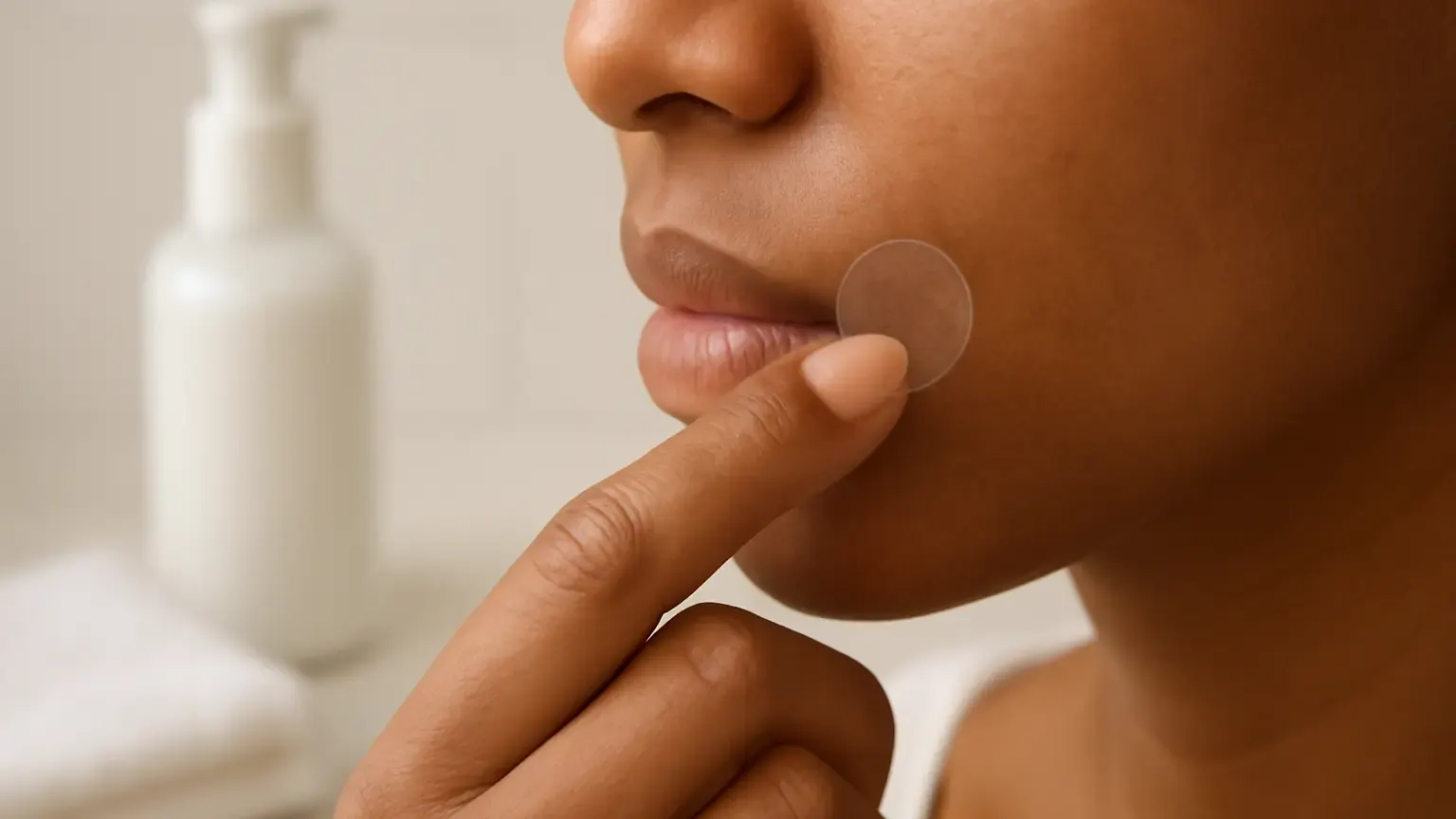
Acne Prone Skin and Hydrocolloid Patches can work well together when the blemish is superficial, slightly raised and ready to release fluid. This guide is for people who want a simple, safer way to protect a whitehead or small spot from picking. You will learn where to place a patch, how long to wear it, when to choose a plain or active version, and which deep, painful or persistent breakouts need more than an adhesive sticker.
What hydrocolloid patches actually do
Hydrocolloid is a gel-forming material commonly used in wound dressings. On a suitable blemish, it absorbs some surface fluid and creates a soft, covered environment. The patch also acts as a physical reminder not to touch, squeeze or repeatedly inspect the spot.
That makes hydrocolloid pimple patches useful for a small, superficial whitehead or a spot that has opened accidentally. They can reduce friction from fingers, masks or pillow contact, and may make the area look less noticeable while it is covered. Their main role is protection and surface-fluid absorption—not a guaranteed cure for acne.
A patch cannot clear every type of breakout because it does not reach deeply into the skin. It also does not replace a consistent routine, suitable acne care or medical advice when symptoms are severe or ongoing.
When patches for surface-level pimples make sense
The best candidates are small blemishes with a visible surface point, light oozing or a recently opened surface. A pimple patch for whiteheads may be particularly practical because the patch can sit directly over the spot without needing to cover a large area.
- Small whiteheads: These are usually the most straightforward patches to cover.
- Recently opened spots: A plain hydrocolloid patch can help shield the area from picking and everyday contact.
- Minor surface irritation from touching: Covering the spot may help interrupt the habit of rubbing or squeezing it.
- Single, occasional blemishes: A patch is easier to use as targeted support than as a replacement for a complete routine.
Results vary. A patch may look cloudy or swollen after absorbing fluid, but that appearance does not prove that all acne-related material has been removed. It is simply a sign that the dressing has interacted with moisture at the surface.
When hydrocolloid patches will not do much
Deep painful acne, firm under-skin bumps and widespread breakouts generally do not respond in the same way. A sticker sits on the surface, so it cannot meaningfully address a blemish that has no accessible opening or visible fluid. This includes many cases described as cystic acne or nodular-looking acne, which should not be squeezed or repeatedly covered in an attempt to force a result.
Patches are also not a substitute for professional care when spots are frequent, increasingly painful, leaving scars, spreading, or affecting your confidence. Seek advice if acne persists despite a sensible routine, or if a lesion is unusually inflamed, warm, very tender or accompanied by other concerning symptoms. A dermatologist can assess the pattern and suggest appropriate treatment without relying on trial and error.
Do not place an adhesive patch over a larger rash, an area that is actively infected, a wound requiring medical attention, or skin that is reacting to another product. If the adhesive causes burning, itching or a spreading red outline, remove it and stop using that product.
How to use hydrocolloid patches on a pimple
Correct placement matters more than applying a patch repeatedly. Follow the product label first, especially if the patch contains additional ingredients.
- Cleanse gently: Wash the area with a mild cleanser and lukewarm water. Avoid scrubbing the blemish.
- Dry completely: Apply the patch only to clean dry skin. Moisturiser, facial oil, sweat and sunscreen can weaken adhesion and make the patch slide.
- Choose the right size: Select a patch that fully covers the spot with a small margin, rather than covering a large amount of healthy skin.
- Press without squeezing: Place it centrally and hold it gently for a few seconds. Do not puncture or force the blemish open just to use a patch.
- Leave it in place: Wear it for the time stated on the packaging. Many products are designed for several hours or overnight, but longer is not automatically better.
- Remove slowly: Lift one edge and peel gently. If it feels strongly stuck, dampen the surrounding skin rather than pulling sharply.
- Reassess the area: Clean gently if needed, then apply a simple moisturiser. Use a fresh patch only if the skin is comfortable and the product instructions allow it.
Overnight pimple patch or daytime patch?
An overnight pimple patch is convenient because it can stay in place while you sleep and may reduce unconscious touching. Apply it after evening cleansing and before heavier skincare. Make sure the area is dry and give any watery products time to absorb before placement.
Daytime use can be helpful under makeup if the patch is thin and its edges remain secure. However, a patch may lift in hot, humid weather or during exercise. In India’s warmer climate, sweat and facial oils can reduce wear time, so check the edges rather than pressing a loose patch back down with unwashed fingers.
Sun protection still matters around a healing blemish. Apply sunscreen to uncovered skin and follow the label for whether the patch can be worn underneath or alongside other products. Do not assume a patch itself provides adequate sun protection unless the packaging specifically says so.
Plain hydrocolloid versus active pimple patches
Plain hydrocolloid is mainly a protective covering. Some products add ingredients such as salicylic acid, tea tree-derived ingredients or other spot-treatment components. These may suit some people, but more ingredients also mean more opportunities for dryness or irritation.
If your skin is reactive, start with a plain patch on one small area. Avoid layering a strong spot treatment underneath unless the product instructions specifically support that combination. Applying an acid, retinoid or benzoyl peroxide and then sealing it under an occlusive patch can increase irritation for some users. A simple spot treatment routine is usually easier to evaluate when only one new product is introduced at a time.
For broader breakouts, think beyond the sticker. Gentle cleansing, a non-comedogenic moisturiser, daily sunscreen and consistent non-comedogenic acne care may support the rest of the routine. Patch use can be one small tool, not the whole strategy.
Common mistakes to avoid
Applying a patch over wet skincare
Serum, cream or perspiration under the adhesive can cause early lifting and uneven contact. Wait until the area is fully dry.
Using one patch for too long
Once the patch is visibly saturated, loose or dirty, replace it according to the label. Wearing an adhesive indefinitely can irritate the surrounding skin and does not guarantee a better result.
Picking before or after application
Do not squeeze a blemish to make it “patch-ready”. After removal, resist scraping away dry skin or pressing the area. This supports skin barrier protection and may reduce unnecessary redness.
Covering a reaction
A patch should not be used to hide burning, intense itching or a rash caused by skincare. Remove it and simplify the routine until the skin settles. If the reaction is severe or persistent, seek medical guidance.
Expecting a patch to prevent every mark
Picking, inflammation and sun exposure can all contribute to post-acne marks. A patch may reduce touching, but it cannot guarantee that a mark will not develop.
How to decide whether to use one
Use a hydrocolloid patch when the spot is small, superficial and intact or lightly open, and when your main goal is protection from touching. Choose a plain formula if your skin is sensitive or if you are already using other active products. Consider skipping it when the bump is deep, sealed, very painful, widespread or surrounded by a rash.
Also consider the adhesive itself. People with known sensitivity to bandages or medical tape should check the ingredient and adhesive information, patch-test cautiously on a small area and stop at the first sign of a reaction. Clean application, gentle patch removal tips and a simple aftercare routine are more useful than applying several patches at once.
Concise takeaway
Acne Prone Skin and Hydrocolloid Patches are most compatible when the patch is used for a small, superficial blemish on clean, dry skin. It can absorb surface fluid and discourage picking, but it will not replace care for deep painful acne, repeated breakouts or concerning changes. Use the patch for protection, follow the wear instructions, remove it gently and know when to seek professional help.
Products that may help with this routine
Choose only what fits your skin, hair or personal needs. Use the links below to view current options on Amazon India.
Frequently Asked Questions
Do hydrocolloid patches work for acne prone skin?
They can help with small, superficial blemishes, especially whiteheads or spots with surface fluid. They are less useful for deep, sealed or widespread acne and are not a substitute for professional care.
How do you use hydrocolloid patches on a pimple?
Cleanse gently, let the area dry fully, place the patch over the blemish without squeezing it, and leave it on for the time stated on the label. Remove it slowly and stop if the adhesive irritates your skin.
Can I use a pimple patch on a deep painful pimple?
You can cover it for protection from touching, but a hydrocolloid patch is unlikely to address a deep painful or under-skin bump because it works mainly at the surface. Do not squeeze it.
How long should you leave a hydrocolloid patch on?
Follow the product directions. Many are intended for several hours or overnight, and they should be replaced when loose or visibly saturated rather than worn indefinitely.
Are hydrocolloid patches good for whiteheads?
They are often most suitable for small whiteheads because the blemish has a superficial point that the patch can cover. Results vary, and the patch does not prevent future breakouts.
When should you see a dermatologist for acne?
Consider professional advice for persistent, widespread, increasingly painful or scarring acne, or for lesions that look unusually inflamed or concerning. A dermatologist can assess the pattern and recommend suitable care.