Skin Care Tips for Patch Testing are useful for anyone introducing a serum, moisturiser, sunscreen, makeup item or hair product—especially if you have sensitive skin or a history of reactions. Test a small amount on an appropriate area, keep the rest of your routine steady, and observe for several days before wider use. The key decision is not simply whether the test spot looks fine, but whether the product’s formula and intended use justify waiting longer or seeking professional advice.
What a patch test can—and cannot—tell you
A patch test is a small-area trial designed to spot possible irritation or sensitivity before you use a cosmetic more widely. It is a useful risk-reduction step, not a safety certificate. A clear test area means your skin tolerated that small amount under those conditions; it does not prove that the same product will never cause a reaction on your cheeks, around your eyes, or after repeated use.
Skin can respond differently because the face may be thinner, oilier, drier or more exposed to friction than the test site. A reaction can also depend on dose, frequency, sun exposure, shaving, sweating, damaged skin or product layering. Some delayed reactions appear after 48 to 72 hours, while cumulative irritation may take longer. This is why a patient, staged introduction is more informative than applying several new products at once.
Where should you patch test a skincare product?
The best location depends on the product and how closely the test area resembles your intended use. Avoid testing on broken, sunburned, freshly exfoliated or already irritated skin.
- Behind the ear: A behind-ear patch test is discreet and practical for creams, lotions and some hair products. It can be useful when you want to check a formula without putting it immediately on your face.
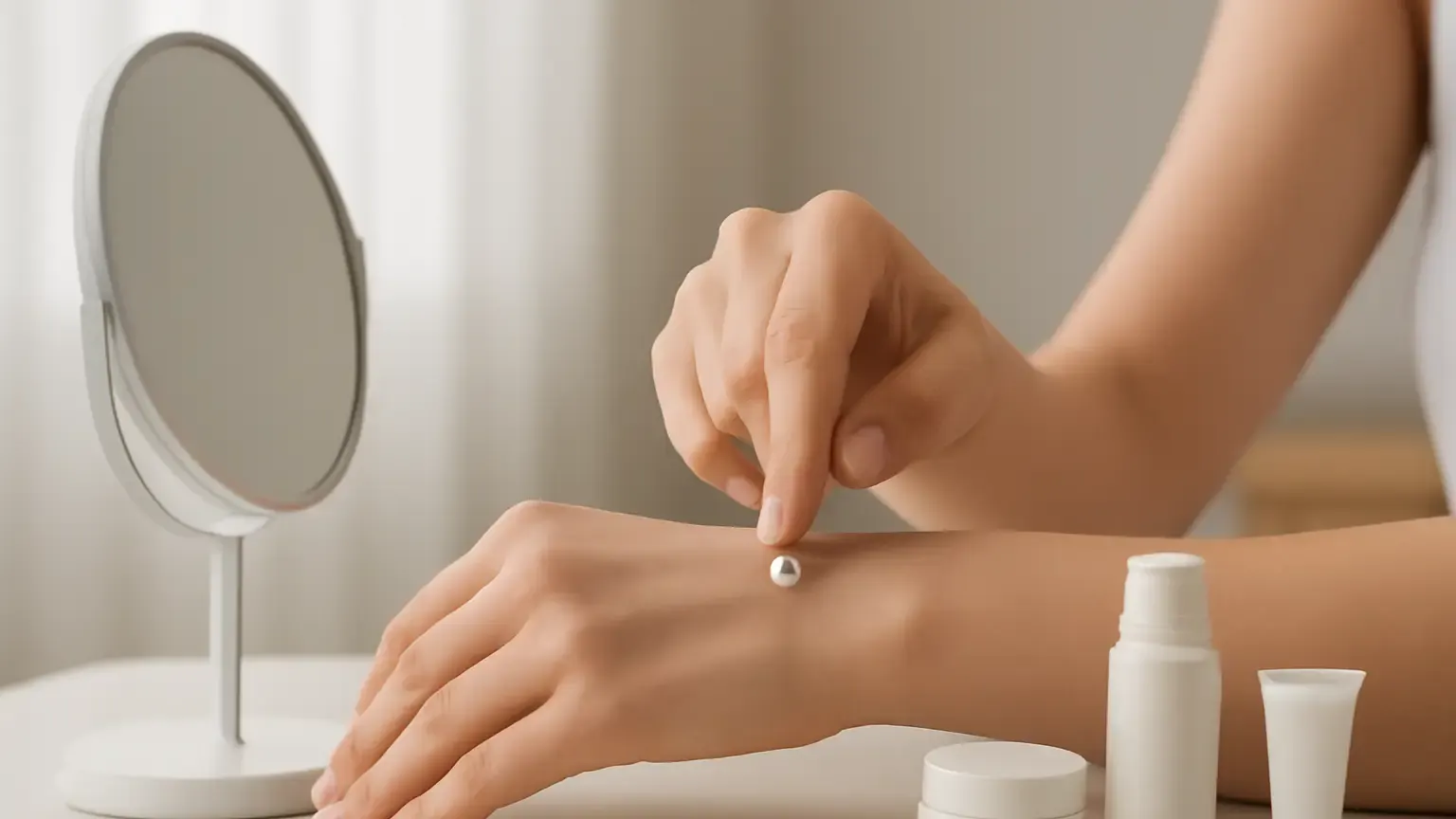
- Inner forearm: An inner forearm test gives you a visible, easy-to-monitor area for leave-on products. Apply a small, thin amount to clean, dry skin and keep the test patch away from clothing friction where possible.
- Along the jawline: For facial products, a small jawline area may give more relevant information than the arm because it is closer to facial skin. However, it is less discreet if redness develops, so use only a small section.
- Near the hairline or behind the neck: These areas can help when checking shampoo, conditioner, styling products or hair colour-related cosmetics that may touch the scalp, ears or neck. Do not deliberately place a product in your eyes or on your lips as a test.
A patch test is not the same as applying a product to the whole face. For products intended specifically for the eye area or lips, follow the product’s safety directions and be particularly cautious; sensitive zones are not suitable for casual experimentation.
How to patch test skin care products step by step
- Choose one new item. Keep your cleanser, moisturiser and other familiar products unchanged. Testing one product at a time makes it easier to identify a possible trigger.
- Read the directions first. Check whether the formula is meant to be rinsed off, left on, used occasionally or avoided on certain areas. Ingredients such as retinoids, exfoliating acids, peroxide-based formulas and strong fragrance may need extra caution.
- Clean and dry the test site. Do not scrub, shave or exfoliate immediately beforehand. A compromised skin barrier can make an otherwise tolerable product feel unnecessarily harsh.
- Apply a small amount. Use roughly the amount you would spread over a small section, rather than covering a large patch. Do not mix it with another new product.
- Follow the product category. Leave-on products should remain on the skin according to their normal instructions. Rinse-off products can be used on a small area for their usual contact time, then washed away.
- Observe without disturbing the area. Notice burning, persistent itching, swelling, bumps, scaling, unusual warmth or redness. Take a quick photo if helpful, but avoid repeatedly touching or rubbing the patch.
- Wait before expanding use. If the test is comfortable, introduce the item gradually and continue watching for delayed changes. Do not add another new active ingredient at the same time.
How long should you wait after a patch test?
For many ordinary cosmetics, observing the area for at least 24 hours is a sensible minimum, while 48 to 72 hours gives more time for a delayed response to appear. A product containing active ingredients or a formula intended for frequent use may deserve a more cautious, longer observation period. If your skin is reactive or you have previously experienced cosmetic sensitivity, consider asking a dermatologist for individual guidance rather than relying only on a home test.
There is no universal countdown that proves a product is safe. A rinse-off cleanser has less contact time than a leave-on serum, but it can still sting or dry the skin. A sunscreen may be tolerated on the forearm yet feel uncomfortable on the face when combined with heat, sweat or other layers. If the area becomes increasingly uncomfortable at any point, wash off a rinse-off or leave-on product as appropriate and do not continue the trial.
Patch testing by product type
Moisturisers, cleansers and face masks
For a moisturiser, test a small amount behind the ear, on the inner forearm or along one jawline section. A facial cleanser should be tested for its normal short contact time and rinsed thoroughly. Clay, peel-off and exfoliating masks deserve caution because their combined ingredients and longer contact may create irritation even when individual ingredients seem familiar.
Serums and active ingredients
When you patch test active ingredients, introduce only one active at a time. Retinoids, alpha hydroxy acids, beta hydroxy acids and other exfoliating formulas may cause dryness or stinging through irritation rather than a true allergy. Use the product only as directed, keep the test area small, and avoid applying it to compromised skin. Do not combine a new active with another newly introduced exfoliant or retinoid while you are trying to understand your skin’s response.
Sunscreen and makeup
You can patch test sunscreen on the inner forearm or jawline before wider application, but remember that a sunscreen must eventually be assessed on the area where you will use it. Makeup can be checked on a small jawline area, but foundation, concealer and blush should also be evaluated for texture, wear and eye or lip contact. A comfortable small test does not guarantee that a product will suit a full face under heat or sun exposure.
Shampoo, conditioner and styling products
For shampoo and hair products, apply a small amount behind the ear or near the hairline according to the product’s use instructions. Hair products can move onto the forehead, neck or back through sweat and rinsing, so observe those areas as well. Do not test hair colour products casually; follow the package instructions exactly, including any specified allergy alert test.
When to wait before trying a new product
Delay a patch test or wider application when your skin is already sore, peeling, sunburned, freshly waxed, freshly shaved or recovering from another reaction. It is also sensible to wait during periods of major routine change, such as after starting several active products, because overlapping irritation makes the cause difficult to identify.
Wait before using a new product immediately before an important event, travel day, intense workout or prolonged sun exposure. If a formula includes a known personal trigger, strong fragrance or several active ingredients, choosing fragrance-free skincare and a simpler formula may reduce unnecessary variables, although “fragrance-free” does not mean reaction-proof.
What to do if the test area reacts
Stop the trial if you notice persistent burning, intense itching, swelling, hives, blistering, spreading redness or significant discomfort. Gently remove the product if it is still present, avoid repeatedly testing the same formula, and keep the rest of your routine simple and familiar. Do not apply the product to a larger area to “check” whether the reaction continues.
Seek medical advice for severe, spreading or persistent symptoms, or for swelling involving the eyes, lips or face. Breathing difficulty or widespread swelling requires urgent medical attention. A dermatologist can help distinguish an irritant reaction from a possible allergic reaction and may recommend appropriate testing; a home patch test cannot make that diagnosis.
Common patch-testing mistakes to avoid
- Testing a new cleanser, serum, sunscreen and makeup item on the same day.
- Applying a large amount or covering the area with an occlusive dressing without professional advice.
- Testing on skin that has just been exfoliated, waxed or exposed to strong sun.
- Judging the result after only a few minutes.
- Assuming a negative test guarantees full-face tolerance.
- Ignoring irritation because it is mild, then increasing use quickly.
- Changing multiple steps in a sensitive skin routine at once.
Quick takeaway: a safer way to introduce skincare
Patch testing works best as part of a slow, controlled routine: choose a relevant small area, follow the product’s contact-time instructions, observe for at least 24 hours and preferably 48 to 72 hours when appropriate, then introduce one product gradually. Remember that Skin Care Tips for Patch Testing can reduce surprises but cannot guarantee that a full-face or repeated-use reaction will not occur. Stop when your skin gives a clear warning and seek professional advice for concerning symptoms.
Products that may help with this routine
Choose only what fits your skin, hair or personal needs. Use the links below to view current options on Amazon India.
Frequently Asked Questions
How long to patch test a new skincare product?
Observe the test area for at least 24 hours for many basic cosmetics; 48 to 72 hours gives more time for delayed reactions. Active formulas or a history of sensitivity may call for greater caution and professional guidance.
Where should you patch test face cream?
Try a small amount behind the ear, on the inner forearm or along one jawline section. The jawline is more representative of facial skin, while the ear and forearm are discreet and easy to monitor.
How do you patch test active ingredients?
Test one active product at a time on a small area of clean, intact skin, follow its directions and avoid combining it with another new exfoliant or retinoid. Watch for delayed dryness, burning, itching or redness.
Can you patch test sunscreen before using it?
Yes. Test a small amount on the inner forearm or jawline, but remember that tolerance on a small area cannot guarantee comfort on the full face during heat, sweating or sun exposure.
How do you patch test shampoo and hair products?
Use a small amount behind the ear or near the hairline according to the product instructions, then observe nearby areas such as the neck and forehead. For hair colour products, follow the package allergy alert test exactly.
Does a patch test guarantee a product is safe?
No. It only shows how a small amount behaved on one area at one time. Full-face use, repeated exposure, product layering, sun exposure and damaged skin can produce a different response.