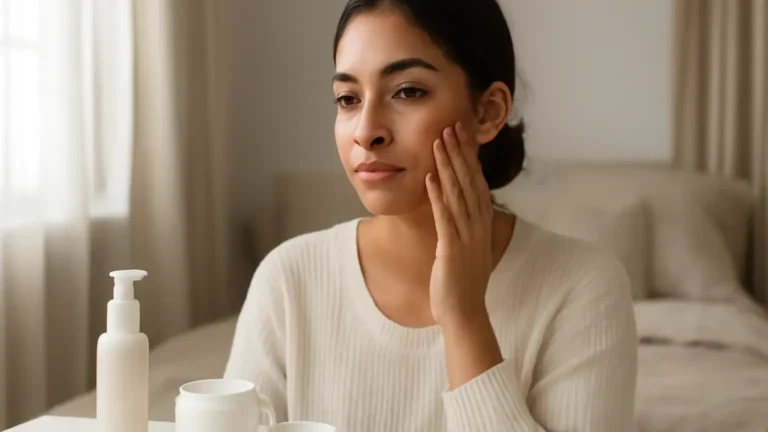
Acne Prone Skin After Threading needs a low-friction, low-heat routine rather than aggressive acne products. This guide is for anyone who develops redness, small bumps or sensitivity after eyebrow, upper-lip or facial threading. Keep the area clean with a mild cleanser, pause irritating actives, limit heat and touching, use sunscreen carefully, and wait until the skin feels settled before makeup. Persistent, painful or worsening bumps deserve advice from a dermatologist.
What is normal after facial threading?
Threading removes hair from the follicle using twisted cotton. That brief pulling action can leave freshly exposed skin more reactive, especially around the eyebrows, upper lip, jawline and cheeks. Mild pinkness, tightness or a few tiny, uniform bumps can appear during the first several hours. For many people, this settles as the skin barrier calms.
Not every bump is acne. Some are temporary follicular irritation, while others may follow sweat, friction, makeup, unclean hands or a product applied immediately after the appointment. A useful distinction is the trend: mild irritation should gradually improve, whereas increasing warmth, swelling, tenderness, widespread rash or pus-like drainage is a reason to seek professional guidance.
This first-48-hours plan is designed for general beauty care, including threading for sensitive skin. It does not replace personalised medical advice, particularly if you have a history of eczema, recurrent follicle problems or severe reactions to hair removal.
First 0–6 hours: keep the routine simple
Clean hands before touching your face
The first step in a practical threading aftercare routine is often overlooked: wash your hands before applying anything. Avoid rubbing, scratching or repeatedly checking the threaded area in a mirror. Touch transfers oil, sweat and microbes to skin that may already feel tender.
If the salon has left a product on the area, follow its basic removal instructions. Otherwise, do not rush to layer skincare. A clean, cool compress held gently over the area for a few minutes may feel soothing. Use a fresh, soft cloth and do not press ice directly against the skin.
Use a gentle cleanser only when needed
When cleansing is necessary, choose a gentle cleanser after threading: fragrance-free or low-fragrance, non-scrubbing and easy to rinse. Use lukewarm water, clean fingertips and a light touch. Pat dry with a freshly washed towel instead of dragging fabric across the skin.
Skip cleansing brushes, facial scrubs, cleansing powders and exfoliating pads. Even if the skin feels oily, repeated washing can increase tightness and make irritation more noticeable. If you have just returned from the salon and the area is clean, waiting until your normal evening cleanse is usually more comfortable than washing repeatedly.
First 6–24 hours: reduce heat, sweat and friction
For the first day, avoid heat after threading where practical. Postpone steam facials, saunas, hot yoga, intense workouts and very hot showers. Heat and sweat can make freshly threaded skin feel more flushed and may encourage touching or rubbing. If exercise cannot be avoided, keep it moderate, shower afterwards and pat the area dry.
Choose loose, breathable clothing if threading was performed on the jawline or cheeks, and keep masks, helmet straps, phone screens and spectacles from rubbing the area unnecessarily. Change a pillowcase if it is visibly soiled. These small measures are part of friction-free skincare; they reduce avoidable contact while the surface settles.
Pause strong actives and home treatments
For at least the first 24 hours, avoid applying exfoliating acids, retinoids, benzoyl peroxide, strong vitamin C formulas, bleaching products, facial oils with essential oils and fragranced masks directly over the threaded skin. These products may be useful in an established routine, but newly threaded skin can react differently.
Do not use toothpaste, lemon, baking soda or harsh antiseptic liquids as home remedies. They can add irritation without addressing the reason for the bumps. If your usual acne treatment is prescribed, do not change or stop it without asking the clinician who recommended it; ask how to work around the threaded area instead.
Sunscreen after threading: protect without overloading the skin
Sunscreen after threading is important if you will be outdoors, but timing and texture matter. Sun exposure can make post-threading redness look more noticeable and may contribute to lingering uneven tone in irritated areas. Once the skin is no longer freshly wet, stinging or highly tender, apply a broad-spectrum, SPF 30 or higher sunscreen that you already know your skin tolerates.
Use clean hands and spread a thin, even layer without vigorous rubbing. A lightweight, non-comedogenic lotion or fluid may feel more comfortable than a heavy balm. If every sunscreen stings, use a hat, umbrella or shade while you ask a pharmacist or dermatologist about suitable alternatives. Do not test several new formulas on the same day.
For a salon appointment in the daytime, carrying a familiar sunscreen and applying it gently after the skin has settled is more sensible than leaving the face unprotected. Remove it at night with your usual mild cleanser, without scrubbing.
Makeup after threading: choose timing over concealment
The safest answer to when can I wear makeup after threading is: wait until the area is calm, no longer stinging and not visibly raw. For many people, that means avoiding makeup for the rest of the day and reassessing after 12–24 hours. If redness or tenderness remains, wait longer rather than covering it with several layers.
When you do apply makeup, use clean hands or freshly washed tools, a light layer and products you have used successfully before. Avoid thick, fragranced, waterproof or heavily occlusive formulas on irritated spots. Do not share brushes, use an old sponge or repeatedly touch up the area. Remove makeup gently before bed.
Makeup is not a treatment for redness after threading. If concealer burns, makes the area itch or causes more bumps, remove it with lukewarm water and a mild cleanser. Let the skin rest instead of trying to correct every change in appearance immediately.
Day 2: rebuild a calm, familiar routine
At 24–48 hours, assess the direction of change. A routine for threading aftercare for acne prone skin should remain deliberately boring: gentle cleansing, a familiar plain moisturiser if needed, daytime sunscreen and minimal touching. A lightweight, fragrance-free moisturiser can support comfort when the skin feels dry or tight, but introduce no more than one new product.
Review your post-threading skincare products for potential triggers. Products containing fragrance, essential oils, menthol, alcohol-heavy formulas or multiple exfoliating ingredients may be unsuitable while the area is sensitive. “Natural” does not automatically mean gentle, and “oil-free” does not guarantee that a product will suit every person.
Do not pick small bumps or pull at possible ingrown hairs after threading. Picking can create more inflammation and marks. Avoid tweezing or re-threading the area until it has fully settled. If you regularly develop bumps after hair removal, discuss technique, timing and alternative methods with a qualified professional rather than repeatedly treating the skin yourself.
How to prevent bumps after facial threading next time
- Book threading when you can keep the area free from heavy makeup, exercise and prolonged sun exposure for the rest of the day.
- Tell the practitioner about acne treatments, known sensitivities and any previous reaction before the service begins.
- Choose a clean, reputable salon and confirm that fresh or hygienically handled thread is used for each client.
- Arrive with clean skin and avoid applying a new exfoliant or peel immediately beforehand.
- Plan a gentle, familiar aftercare routine rather than shopping for several soothing products at once.
- Take a clear photo if reactions recur; the timing, location and appearance can help a clinician assess the pattern.
These steps can reduce avoidable irritation, but they cannot guarantee that bumps will never occur. Individual skin sensitivity, hair-removal technique, product exposure and the condition of the skin before threading all matter.
When should you seek professional advice?
Knowing when to see a dermatologist for threading bumps is more useful than trying increasingly strong products. Arrange professional advice if bumps keep worsening after the first 48 hours, become painful or deep, spread beyond the threaded area, repeatedly recur after hair removal, or are accompanied by marked swelling, heat, crusting or drainage.
Seek prompt medical attention for severe swelling, breathing difficulty, facial swelling near the eyes or a rapidly spreading reaction. These are not routine beauty aftercare concerns. A dermatologist can help distinguish irritation, sensitivity and other causes without asking you to guess from internet photos.
Quick takeaway
For Acne Prone Skin After Threading, the best first 48 hours are calm and uncomplicated: cleanse gently, avoid heat and friction, pause irritating actives, use familiar sunscreen once the skin tolerates it, and delay makeup until there is no active stinging. If the reaction is persistent, painful, spreading or worsening, professional advice is the safer next step.
Products that may help with this routine
Choose only what fits your skin, hair or personal needs. Use the links below to view current options on Amazon India.
Frequently Asked Questions
How do you care for acne prone skin after threading?
Keep the area clean with a mild cleanser, avoid touching, heat and friction, pause irritating actives, use a familiar moisturiser if needed, and apply tolerated sunscreen when going outdoors. Wait until the skin is calm before makeup.
What can I apply after facial threading for acne prone skin?
Use only familiar, gentle products such as a mild cleanser, a simple fragrance-free moisturiser if the skin feels tight, and a tolerated broad-spectrum sunscreen once the area is no longer stinging. Avoid scrubs, acids, retinoids and fragranced remedies immediately afterwards.
When can I wear makeup after threading?
Many people should wait at least until the next day, and longer if the area is red, tender or stinging. Apply a light layer with clean tools only when the skin feels calm, then remove it gently before bed.
How can I prevent bumps after facial threading?
Use a reputable salon, arrive with clean skin, avoid strong exfoliants before the appointment, and limit heat, sweat, touching and friction afterwards. Do not pick or repeatedly re-thread bumps.
Is sunscreen safe after threading?
Sunscreen can be appropriate once the skin is no longer freshly irritated, wet or stinging. Choose a broad-spectrum SPF 30 or higher formula you already tolerate and apply it gently; use shade and a hat if products cause discomfort.
Why do I get pimples after threading?
Post-threading bumps may reflect temporary follicular irritation, sweat, friction, product sensitivity or contact with unclean hands or tools; not every bump is acne. If they worsen, recur or become painful, consult a dermatologist.