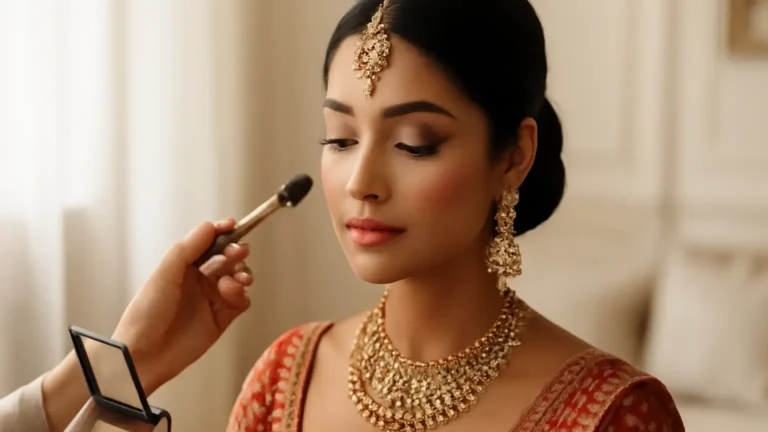
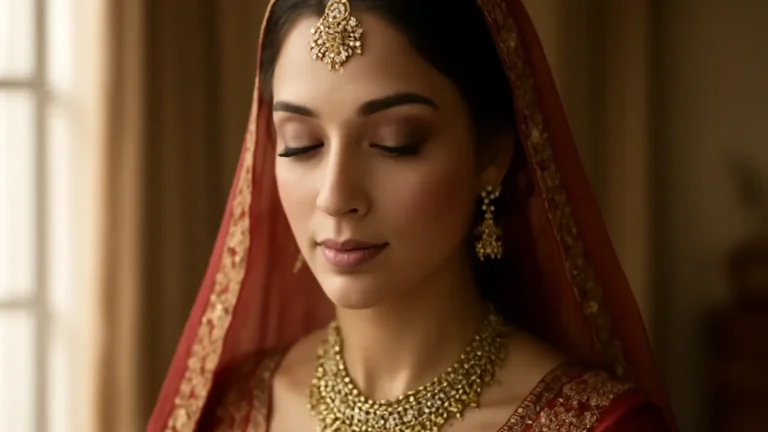
Bridal makeup for glasses should make your eyes readable, your frame comfortable and your base intact from the pheras to the last photograph. This guide is for brides who plan to wear spectacles throughout the wedding, whether for vision, comfort or personal style. The key decision is not simply choosing more makeup: it is testing frame fit, low-transfer base products, lifted liner and lash placement in daylight, indoor lighting and flash before the wedding day.
Glasses are part of how many brides see, move and feel confident, so they do not need to be treated as an obstacle to bridal beauty. The most successful look works with the frames rather than competing with them. It keeps the skin fresh, defines the eyes at a normal conversation distance and remains comfortable under a dupatta, veil or jewellery.
Start with the frame, not the eyeshadow
Before choosing colours, wear the exact spectacles you expect to use at the wedding. A frame that slides, pinches or sits too close to the lashes will create makeup problems no primer can fully solve. Ask your optician to check whether the nose pads and temples feel secure, especially if you will be wearing a heavy maang tikka, earrings or a veil that may catch on the arms.
Frame size also changes the makeup balance. Narrow frames can make a very thick wing look crowded, while larger frames may need stronger definition so the eyes remain visible in portraits. Dark frames already provide contrast; clear, gold or pastel frames may benefit from a slightly deeper lash line. This is a design decision, not a rule that every bride must follow.
Do a practical frame-fit test
- Wear the frames for at least 30 minutes after applying your trial makeup.
- Smile, speak, bend down gently and turn your head to check for slipping.
- Look for rubbing at the bridge, nose pads and upper cheeks.
- Take close-up, three-quarter and full-length photographs before changing anything.
If the frame sits too low, ask for an adjustment well before the ceremony. Do not rely on freshly applied makeup to create grip.
Build an anti-transfer base around the nose
Foundation rubbing off from glasses usually happens because of pressure, oil, skincare residue, heat or repeated touching. A reliable anti-transfer foundation routine begins with clean, moisturised skin that has had time to absorb products. Keep the layer over the bridge and around the nose thin; adding more coverage to a high-friction area often makes the patch lift faster.
- Apply a light moisturiser and allow it to settle.
- Use primer selectively on the sides of the nose and bridge if those areas become oily or makeup tends to slide.
- Press a thin layer of foundation into the area instead of rubbing it across the skin.
- Conceal only where additional coverage is needed.
- Set the contact points with a small, soft brush and a modest amount of finely milled powder.
- Wear the frames for several minutes, then gently press—not wipe—the bridge with clean tissue.
This approach is useful for makeup for nose pads because it leaves less product underneath parts that repeatedly press into the skin. Avoid heavy cream highlighter on the bridge and upper cheek area. It can transfer to the frame and emphasise texture in close photographs.
Define the eyes without crowding the frames
Eye makeup needs to be visible through the lenses, but excessive thickness can make the eye look smaller or cause lashes to touch the glass. Start by curling the lashes and checking the clearance while looking straight ahead. A softer, lifted shape is usually more comfortable than a dense strip of product close to the lens.
Choose liner according to your frame
For bold or dark frames, a slim upper line with a softly extended outer corner often gives enough definition. For thin metallic or transparent frames, you can add a little more depth at the lash roots. Eyeliner for glasses wearers should follow the eye’s natural shape and remain visible when the eyes are open; a dramatic wing that disappears under the frame adds work without adding impact.
Tightlining can make the lash line look fuller without placing a broad band above it, but skip any technique that causes watering or discomfort. Use a water-resistant formula that has been tested during your trial rather than applying an unfamiliar product on the wedding morning. A waterproof bridal eye makeup plan is particularly helpful for humid venues, emotional moments and long ceremonies, but removal should still be gentle.
Consider lashes and mascara carefully
False lashes for glasses should be lightweight, flexible and shorter at the inner corner. Very long or stiff lashes may brush against the lenses each time you blink. Individual clusters or a half-lash concentrated at the outer corner can create lift while leaving more clearance in the centre. Curl natural lashes first, then check the lens distance before finalising the style.
If you prefer mascara, choose a water-resistant option that holds curl without leaving a wet, bulky layer. Allow it to dry fully before putting on the spectacles. Test the complete combination—liner, mascara, lashes and frames—under movement, because a lash that looks elegant in a static mirror may feel irritating after several hours.
Match the eye look to wedding lighting
Makeup can appear different across a mandap, banquet hall and camera flash. Your bridal makeup trial should include photographs in the lighting conditions closest to your venue and a short wear test with the actual frames.
| Setting | What to check | Useful adjustment |
|---|---|---|
| Daylight | Texture, uneven blending and frame shadows | Soften harsh edges and keep the nose area light |
| Indoor wedding makeup | Whether eyes disappear under warm or dim lights | Add controlled lash-line definition and softly lit inner-corner detail |
| Flash photography | Glare, shine and pale-looking powder | Use thin layers, moderate powder and test directly with a flash |
For daylight bridal makeup, avoid relying only on very pale shimmer, which may be less visible than expected or reflect unevenly through the lenses. In indoor settings, warm lighting can reduce the contrast between the eyes and the frame, so a softly deeper crease or upper lash line may help. For bridal makeup for glasses in flash photography, ask the photographer to take several angles. Glare is influenced by lens coating, light position, frame angle and head position—not just by foundation.
Keep the rest of the face balanced
When spectacles are a strong visual feature, the rest of the makeup should look intentional rather than overloaded. Place blush slightly higher on the cheeks if the frame covers the usual centre of the cheek, but stop before it meets the arms of the spectacles. Choose lip colour according to the frame and bridal outfit: a defined rose, berry, terracotta or classic red can balance dark frames, while softer tones may suit delicate frames.
Highlighter should be placed where it will not rub against the spectacles. The tops of the cheekbones and a small amount above the brow can catch light more gracefully than the bridge of the nose. If you wear a veil or face-framing jewellery, check that it does not cast unexpected shadows over the lenses.
Your wedding-day wear and touch-up plan
Long-lasting wedding makeup depends on controlled preparation, not an unusually thick layer of product. Carry blotting paper, a small powder brush, lip colour, cotton buds and a clean microfiber cloth for the lenses. A setting spray for bridal makeup can help unify thin layers, but spray with the spectacles removed and allow the face to dry before putting them back on.
During touch-ups, remove oil by pressing blotting paper around the nose and under the frame rather than dragging it across the skin. If a patch has lifted, use a tiny amount of foundation or concealer only on that area, blend the edge and reset with powder. Wiping the whole bridge repeatedly usually creates a larger uneven patch.
Keep a spare pair only if it has been checked for fit and appearance in advance. A new frame can leave marks, slip differently or reflect light in ways you did not anticipate. If you are considering contacts, make that decision early and test them with a qualified eye-care professional; do not make your wedding day the first trial.
Common mistakes to avoid
- Applying heavy foundation on the bridge: friction will still occur, and the extra product may crease or transfer.
- Choosing lashes by length alone: clearance and flexibility matter more than maximum drama.
- Testing only in a bathroom mirror: photographs reveal glare, shadows and uneven texture that mirrors can hide.
- Putting spectacles on before products dry: this increases slipping and transfer.
- Changing frames at the last minute: the balance of liner, blush and face shape may look different.
- Ignoring comfort: watering eyes, pressure marks or constant adjustments will show in candid photographs.
A simple decision checklist
Choose your final look if it meets five tests: the frame stays secure, the lashes do not touch the lenses, the nose area remains presentable after a few hours, the eyes are readable in daylight and indoor light, and flash photographs show no distracting glare or powder cast. This is the practical standard for wedding makeup for brides with glasses, whether the frames are minimal, colourful, vintage-inspired or bold.
Takeaway
The best bridal makeup with spectacles is light where the frame touches, defined where the camera needs dimension and tested in the lighting your wedding will actually use. Keep the frames comfortable, use thin anti-transfer layers, choose lashes with clearance and photograph the full look before the ceremony. With those decisions made early, bridal makeup for glasses can feel polished, personal and dependable through every photo.
Products that may help with this routine
Choose only what fits your skin, hair or personal needs. Use the links below to view current options on Amazon India.
Frequently Asked Questions
How do you do bridal makeup for glasses without foundation rubbing off?
Use well-set, lightweight layers around the bridge and nose pads. Let skincare absorb, apply foundation thinly, press a small amount of powder onto contact points and blot oil instead of wiping during the event.
What is the best eyeliner for brides who wear glasses?
A water-resistant liner that stays visible with the eyes open is usually the most practical choice. Keep the line slim for bold frames and add slightly more lash-line depth for very delicate frames, then test it with the actual spectacles.
How can I choose false lashes for glasses?
Choose lightweight, flexible lashes with shorter inner corners and enough clearance from the lenses. Half-lashes or small outer-corner clusters can provide lift without brushing the glass.
Should brides wear contact lenses instead of glasses?
There is no universal need to switch. Wear spectacles if they are more comfortable and part of your personal style. If you want contacts, trial them well in advance with appropriate professional guidance rather than introducing them on the wedding day.
How should bridal makeup for glasses be tested for flash photography?
Photograph the complete look from front and three-quarter angles with the same frames, lens coating and approximate flash position. Check for glare, powder cast, frame shadows and whether the eyes remain defined.