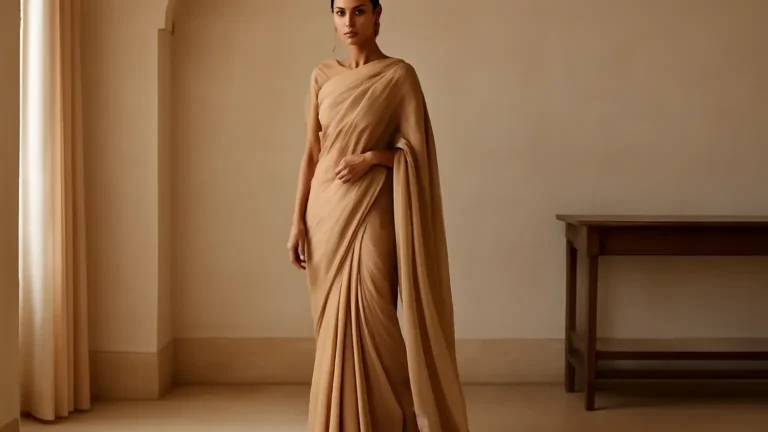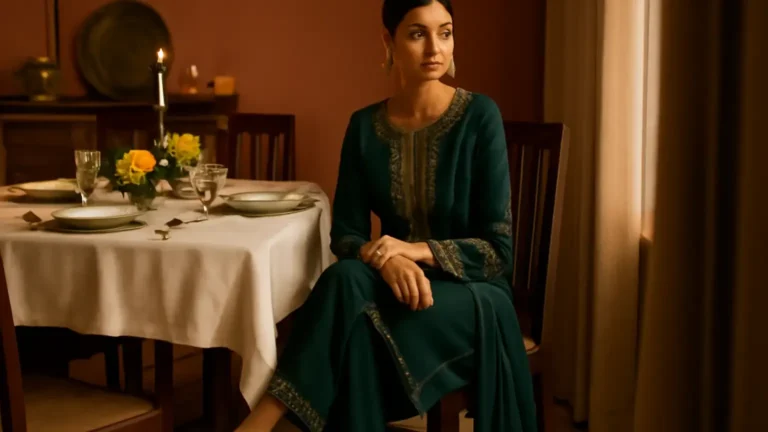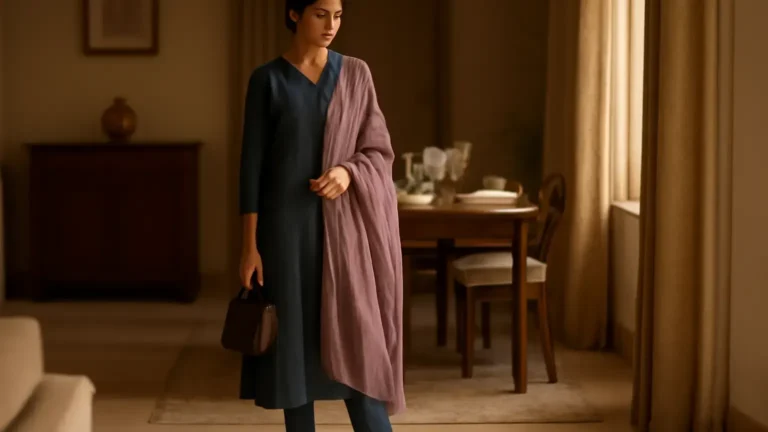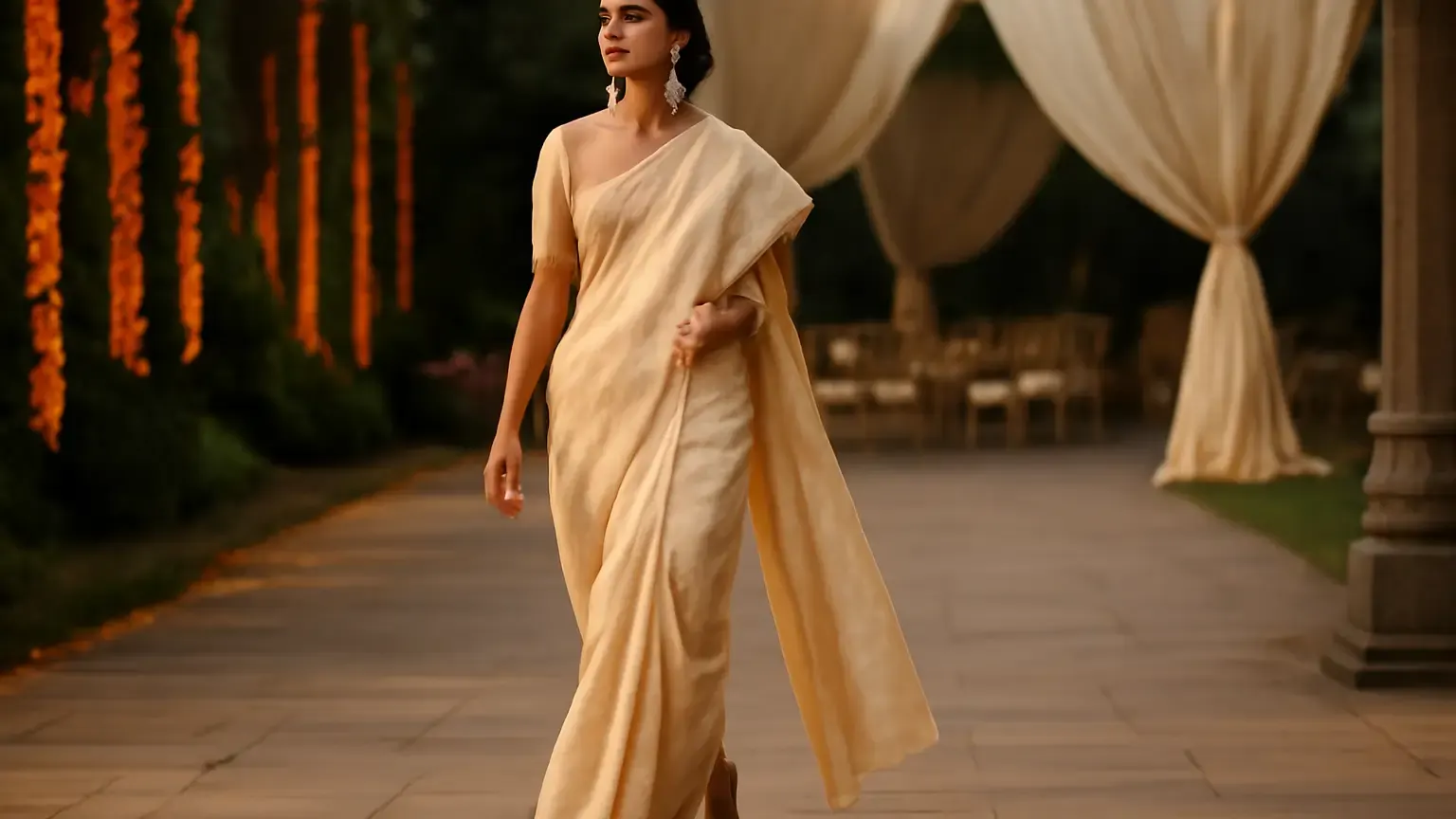
October wedding guest fashion India is easiest when you dress for the event’s temperature and timing first, then add festive detail. This guide is for guests attending daytime rituals, outdoor ceremonies, evening receptions or cool indoor functions. Choose breathable fabric and a manageable silhouette for the first half of the day, then use a light layer, richer jewellery and sturdier footwear to carry the same look comfortably into the night.
October weddings in India can move through several microclimates in one day. A morning puja may feel warm and bright, an afternoon lawn ceremony may involve heat and dust, while an evening reception or banquet hall can become noticeably cool. The most useful approach is not to create a separate wardrobe for every function, but to build a look around fabric, silhouette and accessories that can adapt.
Start with the venue, timing and movement
Before choosing a colour or trend, check four details on the invitation: start time, venue surface, dress code and whether the event is indoors or outdoors. A temple or home ceremony usually rewards modest, easy movement. A lawn wedding needs footwear that will not sink into grass. A formal reception permits more shine, structure and dramatic accessories.
Your outfit should also match how much you will move. If you expect to stand during rituals, greet relatives and walk between venues, a lightweight saree, anarkali or well-fitted sharara is often more practical than a heavily embellished lehenga. For seated dinners, a structured blouse or kurta with a clean drape can look polished without requiring constant adjustment.
Choose breathable wedding guest fabrics for October
The best fabrics for an October wedding guest outfit depend on local weather, but generally favour airy weaves and lighter blends over dense velvet or multiple layers of synthetic embellishment.
- Cotton silk: It gives a festive sheen while remaining more breathable than many heavy occasion fabrics. It works well for sarees, dupattas and dressier kurtas.
- Chanderi: Light, elegant and slightly translucent, it suits daytime rituals when paired with a lined blouse or slip.
- Georgette: Its fluid fall is useful for sarees, anarkalis and dupattas. Look for comfortable lining, especially if the outfit is embellished.
- Mulmul and fine cotton: These are practical for intimate daytime functions, particularly when the outfit has attractive borders, embroidery or festive accessories.
- Organza: It photographs beautifully and adds volume, but it can feel less forgiving in strong wind or during long periods of walking. Use it as a dupatta, overlay or structured saree rather than assuming it is the coolest option.
Satin and brocade can work for an evening wedding, but balance them with an airy blouse, an unlined dupatta where appropriate or a lighter skirt. Check whether embroidery has a rough underside, since friction becomes uncomfortable during a long celebration.
Build the look around the time of day
Day wedding guest outfit
For a morning or early afternoon ceremony, select a softer wedding guest colour palette: ivory with pink, powder blue, pistachio, marigold, peach, lilac or muted coral. If the invitation or family customs make white unsuitable, use cream only as a secondary shade or choose a pastel base with a colourful border.
A cotton-silk saree with a contemporary blouse, a short anarkali with straight trousers, or a printed sharara with restrained embroidery can look celebratory without becoming heavy. Keep the finish fresh: one prominent element, such as a border, statement earrings or an embroidered neckline, is usually enough in bright daylight.
Outdoor wedding guest outfit
An outdoor wedding guest outfit needs to handle sun, wind, grass and photographs from multiple angles. Choose a secure blouse, a dupatta with discreet pins and a hem that will not drag. A pre-pleated saree can be convenient, but test sitting, climbing steps and walking before the event.
Use a small potli bag or crossbody-compatible clutch for essentials, and carry blotting tissues, a compact comb, safety pins and a little face powder if you use it. Avoid very long sleeves or loose jewellery if you will be near candles, cooking areas or crowded seating.
Evening wedding reception outfit
An evening wedding reception outfit can take on deeper colour and more reflective texture. Emerald, wine, navy, plum, rust, fuchsia and antique gold photograph well under warm lighting. A georgette saree with a sequinned border, a satin blouse with a lighter skirt, or a streamlined lehenga with a manageable dupatta can feel suitably formal.
Let jewellery become the main upgrade from day to night. Start with small studs or slim hoops for the ceremony, then switch to jhumkas, a choker or a longer necklace before the reception. If the neckline is detailed, choose earrings instead of adding several competing pieces.
Use light layers for wedding outfits, not bulky cover-ups
Even in October, air-conditioning can make a banquet hall surprisingly cold. For an air-conditioned wedding venue outfit, plan one elegant layer rather than relying on a random cardigan at the last minute. A silk-blend stole, embroidered shawl, cropped jacket, longline cape or lined dupatta can protect the shoulders while keeping the festive mood intact.
Match the layer to the base outfit’s proportions. A cropped jacket works with a high-waisted lehenga or saree, while a long cape suits a straight kurta set. If your outfit already has a large sleeve or ornate neckline, choose a simpler wrap. Keep the layer easy to remove and carry; a garment that slips constantly will distract you throughout the event.
Pair the silhouette with comfortable wedding footwear
Comfortable wedding footwear is a style decision, not an afterthought. Block heels are generally more stable than narrow stilettos for lawns, uneven pavements and long standing. Embellished flats, low wedges or dressy juttis can work beautifully with an anarkali, sharara or saree when the hem is tailored correctly.
Break in new shoes at home with the socks or foot liners you plan to wear. Check that the toe area does not pinch and that the sole has enough grip. Carry blister plasters and, if the venue is large, a foldable pair of flats. Do not choose footwear only because it matches the blouse: a slightly contrasting metallic or jewel tone can look intentional and extend your walking time.
Coordinate festive Indian accessories without overloading the look
Festive Indian accessories should support the outfit’s strongest feature. With a plain saree, use a necklace, bangles or a dramatic pair of earrings to create focus. With dense lehenga embroidery, choose one jewellery family and let the fabric remain visible.
Gold-toned pieces add warmth to marigold, rust and wine; silver or oxidised finishes suit cooler blues, lilacs and greens. A potli or compact clutch should hold your phone, cards, lipstick and pins without becoming so large that it changes the silhouette. Hair accessories can be especially useful for outdoor events: a secure braid, low bun or pinned waves will usually survive better than loose hair in wind and humidity.
A simple day-to-night styling routine
- Fit the base outfit first: Sit, walk, raise your arms and test the dupatta before finalising alterations.
- Keep the daytime finish light: Use minimal jewellery, breathable fabric and a practical bag for rituals or outdoor photographs.
- Pack a two-piece transition kit: Carry a richer pair of earrings, a light layer and a lipstick or bindi change if these suit your personal style.
- Change only what matters: Switching jewellery and adding a wrap can transform the look without carrying a second outfit.
- Recheck footwear before the reception: Remove dust, adjust straps and switch to flats if your feet are tiring.
Common mistakes to avoid
Do not assume October is uniformly cool across India; humidity, city, venue shade and event timing matter. Avoid very heavy synthetic layers for afternoon functions, untested high heels for lawn ceremonies and unsecured dupattas around crowded spaces. Another frequent mistake is choosing a dramatic outfit that needs constant pinning. If you cannot sit, eat or move comfortably during a short trial at home, it is unlikely to feel better after several hours at the wedding.
Also check cultural and family expectations before wearing a very low neckline, short hem or all-white outfit. Personal style is welcome, but comfort, respect and venue practicality should guide the final choice.
Quick takeaway
The strongest October wedding guest outfits in India begin with a breathable base, a silhouette you can move in and footwear suited to the ground. Use a light layer for cold halls, deeper colour and richer jewellery after sunset, and keep one small transition kit in your bag. That balance is the foundation of October wedding guest fashion India: festive enough for photographs, practical enough for a full day.
Products that may help with this routine
Choose only what fits your skin, hair or personal needs. Use the links below to view current options on Amazon India.
Frequently Asked Questions
What to wear to an October wedding in India?
Choose a breathable saree, anarkali, sharara or lighter lehenga for the daytime, then add jewellery, a refined layer and deeper colour for an evening reception. Adapt the fabric to your city and venue.
What are the best fabrics for an October wedding guest outfit?
Cotton silk, chanderi, fine cotton, mulmul and lightweight georgette are useful for warm daytime events. Satin, brocade and heavier embellishment are better balanced with breathable components for evening wear.
What to wear to a daytime wedding ceremony in India?
Try a cotton-silk saree, a light anarkali or a printed sharara in a soft or mid-tone colour. Choose stable footwear, minimal jewellery and a secure dupatta if the ceremony is outdoors.
How should I style a saree for an evening wedding reception?
Use a richer border or blouse, add a statement earring or necklace, and carry a compact clutch. A light silk-blend stole can make the saree more comfortable in an air-conditioned venue.
What footwear is comfortable for Indian wedding guests?
Block heels, low wedges, embellished flats and dressy juttis are practical options. Break them in beforehand, check grip for outdoor venues and carry blister protection or spare flats.
What should I wear to an air-conditioned Indian wedding venue?
Wear your planned festive outfit with a silk-blend stole, embroidered shawl, cropped jacket, cape or lined dupatta. Choose a layer that complements the silhouette and can be removed easily.