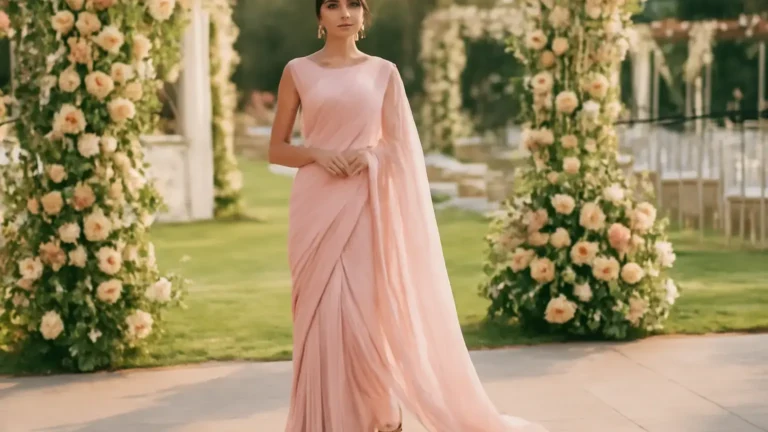
October wedding guest outfits India work best when they balance festive colour with airflow, easy movement and sensible coverage. This guide is for guests attending haldi, mehendi, pheras, sangeet or reception events across India, where October can mean warm afternoons and cooler evenings. Choose one breathable base, add a removable layer, and match your footwear and jewellery to the ritual rather than dressing identically for every function.
October is a useful transition month for wedding dressing. In some cities, afternoons remain humid, while northern and inland locations may become pleasantly cool after sunset. The most reliable approach is not to commit to heavy velvet or heavily layered embroidery from the start. Instead, build an outfit around a comfortable fabric, then add polish through colour, texture, jewellery and a detachable layer.
How to choose October wedding guest outfits India
Start with three questions: Is the event indoors or outdoors, is it during the day or evening, and will you sit on the floor, stand through a ceremony or dance at a sangeet? These details affect the ideal hemline, sleeve length, footwear and dupatta.
- For warm daytime functions: choose cotton silk, chanderi, mulmul, linen blends or light georgette, with minimal lining and comfortable armholes.
- For evening receptions: use a breathable base with a more polished surface such as satin, silk blend, tissue or restrained metallic detailing.
- For religious ceremonies: prioritise ceremony-appropriate coverage, a secure dupatta and a neckline that remains comfortable while sitting or bending.
- For outdoor venues: avoid very long trailing hems, slippery sandals and fabrics that show every crease after a short walk.
The best Indian wedding guest outfits for October usually have one visual focus. If the saree is richly woven, keep the blouse and accessories quieter. If the lehenga is plain, introduce interest through an embroidered blouse, textured dupatta or layered jewellery.
Six breathable outfit formulas for October ceremonies
1. Cotton silk saree with a structured blouse
A cotton silk saree is a dependable choice for a daytime pheras, pooja or family lunch. It has more festive presence than everyday cotton but is generally easier to wear in warmth than a dense silk or velvet drape. Look for a medium-weight weave that holds pleats without becoming stiff.
For wedding guest saree styling, pair the drape with a short-sleeved or elbow-sleeved blouse, a neatly pinned pallu and low-profile jewellery. A contrasting border in marigold, rani pink, teal or wine creates occasion value without requiring heavy embellishment. A small potli bag and comfortable juttis complete the look. If the venue is air-conditioned, carry a fine stole rather than wearing a bulky shawl from the beginning.
2. Lightweight lehenga with a breathable blouse
A lightweight lehenga suits guests who want movement for a mehendi or sangeet without the weight of a heavily panelled bridal skirt. Choose a skirt with a soft lining, a blouse that does not pinch at the underarm and a dupatta that can be secured at one shoulder. Chanderi, georgette, organza and light silk blends can all work, depending on the embroidery.
Keep the silhouette balanced: a fuller skirt works well with a clean blouse, while a detailed blouse looks more considered with a simpler skirt. This is also a good place to use wedding guest accessories selectively. Choose either a statement maang tikka, large earrings or layered bangles, rather than wearing every festive piece at once.
3. Kurta set with an organza or printed dupatta
A kurta set is practical for guests attending several functions or travelling between venues. Select a straight or gently flared kurta in cotton silk, chanderi or a refined viscose blend, then add a more decorative dupatta for a wedding finish. This formula is especially useful for guests who prefer modest wedding guest dressing without looking overly formal.
For a daytime event, try a pastel or jewel-toned kurta with a printed dupatta and slim trousers. For an evening event, choose a deeper base colour and a dupatta with zari, sequins or a woven border. Make sure the dupatta is long enough to cover the shoulders when needed but not so long that it catches underfoot. Small earrings, a structured clutch and low block heels keep the outfit polished.
4. Saree-inspired pre-draped dress
A pre-draped saree dress offers the visual language of a saree with less pleating and fewer points to secure. It can work well for a reception or cocktail-style wedding event, particularly when the invitation suggests contemporary Indian formalwear. Choose a breathable skirt or drape panel and check that the fastening sits comfortably when walking and sitting.
Because the silhouette is already distinctive, keep the wedding guest blouse or attached bodice relatively clean. A pair of sculptural earrings and a compact bag may be enough. For more coverage, add a lightweight cape or matching stole that can be removed once the evening becomes warmer. This is one of the easiest October wedding guest dress ideas for guests who do not regularly wear a traditional saree.
5. Anarkali with practical Indian wedding footwear
An ankle-length anarkali creates an elegant line and provides more coverage for a temple ceremony, formal family gathering or evening reception. Pick a style with a breathable inner layer and enough room through the waist and hips to sit comfortably. Cotton silk, chanderi and light georgette are better suited to October warmth than multiple layers of stiff net.
Indian wedding footwear should look festive but remain stable. Embellished juttis, padded kolhapuris or block heels are generally easier to manage than very thin stilettos, especially on lawns, uneven courtyards and marble floors. Break in new shoes at home, carry blister patches and keep a foldable pair of flats in your bag if you expect a long event.
6. Coordinated separates with a detachable jacket
For a modern reception or destination wedding, combine a wide-leg trouser, a festive top and a short embroidered jacket. This outfit formula gives you October wedding layering without committing to a heavy full-length anarkali. It is also easy to adjust: remove the jacket during a warm afternoon and wear it again after sunset.
Use proportion deliberately. A cropped jacket works with high-waisted trousers, while a longer jacket suits a narrow pant or column skirt. Keep the top comfortable around the neckline and choose a lining that does not trap heat. Metallic sandals, a slim cuff and a small shoulder bag can make separates feel as occasion-ready as a traditional outfit.
Match the outfit to the ritual and venue
Different functions call for different levels of shine and coverage. At a haldi ceremony, cheerful yellow, green or coral and washable fabrics are sensible because turmeric and outdoor seating can be messy. For a mehendi function, choose sleeves and hems that leave your hands and feet comfortable while henna dries. Avoid very tight cuffs or long sleeves that will brush wet designs.
For pheras or another formal ceremony, a saree, anarkali or salwar set with a secure dupatta provides respectful coverage. A reception allows more experimentation with draping, metallic surfaces and contemporary tailoring. At a sangeet, prioritise movement: test whether you can climb stairs, sit cross-legged and raise your arms before finalising the outfit.
For day wedding outfits India guests can rely on, reduce the amount of reflective embellishment and use colour, border work or textured fabric instead. At night, deeper shades and a single metallic accent tend to look more intentional than an outfit covered uniformly in sparkle.
Layering, footwear and accessories that improve comfort
Good October wedding layering is removable and proportionate. A fine stole, cropped jacket, cape or longline shrug is more versatile than a thick shawl when the weather is uncertain. Bring the layer in a breathable fabric and test it with the jewellery you plan to wear; a rough border can catch on sequins or irritate the neck.
For accessories, begin with the outfit’s neckline and sleeve length. Long earrings suit a simple blouse, while a collar necklace may work better with an open neckline. A potli is festive but less practical if you need your phone, tissues and lipstick; a small crossbody or structured clutch may be easier for a long ceremony. These small choices make wedding guest accessories useful rather than decorative clutter.
When choosing shoes, consider the surface first. Block heels are safer on grass, juttis are useful for removing footwear at some venues, and cushioned sandals are practical for a reception involving considerable standing. Match the shoe colour to the border or metallic detail instead of trying to match the entire outfit.
Common mistakes to avoid
- Overdressing for the afternoon: Heavy velvet, thick brocade and dense lining can become uncomfortable before the ceremony starts.
- Ignoring the dupatta: A beautiful outfit can become impractical if the drape slips every few minutes. Pin it discreetly at the shoulder and waist.
- Choosing untested footwear: New heels can spoil an otherwise comfortable look. Walk in them indoors before the event.
- Wearing too many competing details: Keep one hero element, such as the border, blouse, earrings or jacket.
- Forgetting movement: Sit, walk, climb a step and lift your arms before leaving home. The outfit should pass all four tests.
How to repeat the outfit across wedding functions
A thoughtful outfit repeat is easier when the base is simple. Wear the same cotton silk saree with a different blouse and earrings for a daytime ceremony and an evening dinner. Pair a kurta set with a printed dupatta for mehendi, then switch to a metallic stole and statement earrings for the reception. A detachable jacket can transform plain separates without requiring a second full outfit.
Photographs also benefit from variation. Change the drape, add a belt over a saree or swap juttis for block heels, but keep the colour story consistent. This makes a small wedding wardrobe look planned rather than repetitive and helps reduce last-minute packing.
Quick takeaway
The strongest October wedding guest outfits India guests can choose are breathable at the base, festive in one or two details and adaptable after sunset. Select the fabric according to the venue, use a removable layer for temperature changes, wear stable footwear and reserve heavier embellishment for evening events. When in doubt, a cotton silk saree, lightweight lehenga or well-cut kurta set offers the best balance of comfort, coverage and occasion polish.
Products that may help with this routine
Choose only what fits your skin, hair or personal needs. Use the links below to view current options on Amazon India.
Frequently Asked Questions
What to wear to an October wedding in India?
Choose a breathable saree, lightweight lehenga, kurta set or anarkali in cotton silk, chanderi, mulmul, light georgette or a silk blend. Add a removable stole or jacket for cooler evenings and select footwear based on the venue surface.
What are the best breathable fabrics for Indian wedding guest outfits?
Cotton silk, chanderi, mulmul, linen blends, light georgette and breathable silk blends are useful options. The final comfort also depends on lining, embroidery density and how closely the garment fits.
How do you style a saree for an October wedding?
Use a cotton silk or lightweight silk-blend saree, pair it with a comfortable short- or elbow-sleeved blouse, secure the pallu neatly and add one statement accessory. Carry a fine stole or cropped jacket if the ceremony runs into the evening.
What shoes should you wear to an Indian wedding?
Choose embellished juttis, padded kolhapuris, cushioned sandals or block heels according to the venue. Block heels and flat festive shoes are usually more practical than thin stilettos for lawns, courtyards and long ceremonies.
What should you wear to a daytime wedding ceremony in India?
Wear lighter colours, breathable fabrics and restrained embellishment. A cotton silk saree, printed kurta set or lightweight anarkali gives ceremony-appropriate coverage without feeling too warm in afternoon weather.
How can you layer an Indian wedding guest outfit?
Use a removable stole, cropped embroidered jacket, cape or longline shrug over a breathable base. Choose a layer that can be folded into your bag and will not snag on jewellery or embroidery.