Makeup for Indian skin tones becomes easier when you separate three decisions: skin depth, undertone and colour contrast. This guide is for anyone with light, medium or deep Indian skin who wants a foundation that does not look grey, blush that stays visible and lip colours that feel balanced. Start by matching foundation to your undertone and jawline, then adjust blush, bronzer, eyes and lips according to how much contrast your features naturally carry.
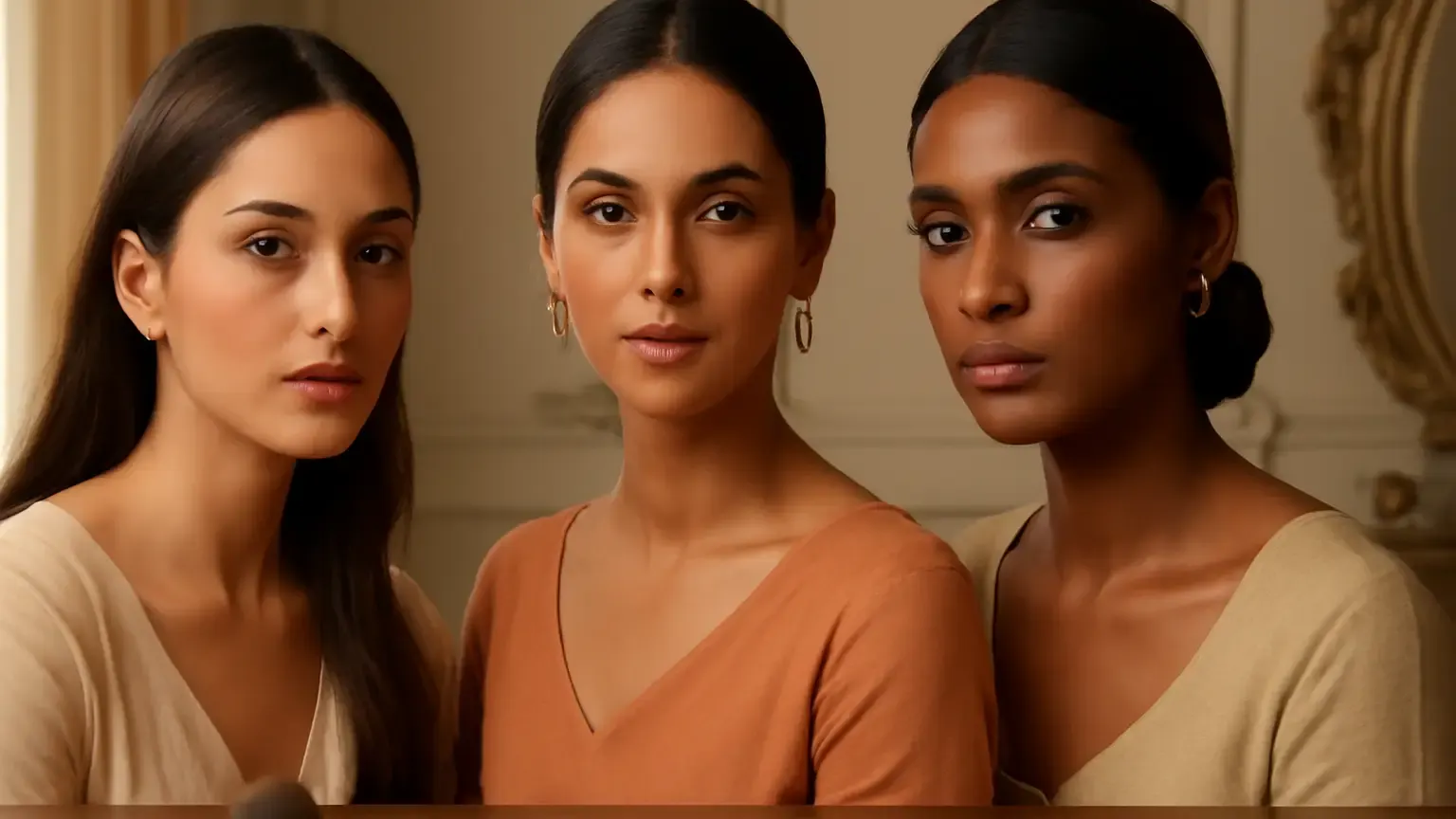
Choosing colour cosmetics by complexion labels alone can be misleading. Indian skin ranges from very light to deep, with undertones that may be golden, yellow, olive, peach, neutral, pink or a combination. Two people with the same depth can need completely different shades, while one person’s face, neck and chest may show slightly different surface tones.
The three decisions behind makeup for Indian skin tones
A reliable colour match considers depth, undertone and contrast. Depth describes how light or deep the skin appears. Undertone is the subtle colour beneath the surface: warm, cool, neutral or olive. Contrast is the difference between your skin, hair, eyes and lips. It helps determine whether soft colours look harmonious or disappear.
- Depth: choose a light, medium or deep colour family before comparing shades.
- Undertone: compare yellow-golden, peach, pink, olive and neutral options rather than relying only on a shade number.
- Contrast: use stronger liner, blush or lip colour when your features naturally have high contrast; choose sheerer, softly blended colour when contrast is low.
These categories are starting points, not fixed rules. Tanning, pigmentation, seasonal changes and indoor lighting can all alter how a product appears.
How to identify undertone for Indian skin
For practical Indian undertones checking, look at several clues in daylight instead of trusting one test. If gold jewellery and warm beige or cream clothing feel especially flattering, you may lean warm. If silver, rose pink or blue-based colours look more balanced, you may lean cool. If both groups work reasonably well, neutral is possible. A muted green cast alongside golden tones can indicate olive.
Vein colour is only a rough clue because lighting and skin depth affect what you see. A better method is to hold warm ivory, clear white, peach, rose and muted olive fabrics near a bare face. Notice which colours make the skin look even rather than unusually yellow, pink, grey or dull.
Remember that surface redness, tanning or post-sun colour is not the same as undertone. Test makeup along the jaw and allow a few minutes for the formula to settle. This is more useful than testing only on the wrist.
Foundation shade matching without a grey or orange finish
For foundation shade matching, test two or three close shades in a short stripe from the lower cheek to the jaw. The best shade visually disappears between face and neck in natural light. If the face is more pigmented than the neck, do not automatically choose a much lighter foundation; use a thin, even layer and address local discolouration with concealer.
Match the formula to your routine
For makeup for humid weather, thin layers, a compatible moisturiser and careful setting around the nose can be more useful than a heavy, highly matte base. In dry indoor air, a comfortable satin or skin-like finish may sit better. Always check how the foundation looks after it has settled, because some formulas deepen slightly through oxidation.
Light Indian skin may suit light beige, neutral, peach or golden families, depending on undertone. Medium Indian skin often falls into neutral, golden, olive or warm tan families. Deep Indian skin may need rich golden, red, neutral-deep or olive-deep options. These are broad ranges: the undertone match matters more than the label “fair”, “wheatish” or “dusky”.
For Indian skin tone concealer, choose a close skin match for blemishes and a slightly brighter shade only where you want gentle lifting, such as the inner under-eye. A concealer that is too pale can make the under-eye look ashy. If darkness is prominent, a very thin peach, orange or red-orange colour correction layer may help, selected according to depth and intensity. Follow with foundation or concealer rather than applying a thick corrector.
Blush and bronzer: choosing colour that remains visible
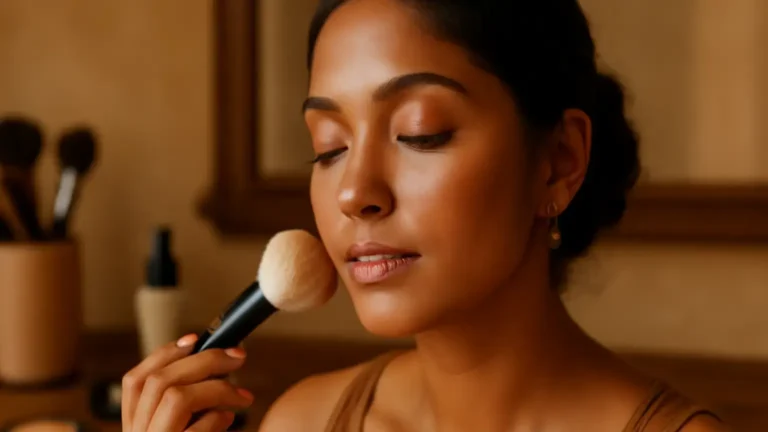
The best blush shades for Indian skin tones should complement the undertone while providing enough pigment to show through the base. Placement matters too: apply a small amount high on the cheeks and blend towards the temples, then build slowly.
- Light depth: try soft peach, apricot, warm pink, muted rose or delicate terracotta. Very pale beige-pink may look chalky if it lacks warmth.
- Medium depth: explore peach, coral, rose, cinnamon, terracotta and berry. A medium warm pink can add freshness without looking stark.
- Deep depth: consider burnt orange, brick, wine, plum, berry, rich coral and red-brown. For blush for dusky skin, high-contrast shades often look more natural than pale pastel pink.
A cream blush can give a fresh finish and blend easily over a light base, while powder blush can help durability in heat or humidity. Use a compatible formula: layering a powder over a wet, unset base can become patchy, and too much powder can flatten the skin.
Bronzer is intended to add warmth and dimension, not change your skin colour. For bronzer for brown skin, look for a shade that is only a little deeper and warmer than the complexion. Golden brown, caramel, chestnut or neutral bronze can work depending on depth. Very orange bronzer may look artificial; a cooler contour shade is better for creating a shadow beneath cheekbones, along the jaw or beside the nose.
Eyes: build colour around natural contrast
Indian eyes can carry both soft and intense makeup beautifully, but the most flattering choice depends on eye shape, lid space and contrast rather than nationality alone. Warm undertone makeup can include bronze, copper, cinnamon, olive, mustard and chocolate. Cool undertone makeup may suit mauve, plum, charcoal, taupe, navy and blue-green. Neutral undertone makeup can move between both families.
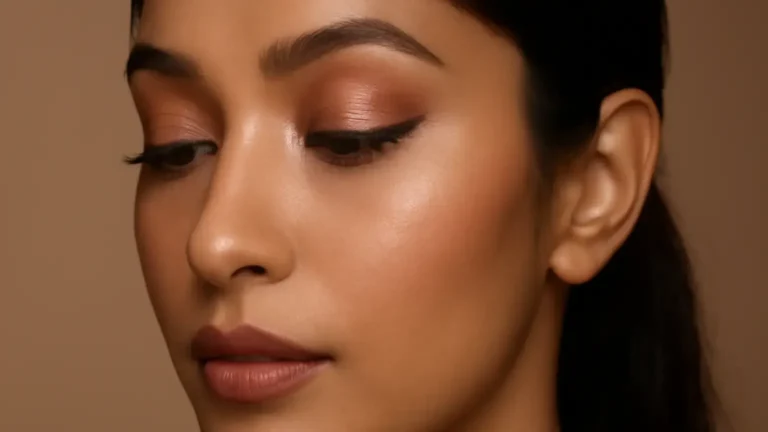
For an everyday look, sweep a medium matte brown or muted rose through the crease, add a softly luminous lid shade and deepen the lash line with brown or black. Medium and deep complexions often benefit from richer pigment so the colour does not turn grey after blending. On light complexions, sheer layers of copper, rose-brown or taupe can create definition without overpowering the face.
Kohl is an adaptable option across skin depths. A soft brown gives lower contrast, while black or deep plum creates stronger definition. If the eyes are the focal point, balance them with a quieter lip; if the eye makeup is minimal, a vivid lip can provide the emphasis.
Lip colour: use depth and undertone together
When comparing lipstick shades for Indian skin, first consider the natural lip tone. Pigmentation can shift a colour dramatically, so test lipstick on the lips or use a matching liner rather than judging it only from the tube.
- Light Indian skin: peach nude, rose, pink-brown, coral, brick and soft berry can work well. Avoid choosing a nude that is much lighter than the skin unless it is balanced with liner.
- Medium Indian skin: caramel nude, warm rose, terracotta, coral, red, berry and brown-red offer flexible options. A deeper liner can add shape without making the lip look overdrawn.
- Deep Indian skin: raisin, wine, plum, brick red, burnt orange, chocolate and deep berry can provide attractive definition. Richer colours generally remain clearer than chalky beige or pale lavender.
To answer what lipstick shades suit Indian skin tones, look for a shade with similar warmth unless you intentionally want contrast. Blue-reds can look striking on warm or olive skin too; the key is the overall balance with the rest of the face, not a strict warm-versus-cool rule.
A simple routine for a balanced result
- Apply skincare and sunscreen, then allow the layers to settle.
- Test foundation along the jaw in daylight and use the thinnest even layer that gives the coverage you need.
- Correct only visible discolouration, keeping the corrector sheer.
- Place blush before or after powder according to the formula, building from a small amount.
- Add bronzer to areas where sunlight would naturally reach; use contour only where a shadow is desired.
- Choose one main focus: strong eyes, bright cheeks or a statement lip.
- Check the complete face near a window and take a photograph before adding more product.
Common mistakes to avoid
Using a lighter foundation to brighten the face is one of the most common errors; it can create a grey cast around the jaw. Testing in yellow store lighting can also hide an undertone mismatch. Another mistake is selecting blush or lipstick by colour name alone: “nude”, “coral” and “rose” vary greatly between formulas.
Do not assume every Indian complexion needs orange corrector, heavy coverage or a matte finish. Use correction only where needed, choose coverage based on preference and let skin texture remain visible. Finally, remove makeup gently at the end of the day and stop using any product that causes persistent irritation. If a reaction is severe or continues after discontinuing a cosmetic, seek advice from a qualified dermatologist.
Takeaway: make the match, then adjust the contrast
The most dependable approach to makeup for Indian skin tones is to match foundation to depth and undertone, choose blush and bronzer with enough warmth and visibility, then balance eye and lip intensity with your natural contrast. Light, medium and deep complexions all have broad colour options; the right result comes from testing in daylight, building thin layers and adapting shades to your own skin rather than following a single complexion chart.
Products that may help with this routine
Choose only what fits your skin, hair or personal needs. Use the links below to view current options on Amazon India.
Frequently Asked Questions
How do I choose foundation shade for Indian skin?
Identify your approximate depth, then compare warm, cool, neutral or olive options along the jaw in natural daylight. Choose the shade that blends into both the face and neck after the formula settles, rather than the lightest or most golden-looking option.
How can I identify undertone for Indian skin?
Compare your skin with warm ivory, peach, rose, clear white and muted olive fabrics in daylight. If golden and peach shades look most even, you may be warm; if rose or blue-based colours suit you, you may be cool; if both work, you may be neutral. Olive undertones can look muted or slightly green alongside golden tones.
What are the best blush shades for Indian skin tones?
Light complexions can try peach, apricot, rose and soft terracotta; medium complexions can try coral, rose, cinnamon and berry; deep complexions often suit brick, burnt orange, wine, plum, rich coral and red-brown. Choose enough pigment for the blush to remain visible without looking chalky.
What makeup shades work for a light Indian skin tone?
Depending on undertone, consider light beige, peach, neutral or golden foundation families, with apricot, muted rose, soft coral, taupe, bronze and rose-brown for colour cosmetics. Test every shade on the face because light skin can still be warm, cool, neutral or olive.
What makeup works best for deep Indian skin tone?
Choose a foundation with a genuinely deep, undertone-appropriate base and use rich blush shades such as brick, berry, plum or burnt orange. Bronze, copper, chocolate, wine, red and raisin can add definition, while very pale powders and concealers may create an ashy cast.
What lipstick shades suit Indian skin tones?
The most adaptable choices include rose-brown, terracotta, brick, coral, berry, red, wine, plum and chocolate, selected according to depth and undertone. Consider your natural lip pigmentation and use liner when a nude or pale colour lacks definition.