Makeup basics for bronzer are for anyone who wants a warmer, more dimensional face without harsh stripes. Choose a shade one or two levels deeper than your complexion, match its undertone, then sweep it around the hairline, high cheek area and jaw before softly blending inward. This guide helps Indian beginners decide between bronzer and contour, select a cream or powder formula, and build colour gradually so the finish stays fresh rather than orange, grey or muddy.
Bronzer is designed to bring warmth and a lightly sun-touched effect to the face. It is not meant to redraw your bone structure. That distinction matters because many muddy or overly dark makeup looks come from using a cool contour shade where a warm bronzer was intended.
Bronzer versus contour: start with the right job
Bronzer adds warmth and a soft sense of dimension. It usually looks most natural on the areas where sunlight would gently reach: the upper forehead near the hairline, the tops or outer edges of the cheeks, the bridge of the nose and a little along the jaw. A bronzer can be matte, satin or subtly luminous.
Contour creates the impression of a shadow. It is generally cooler or more neutral, placed beneath the cheekbone, along the sides of the nose or under the jaw. Contour should recede; bronzer should warm. You can use both, but beginners often need only bronzer for an everyday look.
If a product looks orange when applied broadly, it may be too warm or too deep. If it makes the face look grey, it may be too cool or too ashy for your complexion. For a natural bronzer look, prioritise believable warmth over dramatic contrast.
How to choose a bronzer shade for Indian skin
The best bronzer shade for Indian skin depends on two things: your complexion depth and your undertone. Avoid choosing solely by the label “medium” or “deep”, because shade descriptions vary between brands and formulas.
- Light to light-medium complexions: look for a soft beige-brown, honey or muted caramel shade. Very orange terracotta can become obvious quickly.
- Medium to tan complexions: golden brown, caramel and warm chestnut shades can add dimension without looking chalky. Test whether the colour remains brown after blending.
- Dusky and deep complexions: rich cocoa, warm espresso and deep terracotta-brown shades often provide visible warmth. Avoid pale powders that leave a dull, dusty cast.
For bronzer for warm undertones, golden, honey, caramel and warm brown tones are usually harmonious. Neutral undertones may prefer a balanced brown that is neither strongly orange nor grey. Olive undertones often suit muted golden-brown shades rather than vivid orange. If you have a deeper complexion, the colour should show after one or two light layers; a product that disappears completely is not necessarily the most flattering choice.
Test the shade along the upper cheek or jaw in daylight, not only on the hand. Give it a moment to settle over foundation. When comparing products, consider how much pigment you can control, not simply how dark the pan looks.
Choose the formula for your skin and routine
Cream bronzer for dry skin
A cream bronzer for dry skin can blend comfortably over a moisturised, flexible base and leave a skin-like finish. It is also useful when you prefer a fresh, dewy appearance. Apply it after foundation or skin tint with a dense-but-soft brush, sponge or clean fingertips, pressing rather than rubbing. Keep the amount small, because cream pigment can spread farther than expected.
Powder bronzer for oily skin
Powder bronzer for oily skin is often convenient because it sets quickly and can help keep the finish less shiny. Use it after complexion products have been lightly set, especially around the areas where makeup tends to move. A finely milled matte or satin formula gives the most control. If your skin is combination, you can use powder on the forehead and nose while keeping the cheeks more natural.
Neither formula is automatically better. Creams tend to melt into a dewy base, while powders are easy to layer and travel with. If you are new to bronzer, a buildable bronzer with moderate pigment is more forgiving than an intensely coloured formula.
Bronzer placement for beginners: where to apply it
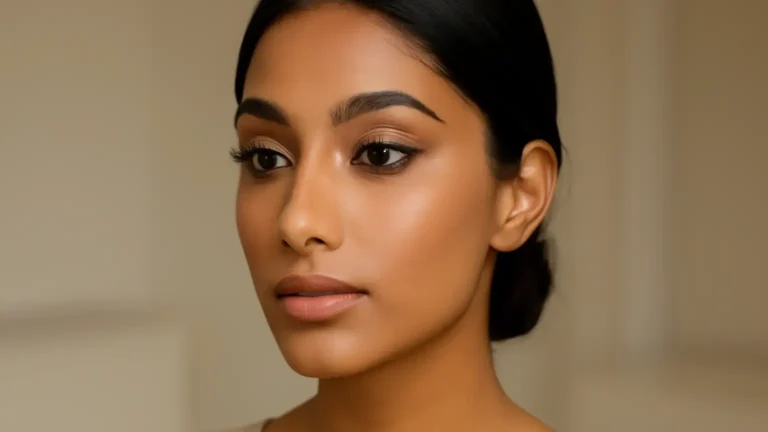
When learning where to apply bronzer, imagine a soft, wide “3” shape on each side of the face: start at the forehead, curve toward the cheek, and finish lightly near the jaw. This is only a map, not a rule. Your face shape, hairstyle and base makeup can change the placement.
- Forehead and hairline: Sweep a small amount along the outer forehead, especially near the hairline. Keep the centre of the forehead lighter so the result does not look like a horizontal band.
- Cheeks: Place colour high on the outer cheek, slightly above where a contour would sit. Blend toward the hairline and back toward the centre without taking the product too close to the nose.
- Jawline: Use the leftover product along the jaw and blend down a little toward the neck. This prevents a visible colour break, but do not create a heavy stripe underneath the jaw.
- Nose: For gentle cohesion, tap the remaining product across the bridge and lightly over the tip. This is optional; broad side-to-side colour can make the nose look wider or overly made up.
Those asking, “Can I use bronzer on my nose?” can: use very little, choose a small fluffy brush and keep the placement soft. The goal is to connect the warmth of the face, not draw precise lines.
How to choose a bronzer brush
The right bronzer brush for beginners should be soft, moderately fluffy and large enough to diffuse colour without covering the whole face at once. A tapered face brush gives targeted control around the cheek and hairline. A rounded fluffy brush creates a more diffused wash, which can be easier for quick makeup. Avoid a very small, stiff brush for the first layer; it can deposit a concentrated patch that takes longer to blend.
For cream formulas, use a synthetic brush or a slightly damp sponge if that gives you more control. For powder, a fluffy natural- or synthetic-fibre face brush can work. Pick up product lightly, tap off excess and begin at the outer face, where you usually want the most warmth. Clean brushes regularly, particularly if you use cream makeup.
A gradual bronzing routine for a natural finish
- Complete the base: Apply moisturiser, sunscreen and your usual complexion makeup. Allow skincare to settle so the bronzer does not catch unevenly.
- Load less than you think: Pick up a small amount and tap off excess. It is easier to add than to rescue an over-applied patch.
- Place, then diffuse: Set the first touch near the hairline or outer cheek. Blend the edges with small circular or sweeping motions.
- Balance both sides: Repeat with a similarly small amount on the other side rather than trying to match one side with a large application.
- Layer only where needed: Add a second thin layer to the cheek or forehead if the first has blended away. Leave the nose and jaw lighter.
- Check in daylight: Turn your face near a window. If you see an orange patch, grey cast or hard border, soften it with a clean brush or a little of your base product.
For a dewy bronzer look, keep shine concentrated on the high points and avoid placing a reflective product across textured areas if it makes them more noticeable. A matte bronzer is often easier to use around the hairline and nose, while a subtle satin finish can keep the cheeks from looking flat.
Common bronzer mistakes and easy fixes
- Using too much at once: Remove excess from the brush before touching the face and build in thin layers.
- Putting bronzer in the contour hollow: Move the colour slightly upward and outward if the face starts to look sunken.
- Choosing a shade only because it is popular: Compare undertone and depth against your own complexion in natural light.
- Stopping at the jaw: Blend the remaining product toward the neck so the face and body do not look disconnected.
- Applying over a wet base: Let cream products settle or lightly set the areas where powder will go. This reduces patchiness.
- Ignoring the finish: Too much shimmer across the entire face can look artificial in daylight. Start with matte or satin if you are uncertain.
A simple decision guide
Choose cream if you like a fresh base, have dry or normal skin, or prefer tapping makeup into place. Choose powder if you want fast application, more oil control or an easy-to-layer finish. Choose matte when you want subtle everyday warmth and satin when you enjoy a softly radiant cheek. Whatever you select, the most flattering result comes from a shade that is slightly deeper than your complexion, not several shades darker.
Takeaway: keep warmth controlled
The foundation of makeup basics for bronzer is simple: bronzer warms, contour shapes, and both need thoughtful placement. Match the formula to your base and skin preference, select an undertone-compatible shade, begin around the outer face and add only as much as daylight supports. Soft edges and gradual layers will make the finish look intentional, wearable and connected to the rest of your makeup.
Products that may help with this routine
Choose only what fits your skin, hair or personal needs. Use the links below to view current options on Amazon India.
Frequently Asked Questions
How do I apply bronzer for beginners?
Start with a small amount on a soft, fluffy brush. Sweep it along the outer forehead, high outer cheeks and jawline, then blend inward and add a second thin layer only where needed.
Where should bronzer be applied on the face?
Apply bronzer mainly around the hairline, upper outer cheeks and lightly along the jaw. You can tap the remaining product across the nose for a more cohesive sun-warmed effect.
Which bronzer shade suits Indian skin?
Choose according to complexion depth and undertone. Golden brown and caramel can suit many medium complexions, while muted brown, cocoa or warm espresso often works better for dusky and deep skin tones.
Is bronzer different from contour?
Yes. Bronzer adds warmth and a sun-kissed effect, while contour mimics a cooler shadow to define or recede areas. Bronzer is generally placed higher and more broadly than contour.
How do I choose a bronzer brush?
Use a soft, moderately fluffy brush that diffuses colour without covering the whole face at once. A tapered brush offers control, while a rounded fluffy brush gives a softer wash.