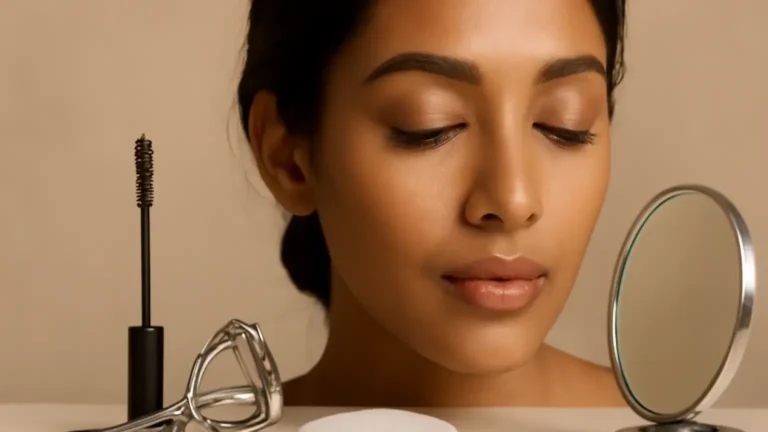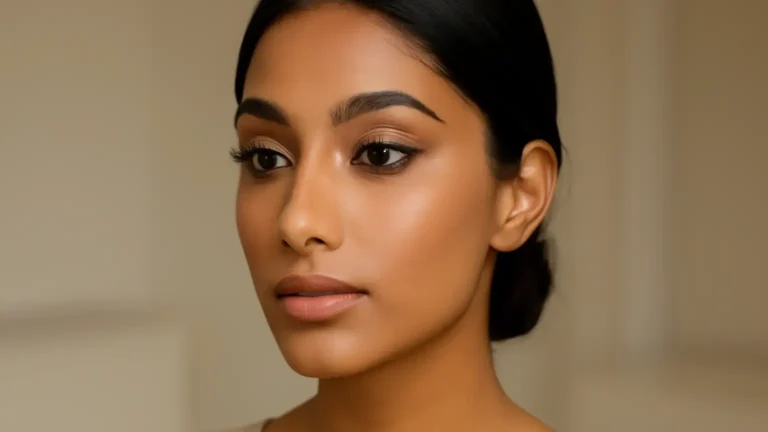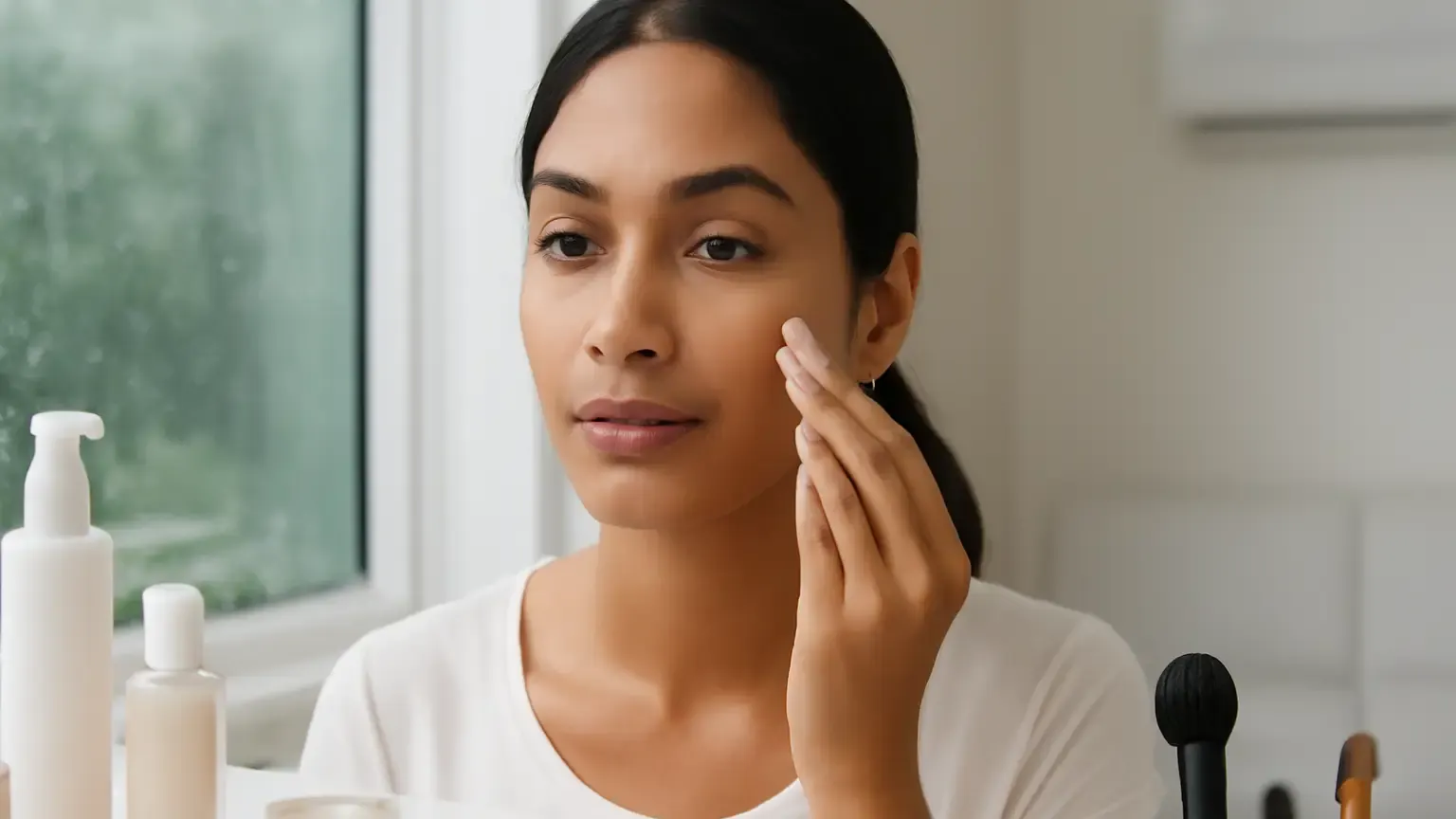
Makeup for Combination Weather works best when you stop treating the whole face alike. This routine is for anyone moving between hot, humid streets, dry air-conditioning and unpredictable seasonal conditions: hydrate areas that feel tight, control shine only where needed, then use thin, flexible layers. The result is a fresher base with less caking on dry zones, less slipping around the nose and a simpler touch-up decision during the day.
Weather changes can alter how makeup behaves within hours. In India, a morning commute may mean heat and humidity, while an office, car or shopping centre may expose the skin to constant air-conditioning. The same base can look comfortable on the cheeks but separate around the nose, cling to flaky areas or become shiny across the forehead.
The practical answer is not necessarily a heavier long-wear foundation. A more reliable approach is to divide the face into zones, match preparation to each zone and keep coverage light enough to flex with changing conditions. Think of this as a targeted combination skin makeup routine, rather than a single formula applied everywhere.
What makes makeup for changing weather difficult?
Temperature, humidity and indoor dryness affect both skin comfort and product wear. Humidity can make emollient products feel slippery and encourage foundation to move. Dry air can make the same complexion look tight, emphasise texture and pull moisture from areas that were comfortable earlier.
Your natural skin pattern matters too. The forehead, nose and chin may produce more oil, while the cheeks or around the mouth may feel dry. These zones do not need identical amounts of moisturiser, primer, foundation or powder. A fresh base comes from balancing comfort and hold, not from maximising either glow or mattification.
Prep each zone before applying base
1. Cleanse gently and assess the day
Start with a gentle cleanse or a thorough rinse, depending on how your skin feels. Before choosing products, consider the forecast and your plans. A humid outdoor day calls for lighter layers, while a long day in air-conditioning may require more moisture on the cheeks and around the mouth.
2. Moisturise selectively
Apply a comfortable moisturiser across the face, but use a thinner layer on areas that become greasy quickly. Give it a few minutes to settle. Add a little more to the cheekbones, sides of the mouth or visibly dry areas rather than spreading a rich layer over the entire T-zone.
3. Choose primer by zone
A hydrating primer can soften the look of dryness on the cheeks and help complexion products glide over uneven-feeling areas. A mattifying primer is more useful on the centre of the forehead, sides of the nose or chin if those locations become oily. Use each only where it serves a purpose; layering both over the whole face can create unnecessary texture.
Allow skincare and primer to settle before applying makeup. If products pill when you rub them, reduce the amount, press rather than massage the layers, and wait longer between steps.
Build a flexible, weather-proof makeup base
Start with thin coverage
For everyday wear, a skin tint or lightweight foundation can be easier to adjust than a dense, full-coverage formula. Apply a small amount from the centre of the face outward, then add coverage only where redness or discolouration needs it. Thin layers are less likely to crack in dry air or slide in humidity.
Use a damp sponge for a softer, pressed-in finish or a dense brush for more targeted coverage. Avoid repeatedly buffing over areas that already look smooth, because friction can disturb both moisturiser and primer underneath.
Keep concealer local
Place concealer only under the inner eye, around the nose or over specific marks. Too much product around the mouth and nose can crease as the face moves. If the skin is dry, press concealer in with a fingertip or sponge instead of dragging it across the area.
Balance colour products with the weather
Flexible textures usually perform better than rigid layers when the climate is unpredictable. A small amount of cream blush can bring life to a base that looks flat after powder. Press it onto the cheeks after foundation, then lightly tap the edges to avoid disturbing coverage.
In very humid conditions, choose a cream blush that sets down or apply a light layer of powder blush over it. On a drier day, a cream or balm-like texture may look more natural than a heavily powdered cheek. The goal is a controlled dewy makeup finish, not a uniformly glossy face.
Bronzer and highlighter should also be placed selectively. Keep luminous products away from pores or areas that already become shiny, and use a smaller amount on the cheekbones where the light naturally catches.
Set only where makeup needs help
Setting the entire face with a thick layer of powder can make dry zones look older and more textured. Instead, use a small brush or puff to press setting powder onto the sides of the nose, centre of the forehead, chin and any area where concealer tends to crease.
If you are asking, “should I use powder on combination skin?”, the answer is yes, but strategically. Leave the high points of the cheeks less powdered if they feel comfortable and you want a natural finish. Press powder rather than sweeping aggressively, especially over areas prepared with hydrating products.
For a long outdoor day, a light layer of humidity-resistant makeup products can help, but no formula is completely unaffected by heat, sweat or rubbing. A setting spray may help meld powder and base together. Let it dry without touching the face.
Adjust the routine for humid and dry weather
On hot or humid days
- Use less moisturiser on the T-zone and allow each layer to settle.
- Choose lightweight complexion products and avoid stacking multiple creamy layers.
- Keep oil control local with powder or blotting paper rather than mattifying the entire face.
- Place cream colour products in thin layers and check whether they set before adding more.
- Carry a clean tissue or blotting paper to press away shine without rubbing off the base.
On dry or air-conditioned days
- Give the cheeks and areas with dry patches a little more moisturiser before makeup.
- Avoid applying powder over texture unless the area genuinely needs setting.
- Use a hydrating mist only if it suits your products; repeated wetting and rubbing can break up makeup.
- Choose a flexible, satin or natural-finish base instead of forcing a very matte look.
- Press, do not buff, when blending over areas that feel tight.
Build a simple makeup touch-up kit
A practical makeup touch-up kit for changing conditions need not be large. Carry blotting paper or a clean tissue, a small powder compact, a cotton bud, your lip product and a small amount of concealer. If the cheeks become dry, avoid immediately adding powder. Press away excess oil first, then use a tiny amount of moisturiser or a compatible complexion product only where necessary.
For a separating base, do not keep rubbing the area. Blot gently, soften the edge with a clean fingertip and add a very small amount of foundation or concealer. If the base has completely broken down, removing that small section and rebuilding it is usually neater than layering more product over it.
Common mistakes that make the base look less fresh
- Using one primer everywhere: A pore-blurring or mattifying formula may feel uncomfortable on dry cheeks, while a rich primer can shorten wear on the nose.
- Over-moisturising before a humid commute: Comfortable skin does not require a thick film of product across every zone.
- Applying full coverage by default: More pigment means more visible movement, creasing and texture when the weather shifts.
- Powdering before assessing shine: Give the base time to settle so you can identify where setting is actually needed.
- Touching the face frequently: Hands, masks, helmets and phone screens can remove makeup regardless of the formula.
Who this zone-based method suits
This approach suits combination skin, changing seasons, monsoon commutes, hot climates and anyone who moves between outdoor heat and indoor air-conditioning. It is also useful if your face is not consistently oily or dry but changes from day to day. If your skin is persistently irritated, painful, intensely itchy or unusually flaky, pause experimentation and consider speaking with a dermatologist. Makeup can improve appearance, but it should not be used to mask a concerning skin change.
Takeaway: let each zone choose its own finish
The most dependable Makeup for Combination Weather routine is light, targeted and easy to modify. Hydrate the areas that feel tight, control shine only in the T-zone, select flexible textures and set makeup where movement is most likely. When the weather changes, adjust the preparation and finish by zone instead of replacing your entire routine.
Products that may help with this routine
Choose only what fits your skin, hair or personal needs. Use the links below to view current options on Amazon India.
Frequently Asked Questions
How do I do makeup for changing weather?
Use a gentle moisturiser, add hydrating primer to dry zones and mattifying primer only to oily areas. Apply thin complexion layers, set the T-zone selectively and carry blotting paper for midday adjustments.
What is the best makeup routine for humid and dry weather?
Keep the base lightweight, moisturise cheeks more generously than the T-zone, use a setting product only where makeup moves, and choose cream or satin textures that can be adapted instead of a thick matte layer.
How can I stop makeup separating in humidity?
Use fewer skincare and makeup layers, allow each one to settle, keep rich products away from the T-zone, and press away oil with tissue or blotting paper instead of rubbing.
How should I apply makeup on dry patches and oily areas?
Use extra moisturiser and a hydrating primer on dry patches, then apply minimal base by pressing it in. Use targeted mattifying primer and powder on oily areas rather than across the whole face.
What primer is best for changing weather?
There is no single best primer for every face. A hydrating primer suits dry-feeling zones, while a mattifying primer can help the forehead, nose or chin. Using them selectively is often more comfortable and effective.