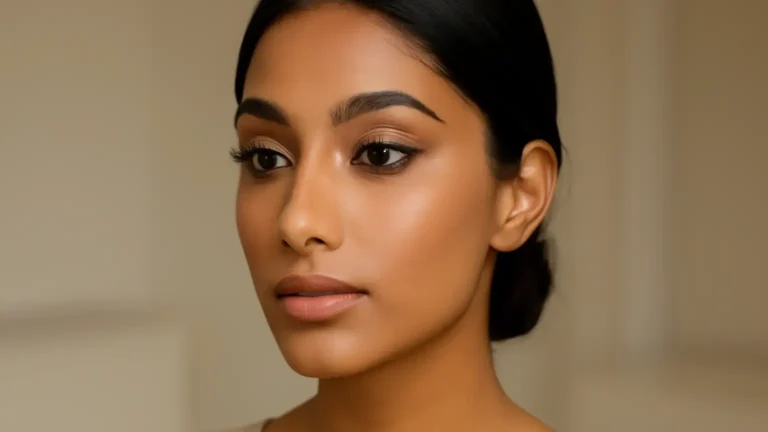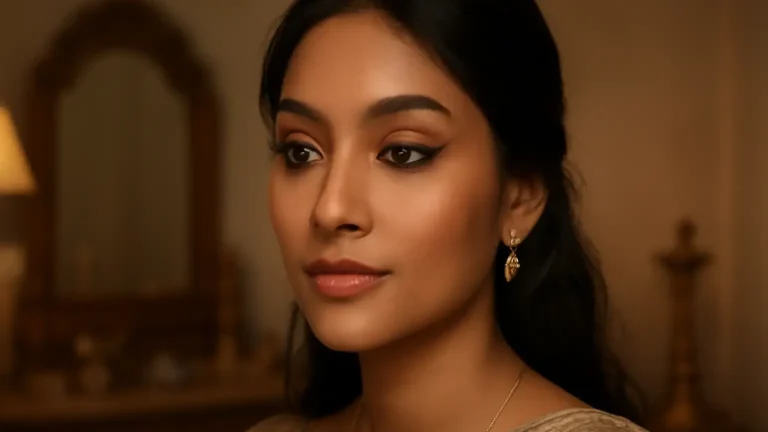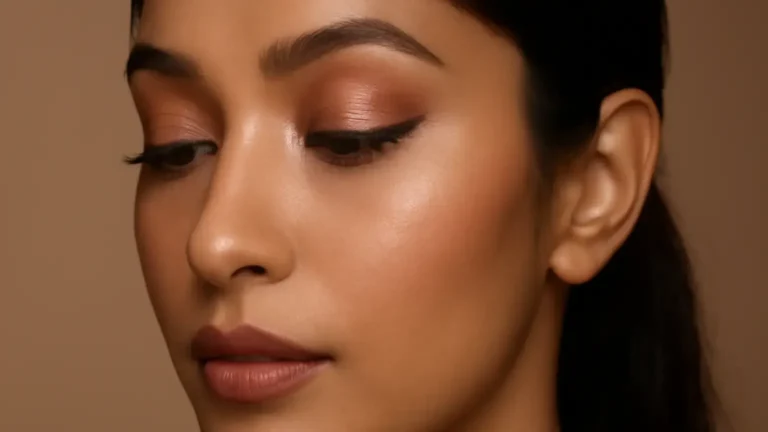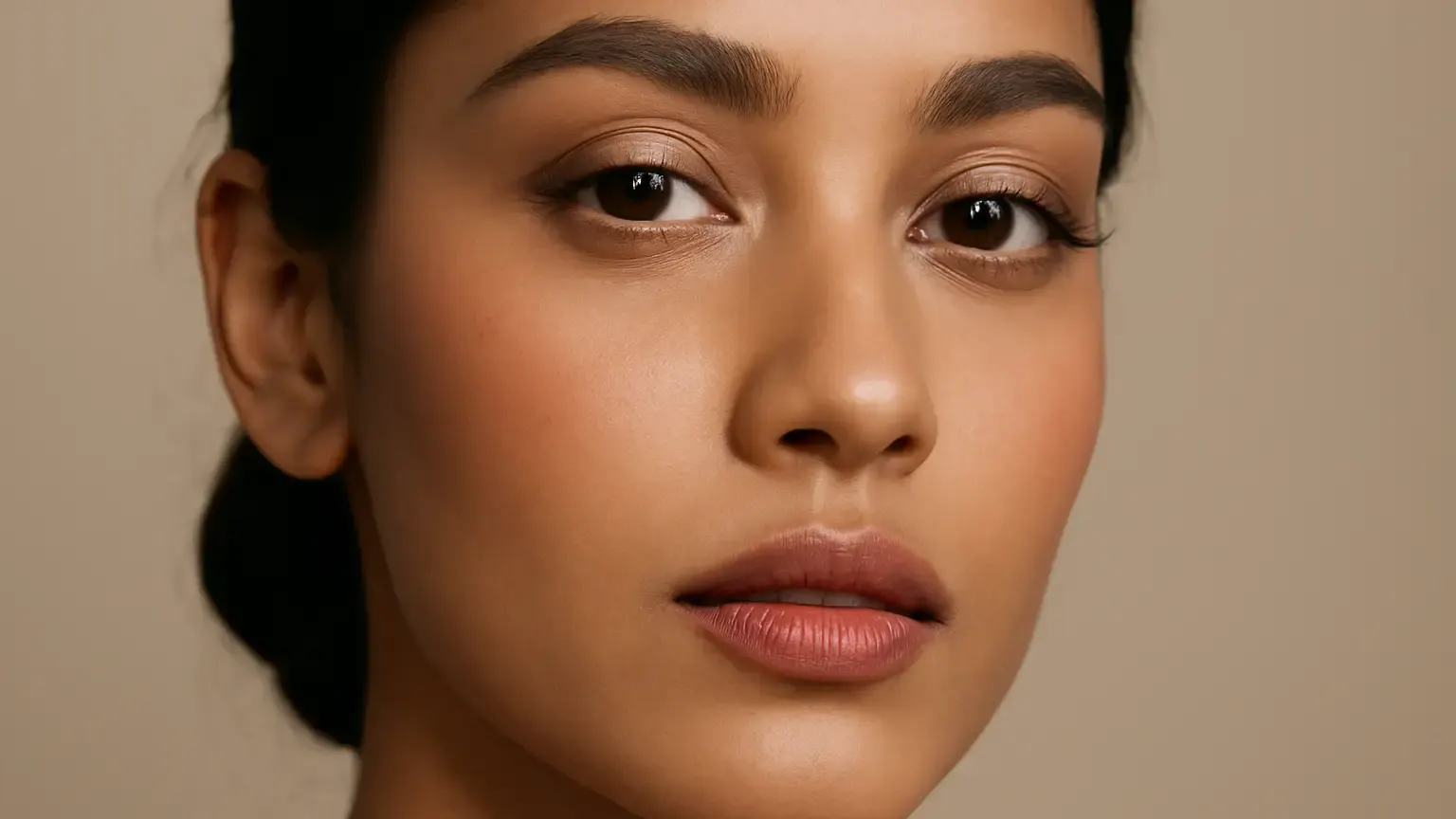
Eye makeup for wide set eyes is mainly about shifting gentle emphasis inward, not disguising your natural proportions. This guide is for anyone whose eyes sit farther apart than one eye-width, including people with almond, hooded or downturned lids. Start with a softly deepened inner third, keep liner from pulling attention too far outward, concentrate lashes nearer the centre, and bring the brows slightly closer together for a balanced, polished finish.
Wide set eyes have more space between the eyes than the width of one eye. This is a natural facial proportion, not a problem that needs correcting. The most flattering makeup approach is to create a little more visual weight near the nose and centre of each eye while keeping the finish soft and proportional.
These suggestions are starting points rather than strict rules. Your eyelids may also be hooded, almond-shaped, round or downturned, and that second layer of shape should guide the final placement. Use a mirror with your eyes relaxed and looking straight ahead; placement that looks perfect with closed eyes can disappear when the lid is open.
1. Bring the first eyeshadow emphasis slightly inward
The simplest adjustment is to avoid placing all your colour on the outer corner. Instead, use a light-to-medium shade across the inner third and centre of the lid, then deepen only the inner edge or the centre depending on your comfort level.
- Apply eye primer lightly across both lids so the colour does not crease or fade unevenly.
- Press a satin or soft matte shade onto the inner third and centre of the lid.
- Use a slightly deeper shade close to the inner lash line, stopping before the tear duct if your eyes water easily.
- Blend the colour toward the middle, not far out toward the temple.
For an understated daytime look, choose a warm taupe, muted brown or rose-brown rather than a very dark pigment. A small touch of inner corner eyeshadow can add definition, but a bright, high-contrast spot directly in the tear duct may make the eyes look more separated again. If your eyes are hooded, keep the deeper colour just above the fold while your eyes are open so it remains visible.
2. Change the direction of your liner
Where eyeliner ends often affects perceived eye spacing more than the colour itself. A long, sharply extended wing pulls the eye outward, so it may exaggerate distance. For balanced makeup for wide set eyes, keep the outer flick short or angle it slightly upward without extending it far beyond the natural lash line.
Choose liner by your eye shape
- Almond eyes: Draw a thin line from the inner corner to the outer lash line, then add a small lifted flick.
- Hooded eyes: Keep the line thin and test the wing with your eyes open. A thick band can cover the mobile lid.
- Downturned eyes: Stop the liner before the outer corner turns downward, then angle a tiny flick from the upper lash line.
- Round eyes: Extend the line only slightly and smudge the outer edge so the result stays soft rather than pulled outward.
If you want extra depth near the nose, try tightline eyeliner along the upper inner lashes instead of drawing a visible, heavy inner-corner line. This gives the roots of the lashes more presence without making the eyes appear smaller. To answer the common question, “does inner corner eyeliner suit wide set eyes?”—it can, particularly as a fine, short line, but avoid forcing a point into the tear duct or using a thick black block.
3. Place crease colour where your eyes can actually see it
Crease placement should follow your lid anatomy, not a fixed diagram. The goal is to create a soft shadow from the inner crease through the centre, with the highest visible depth around the middle rather than only at the outer V. This is the most useful principle in eyeshadow placement for wide set eyes.
Look directly into a mirror and mark the natural fold. Sweep a matte transition shade from the inner crease to the centre, keeping the brush closer to the nose than you normally might. Add a deeper shade to the inner half in small amounts, then blend the edges upward and inward. Leave the outer corner lighter if a strong outer V makes your eyes look farther apart.
For hooded eyes makeup, place the transition shade slightly above the fold while the eye is open, but do not take it all the way to the brow. For prominent or deep-set eyes, keep the colour nearer the actual crease and use a lighter lid shade to prevent the eye from looking overly recessed. A matte eyeshadow is usually easier for creating this structural shadow; reserve shimmer for the centre or inner lid.
4. Concentrate lash focus toward the centre
Lashes can redirect attention without requiring dark, dramatic makeup. Apply the most mascara to the middle and inner-middle lashes, using less product on the far outer lashes. This creates a subtle central emphasis and works well for everyday looks.
- Wiggle the mascara wand at the roots, then comb upward through the centre lashes.
- Use the tip of the wand to separate inner lashes rather than coating them heavily.
- Comb the outer lashes diagonally upward, not straight out toward the temples.
If you wear false lashes, select a style that is even, rounded or gently longer in the centre. Very long, cat-eye lash strips place maximum length at the outer edge and can work against this balancing aim. Half lashes are not automatically wrong, but they should be trimmed and positioned from the centre outward rather than starting too far at the outer corner.
5. Balance the brows without overcorrecting
Brows frame the eyes, so their inner spacing and tail direction influence the finished look. Avoid extending the tails dramatically outward or leaving a large gap between the brows. Instead, keep the inner brow shape natural and softly define the front third, then maintain a moderate arch.
With brow shaping, make changes gradually: fill sparse areas with hair-like strokes, brush the hairs upward, and compare both sides from a distance. The inner brow should not be drawn as a solid vertical block. A soft front and a gently tapered tail usually look more balanced than a heavily squared brow.
Do not force the brows to begin far closer together than your natural anatomy allows. Over-plucking or drawing an artificial bridge can look severe and may make the upper face feel crowded. The best result is a small visual shift, not a complete change to your facial proportions.
How to combine the five tweaks in one routine
For a practical five-minute look, begin with primer, then apply a medium matte shade from the inner lid through the centre. Add a slightly deeper shade to the inner crease and upper inner lash roots. Keep the outer third softly blended rather than heavily smoked. Draw a thin liner close to the lashes, ending with a short lifted flick. Finish with centre-focused mascara and lightly groomed brows.
For evening makeup, increase intensity in stages. First deepen the inner and centre lid, then add a small amount of shimmer to the centre. Check the balance with both eyes open before adding more liner. If the look starts appearing too close-set, soften the inner depth with a transition shade and restore a little brightness at the centre of the lid.
Common mistakes to avoid
- Only darkening the outer V: This can pull the visual focus away from the centre and emphasise spacing.
- Using an extra-long wing: A dramatic outward line may make the eyes seem farther apart.
- Copying a crease map exactly: Hooded, deep-set and monolid eyes need placement adapted to their visible lid space.
- Overfilling the inner brows: This creates a hard look rather than natural balance.
- Applying identical lash lengths everywhere: Lash distribution changes the direction of attention, even when the eyeshadow is subtle.
- Ignoring comfort: Keep pigment out of the waterline if your eyes become irritated or watery, and remove makeup gently at the end of the day.
A simple decision guide for your eye shape
If your eyes are wide set and hooded, prioritise visible crease colour above the fold, a thin liner and centre-focused lashes. If they are wide set and downturned, stop the liner before the downward turn and lift the outer edge slightly. If they are wide set and round, use a soft, elongated shadow shape through the centre while avoiding an oversized outer wing. If they are wide set and almond-shaped, all five tweaks can be subtle because the natural eye contour already provides definition.
The right level of adjustment depends on your preferred style. Soft makeup may need only inner-centre shadow and a restrained wing, while a more sculpted look can add inner tightlining, a deeper crease and carefully placed lashes. Take a quick photograph from a normal viewing distance; this is often a more useful test than inspecting each eye very closely in a magnifying mirror.
Concise takeaway
The most reliable approach to eye makeup for wide set eyes is to add gentle weight to the inner and central areas, limit outward pull from liner and lashes, and shape the brows with restraint. Adapt every step to your lid space, crease visibility and eye direction. Balance should look like your features, only slightly more intentional—not like a fixed template.
Products that may help with this routine
Choose only what fits your skin, hair or personal needs. Use the links below to view current options on Amazon India.
Frequently Asked Questions
What is the best eyeshadow placement for wide set eyes?
Place medium or softly deepened colour across the inner third and centre of the lid, carry transition colour through the inner crease, and avoid concentrating all the depth in the outer V. Adjust the height for hooded or deep-set lids.
How can I make wide set eyes look closer together with makeup?
Add subtle definition near the inner lash roots and inner crease, keep the outer wing short, focus mascara toward the centre, and softly bring the brows forward without drawing an unnatural inner brow block.
Where should eyeliner go for wide set eyes?
Keep eyeliner close to the upper lash line, especially through the inner and middle sections, and finish with a short lifted flick. A very long outward wing can emphasise the distance between the eyes.
Does inner corner eyeliner suit wide set eyes?
A fine, short inner-corner line can suit wide set eyes and add balance, but a thick or sharply extended line may look harsh. Tightlining the inner upper lashes is a softer alternative.
What makeup works for wide set eyes and hooded lids?
Use matte crease colour slightly above the fold while looking straight ahead, keep liner thin, place depth on the inner-to-centre lid, and choose centre-focused mascara so the visible lid is not covered.