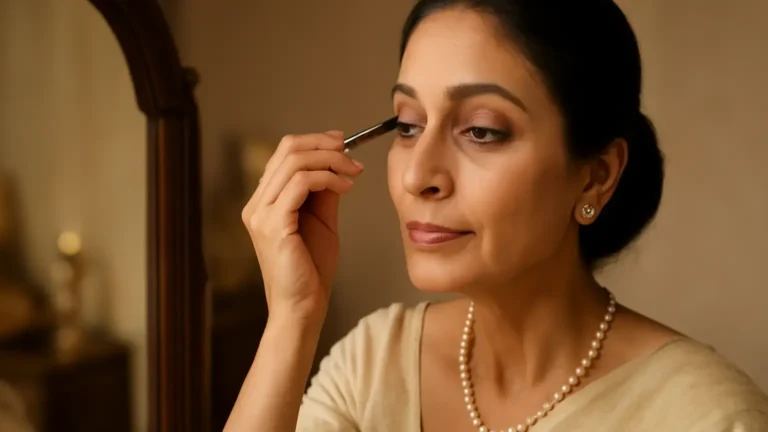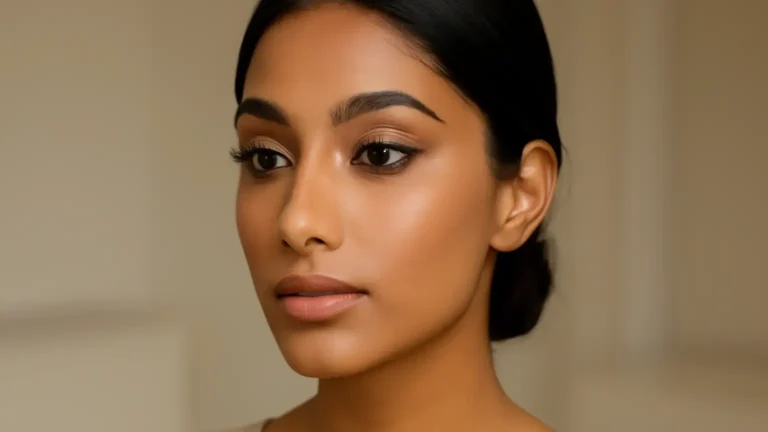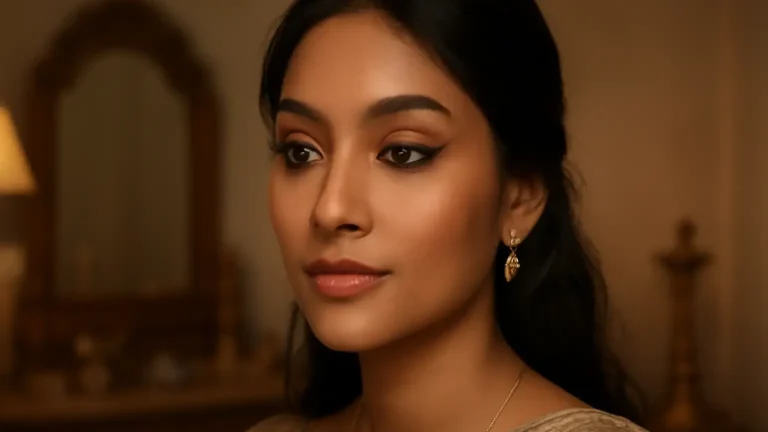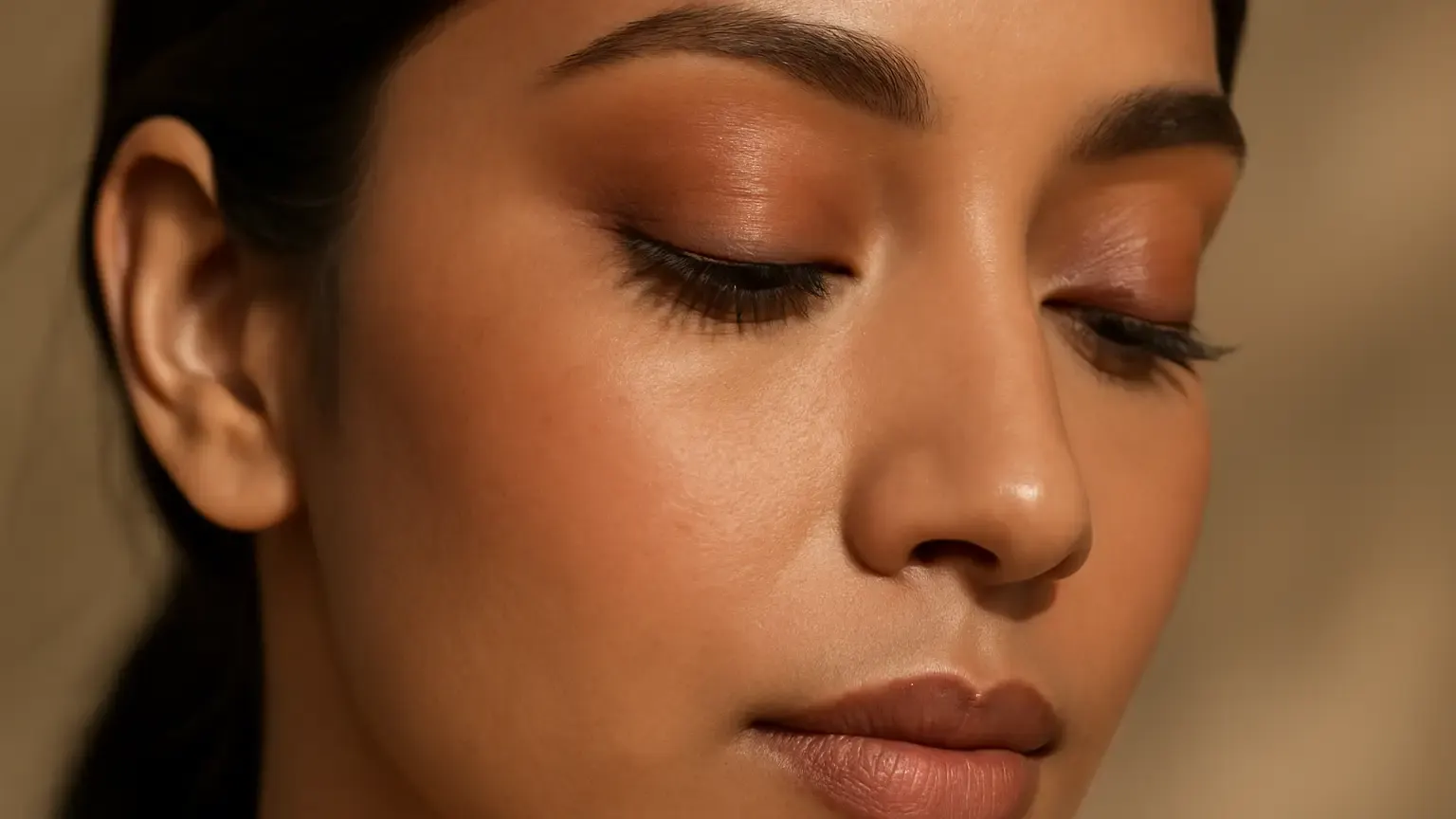
Eye makeup for monolids India works best when you map colour and liner with the eyes open, not only while they are closed. This guide is for anyone whose eyelid fold hides part of the lid, whether you have naturally monolid or low-crease eyes. The key decision is simple: keep the deepest definition close to the lashes and place soft colour slightly above the fold, using thin, transfer-resistant layers that can handle Indian humidity.
Monolid eyes have little or no visible crease separating the mobile lid from the brow area. That does not mean there is no space for eyeshadow; it means the visible space changes when the eye opens. Makeup that looks balanced with the eyes shut can disappear, crease or transfer once you look straight ahead.
Start with an open-eye map
The most useful adjustment is to plan your shape while looking directly into a mirror. Keep your face relaxed and your eyes naturally open. Notice three areas: the upper lash line, the small amount of visible lid above it, and the outer area that remains visible when the eye is open.
For an open-eye makeup mapping approach, place the strongest definition where it will still be seen: close to the lashes and at the outer corner. A soft transition shade can sit just above the natural fold or the point where colour disappears. This is not an invitation to draw a heavy artificial crease. It is a way to create dimension in the space that remains visible.
- Lash line: the darkest and most precise area.
- Visible lid: a thin wash of satin or matte colour, depending on your preference.
- Outer corner: a short, lifted shape that follows the eye rather than extending too far outward.
- Above the fold: a diffused transition shade, blended until there is no hard stripe.
Check the result with your eyes open before adding more product. If the colour vanishes, move the next layer only a few millimetres higher. Small adjustments usually look more natural than drawing a wide, dark crease.
Eyeshadow placement for monolids that stays visible
Eyeshadow placement for monolids should be built in thin sections. Start with an eye primer or a very light layer of concealer, then set only if the base feels tacky or tends to crease. Too much powder can make the lid look flat and can reduce the grip of later shimmer.
Use a three-zone gradient
- Base shade: Sweep a soft beige, peach, rose, taupe or brown across the lid and slightly above the fold. Choose a shade that is close to your skin tone but has enough contrast to remain visible.
- Depth shade: Press a matte medium brown, plum, terracotta or charcoal close to the upper lashes and into the outer third. Keep the colour concentrated rather than spreading it across the entire lid.
- Highlight shade: Add a small amount of satin or fine shimmer to the centre or inner third. Press it on with a fingertip or flat brush so it does not migrate into the fold.
For everyday monolid eye makeup Indian eyes often suit soft brown eyeshadow, muted rose, bronze, copper and plum because these shades offer definition without requiring a very sharp crease. The best colour depends on your skin tone, wardrobe and comfort with contrast. Very pale matte shades may disappear, while very dark colour across the full lid can make the eye look smaller.
Keep shimmer away from areas where the lid folds or rubs most. A matte outer corner and a controlled inner-corner highlight generally give more reliable dimension than glitter spread from lash line to brow.
Monolid eyeliner placement: thin, lifted and set
Monolid eyeliner placement is easier when you draw the line with the eyes open. Begin at the centre of the upper lash line and work outward, keeping the line as close to the lashes as possible. If the liner disappears when you relax your gaze, slightly thicken only the section that remains visible. Avoid beginning with a broad wing; it can consume the lid space and transfer onto the fold.
A short, softly lifted wing usually performs better than a long horizontal one. Follow the direction of the lower lash line for the first few millimetres, then angle upward subtly. For a softer daytime look, use dark brown or deep plum instead of opaque black.
Kajal and liner choices
Waterproof kajal can be useful on the waterline or upper lash line, but a creamy formula may still migrate if it touches a warm fold. Give it a little time to set, then press a matching matte shadow over the outer section. This simple setting step can improve wear without making the line look thick.
For a smudge-proof eyeliner result, choose a quick-setting pencil, gel or liquid formula according to your skill level. Liquid liner gives a crisp finish but needs a steady hand; pencil is easier to soften; gel offers control but should be used in a thin layer. Patch-test new eye products and stop using anything that causes burning, swelling or persistent irritation.
Lash curling and mascara for more open-looking eyes
An eyelash curling technique matters because lifted lashes create visible space without adding more shadow. Curl in three gentle points: near the roots, at the middle and close to the tips. Use light pressure rather than clamping hard in one place, which can create an angular bend or breakage.
Apply mascara mainly to the roots and upper surface of the lashes. A tubing, waterproof or humidity-resistant formula may be more suitable if your lashes touch the lid or if mascara commonly leaves marks. Comb away clumps before the product fully dries. If your lashes are straight, let the first coat set briefly before adding a second light coat; several wet layers are more likely to weigh down the curl.
Lower-lash mascara is optional. A small amount on the outer lower lashes can balance a lifted look, but applying it heavily may make the eyes appear shadowed. If you use false lashes, choose a lightweight, shorter style and place it slightly above the natural lash line only after the liner has dried.
Humidity-proof eye makeup for Indian weather
Long-wear eye makeup begins with skin preparation. Use a light moisturiser, allow it to absorb, and keep rich eye creams away from the exact fold if they make products slide. Blot excess oil rather than repeatedly adding powder. A thin eye primer can create a more even surface, particularly for combination or oily lids.
- Apply fewer layers, because thick cream and powder combinations crease faster.
- Let each layer set before adding the next, especially liner and cream shadow.
- Use transfer-resistant eyeshadow on the fold and reserve cream shimmer for areas with less rubbing.
- Set the outer lash line with a coordinating matte powder shadow.
- Carry cotton buds for precise cleanup rather than rubbing the whole eye.
For humid commutes, weddings or long outdoor events, a matte base with pressed powder shadow is often more dependable than a glossy cream look. If you prefer a dewy finish, place shine selectively on the inner third and centre lid. Humidity-proof eye makeup is not about making every product waterproof; it is about reducing movement where your lid naturally touches itself.
Common mistakes and how to correct them
Drawing a crease with closed eyes
A high, dark line may look even when the eye is shut but can appear heavy when open. Map the transition shade with the eyes open, then blend the edges with the eye closed.
Making the eyeliner too thick
Thick liner takes away the visible lid area. Start with a narrow line, look forward, and add width only where it is actually needed.
Using wet, highly reflective shimmer everywhere
Large glitter or glossy shadow can shift into the fold and emphasise transfer. Use finely milled shimmer in a small area and press, rather than sweep, it into place.
Ignoring the lower lash line
A completely bare lower eye can make strong upper liner look disconnected. Try a small amount of the transition or depth shade along the outer third, keeping the inner lower line clean for openness.
Rubbing during touch-ups
Rubbing spreads pigment and can irritate the delicate eye area. Remove a mark with a pointed cotton bud, let the skin dry, and reapply a tiny amount of liner or shadow.
A practical five-minute routine
- Prep clean, dry lids with a thin layer of primer or a lightly set base.
- With your eyes open, place a soft transition shade slightly above the point where colour disappears.
- Press a medium matte shade onto the outer third and blend inward without creating a broad dark band.
- Draw a thin upper-lash liner, adding a short upward flick only if it remains visible when relaxed.
- Curl lashes in three points and apply a light coat of long-wear mascara.
- Add a small inner-corner highlight and check for transfer after looking down and blinking normally.
For festive makeup, deepen the outer corner with a second layer and add metallic colour to the centre lid. For office or college makeup, a matte brown liner and one softly blended shadow are usually enough. The same map can be adapted for round, downturned or slightly hooded and monolid eyes by following the visible shape rather than forcing a standard crease.
Takeaway
Good eye makeup for monolids India is based on visibility, not on copying a crease-led tutorial. Keep definition close to the upper lashes, blend transition colour just above the disappearing fold, curl lashes carefully and choose thin, setting-friendly layers. Test the look with your eyes open in daylight before relying on it for a long, humid day.
Products that may help with this routine
Choose only what fits your skin, hair or personal needs. Use the links below to view current options on Amazon India.
Frequently Asked Questions
How do you do eye makeup for monolids in India?
Map the look with your eyes open, keep the darkest colour close to the upper lashes, blend a soft transition shade slightly above the fold, and use thin transfer-resistant layers. Finish with a careful lash curl and a humidity-suitable mascara.
Where should eyeliner go on monolid eyes?
Place eyeliner as close to the upper lash roots as possible and check it with the eyes open. Keep it thin across the lid, slightly thicken only where the line disappears, and use a short lifted wing instead of a wide horizontal one.
What is the best eyeshadow placement for monolids?
Use a light-to-medium base across the visible lid, place matte depth on the outer third and lash line, and blend a transition shade just above the fold. Add shimmer only where the lid does not rub heavily.
How can I stop kajal transferring on monolids?
Use a thin quick-setting or waterproof kajal layer, allow it to dry, and press a matching matte eyeshadow over the outer lash line. Avoid heavy cream around the fold and remove excess oil before makeup.
How can I make monolid eyes look bigger with makeup?
Keep the inner lid lighter, place depth at the outer corner, curl the lashes from root to tip and avoid covering the full visible lid with thick black liner. A small inner-corner highlight can add brightness.
How can I make monolid eye makeup last in humidity?
Start with clean, dry lids and a thin primer, use light layers, let cream products set, and choose transfer-resistant liner and humidity-resistant mascara. Press, rather than rub, shimmer and use cotton buds for touch-ups.