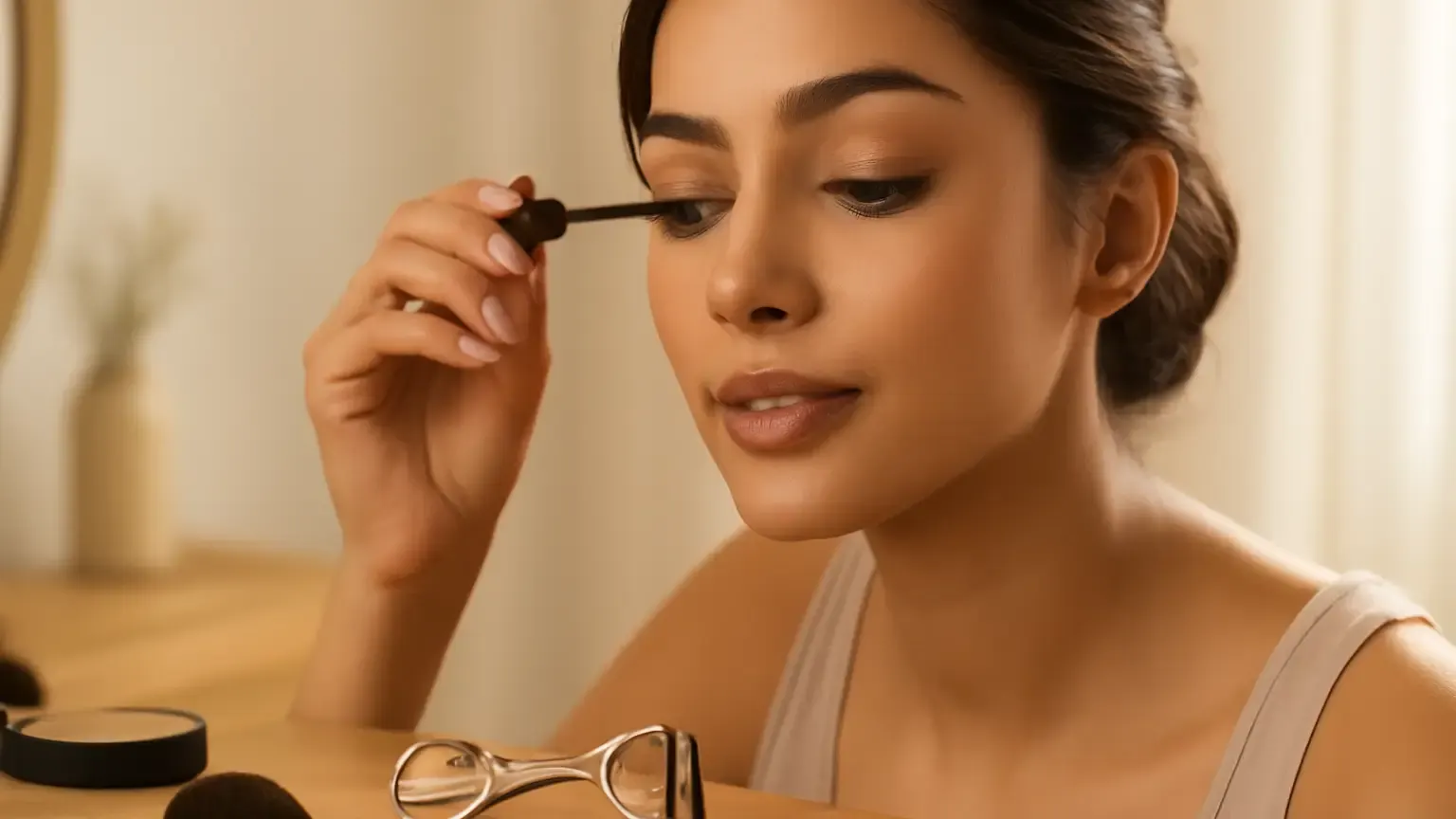
These makeup basics for mascara are for beginners, busy professionals and anyone who wants lifted, defined lashes without flakes or dark under-eyes. Curl lashes before applying a thin coat, wiggle the wand at the roots, use the tip for corners, and choose a waterproof formula only when humidity or tears demand it. The cleanest result also depends on gentle removal and replacing mascara on time—not piling on extra layers. The steps below show how to build length and lift while keeping natural lashes comfortable.
What makes mascara look lifted instead of heavy?
A polished mascara look comes from placement, formula and restraint. Mascara cannot permanently change the direction of your lashes, but it can make them appear longer, darker and more open-eyed when applied close to the roots and combed through to the tips.
For natural-looking lashes, use one thin coat of a lengthening mascara and concentrate the product at the roots. If you want more drama, add a second coat while the first is still slightly tacky. Waiting until the first coat is completely dry can pull on the lashes and encourage clumps.
Before starting, wipe excess product from the wand on the tube opening or a clean tissue. An overloaded brush is one of the main causes of smudging, spidery tips and uneven drying.
1. Curl lashes before mascara, not after
An eyelash curler technique works best on clean, dry lashes. Curling after mascara has dried can make the coating brittle and may tug at the lash hairs. It can also leave a kink rather than a soft, upward curve.
- Place the curler at the base of the upper lashes without pressing the skin.
- Hold gently for five to eight seconds.
- Move slightly towards the middle and press again, then repeat near the tips for a rounded lift.
- Check the rubber pad regularly and replace it if it becomes cracked or flattened.
Do not pump the curler aggressively or use it over wet product. If your lashes are very straight, a gentle three-point curl usually looks more natural than one hard squeeze at the base.
2. Use root-to-tip application for clean lift
The most reliable answer to how to apply mascara without smudging is to control both the starting point and the amount of product. Look slightly down into a mirror rather than opening your eyes wide immediately after application.
- Position the wand horizontally at the upper-lash roots.
- Wiggle it lightly from side to side to coat the base.
- Pull slowly towards the tips in one smooth motion.
- Turn the wand vertically and use its tip to separate corner lashes.
- Let the coat settle for a few seconds before deciding whether you need another.
Root coverage creates the appearance of a fuller lash line, while a clean pull through the tips supplies length. Avoid repeatedly dragging the wand through already coated lashes; that is more likely to cause flakes than extra lift.
3. Choose the formula according to your lash goal
Formula selection matters as much as technique. A lengthening mascara is useful for short or fine lashes because its slimmer brush and fibre-rich texture can emphasise separation. A volumising mascara usually has a denser formula and fuller brush, making it better for a bold lash line but more likely to feel heavy on sparse or downward-pointing lashes.
| Need | Useful choice | What to watch for |
|---|---|---|
| Everyday definition | Lightweight lengthening formula | Too many coats can still clump |
| Humidity, rain or watery eyes | Waterproof mascara | Needs careful removal and may feel drier |
| Soft, flexible wear | Regular washable formula | May transfer if the under-eye area is oily |
| Very natural separation | Fine comb or slim wand | May provide less volume |
Use waterproof mascara strategically rather than automatically. It can help hold a curl in humid Indian weather, but a washable formula may be more comfortable for daily wear. If you choose waterproof, keep removal gentle and thorough.
4. Keep lower-lash mascara precise
How to apply mascara to lower lashes depends on control, not quantity. Lower lashes sit close to the skin, so a large loaded brush can quickly create dots or shadows beneath the eyes.
- Wipe most of the product off the wand first.
- Hold the wand vertically or use only its tip.
- Touch individual lashes with short, light strokes.
- Focus on the outer or centre lashes if a fully coated look feels too intense.
- Look down for a moment before blinking normally.
If your lower lashes frequently transfer, skip mascara there or select a tubing mascara designed to form small removable tubes around the hairs. No formula is transfer-proof for every person, especially in heat, humidity or watery-eye conditions.
5. Build layers without overloading lashes
Good mascara wand control means using the brush to distribute product rather than adding more product with every pass. Start with the eye that is less skilled for you, then match the other eye while the texture is still workable.
A simple two-coat routine
- Apply one light coat from roots to tips.
- Separate visible clumps with a clean lash comb before the product sets.
- Add a second coat only to the roots or outer lashes for extra definition.
- Use a clean spoolie to remove a stray blob, rather than adding more mascara to balance it.
Clumpy mascara prevention also depends on the tube. Do not pump the wand, because that pushes air into the formula and can make it dry out sooner. Twist the wand out slowly, close the tube firmly and avoid adding water or other liquids to revive it.
6. Remove mascara gently and replace it hygienically
A lash-friendly routine ends when the makeup comes off. Rubbing can irritate the delicate eye area and may pull at lashes, particularly when removing a waterproof formula.
How to remove waterproof mascara safely
- Soak a cotton pad with a suitable eye makeup remover, cleansing balm or biphasic remover.
- Hold it over the closed eye for 10 to 15 seconds to soften the coating.
- Wipe downwards and outwards with minimal pressure.
- Use a fresh cotton bud or pad for residue at the lash roots.
- Clean the surrounding skin with your usual gentle cleanser, taking care not to get cleanser inside the eye.
Do not share mascara, use a dried-out tube or repeatedly scrape the brush against the rim. As a general hygiene rule, replace mascara around three months after opening, or earlier if it smells different, changes texture or causes discomfort. Follow the product label when it gives a shorter period. A mascara tube is a moist eye-area product, so replacing it is more sensible than trying to prolong its life.
Common mistakes that cause smudges
- Applying too much at the roots: Excess formula can transfer to the upper lid before it dries.
- Opening the eyes immediately: Give the coating a brief moment to set, especially if your eyelids fold over the lash line.
- Using a rich formula on fine lashes: Heavy volume can pull down a curl.
- Layering after the product has fully dried: This often creates flakes and brittle-looking tips.
- Skipping the removal step: Sleeping in eye makeup can leave residue and make the next application uneven.
For persistent redness, swelling, pain, discharge or ongoing irritation around the eyes, stop using the suspected product and seek advice from a qualified doctor or dermatologist. General makeup technique is not a substitute for medical assessment.
A quick routine for beginners
For a reliable everyday result, clean and dry the lashes, curl them in three gentle sections, wipe excess mascara from the wand, and apply one root-to-tip coat. Use the tip for corners, add a small second coat only where needed, and treat the lower lashes sparingly. Choose washable mascara for ordinary days and waterproof mascara for situations that genuinely call for extra resistance. Remove it fully at night and note the opening date on the tube.
Takeaway: The core of makeup basics for mascara is controlled application: curl first, start at the roots, keep the tips light, select the formula for the occasion, and remove the product without rubbing. These habits lift the look while helping natural lashes stay neat and comfortable.
Products that may help with this routine
Choose only what fits your skin, hair or personal needs. Use the links below to view current options on Amazon India.
Frequently Asked Questions
How do I apply mascara without smudging?
Curl clean lashes first, wipe excess product from the wand, wiggle at the roots and pull through the tips in one smooth motion. Keep your eyes gently lowered for a few seconds while the coat sets, and use less product on lower lashes.
How do you curl lashes before mascara?
Use an eyelash curler on clean, dry lashes before applying any product. Press gently at the base for five to eight seconds, then repeat near the middle and tips to create a rounded lift instead of a sharp bend.
What is the best mascara technique for natural lashes?
Choose a lightweight lengthening formula, apply one thin root-to-tip coat, and use the wand tip to separate corners. Add a small second coat only at the roots or outer lashes if more definition is needed.
How do I apply mascara to lower lashes?
Wipe almost all excess product from the brush, hold it vertically and touch individual lower lashes with short strokes. Concentrate on the centre or outer lashes, and skip them if transfer is a regular problem.
How often should mascara be replaced?
Replace mascara around three months after opening, or sooner if its smell, texture or performance changes. Follow the product label, never share the tube and do not add water to dried-out mascara.
How do I remove waterproof mascara safely?
Hold a cotton pad soaked with eye makeup remover over the closed eye for 10 to 15 seconds, then wipe downwards and outwards gently. Repeat with a fresh pad rather than rubbing the lashes.