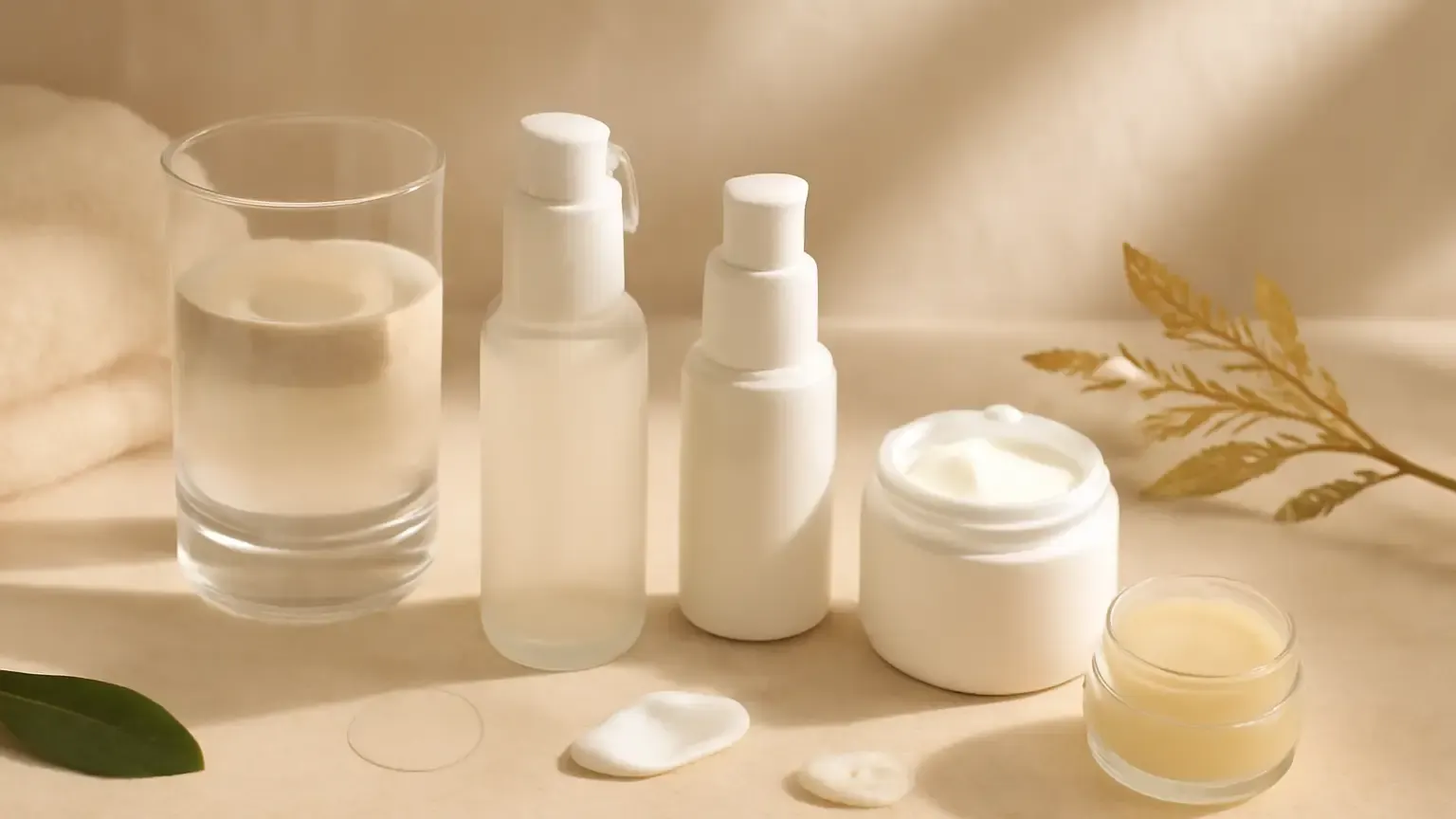
Dry skin moisturiser layering works best when each texture has a job: watery hydrators add water, creams soften and reinforce the barrier, and balms reduce moisture loss. This guide is for people with dry, tight or flaky skin who want to layer moisturisers without heaviness or pilling. The key decision is simple: use the lightest useful layer first, then add richer textures only where your skin, facial area, weather and routine actually need them.
What dry skin moisturiser layering actually means
Moisturiser layering is the deliberate use of more than one hydrating texture in a sensible order. It is not a requirement to apply four products every day. Many people with dry skin need only one well-formulated cream, while others benefit from a watery layer underneath a cream or a small amount of balm on flaky areas.
The basic sequence is:
- Watery hydrator: a hydrating toner, essence or serum containing ingredients such as glycerin or hyaluronic acid.
- Emollient moisturiser: a lotion, gel cream or face cream that smooths roughness and supports the skin barrier.
- Occlusive balm: a richer layer that slows water loss, usually reserved for very dry patches, cold weather or night-time use.
Apply products from thinnest to thickest, allowing each layer to settle briefly. If a product feels sticky, pills under sunscreen or makes your face uncomfortably warm, the routine is probably too layered for that moment.
Which texture goes where?
Watery hydrators: the first layer
A hydrating toner for dry skin or a hyaluronic acid serum can be useful when the skin feels tight after cleansing. These products are generally humectant-led: they help attract and hold water at the skin’s surface. Apply a thin amount to slightly damp, clean skin rather than repeatedly soaking the face with multiple watery products.
Watery layers suit the whole face, including areas that feel tight but do not need a heavy cream. They are particularly comfortable in humid Indian weather, when a thick product may feel sticky. However, a humectant layer should usually be followed by a moisturiser. On its own, it may not provide enough emollient or occlusive support for dry skin.
Lotions and gel creams: light barrier support
Lotions and a gel cream for dry skin sit between watery hydration and a traditional cream. They spread easily and can be helpful for daytime use, combination-dry skin or people who dislike rich textures. Look for a balanced formula with humectants, emollients and, where suitable, barrier-supporting ingredients such as ceramides.
A lotion can cover the face and neck, while a gel cream may be more comfortable on the forehead, nose and chin. If your cheeks remain tight after applying it, do not automatically add another full layer everywhere. Use a richer product only on the cheeks or other dry zones.
Creams: the main moisturising layer
A ceramide moisturiser or rich face cream is often the most useful central step for dry skin. Creams contain more oil-phase ingredients than watery products, so they help soften rough texture and reduce the feeling of tightness. They are usually the best choice when a single product needs to carry most of the routine.
Use a small, even amount over the face, then add a second thin coat only to areas that still feel dry. A fragrance-free moisturiser may be a sensible option when the skin is easily irritated or when a routine already contains several active products. More product is not always more hydration; excess can feel greasy and may encourage pilling.
Occlusive balms: the protective final layer
An occlusive balm forms a more protective film over the skin and can help reduce transepidermal water loss. It is most useful on very dry patches, around the sides of the nose during cold weather, or at night when there is no need to layer sunscreen or makeup over it.
Use a rice-grain-to-pea-sized amount, warm it between clean fingers and press it onto selected areas. You do not necessarily need balm across the entire face. If you are prone to congestion, use less and keep it away from areas that do not feel dry. Patch testing a new product is sensible, especially when the formula contains fragrance, essential oils or several unfamiliar ingredients.
How to layer moisturiser for dry skin by condition
For mildly dry or tight skin
Start with a gentle cleanser, followed by one watery layer if needed and a medium-weight cream. In the morning, finish with broad-spectrum sunscreen. If the skin feels comfortable for the rest of the day, there is no reason to add a balm.
For very dry or flaky skin
Use a gentle cleanse, a simple hydrating serum or toner, then a rich cream. Press balm over the most flaky areas at night. Avoid scrubbing flakes away; physical exfoliation can make visible dryness and sensitivity more noticeable. Give the routine several days of consistent use before deciding whether another layer is necessary.
For dehydrated skin that is also oily
Dehydrated skin can feel tight while still producing oil. In this situation, choose a light watery layer and a non-greasy lotion or gel cream rather than automatically applying a heavy balm. The goal is comfortable hydration without a thick film across the entire face. Apply richer cream only to dry cheeks if the facial zones need different treatment.
Adjust dry skin hydration layers for Indian weather and time of day
Climate changes how much product feels comfortable. In humid monsoon or coastal weather, a hydrating toner followed by a light lotion may be enough for daytime. In dry indoor air, air-conditioned rooms or cooler northern winters, add a cream and reserve balm for exposed or flaky areas. Do not judge a texture only by how it feels in the first minute; check whether the skin remains comfortable several hours later.
A practical summer skincare for dry skin routine can be:
- Gentle cleanser or water rinse, depending on your skin and morning needs.
- One watery hydrator on slightly damp skin.
- Light lotion or gel cream.
- Broad-spectrum sunscreen as the final morning skincare step.
A winter skincare routine may be:
- Gentle cleanser, without hot water.
- Watery hydrator if the skin feels tight.
- Ceramide-rich cream over the face and neck.
- Occlusive balm on dry patches at night.
In the evening, you can use richer textures because makeup and sunscreen are no longer competing with the final layer. Keep the order the same, but tailor the amount to your skin rather than copying a fixed routine.
Choose layers by facial area
Dry skin is rarely identical across the entire face. Cheeks and the area around the mouth often need more cream, while the forehead and nose may prefer a lotion. The delicate eye area should receive only products labelled or clearly suitable for that area, applied carefully without rubbing.
For dry lips, use a dedicated lip balm rather than spreading a facial moisturiser across them. Around the nose, a thin cream layer followed by a tiny amount of occlusive balm can be comfortable during cold, dry weather. Avoid applying heavy balm directly over irritated or broken skin unless a healthcare professional has advised it.
Common layering mistakes to avoid
- Using too many watery products: several toners and serums can add stickiness without improving comfort.
- Applying balm everywhere by default: occlusives are useful, but targeted application often feels better and reduces greasiness.
- Layering on completely dry skin: a humectant product may spread more comfortably over slightly damp skin, followed promptly by cream.
- Rubbing each layer aggressively: press and smooth gently to reduce friction, especially over flaky areas.
- Ignoring sunscreen: morning moisturiser layering does not replace sun protection.
- Changing several products at once: introduce one new formula at a time so you can identify what suits your skin.
Product texture is only one decision factor. Check the ingredient list, fragrance level, finish, climate, makeup compatibility and how your skin feels several hours after application. If a product causes persistent burning, swelling, a spreading rash or severe cracking, stop experimenting with extra layers and seek advice from a dermatologist or doctor. Do not stop prescribed skincare without speaking to the prescriber.
A simple decision guide and takeaway
Choose a watery hydrator when your skin feels tight but not rough. Choose lotion or gel cream when you want light comfort, especially in humid weather or on oilier facial areas. Choose a rich cream when dryness, roughness or flaking is the main concern. Choose balm when moisture loss is most noticeable on selected patches, overnight or in cold, dry conditions.
The best routine is the fewest layers that keep your skin comfortable from morning to evening. With dry skin moisturiser layering, start light, add richer texture only where needed, and reassess as the weather and your skin change.
Products that may help with this routine
Choose only what fits your skin, hair or personal needs. Use the links below to view current options on Amazon India.
Frequently Asked Questions
How do I layer moisturiser for dry skin?
Apply products from thinnest to thickest: a watery hydrator first, followed by lotion or gel cream, then a richer cream. Finish with an occlusive balm only on very dry areas or at night. Use sunscreen as the final morning skincare step.
What order should I apply dry skin moisturisers?
Use a hydrating toner or serum first, then a lotion or gel cream, followed by a face cream. An occlusive balm goes last because it forms the most protective layer.
Can I use a gel cream and a rich cream together?
Yes. Apply the gel cream across the face, then use the rich cream only on areas that remain dry, such as the cheeks. You may not need both products everywhere.
What are the best dry skin hydration layers for winter?
In winter, a gentle cleanser, watery hydrator, ceramide-rich cream and a small amount of occlusive balm on dry patches can work well. Adjust the amount according to comfort and indoor dryness.
How many moisturiser layers does dry skin need?
There is no fixed number. Many people need one cream, while others benefit from two or three textures. Stop adding layers when the skin feels comfortable without stickiness, pilling or heaviness.
Should I use an occlusive balm on my face?
You can use an occlusive balm on very dry facial patches if the formula suits your skin. Apply a small amount at night, avoid areas that become congested, and do not use it as a substitute for medical care for persistent irritation.