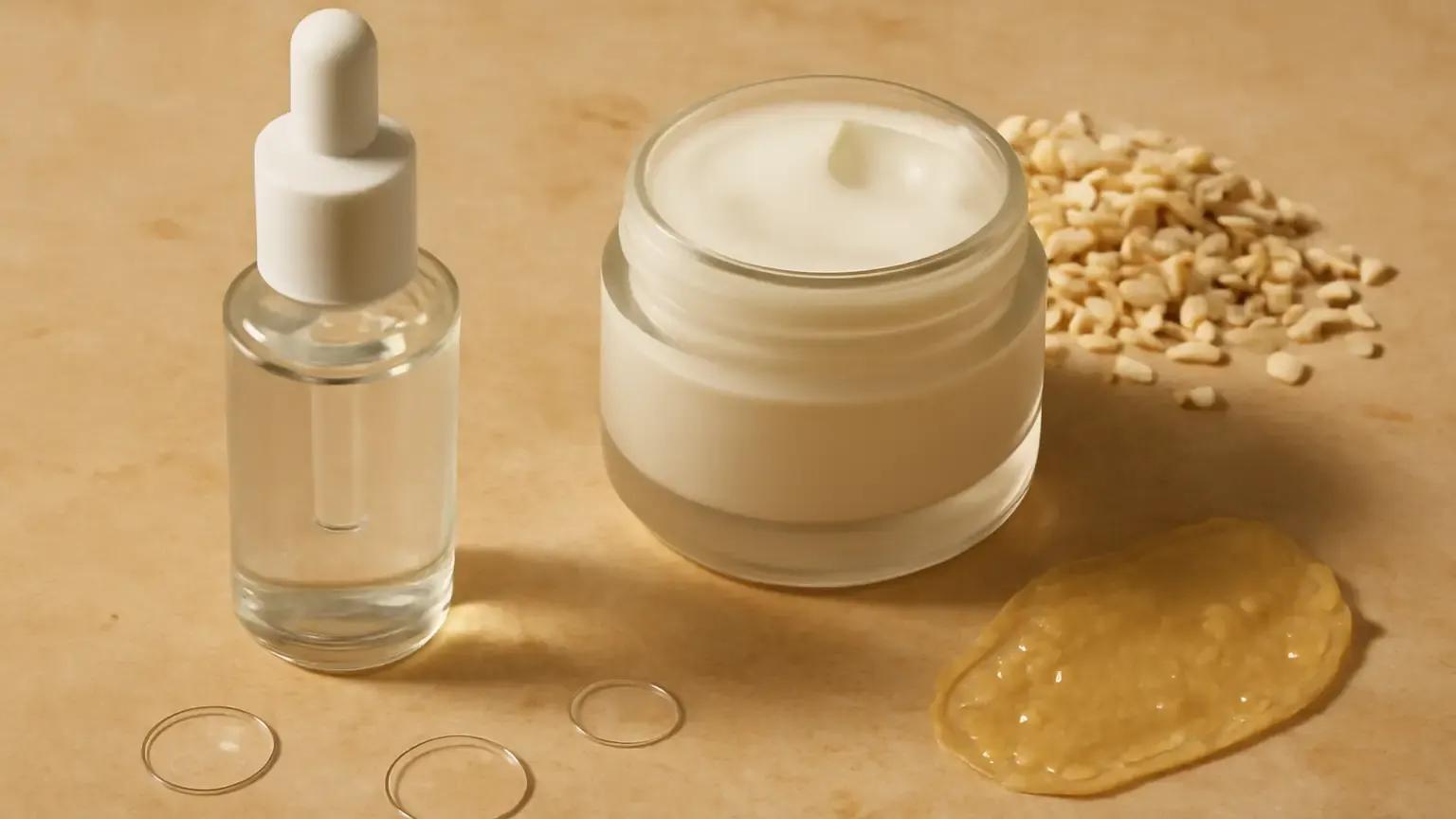
A dry skin serum can improve comfort, but the right route depends on what your skin is missing: humectants attract water, soothing ingredients calm a stressed-feeling surface, and lipid-supportive formulas help reduce moisture loss. This guide is for people in India dealing with tightness, seasonal dryness or dehydration and wanting a practical choice. The key step is simple: apply serum to slightly damp skin, then seal it with moisturiser before water evaporates.
Dryness is not always the same problem. Skin may feel tight because it lacks water, rough because its surface lipids are depleted, or uncomfortable because the barrier is irritated by weather, over-cleansing or too many active products. A serum can support these concerns, but it is usually a concentrated supporting step rather than a replacement for moisturiser.
What a dry skin serum should do
Look for a formula that matches your main need and fits the rest of your routine. A humectant draws water towards the outer layers of skin. A soothing serum aims to make a dry, reactive-feeling surface feel more comfortable. A lipid-supportive serum supplies or mimics some of the materials that help the skin barrier hold on to moisture.
These categories can overlap. For example, a product may contain glycerin, panthenol and ceramides together. The label matters less than the formula’s overall feel, the presence of potentially irritating extras and whether you can comfortably use it every day.
Route 1: humectants for dehydrated skin
Humectants are a useful first choice when skin feels tight soon after cleansing but does not necessarily feel very rough. Common examples include glycerin, hyaluronic acid, beta-glucan, sodium PCA and low levels of urea. A glycerin serum is often straightforward for dry skin because glycerin is effective in small amounts and can feel less tacky than some gel formulas.
A hyaluronic acid serum may also suit dehydrated skin, particularly when used under a cream. However, hyaluronic acid is not a complete routine by itself. If a watery serum is applied and left uncovered in a dry, air-conditioned environment, the skin may still feel tight. Follow it promptly with moisturiser to add emollient and occlusive support.
How to use a humectant
- Cleanse gently and leave the skin slightly damp rather than dripping wet.
- Apply a small amount of serum over the face, avoiding the immediate eye area unless the label says otherwise.
- Wait only until the layer feels comfortable, then apply moisturiser.
Route 2: soothing ingredients for uncomfortable skin
Choose a soothing route when dryness comes with a stinging or easily bothered feeling, especially after cleansing or in changing weather. Panthenol, allantoin, colloidal oatmeal, centella-derived ingredients and beta-glucan are commonly used in comfort-focused skincare. They do not make a product automatically suitable for everyone, but they can be preferable to a heavily fragranced or high-active formula.
Niacinamide for dry skin can be useful in a modest concentration, especially when the formula also contains moisturising ingredients. Higher-strength niacinamide is not automatically better; some people find strong formulas uncomfortable when their skin is already sensitive. If you are considering niacinamide, choose a simple product and introduce it on alternate days.
For a dry or sensitive-feeling routine, prioritise fragrance-free skincare and avoid stacking several exfoliating acids, retinoids and strong vitamin C products at once. “Natural” fragrance can still be irritating, and a short ingredient list is often easier to assess when your skin is unsettled.
Route 3: lipid-supportive ingredients for barrier comfort
If your skin feels rough, flaky or tight again shortly after applying hydration, consider lipid-supportive ingredients. Ceramides, cholesterol, fatty acids and squalane can help a formula feel more nourishing. A ceramide serum may be useful for someone who wants a lighter layer than a rich cream, while a squalane serum can add slip and reduce the dry, dragging feeling of application.
There is an important distinction between adding water and reducing water loss. Humectants address the first part; emollients and occlusive ingredients support the second. A lipid-supportive serum may therefore feel more immediately comfortable on rough skin, but it still may not provide enough protection alone. A moisturiser over it can create a more complete routine.
How to choose a serum for dry skin India routines
India’s climate varies widely, so the best choice depends on location, season and indoor exposure. Humid coastal weather may make a light, glycerin-based formula comfortable, while dry winter air or frequent air-conditioning may call for a serum followed by a richer cream. In a hot climate, use fewer layers rather than skipping moisturiser altogether.
- For tight but smooth skin: start with glycerin, hyaluronic acid or another humectant.
- For easily uncomfortable skin: choose panthenol, colloidal oatmeal or a low-irritant, fragrance-free formula.
- For roughness and quick moisture loss: consider ceramides, squalane or a serum with emollient support.
- For combination skin: apply a thin layer to dry zones and use less on oilier areas.
- For blemish-prone skin: look for a lightweight, non-comedogenic serum, but remember that “non-comedogenic” is not a guarantee for every individual.
When comparing products, check whether alcohol denat. appears high on the ingredient list if your skin finds it drying, and be cautious with essential oils or strong fragrance. Packaging that limits repeated air exposure can also help preserve sensitive ingredients, although the complete formula remains the main consideration.
The serum and moisturiser layering method
Correct serum and moisturiser layering is what often determines whether hydration lasts. A serum supplies targeted ingredients; moisturiser adds a blend of water-binding, softening and moisture-sealing components. For many people, this pairing works better than applying multiple serums.
- Cleanse without over-stripping. Use lukewarm water and avoid scrubbing dry areas.
- Apply serum to slightly damp skin. This is particularly helpful with humectant formulas.
- Use moisturiser while the serum is still comfortable. Do not wait for the face to become completely dry and tight.
- Add an occlusive layer when needed. On very dry patches, a thin balm or ointment-like layer at night may reduce quick water loss. Keep it away from areas where it feels too heavy.
- Use sunscreen in the morning. Sun exposure can worsen the look and feel of dryness, so finish with broad-spectrum sunscreen suited to your skin.
For a simple evening routine, try gentle cleanser, one serum and moisturiser. In the morning, use serum, moisturiser and sunscreen. If the serum pills, reduce the amount, allow each layer a brief settling period and avoid rubbing. More product is not necessarily more hydration.
Common mistakes that increase tightness
Using a watery serum alone
A humectant layer without moisturiser may not be enough for dry weather or air-conditioned rooms. Seal it with a cream or lotion chosen for your comfort level.
Applying too many actives
Frequent exfoliation, retinoids and strong brightening products can make a routine feel harsher. Introduce one active at a time and keep the basic hydration routine consistent.
Choosing texture over formula
A lightweight serum can feel elegant, but it may not meet the needs of rough skin unless it is followed by a suitable moisturiser. Conversely, a heavy oil may feel rich without supplying enough water-binding support.
Changing products too quickly
Test a new product on a small area first, then introduce it gradually. Stop using it if you develop significant burning, swelling or a spreading rash. Persistent, severe or concerning symptoms deserve advice from a dermatologist or doctor rather than repeated product changes.
A practical takeaway
The best dry skin serum is the one that addresses your main concern and works with a moisturiser. Choose humectants for a dehydrated, tight feel; soothing ingredients for a stressed-feeling surface; and lipid-supportive ingredients for roughness or rapid moisture loss. Apply a modest amount to slightly damp skin, then moisturise promptly. That final layer is the simplest way to reduce quick water loss and make hydration feel more lasting.
Products that may help with this routine
Choose only what fits your skin, hair or personal needs. Use the links below to view current options on Amazon India.
Frequently Asked Questions
Which serum is best for dry skin in India?
There is no single best formula for every climate or person. Choose a humectant serum with glycerin or hyaluronic acid for dehydration, a soothing formula with panthenol or colloidal oatmeal for discomfort, or a lipid-supportive option with ceramides or squalane for roughness. Always follow it with moisturiser.
How do you use serum and moisturiser for dry skin?
After gentle cleansing, apply a small amount of serum to slightly damp skin. Follow with moisturiser while the serum still feels comfortable, then use sunscreen in the morning. A richer balm can be added to very dry areas at night if needed.
Is hyaluronic acid serum good for dry skin?
It can be helpful when skin feels dehydrated because hyaluronic acid is a humectant. Use it on slightly damp skin and apply moisturiser afterwards. Hyaluronic acid alone may not reduce moisture loss sufficiently, particularly in dry weather or air-conditioned rooms.
What are the best ingredients in a serum for dry skin?
Useful options include glycerin and hyaluronic acid for water-binding hydration, panthenol and colloidal oatmeal for soothing support, and ceramides or squalane for lipid and emollient support. A simple fragrance-free formula may be easier to tolerate.
Can I use niacinamide on dry sensitive skin?
Many people can, especially with a modest-strength, moisturising formula, but sensitivity varies. Patch test first, introduce it gradually and avoid combining it immediately with several other potentially irritating actives.
How can I stop dry skin from feeling tight after skincare?
Use a gentle cleanser, apply serum to slightly damp skin, and layer moisturiser before the skin dries completely. If tightness persists, reduce exfoliating products and consider a more emollient or barrier-supportive moisturiser. Persistent or severe discomfort should be assessed by a dermatologist.