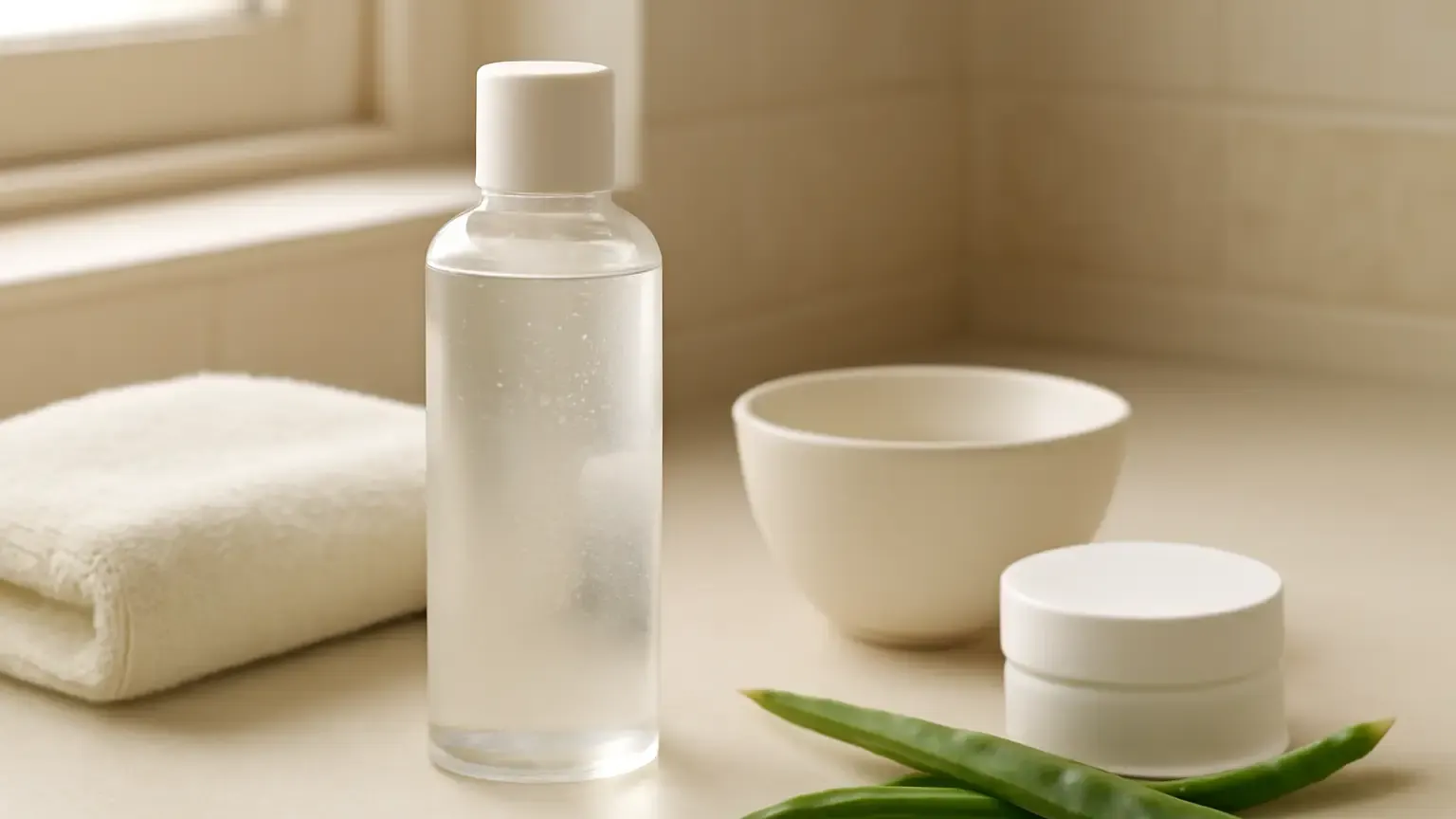
dry skin and toner can work well together when the formula adds water and comfort rather than stripping the skin. This guide is for people whose face feels tight, flaky or easily irritated after cleansing, and for anyone comparing a hydrating toner, exfoliating liquid, astringent or facial mist. The practical decision is simple: choose a gentle, moisturising formula if it improves comfort; skip toner entirely if it causes stinging, tightness or extra steps without benefit.
Toner is optional skincare, not a required stage. For dry skin, its value depends less on the word toner and more on the formula, the way you apply it and what your skin still needs afterwards. A well-made product can add light hydration before moisturiser. A harsh one can increase tightness and make a simple routine harder to tolerate.
What toner actually does
Modern toners are leave-on liquids applied after cleansing. They may provide hydration, mild exfoliation, oil control, soothing ingredients or simply a refreshing layer. They are not all interchangeable, and a watery texture does not automatically mean a product is gentle.
For dry or dehydrated skin, the most useful role is usually supporting comfort with humectants such as glycerin, panthenol, aloe or hyaluronic acid. Humectants attract water to the skin’s surface, but they still need a moisturiser over them to help reduce moisture loss. A toner cannot replace a cream or lotion containing emollients and barrier-supporting ingredients.
Comparing toner types for dry skin
Hydrating toner
A hydrating formula is generally the best starting point for dry skin. Look for simple, low-irritation blends with glycerin, panthenol, beta-glucan, hyaluronic acid or soothing botanical ingredients. A hydrating toner for dry skin should leave the face comfortable and supple, not sticky, hot or tight.
Exfoliating toner
An exfoliating toner contains ingredients such as alpha hydroxy acids or salicylic acid to loosen excess dead skin. It may make rough texture look smoother, but it is not the first choice when the skin is already peeling, cracked, sore or reactive. If you use one, choose a mild product, apply it infrequently and avoid combining it with several other active products at once.
Astringent toner
An astringent toner is designed mainly to reduce surface oil or leave a tighter feeling. That sensation is not proof that the skin is healthier. High alcohol content, strong fragrance or aggressive oil-control ingredients may be uncomfortable for dry skin and can make the routine feel stripped. If you want this category, read the ingredient list carefully and stop if tightness persists.
Facial mist
A facial mist can be refreshing and convenient in hot, dry or air-conditioned environments. However, misting water alone is temporary; it does not reliably lock hydration in. Follow a mist with moisturiser while the skin is still slightly damp if the product feels comfortable. A mist is useful for refreshment, but it is not automatically more effective than a basic hydrating toner.
Where toner fits in a toner routine for dry skin
A practical toner routine for dry skin can be as short as three steps:
- Cleanse gently: Use a gentle cleanser with lukewarm water. Avoid scrubbing and avoid washing repeatedly unless there is a specific reason.
- Apply toner if it helps: Pat or press a small amount onto slightly damp skin with clean hands. Cotton pads are optional; rubbing can feel irritating when the skin is flaky.
- Moisturise promptly: Apply a cream or lotion while the skin still feels lightly hydrated. Ingredients such as ceramides, squalane, glycerin and other emollients can help support the skin barrier.
In the morning, finish with broad-spectrum sunscreen when outdoors. At night, toner can sit between cleansing and moisturising. If you use a treatment serum, follow the product’s directions, but keep the overall routine uncomplicated while assessing tolerance.
How to choose a toner without irritating dry skin
- Prefer hydration over sensation: A cooling or tightening feeling is not the same as moisturised skin.
- Look for hydrating ingredients: Glycerin, panthenol, beta-glucan and hyaluronic acid are common options. Niacinamide can suit some people, but a highly concentrated formula may not feel comfortable for everyone.
- Consider an alcohol-free toner: This can be a sensible choice if alcohol-heavy formulas have previously caused tightness. It is still worth checking the full ingredient list because alcohol-free does not mean every formula is irritation-free.
- Choose fragrance-free skincare when sensitive: Fragrance is not necessary for toner to work. A fragrance-free option may make it easier to identify the cause of irritation.
- Keep the formula simple: If you already use retinoids, acids or other active products, avoid adding several new steps at once.
- Patch test first: Apply a small amount to a limited area for several days before using a new product across the face. Stop if you notice significant burning, swelling or a worsening rash.
When to skip toner altogether
Skip toner if your cleanser, moisturiser and sunscreen already meet your needs. There is no skincare benefit in forcing an extra step. You may also want to leave it out when the face is stinging, visibly peeling, newly sun-exposed or reacting to a product. In those situations, a bland routine is often easier to manage than experimenting with a new liquid.
Do not use a toner simply to remove residue that your cleanser left behind. If you regularly feel a film after washing, review the cleanser or rinse more thoroughly rather than relying on a second cleansing step. Likewise, do not use exfoliation to remove every dry-looking patch; flakes can reflect irritation rather than a need for more acid.
Can dry skin use exfoliating toner?
Yes, some people with dry skin can use a mild exfoliating toner, but it should be an occasional option rather than a default daily product. Start once a week on clean, dry skin, avoid the eye area and apply moisturiser afterwards. Do not use it on broken or irritated skin, and do not layer it on the same evening as other strong exfoliants or retinoid products unless a qualified professional has advised you to do so.
Reduce frequency or stop if you develop persistent burning, worsening flaking or unusual sensitivity. Those signs suggest the routine needs reassessing, not that you should push through.
Common mistakes with dry skin and toner
The biggest mistake is choosing by label alone. “For oily skin” and “pore tightening” often signal an astringent direction, while “essence toner” may be more hydrating, but the ingredient list and your response matter more than marketing language.
Other common errors include pouring on too much product, rubbing with a rough cotton pad, waiting too long before moisturising, and using a toner twice daily despite discomfort. Another is expecting toner to repair a compromised barrier by itself. A supportive routine, adequate moisturising and sensible cleansing matter more than any single bottle.
A simple decision guide
| What your skin feels like | Most sensible choice |
|---|---|
| Comfortable but slightly tight after cleansing | Try a simple hydrating toner, followed by moisturiser. |
| Flaky, stinging or easily irritated | Skip toner temporarily and simplify cleansing and moisturising. |
| Rough texture without active irritation | Consider occasional gentle exfoliation, introduced slowly. |
| Oily in some areas but dry elsewhere | Use hydration across the face rather than a strong astringent everywhere. |
| No noticeable benefit from toner | Remove the step; it is optional. |
The takeaway
dry skin and toner are compatible when the toner is gentle, hydrating and followed by a proper moisturiser. A hydrating formula is usually more suitable than an astringent one, while exfoliating toner should be treated as an occasional active rather than everyday hydration. If toner causes tightness, stinging or extra complexity, skip it without guilt. Persistent redness, cracking, swelling or discomfort deserves advice from a dermatologist or doctor, particularly if it does not settle after simplifying your routine.
Products that may help with this routine
Choose only what fits your skin, hair or personal needs. Use the links below to view current options on Amazon India.
Frequently Asked Questions
Is toner good for dry skin?
Toner can be good for dry skin when it is a gentle, hydrating formula containing ingredients such as glycerin, panthenol or hyaluronic acid. It is optional and should be followed with moisturiser. Skip it if it causes stinging or tightness.
How do you use toner for dry skin?
After cleansing, apply a small amount with clean hands to slightly damp skin, then moisturise promptly. Press rather than rub, and introduce a new product gradually.
What are the best toner ingredients for dry skin?
Useful options include glycerin, panthenol, beta-glucan, hyaluronic acid and other humectants. Ceramides and emollients can also support the routine, although a toner may not contain enough of them to replace moisturiser.
Can dry skin use exfoliating toner?
Yes, if the skin is not irritated and the product is mild. Start about once a week, avoid combining it with other strong actives, and stop if burning, increased flaking or sensitivity develops.
Should I use toner before moisturiser?
Yes. If you choose to use toner, apply it after cleansing and before moisturiser. Moisturiser helps reduce moisture loss and is the more important step for dry skin.
How often should you use toner on dry skin?
A hydrating toner may be used once or twice daily if comfortable, but it is not necessary to use one every day. Exfoliating toner should be used much less often and according to the product’s directions.