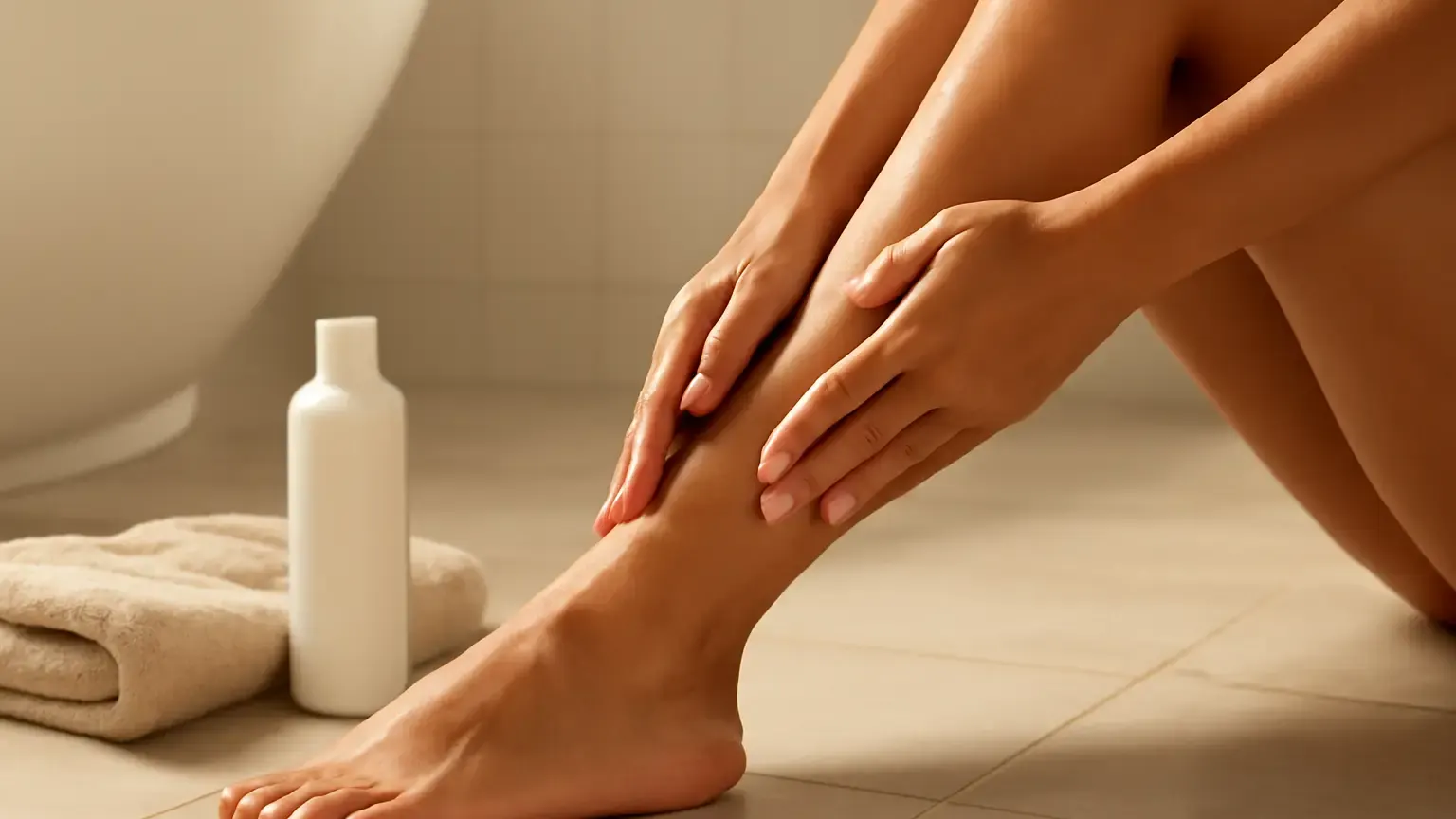
Dry skin and body oil work best together when you layer them after a shower: gently pat until your skin is lightly damp, apply lotion or cream if you need water-based hydration, then smooth on a small amount of oil to help reduce moisture loss. This answer-first method is useful for post-shower tightness, rough elbows, flaky legs, dry hands and hard-feeling feet. Oil softens and seals; lotion or cream usually does more of the hydrating work.
Dry skin and body oil are most effective when the oil is treated as a finishing step rather than the entire moisturising routine. After a warm shower, gently pat with a towel but leave the skin lightly damp. Apply lotion or cream first if your body feels tight or flaky, then press a small amount of body oil over the top. This helps the skin feel softer without requiring a greasy layer.
What body oil does for dry skin
Most body oils contain plant oils, mineral oil, squalane or blends of emollient ingredients. They can smooth the surface, soften rough texture and form a more protective layer that helps slow moisture loss. This makes body oil useful for flaky legs, rough elbows and tight-feeling arms, especially after bathing.
Body oil is not always a complete moisturiser, however. A lotion or cream usually contains water as well as humectants such as glycerin, which attract water, and emollients or occlusives that help keep the skin comfortable. In simple terms, oil is often a sealing and softening step, while lotion or cream supplies more water-based hydration.
That is the basic principle of occlusive skincare: use a product that helps reduce evaporation after applying a hydrating layer. It can support everyday skin barrier care, but it cannot replace gentle cleansing or solve every cause of persistent dryness.
Body oil vs lotion: which should you use?
The choice depends on how your skin feels and how much layering suits your routine.
- Choose lotion when your body feels mildly tight or dull but is not severely rough. It spreads quickly and is convenient for daily use.
- Choose a richer cream when you have persistent roughness, visible flaking or discomfort after bathing. Ingredients such as glycerin, ceramides and shea butter may feel supportive.
- Choose oil when you want to soften rough texture, reduce a dry after-feel or add a protective final layer.
- Use lotion and oil together when your skin feels both dehydrated and rough. Lotion supplies water-based hydration, while oil helps reduce moisture loss.
For daytime use in a hot or humid part of India, a light lotion may feel more comfortable. During winter, in dry climates or in air-conditioned rooms, a richer cream followed by a small amount of oil may suit your skin better. This is a practical approach to winter body care rather than a rule that every skin type must follow.
How to use body oil after a shower for dry skin
This simple shower moisturising routine takes only a few steps:
- Keep the water warm, not hot. Very hot water can worsen the tight, stripped feeling that often follows bathing.
- Use a gentle cleanser where needed. Focus it on areas that need cleansing instead of aggressively lathering every part of the body.
- Pat, do not scrub. Use a soft bath towel and leave the skin lightly damp. It should feel moist, not dripping wet.
- Apply lotion or cream first if you need hydration. Smooth it over your body within a few minutes of stepping out.
- Press on a small amount of oil. Warm two or three drops between your palms and spread it over one area at a time. Add more only if needed.
- Let the layers settle. Put on loose clothing and clean any oil from the floor because it can make smooth surfaces slippery.
To apply oil on damp skin, wait until excess water has been patted away, then smooth the product over the remaining moisture. This helps the oil spread more easily and can leave less of a heavy coating. Avoid pouring oil onto soaking-wet skin because it may slide away, making it difficult to judge how much you have used.
Should oil go before or after lotion?
For most dry skin, lotion or cream goes first and oil goes second. This order provides a water-based moisturising step before the more sealing layer. It is the most straightforward answer to “Should I apply body oil before or after lotion?”
There is a practical exception. If product directions recommend oil first, or if you prefer a very light oil beneath a cream, that order may also feel comfortable. The best sequence is the one that leaves your skin soft without pilling, stickiness or irritation. If the combination feels greasy, use less product rather than rubbing harder.
How to use body oil on different dry areas
Legs
For body oil for legs, apply lotion over lightly damp skin and then smooth a thin layer of oil from the lower legs upwards. Legs can feel rough after shaving, dry weather or long hot showers. Use less around the knees if clothing tends to cling there.
Elbows
For body oil for rough elbows, use cream first if the area feels thick or scaly, followed by a small amount of oil. Massage gently instead of scrubbing. A consistent routine several nights a week is more sensible than aggressive exfoliation, which can leave the area more uncomfortable.
Hands
Body oil for dry hands is most useful after handwashing or before bed. Apply a hand cream first, then press a drop of oil over the backs of the hands and around the knuckles. Do not use oil as a substitute for hand hygiene, and wipe excess from the palms if you need to handle objects immediately.
Feet
For body oil for cracked feet, use a richer foot cream or body cream before the oil. Apply the routine at night and wear breathable cotton socks if comfortable. Do not apply a slippery layer immediately before walking, and avoid putting oil between the toes if the area tends to stay damp.
When body oil alone may not be enough
Is body oil enough for very dry skin? Sometimes it is, particularly when the main concern is mild tightness or surface roughness. Oil alone may be insufficient when skin is visibly flaky, repeatedly uncomfortable or rough despite regular use. In that situation, use a fragrance-free body oil over a cream containing hydrating and barrier-supporting ingredients.
Persistent cracking, bleeding, intense itching, swelling, oozing or a rash that does not settle should not be managed only with cosmetic products. Speak with a dermatologist or doctor, particularly if symptoms are spreading, painful or interfering with sleep. A beauty routine can support comfort, but it cannot identify or treat an underlying skin concern.
How to choose a body oil
- Check the finish: lighter oils may suit daytime use, while richer formulas can feel more comfortable at night.
- Consider fragrance: choose a fragrance-free body oil if your skin is easily irritated or you have fragrance sensitivity.
- Read the full ingredient list: a short list is not automatically better, but it can make it easier to identify ingredients that do not suit you.
- Patch test first: try a small amount on one area and observe how your skin responds before applying it widely.
- Think about the season: a lighter product may be preferable in humid weather, while a cream-and-oil combination can be more comfortable during winter body care.
Plant oils and squalane can feel different from one formula to another, so texture and tolerance matter more than choosing a product simply because it is labelled natural. If you are prone to irritation, a simple formula may make it easier to identify a source of discomfort.
Common mistakes in a dry skin body oil routine
Applying oil to completely dry skin: This can still soften the surface, but it may not address tightness as effectively as applying moisturiser to lightly damp skin.
Using too much: A shiny, sticky layer is not proof of better hydration. Start with a few drops per body area and build only when needed.
Rubbing hard: Vigorous massage can make already-irritated skin feel worse. Use gentle, even strokes.
Ignoring the shower itself: Very hot water, a harsh cleanser and a rough towel can work against your moisturising routine.
Forgetting practical safety: Oil on feet or hands can reduce grip. Allow it to absorb and clean any residue from the bathroom floor.
A simple takeaway
The best body oil routine for dry skin is simple: take a warm shower, pat until the skin is lightly damp, apply lotion or cream when hydration is needed, and finish with a thin layer of oil. Use extra care on legs, elbows, hands and feet, and select a fragrance-free option if your skin is easily reactive. If oil alone leaves your skin tight or rough, add a richer moisturiser instead of simply applying more oil.
Products that may help with this routine
Choose only what fits your skin, hair or personal needs. Use the links below to view current options on Amazon India.
Frequently Asked Questions
How do you use body oil after a shower for dry skin?
Pat your skin until it is lightly damp, apply lotion or cream if you need extra hydration, then press a small amount of body oil over the area. This helps soften skin and reduce moisture loss without requiring a heavy layer.
Should I apply body oil before or after lotion?
For most dry skin, apply lotion or cream first and body oil second. The lotion provides water-based hydration, while the oil acts as a softer, more sealing final layer.
How do you apply body oil on damp skin?
After gently patting with a towel, leave the skin slightly moist rather than dripping wet. Warm a few drops between your palms, smooth them over one area at a time and add more only if the skin still feels dry.
Is body oil enough for very dry skin?
It can be enough for mild tightness or surface roughness, but very dry or flaky skin often benefits from a rich cream or lotion underneath. Persistent cracking, bleeding, intense itching or a rash needs medical advice.
Can I use body oil on my feet and elbows?
Yes. Apply a foot or body cream first to rough feet and elbows, then use a thin layer of oil. Avoid slippery application immediately before walking and avoid leaving oil between the toes.
What type of body oil is suitable for sensitive dry skin?
A fragrance-free formula with a simple ingredient list may be easier to tolerate. Patch test it on a small area first, and stop using it if it causes burning, redness or worsening irritation.


