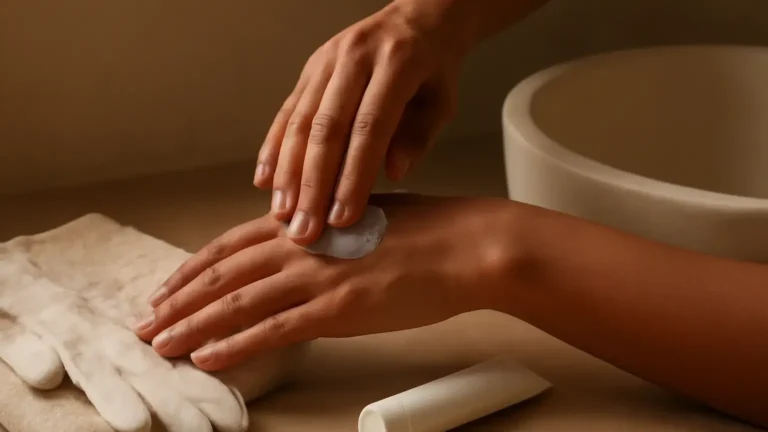
Dry Skin and Body Sunscreen works best when you treat two separate needs: moisturiser adds comfort and water, while sunscreen protects exposed skin from UV. This guide is for anyone whose arms, legs, shoulders or neck feel tight after bathing or look powdery under sunscreen. Choose a creamy but spreadable lotion, apply it over fully absorbed moisturiser when needed, and reapply on exposed areas instead of relying on one heavy layer.
A chalky body sunscreen is often blamed on dry skin alone, but the finish usually comes from a combination of formula, application and timing. Mineral filters can leave visible residue, a fast-drying lotion may catch on flaky areas, and rubbing too long can make sunscreen pill or roll away. The goal is not to cover dryness with more product. It is to build a simple routine in which hydration and UV protection each do their own job.
1. Start by separating moisturising from sun protection
A body moisturiser helps soften rough-feeling skin and reduce moisture loss. Sunscreen forms a protective layer designed to reduce exposure to UVA and UVB rays. One product may offer both benefits, but a moisturiser cannot automatically replace sunscreen unless it is clearly labelled with adequate, tested broad-spectrum protection.
For daily outdoor exposure, look for a broad-spectrum body sunscreen with at least SPF 30. If the label uses the PA system, a higher PA rating indicates stronger UVA protection; a PA+++ sunscreen is a useful option when available and suitable for your skin. SPF describes protection against UVB-related burning, while broad-spectrum and UVA ratings help address longer-wave UVA exposure.
If your skin feels tight, use a body moisturiser for dry skin first, especially on the shins, elbows and forearms. Let it settle before applying sunscreen. If the sunscreen itself is creamy and comfortable, you may be able to use it alone in the morning. The correct choice depends on how your skin feels after application, not on whether a product is marketed as “hydrating”.
2. Choose a lotion texture that spreads without dragging
Dry skin usually benefits from a lotion or light cream rather than an ultra-fluid gel that disappears before you have covered the area. However, a very thick balm can make sunscreen uneven and increase the chance of a visible film. For most body areas, the sweet spot is a creamy, spreadable texture that leaves a flexible finish rather than a greasy coating.
What to look for on the label
- Humectants: ingredients such as glycerin can help attract water to the skin’s surface.
- Emollients: ingredients such as squalane and fatty alcohols can make rough areas feel smoother.
- Barrier-supporting ingredients: ceramides and similar lipids may make a formula feel more comfortable on dry skin.
- Practical finish: a non-sticky sunscreen lotion is easier to spread over arms and legs without repeated rubbing.
Do not judge a product only by how rich it feels in the bottle. Apply a small amount to one forearm and wait several minutes. Check whether it leaves a powdery cast, gathers around hair follicles, transfers heavily to clothing or remains tacky. This small test is especially useful when comparing a body lotion with SPF with a dedicated sunscreen.
3. Layer sunscreen over moisturiser in the right order
Can you use body lotion and sunscreen together? Yes. Apply the body moisturiser first, allow it to absorb, then apply sunscreen as the final skincare step on exposed skin. This order gives the moisturiser time to soften the surface without diluting or disturbing the sunscreen layer.
A simple morning sequence
- After bathing, pat the skin dry rather than rubbing it aggressively.
- Apply a moderate layer of moisturiser to areas that feel tight or rough.
- Wait until the surface feels comfortable and mostly absorbed, usually a few minutes.
- Apply broad-spectrum sunscreen generously to exposed areas, including the neck, ears, shoulders, forearms, hands and feet.
- Give it a short settling period before dressing, particularly if the formula feels rich.
Avoid mixing sunscreen and moisturiser together in your palm. Mixing can change how evenly the sunscreen spreads and makes it harder to know whether enough protection has been applied. If layering creates pilling, reduce the amount of the first product, allow more time between steps, or choose formulas with more compatible textures.
4. Prevent a white cast with coverage and technique
To avoid white cast from body sunscreen, use a formula that matches your preference for finish and filter type. Mineral sunscreens containing zinc oxide or titanium dioxide can leave a more noticeable cast on some skin tones, although newer dispersions may look less visible. Some chemical or hybrid formulas spread more transparently, but personal tolerance and the product’s complete formula still matter.
Application technique also affects appearance. Work in sections—one forearm, one upper arm, one lower leg—rather than placing sunscreen over the whole body and rushing to blend it. Smooth it in long, light strokes until evenly distributed, then leave it alone. Repeatedly rubbing a nearly dry layer can create flakes or rolls that look like chalk.
For areas with body hair, press and smooth the product in the direction of hair growth instead of scrubbing back and forth. On hands, knuckles and ankles, use deliberate coverage because these areas are easy to miss. If a sunscreen remains visibly pale after a careful trial, it may simply be the wrong formula for your preferred finish; adding more moisturiser will not always solve the problem.
5. Reapply where exposure actually happens
Sunscreen reapplication matters most on skin that is outdoors, sweating, rubbed by clothing or exposed to water. A common routine mistake is applying once in the morning and assuming the body remains protected all day. Protection can become less reliable after swimming, towelling, exercise or extended outdoor time.
For a normal office or home day, reapply to exposed body areas before a long commute, lunch outdoors or an afternoon activity. During direct sun, reapply approximately every two hours, and sooner after heavy sweating or swimming. A water-resistant sunscreen can be helpful for beach or pool use, but “water-resistant” does not mean waterproof; follow the label’s timing and reapply after towelling.
Prioritise the face and neck according to your facial routine, then focus on the body areas actually uncovered: forearms, hands, shoulders, calves, feet and the upper chest. Reapplying only to the hands while leaving exposed arms untouched is not a complete body routine.
How to choose a moisturising body sunscreen in India
When shopping for a moisturising body sunscreen India shoppers can use, compare the product by use case rather than by the word “moisturising” alone. Hot, humid weather may make a thick cream uncomfortable, while dry winter air or air-conditioned spaces may call for more cushioning. A lotion that feels good in the morning but remains sticky under clothing may be difficult to reapply consistently.
- For everyday commuting: choose a spreadable SPF 30 or higher lotion with broad-spectrum protection and a finish you will not avoid using.
- For very dry-feeling skin: layer a fragrance-free or low-fragrance moisturiser underneath if the sunscreen alone leaves tightness.
- For outdoor sport: consider a water-resistant option and plan reapplication after sweat or towel use.
- For sensitive dry skin: patch test a small area, avoid applying to broken or irritated skin, and be cautious with strong fragrance if it causes discomfort.
- For darker skin tones: test for a white cast in natural light before committing to a large bottle.
Even the best sunscreen is only useful when applied adequately and used consistently. Choose comfort, coverage and reapplication practicality together rather than selecting the richest or highest-numbered product by default.
Common mistakes that create a chalky finish
- Applying sunscreen over completely dry, flaky skin without first addressing comfort with moisturiser.
- Using a very thick layer of body butter immediately underneath sunscreen.
- Mixing two products to make one “custom” sunscreen lotion.
- Rubbing until the product begins to pill instead of letting it settle.
- Ignoring hands, feet, ears, shoulders and the backs of legs.
- Assuming a high SPF removes the need for shade, clothing or reapplication.
If dryness is persistent, painful, intensely itchy, cracking, spreading or accompanied by other concerning symptoms, seek advice from a dermatologist or doctor. Cosmetic layering advice is not a substitute for evaluation of an ongoing skin concern.
Takeaway
The most comfortable Dry Skin and Body Sunscreen routine uses a suitable moisturiser for hydration and a dedicated broad-spectrum sunscreen for protection. Pick a lotion that spreads evenly, layer rather than mix, test for cast in daylight, and reapply on the exposed areas that actually receive sun. This approach gives dry skin a smoother finish without confusing softness with UV protection.
Products that may help with this routine
Choose only what fits your skin, hair or personal needs. Use the links below to view current options on Amazon India.
Frequently Asked Questions
What is the best sunscreen for dry body skin?
The best sunscreen for dry body skin is usually a creamy, spreadable broad-spectrum lotion with at least SPF 30. Look for a comfortable finish, moisturising ingredients and no visible residue after it settles. If the sunscreen alone feels tight, apply a body moisturiser underneath.
How do you apply sunscreen over body moisturiser?
Apply body moisturiser first to clean, dry skin and wait until it has mostly absorbed. Then smooth sunscreen over exposed areas as the final skincare step. Do not mix the two products in your hand because this may make coverage uneven.
How can you avoid a white cast from body sunscreen?
Test the formula on your forearm in natural light, apply it in sections and avoid vigorous rubbing after it starts to set. If a product remains visibly pale, choose a more transparent chemical or hybrid formula, or a mineral formula designed to blend more easily with your skin tone.
Is SPF 30 enough for body sunscreen?
SPF 30 can be a practical everyday choice when applied generously and reapplied correctly. Broad-spectrum coverage, shade, protective clothing and reapplication also matter. For long periods of intense outdoor exposure, follow the product label and consider a higher SPF if it suits your routine.
How often should you reapply body sunscreen?
Reapply about every two hours during direct outdoor exposure, and sooner after sweating, swimming or towelling. On an ordinary indoor day, focus on exposed areas before a long commute or outdoor activity rather than automatically applying it to covered skin.