A dry skin body lotion is usually the easiest everyday choice for arms and legs, while a cream suits persistent tightness and a balm works best as a targeted seal for stubborn rough patches. This guide is for anyone dealing with dry body skin, especially in cooler or low-humidity weather, and helps you choose by texture, ingredients and timing—without making your routine greasy or unnecessarily complicated.
Choosing a body moisturiser can feel surprisingly confusing: bottles may say lotion, cream, body butter or balm, yet the useful difference is usually texture, oil content and how strongly the formula seals moisture into the skin. There is no single winner for every part of the body. Arms and legs may prefer a quick-absorbing lotion, while knuckles, elbows, knees, heels and other stubborn areas often benefit from a richer cream or balm.
What is the difference between lotion, cream and balm?
All three can help reduce the feeling of dryness, but they behave differently on the skin. Your best option depends on how rough or tight the area feels, whether you need to dress immediately, and whether you prefer a light or rich finish.
| Texture | Best suited to | Advantages | Possible drawback |
|---|---|---|---|
| Lotion | Large areas such as arms, legs and the body after a shower | Light, spreadable and generally quicker to absorb | May feel insufficient on very rough or cracked-feeling areas |
| Cream | Persistently dry, tight or flaky body skin | Richer than lotion while still practical for daily use | Can feel heavier, particularly in hot, humid weather |
| Balm or body butter | Small stubborn patches, hands, feet, elbows and knees | Creates a more protective, cushioning layer | Can feel greasy and may be inconvenient over the whole body |
In simple terms, choose a lotion for coverage and convenience, a cream for more comfort and a balm for targeted protection. You can also use more than one texture: a lotion on your arms and legs, followed by a small amount of balm on the driest spots.
How to choose a dry skin body lotion by skin need
For everyday dryness on arms and legs
Look for a lotion that spreads easily and contains humectants such as glycerin. Humectants attract and hold water at the skin surface, helping the body feel less tight after cleansing. A non-greasy body lotion is often easiest to use consistently because it does not make clothing feel coated.
If you shower in the morning, a fast-absorbing formula may encourage regular use. If dryness returns quickly, try a cream in the evening rather than applying a thin lotion repeatedly without changing the texture.
For very dry, rough or tight-feeling skin
A body lotion for very dry skin is best selected by its complete formula rather than its label alone. Creams containing humectants, emollients and occlusives can be more comfortable than a watery lotion. Emollients smooth the feel of roughness by filling spaces between surface cells, while occlusives form a layer that slows moisture loss.
Ceramide body cream is one option for people who want skin barrier support, while formulas with ingredients such as glycerin, shea butter or petrolatum may suit different preferences. If you are considering a urea body lotion, check the product directions and begin cautiously on sensitive or freshly shaved areas, as some formulas may sting.
For sensitive or easily irritated skin
A body moisturiser for sensitive skin should have a short, straightforward ingredient list and be easy to patch test. Fragrance-free body lotion can be a sensible starting point, particularly if scented products make your skin feel uncomfortable. “Fragrance-free” is not the same as “unscented”, so read the label rather than relying only on the front packaging.
Apply a small amount to an inconspicuous area first and observe how your skin responds. Avoid applying any new product over broken, oozing or visibly inflamed skin unless a healthcare professional has advised it.
Which ingredients help rough dry skin on the body?
Ingredient categories are more useful than marketing claims when comparing products. A good moisturiser may combine several of these:
- Humectants: Glycerin and similar ingredients help attract water to the outer layer of skin.
- Emollients: Plant oils, fatty ingredients and some synthetic emollients help make a rough surface feel softer and smoother.
- Occlusives: Petrolatum, waxes and richer butters help reduce moisture loss by forming a protective film.
- Ceramides: These lipid-like ingredients are commonly used in products designed to support the skin barrier.
- Urea: In suitable body formulations, it can help improve the feel of dry, thick or rough skin; follow the label because strength and tolerability vary.
- Lactic acid: Some body products use it to improve the feel of rough texture, but it may be irritating on sensitive or freshly exfoliated skin.
More active ingredients do not automatically mean a better product. If your skin is simply dry, start with a well-tolerated moisturiser. If roughness persists or the area becomes itchy, painful, cracked or inflamed, seek personalised advice rather than continually adding stronger products.
When and how to apply body moisturiser
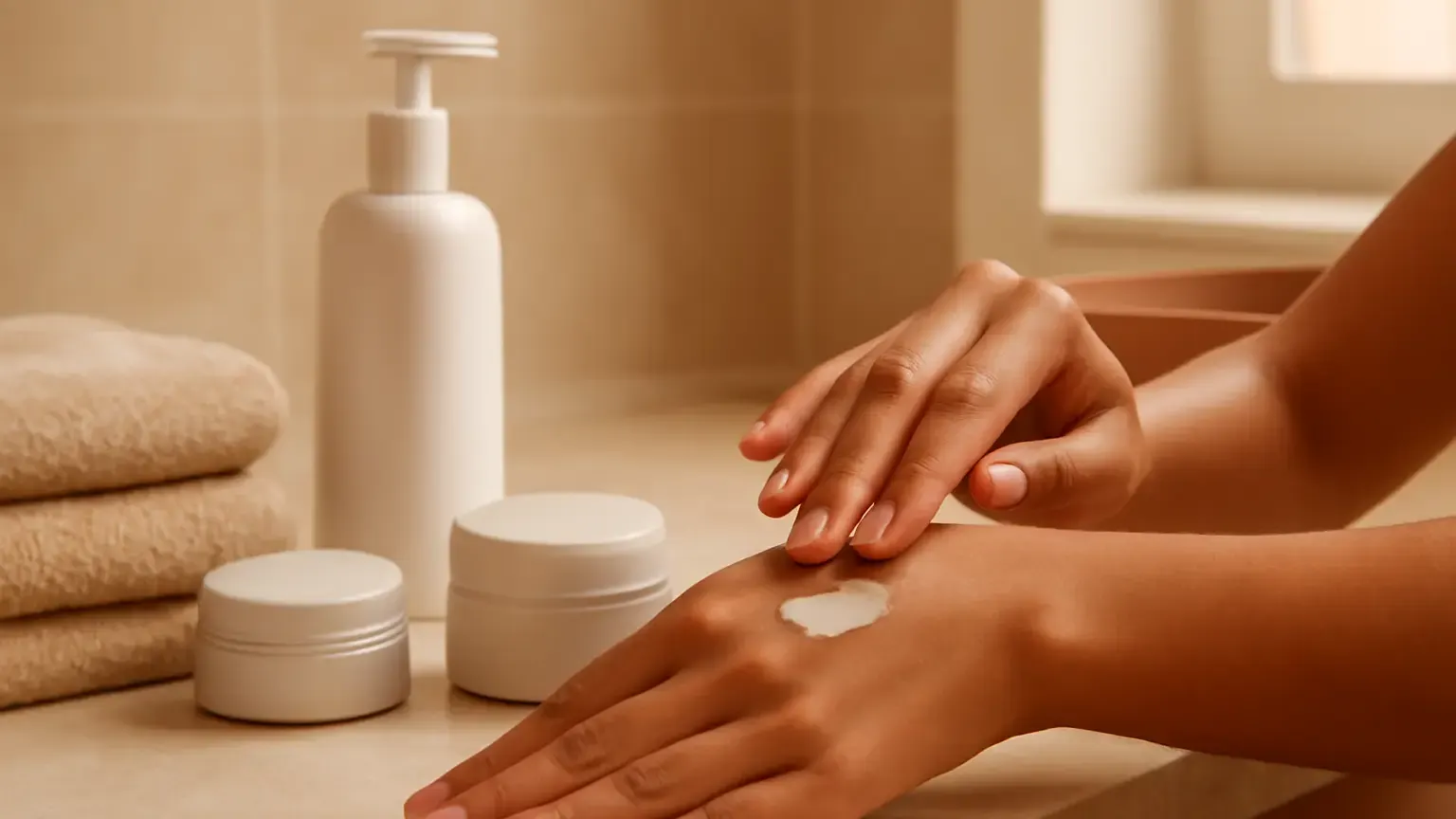
The most useful time is shortly after bathing, when skin is clean and still slightly damp. This helps the product spread and can reduce the tight, dry feeling that follows water exposure. It is not necessary to leave your skin dripping wet; gently pat off excess water first.
- Keep the shower short and comfortably warm: Very hot water and long showers can leave dry skin feeling more uncomfortable.
- Use a gentle cleanser where needed: You do not have to heavily lather every part of the body every time.
- Pat, do not vigorously rub: Leave a little moisture on the surface.
- Apply enough product: Work in sections, covering the fronts and backs of arms, legs, elbows and knees.
- Layer strategically: Use lotion over broad areas and a thin layer of cream or balm over stubborn patches.
- Reapply when useful: Hands may need moisturiser after washing, while feet and elbows may benefit from an evening application.
A consistent shower moisturising routine generally matters more than choosing an expensive or elaborate product. Keep a pump bottle where you get dressed if that makes application easier, and keep a smaller hand cream near the sink.
How to match the texture to each body area
Arms and legs: Start with a lotion for comfortable, even coverage. Switch to a cream if the skin still feels tight within a few hours.
Hands: Choose a cream during the day if you need frequent washing, then use a richer balm at night if the knuckles and backs of the hands feel especially dry. Allow it to settle before touching fabrics or surfaces.
Elbows and knees: These areas often tolerate a richer cream or body butter for dry skin because they tend to feel thicker and rougher than surrounding skin. Use a small amount first; more product is not always more effective.
Feet and heels: A cream or balm can feel more protective than a light lotion. Be careful when walking immediately after application because rich products can make floors and footwear slippery.
Small rough patches: Apply a targeted layer rather than covering the entire body with balm. This gives extra protection without creating an uncomfortable heavy finish.
Common mistakes that can keep body dryness going
- Waiting until skin feels extremely tight: Moisturising soon after bathing is easier than trying to compensate later.
- Using a rich balm everywhere: A balm may be useful for selected areas but unnecessarily sticky for full-body use.
- Over-scrubbing: Rough skin is not always solved by a scrub. Frequent physical exfoliation can make the surface feel more uncomfortable.
- Ignoring fragrance preference: A product you dislike using will not support a reliable routine. Choose fragrance-free body lotion if that feels more comfortable.
- Changing several products at once: Introduce one new formula at a time so you can notice whether it suits you.
- Forgetting hands and feet: Repeated washing, air-conditioning and footwear friction can make these areas needier than the rest of the body.
Which option should you buy?
Choose a lotion if you want a practical daily moisturiser for large areas and dislike a heavy finish. Choose a cream if your skin is persistently tight, flaky or rough and you can tolerate a richer layer. Choose a balm if you need targeted help for hands, elbows, knees, heels or a few stubborn patches.
For many people, the most sensible routine is not an either-or decision: use a lightweight dry skin body lotion after bathing, then add cream or balm only where the skin needs more support. This approach can make the routine easier to maintain across India’s changing weather, from dry winter air and indoor air-conditioning to humid conditions where a rich product may feel uncomfortable.
A simple takeaway
The best dry skin body lotion is the one whose texture and ingredients match the area, season and severity of dryness—and that you will apply regularly. Begin with a lotion for everyday arms and legs, move to a cream for ongoing tightness, and reserve balm for small, stubborn rough patches. If dryness is persistent, severe, painful, rapidly changing or associated with marked irritation, consult a dermatologist or doctor for tailored guidance.
Products that may help with this routine
Choose only what fits your skin, hair or personal needs. Use the links below to view current options on Amazon India.
Frequently Asked Questions
Which is better for dry skin: lotion, cream or balm?
Lotion is usually the most convenient choice for everyday coverage, cream is better for skin that feels persistently tight or rough, and balm is useful for targeted areas such as heels, elbows, knees and hands. Many routines combine a lotion with a small amount of balm on stubborn patches.
What is the best body lotion for very dry skin in India?
Look for a formula with a combination of humectants, emollients and occlusives, such as glycerin, suitable oils or butters, and barrier-supporting ingredients such as ceramides. A fragrance-free cream may be more comfortable if your skin is sensitive. Product suitability matters more than a single universal brand recommendation.
How should you apply body lotion after a shower?
Use a gentle, comfortably warm shower, pat your skin so it remains slightly damp, and apply moisturiser within a few minutes. Spread lotion over arms and legs, then use a richer cream or balm on elbows, knees, hands or other rough patches if needed.
What ingredients help rough dry skin on the body?
Glycerin and other humectants help attract water; emollients smooth the surface; occlusives such as petrolatum reduce moisture loss; and ceramides can support the skin barrier. Urea or lactic acid may suit some rough areas, but they can irritate sensitive or freshly shaved skin.
Is body balm better than lotion for rough patches?
A balm is often more protective for small, stubborn rough patches because it forms a richer layer, but it is not automatically better for the whole body. Lotion is lighter and easier for broad areas, while balm works best as a targeted addition.