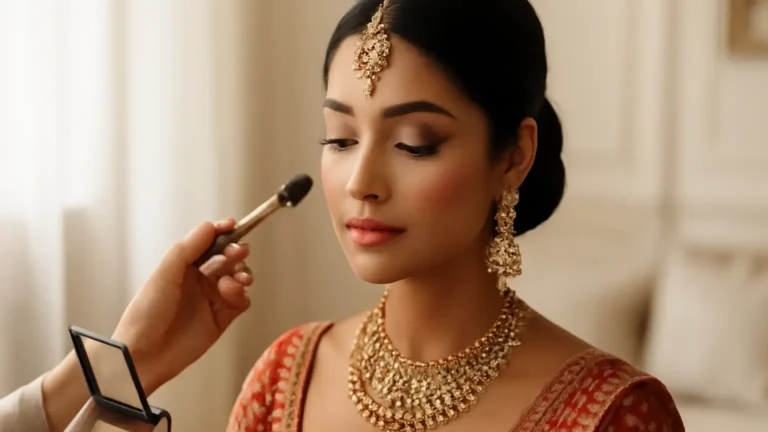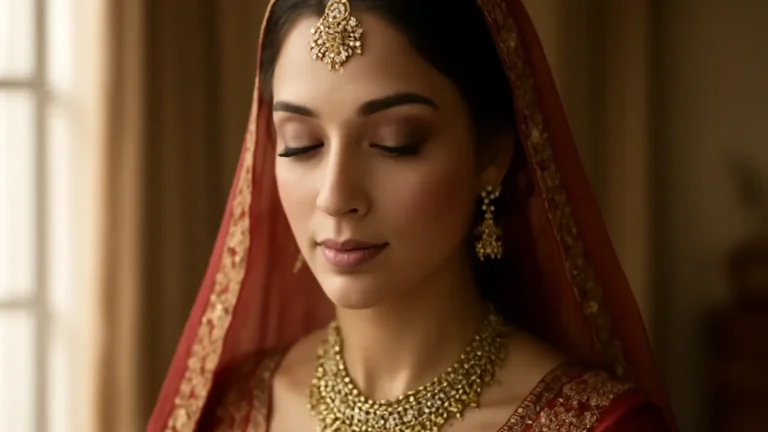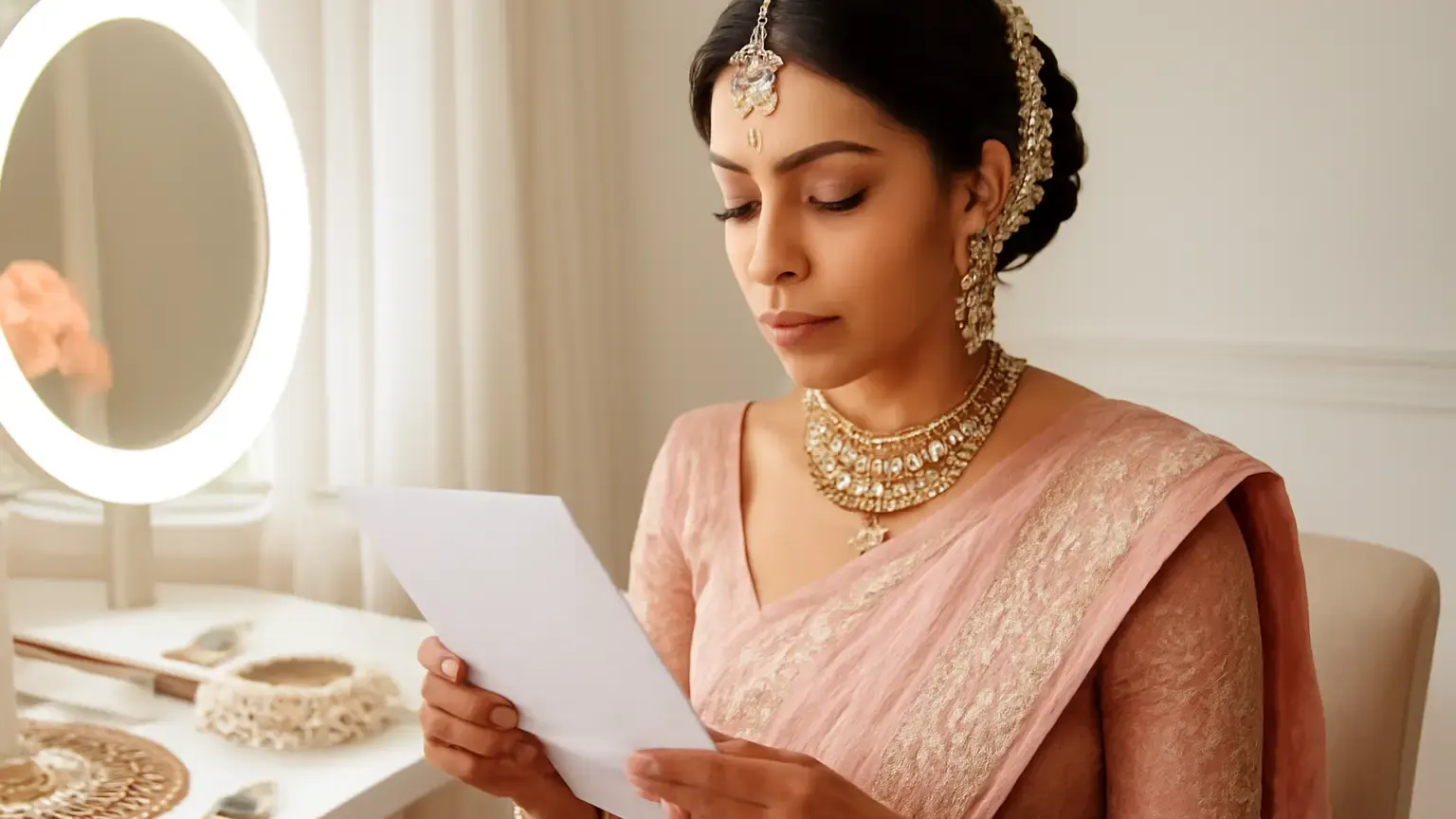
This bridal makeup trial checklist is for brides who want fewer surprises between the makeup chair and the mandap. Test the base in real lighting, check whether the undertone stays natural, wear the eye look long enough to judge comfort, and confirm touch-ups, hair and jewellery coordination, pricing and cancellation terms before booking. A successful trial is not just a pretty photograph; it is evidence that the artist’s technique, products and working style suit your wedding schedule and skin.
A bridal trial should answer one practical question: can this makeup look remain comfortable, flattering and manageable through your actual wedding day? The appointment is also a working consultation. You are assessing the artist’s preparation, hygiene, communication, timing and ability to adapt—not simply choosing a lipstick shade.
Bring reference images that resemble your features, outfit colours and preferred level of coverage. Also share the ceremony time, venue conditions, photography style and any sensitivities before the artist begins. Use the following nine checks to turn a trial into a useful booking decision.
1. Check the base shade, undertone and finish
Good bridal foundation matching is about more than finding a shade that looks close in the pan. Ask the artist to compare the foundation along the jawline and slightly onto the neck. Check it in daylight, indoor lighting and a mirror after the products have settled. A base can appear correct immediately and then look warmer, darker or more yellow after oxidation.
Your undertone should harmonise with your neck and exposed chest rather than making the face look separate. Decide whether you prefer a natural, satin or softly matte finish, keeping in mind that heavy powder can emphasise texture while an overly dewy base may reflect unwanted light. Take front and side photographs before approving the look.
2. Test how the makeup behaves over time
Ask for enough wear time to judge long-lasting bridal makeup, especially if your ceremony and reception are several hours apart. Ideally, keep the makeup on for at least four to six hours during the trial. Walk outside, sit in a warm room and observe how the T-zone, under-eyes and around-the-mouth area change.
Look for separation, creasing, patchiness, excessive oiliness and foundation transfer onto clothing. Longevity depends on skin preparation, product compatibility, humidity, perspiration and how often you touch your face. Ask what you should apply before the appointment on the wedding day and whether the artist expects you to arrive with clean, moisturised skin or a specific routine.
3. Photograph the look with and without flash
Flash photography makeup should look balanced in photographs without becoming unnaturally pale or flat in person. Take pictures using your own phone and, if possible, ask the photographer or a trusted person to take a few images from different distances. Compare daylight, warm indoor light and direct flash.
Review the photographs later rather than deciding only while seated in the studio. Check whether the under-eye area looks too bright, whether contour appears muddy, and whether highlighter creates distracting hotspots. This is also the right time to discuss photography preferences: a very soft, natural look may need slightly more definition for distance shots, but it should still resemble you in person.
4. Assess eye comfort and lash security
Eye makeup must survive blinking, smiling, heat and possibly tears without making you want to rub your eyes. If you have watery or sensitive eyes wedding makeup needs a cautious approach. Tell the artist about previous reactions, contact lens use and discomfort from eyeliner or lash glue. Do not agree to a product that causes burning or persistent irritation during the trial.
Test the proposed waterproof eye makeup by wearing it for several hours. Blink normally, look down and take close-up photographs. If false lashes bridal makeup are part of the plan, check their weight, band visibility and corner lift. Ask whether the artist will use individual lashes, a strip or no lashes if comfort becomes an issue. A patch test may be sensible for products you have never used, but it cannot guarantee that irritation will never occur.
5. Coordinate makeup with hair, jewellery and the outfit
A face-only trial can be misleading. Your makeup should support the neckline, dupatta, blouse detailing, jewellery scale and hairstyle rather than compete with them. A bridal hair and makeup trial is especially useful when you plan a maang tikka, matha patti, veil, flowers or a low bun that changes how the face is framed.
Bring or photograph your main jewellery and outfit colours. If a full hair trial is not included, ask the hairstylist and makeup artist to coordinate their plans in advance. Consider where the hair volume will sit, whether earrings will cast shadows, and whether a veil will soften or obscure the eye and cheek makeup. This prevents a common mistake: approving a beautiful makeup look that feels too strong or too faint once the complete bridal styling is in place.
6. Confirm the skin-preparation routine
Skin prep for bridal makeup should be simple, familiar and suited to your skin on the day. Ask which moisturiser, primer and lip preparation the artist expects, and whether you should avoid introducing new exfoliants, facials or active products close to the wedding. Do not use a new product immediately before the ceremony just because it was suggested at the trial without first understanding how your skin responds.
If you have persistent redness, swelling, itching or another concerning skin symptom, speak with a dermatologist or doctor rather than trying to conceal or treat it through makeup alone. For ordinary dryness or oiliness, the artist can usually adjust preparation and product textures, but the trial should reveal whether those adjustments remain comfortable.
7. Map touch-ups and the wedding-day schedule
A polished look does not mean every product will stay untouched from the first photograph to the final event. Ask what needs refreshing and who will do it. Your makeup touch-up kit may include lipstick or lip colour, a small powder or blotting papers, cotton buds and tissues, depending on the artist’s instructions. Avoid carrying a large collection of products that may not match the original base.
Use the trial to build a realistic wedding day makeup timeline. Confirm the start time, preparation duration, number of people being serviced, outfit-change plans and buffer for delays. If the artist is handling several family members, ask how your slot is protected. A look that takes three hours at the trial may not be workable if the ceremony begins early or the venue has limited preparation space.
8. Test the artist’s communication and hygiene standards
The trial shows you how the artist works under ordinary conditions. Notice whether brushes and tools appear clean, disposable items are used appropriately, and products are handled neatly. Ask how the artist sanitises cream products, sharpens pencils and manages products between clients. You do not need a dramatic checklist of technical terms; you do need clear, confident answers.
Communication matters just as much. Can you explain that the coverage feels heavy, that a lash is uncomfortable or that you want less shimmer without being dismissed? Ask how changes are documented so the final look does not depend on memory. Save photographs of the approved base, eye makeup, blush and lip colour, along with notes about products or shades where relevant.
9. Read the price, inclusions and cancellation terms
Before paying a booking amount, review the bridal makeup contract or written confirmation. It should state the wedding date, venue or travel terms, trial fee, final package price, number of services, assistant charges, touch-up availability, advance payment, balance due date and cancellation or postponement policy.
Clarify whether the trial fee is adjusted against the final package, whether a second trial costs extra, and what happens if the artist becomes unavailable. Ask about travel, early-morning charges, taxes and additional family members rather than assuming they are included. A lower quoted price may not be better value if essential services, transport or touch-ups are excluded.
What to bring to your trial
- Photos of your outfit, jewellery, hairstyle and preferred makeup references.
- Your usual skincare and lip products if you are unsure about compatibility.
- Contact lenses, if you will wear them at the wedding.
- A clean top with a neckline similar to your blouse or outfit.
- Information about ceremony timing, venue conditions and photography.
- A phone for photographs in daylight, indoor light and flash.
Common trial mistakes to avoid
Do not schedule the trial immediately after an exhausting day and then judge the makeup without wearing it. Do not arrive with a heavily exfoliated or newly treated face. Avoid choosing a look solely from a filtered reference image, and do not approve the base before seeing it after several hours. Finally, do not rely on a verbal promise about timing or inclusions when a written booking confirmation can prevent confusion.
Final takeaway
The best bridal makeup trial checklist tests performance as carefully as appearance. Approve the look only after checking undertone, wear time, flash photographs, eye comfort, complete styling, touch-up needs and written booking terms. If the artist listens well, explains the plan clearly and can deliver a comfortable look within your schedule, you have stronger evidence for booking than a single flattering selfie.
Products that may help with this routine
Choose only what fits your skin, hair or personal needs. Use the links below to view current options on Amazon India.
Frequently Asked Questions
What to check at a bridal makeup trial?
Check the foundation shade and undertone, finish, wear over several hours, flash photography, eye comfort, lash security, coordination with hair and jewellery, touch-up requirements, hygiene and written booking terms.
How long should a bridal makeup trial last?
Allow roughly two to three hours for the application and discussion, then wear the makeup for at least four to six hours if possible. A longer wear period helps reveal creasing, separation and comfort issues.
How do you test bridal makeup for flash photography?
Take photographs in daylight, warm indoor light and direct flash using your phone or a photographer’s camera. Review them later for an overly bright under-eye, grey cast, harsh contour or distracting shine.
What should be included in a bridal makeup contract?
The written agreement should cover the date, location, services, trial fee, package price, travel and early-start charges, assistants, touch-ups, payment dates, postponement rules and cancellation terms.
What should you bring to a bridal makeup trial?
Bring outfit and jewellery photographs, makeup references, contact lenses if relevant, your usual skincare information, a similar-neckline top and details of the ceremony and photography schedule.