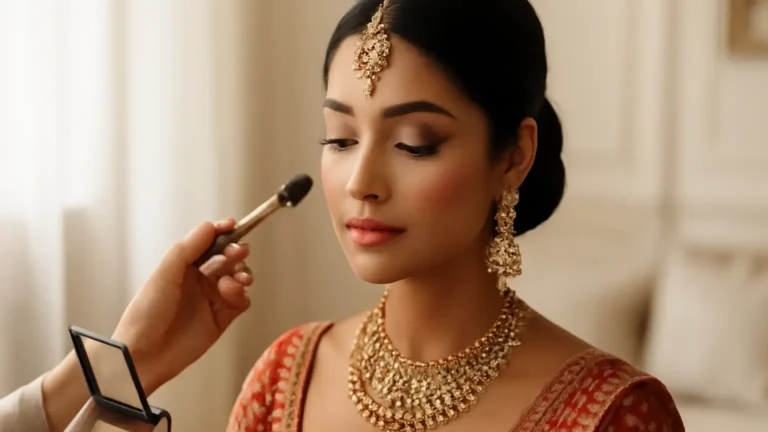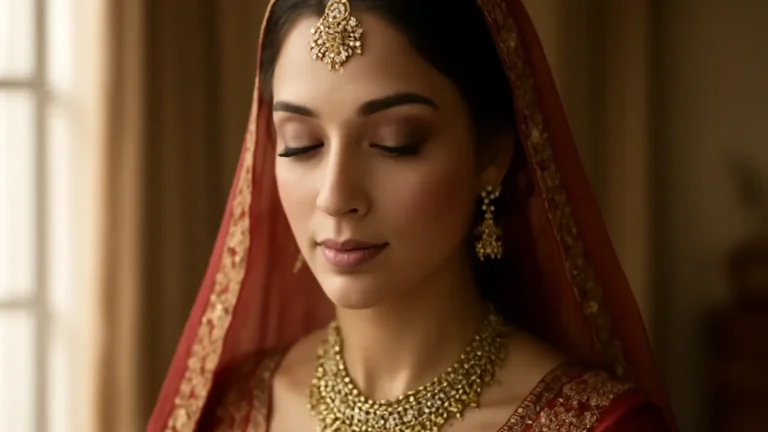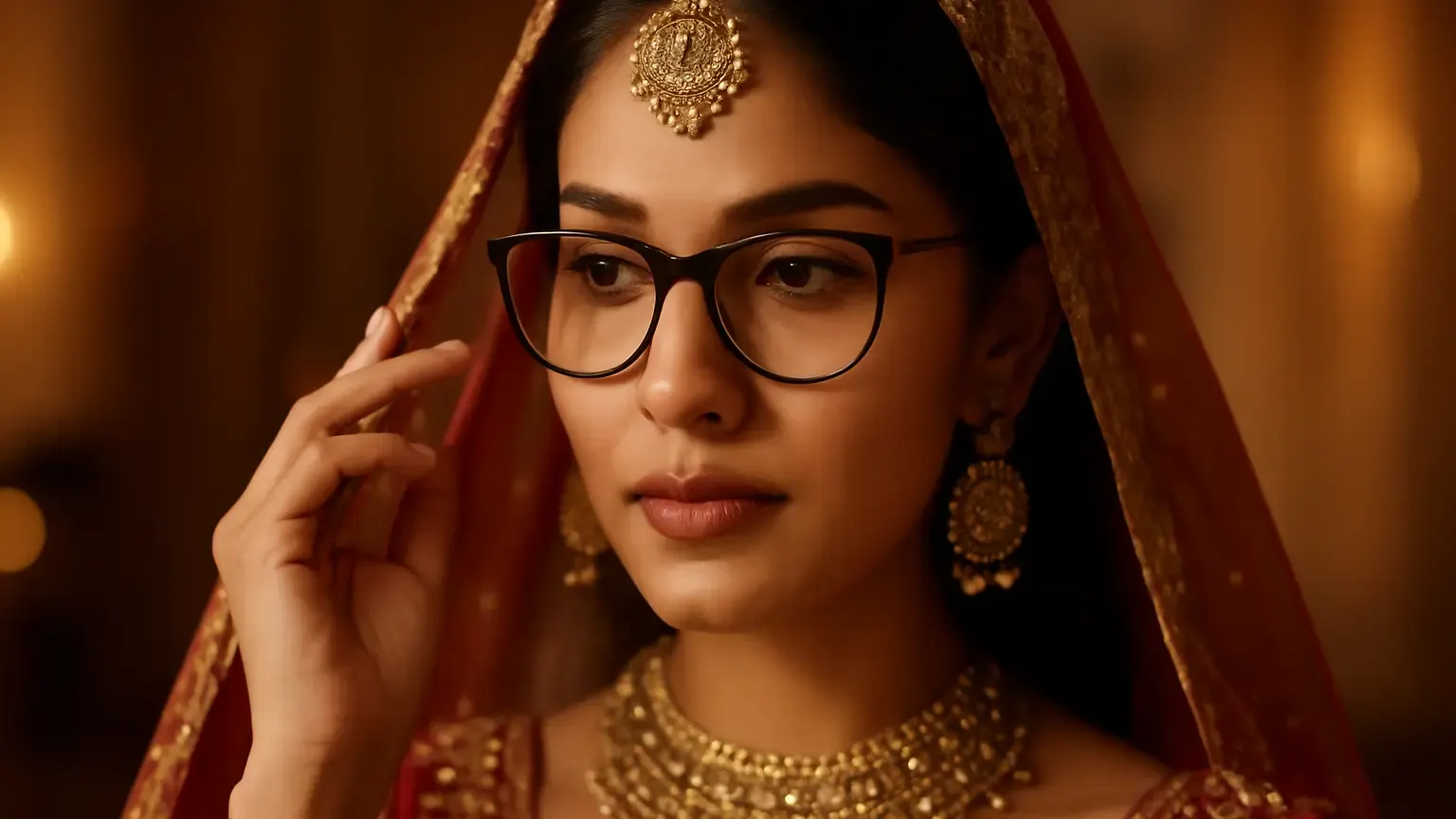
Bridal makeup for glasses should keep your eyes visible, your base intact and your frames comfortable from varmala to reception photographs. This guide is for brides who plan to wear spectacles throughout the wedding or switch between glasses and contacts. The key decision is to balance frame shape with eye definition, then test every product with the actual frames, lashes and lighting you will use on the day.
Glasses do not need to compete with bridal makeup. They can become part of your wedding-day look when the eye definition, brow shape and complexion finish are planned around the frames. The most reliable approach is not simply adding more eyeliner or powder. It is reducing friction at the nose pads and temples, choosing textures that set properly, and checking how your eyes look through the lenses.
Start with the frame, not the trend
Your spectacles change the visual balance of the face. Slim metal frames may need a little extra definition, while bold black, tortoiseshell or coloured frames can act as a strong outline on their own. The aim of frame shape makeup matching is to create harmony, not to copy the frame in your eyeshadow.
- Thick or dark frames: Keep the lid colour softly luminous and concentrate definition at the lash line. A medium-brown or deep-plum liner can look less harsh than solid black.
- Thin metal frames: You can use slightly stronger liner, a defined outer corner or a soft shimmer without making the eyes appear heavy.
- Round frames: A subtly elongated outer corner helps balance the circular shape. Avoid taking a dark line all the way around the eye if it makes the eyes look smaller.
- Cat-eye or upswept frames: A lifted liner direction and softly angled brow tail can echo the frame without becoming too graphic.
- Large frames: Blend eyeshadow high enough to remain visible when the eyes are open, especially if you have hooded lids.
Bring the exact frames to your makeup appointment. A similar pair is not enough because lens thickness, nose-pad position, frame width and reflections all affect the finished result.
Build a base that will not slide under the frames
Most frame transfer happens where the spectacles touch the skin: across the bridge of the nose, around nose pads and at the upper cheeks. A heavy, emollient base can move more easily in warm Indian wedding conditions, particularly during outdoor ceremonies or long reception hours.
A practical base routine
- Cleanse and moisturise, then allow skincare to settle before applying makeup. Use less cream directly on the bridge and sides of the nose if those areas become oily.
- Apply a thin layer of primer only where you need smoothing or oil control. Avoid stacking several slippery layers beneath the frames.
- Use a light-to-medium complexion base in thin layers. Add coverage locally instead of applying a thick coat everywhere.
- Use careful under-eye concealer placement: place product where discolouration is visible, blend outward, and keep the inner corner layer fine so it does not crease beneath the lens.
- Press a small amount of finely milled powder onto contact points with a small puff or tapered brush. Do not repeatedly brush powder back and forth, as that can disturb the base.
- Finish with a bridal setting spray suited to your skin type, then let the face dry fully before putting the glasses on.
A glasses-friendly bridal base is not necessarily completely matte. A natural or satin finish usually photographs well while controlled powder at the contact points limits movement. Carry cotton buds or a clean pointed sponge for small touch-ups rather than adding more foundation over a rubbed patch.
Define the eyes without making them look crowded
The best eyeglass-friendly eye makeup keeps the lash line clear and the brow visible through the lenses. Start by looking straight ahead with both eyes open. This reveals which part of the lid can actually be seen in photographs and prevents you from placing all the colour in a fold that disappears.
Liner placement for different eye shapes
- For hooded eyes, use hooded-eye liner placement: draw a thin line close to the upper lashes, keep the wing short, and check it with the eyes relaxed. A floating, thick wing can show through the lens as a dark block.
- For deep-set eyes, keep the deepest shade close to the lash roots and use a softly blended mid-tone above it. This preserves dimension without pushing the eyes visually backward.
- For smaller eyes, avoid a thick black line on both upper and lower lash lines. Tightline the upper lashes and use a muted brown pencil beneath the outer half if needed.
- For larger eyes, a softly smudged outer corner can add definition without competing with bold frames.
Choose eyeshadow with enough contrast to show in photographs, but avoid very fine glitter that may scatter or reflect unpredictably. Satin, shimmer and matte textures can work together: use matte depth at the outer corner, a controlled sheen on the lid, and a light highlight only at the inner corner or brow bone.
Choose lashes for comfort and lens clearance
Long lashes can brush against the lenses, leave marks, or feel distracting when you blink. The goal is lift and separation rather than maximum length. Curl the natural lashes, apply waterproof bridal mascara in a thin coat, and allow it to set before adding another coat.
If you wear falsies, select comfortable false lashes with a flexible, lightweight band. Half lashes or a shorter style focused on the outer corner are often easier to wear with glasses than dense, very long strips. Ask the artist to trim the band to your eye rather than placing an untrimmed strip. Check that the lashes do not touch the lenses when you blink, look down or smile.
Those who use contact lenses should insert them before makeup and use products appropriate for lens wear. If your eyes become irritated, remove the lenses safely and avoid continuing with eye makeup that causes discomfort. Brides prone to sensitivity should discuss product choices with a qualified eye-care professional rather than experimenting on the wedding morning.
Make brows visible but soft
Frames draw attention to the brow area, so brow definition for brides matters even when the eye look is subtle. Brush the hairs upward, fill only sparse areas with fine strokes, and set them with a flexible gel. The brow should have a clean shape that supports the frame, not a dark block that sits beside it.
When frames are thick or strongly coloured, a softer brow can prevent the upper face from looking overloaded. With delicate frames, slightly clearer brow definition may help the features remain visible in photographs. Keep the front of the brow diffused and avoid extending the tail too far beyond the natural shape.
Test everything during the bridal makeup trial
A bridal makeup trial checklist should include more than a front-facing mirror selfie. Wear the same frames, earrings and hairstyle direction you expect to use, and test the look for at least two to three hours if possible.
- Take photographs in daylight, indoor light and with flash. Check whether the lenses create glare or hide the liner.
- Look up, down and sideways, then blink naturally. Confirm that lashes do not touch the lenses.
- Put the glasses on and remove them several times. Inspect the bridge and cheeks for foundation transfer.
- Walk around or sit in a warm room to see how the base behaves after mild perspiration.
- Wear the planned veil, dupatta or head jewellery. These can affect how often you adjust your frames.
- Record the shades, products and application order so the final artist or makeup team can reproduce the approved look.
This is also the right time to decide whether you will wear glasses for every event. If you plan to switch to contacts for some ceremonies, test both versions because the visible eye balance may change. Do not introduce a new lens type, lash style or strong skincare active immediately before the wedding.
Common mistakes to avoid
The most frequent mistake in wedding makeup for brides with glasses is adding excessive product to compensate for the frame. Thick liner, very long lashes and heavy concealer can make the eyes look smaller and increase transfer. Another mistake is powdering the whole face repeatedly; this can create dryness and texture while failing to solve the contact-point problem.
Do not leave frames in their case during the trial. Do not rely on a setting spray alone, and do not wipe a transferred area with a tissue, which may remove both makeup and skincare. Instead, lift excess product with a clean cotton bud, tap on a tiny amount of base if required, and press powder gently over it.
Quick decision guide for the wedding day
Choose a thinner liner and shorter lashes if your frames are bold, your lenses are highly reflective, or your eyes feel easily crowded. Choose stronger outer-corner definition if your frames are minimal and your eyes disappear in photographs. Choose a natural-satin complexion with targeted powder if you want skin to look fresh; choose more strategic mattifying layers if you expect heat, humidity or frequent frame adjustments.
Takeaway: Successful bridal makeup for glasses is built around the real frames, the real lens clearance and the real wedding schedule. Test the base, liner, lashes and transfer points together, then keep the final look defined, comfortable and easy to refresh.
Products that may help with this routine
Choose only what fits your skin, hair or personal needs. Use the links below to view current options on Amazon India.
Frequently Asked Questions
How do I stop bridal makeup from transferring to glasses?
Use thin complexion layers, minimise rich skincare on the nose bridge, set the nose pads and upper cheeks with finely milled powder, and allow setting spray to dry before putting on the frames. Test the routine with your actual glasses because contact points vary.
What is the best bridal eye makeup with glasses?
A softly defined lash line, eyeshadow that remains visible with the eyes open, controlled outer-corner depth and comfortable, shorter lashes usually work well. Adjust the liner thickness and lash length to the frame size and eye shape.
How do I do wedding makeup for brides with glasses?
Match the makeup to the frame shape, use a transfer-resistant base at the bridge and nose pads, define brows without over-darkening them, and test the complete look in daylight, indoor light and flash before the wedding.
Should brides wear glasses on their wedding day?
Yes, if glasses are part of your normal vision needs or personal style. Wear the actual pair during the makeup trial and photography test so the artist can plan around glare, frame width, lash clearance and transfer.
What are the best lashes for a bride who wears glasses?
Lightweight, flexible lashes with moderate length are usually more comfortable than dense, dramatic strips. Half lashes or shorter outer-corner styles can provide lift while reducing the chance of touching the lenses.
How should I test bridal makeup with glasses?
Wear the frames for two to three hours after the trial, blink and look in different directions, take photos with and without flash, and check the bridge, nose pads and cheeks for transfer.