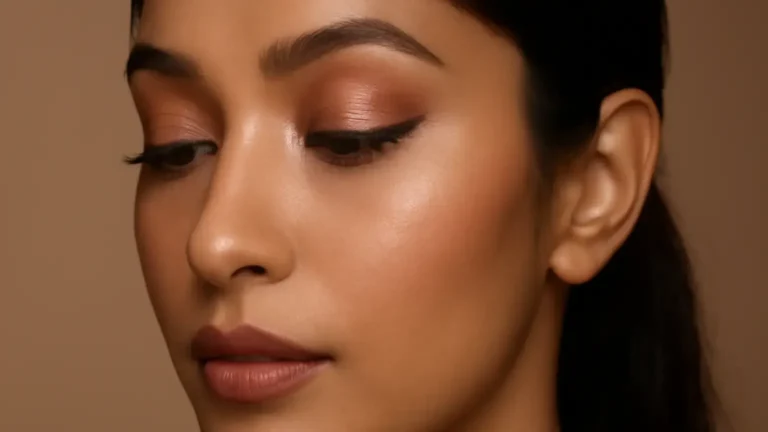
makeup basics for setting spray start with one simple rule: use a fine mist from the correct distance, then let it dry without touching your face. This guide is for beginners and anyone whose base fades in heat, humidity or long workdays. You will learn which spray suits your skin, when to use powder, how to layer both without heaviness, and how to avoid the over-spraying that causes patchiness rather than longer wear.
Setting spray is a finishing product designed to help makeup look more cohesive and resist fading, transfer or powderiness. It is not a substitute for skin preparation, a well-matched foundation or sensible powder placement. The best result comes from choosing the right formula and applying a light, even film over makeup.
What setting spray does—and what it cannot do
A setting spray usually contains film-forming ingredients that sit over the makeup as the mist dries. Depending on the formula, it may reduce a visibly powdery finish, add glow, control shine or improve the comfortable wear of foundation and concealer. These are the main setting spray benefits, although results vary with the product, climate and makeup underneath.
A spray cannot completely stop oil production, prevent every crease or make an incompatible foundation last all day. If your base is separating because skincare has not absorbed, too much product has been applied or the foundation does not suit your skin, more mist will not fix the underlying problem.
In India, heat, humidity, sweat and air-conditioning can all affect makeup differently. Think of setting spray as one part of a makeup setting routine, not as a final rescue step for an overloaded base.
Choose the formula for your skin and finish
For oily or combination skin
A matte setting spray can help reduce the look of excess shine, especially across the forehead, nose and chin. If you need setting spray for oily skin, look for a lightweight, non-greasy formula and use it mainly to improve wear rather than trying to make the entire face flat and matte.
Powder still has an important role. Press a small amount of finely milled powder onto the T-zone after foundation and concealer, then mist lightly. This targeted approach is usually more comfortable than coating the whole face in several layers of powder and spray.
For dry or dehydrated-looking skin
A hydrating setting spray can soften the appearance of dry powder and make the base look less tight. If you are choosing setting spray for dry skin, consider a comfortable, non-stinging formula with a natural or radiant finish. Avoid misting repeatedly to compensate for flaking; smooth skin preparation and thin makeup layers matter more.
A dewy setting spray adds visible sheen, so place it carefully if you do not want shine around the nose or forehead. Dewy does not mean oily, but a luminous finish can become glossy in humid weather.
For sensitive-feeling skin
Read the ingredient list and patch-test a new product on a small area before using it for an important event. An alcohol-free setting spray may feel more comfortable for some people, but “alcohol-free” is not automatically the right choice for everyone. Stop using a product if it causes persistent burning, swelling or irritation, and seek medical advice for severe or ongoing symptoms.
How to use setting spray makeup correctly
The most reliable application is light, deliberate and evenly spaced. Follow these steps:
- Complete the base first. Apply foundation, concealer, blush, bronzer and highlighter. Blend edges before spraying; the mist is not a replacement for blending.
- Shake the bottle. This helps distribute the formula when the product contains ingredients that settle between uses.
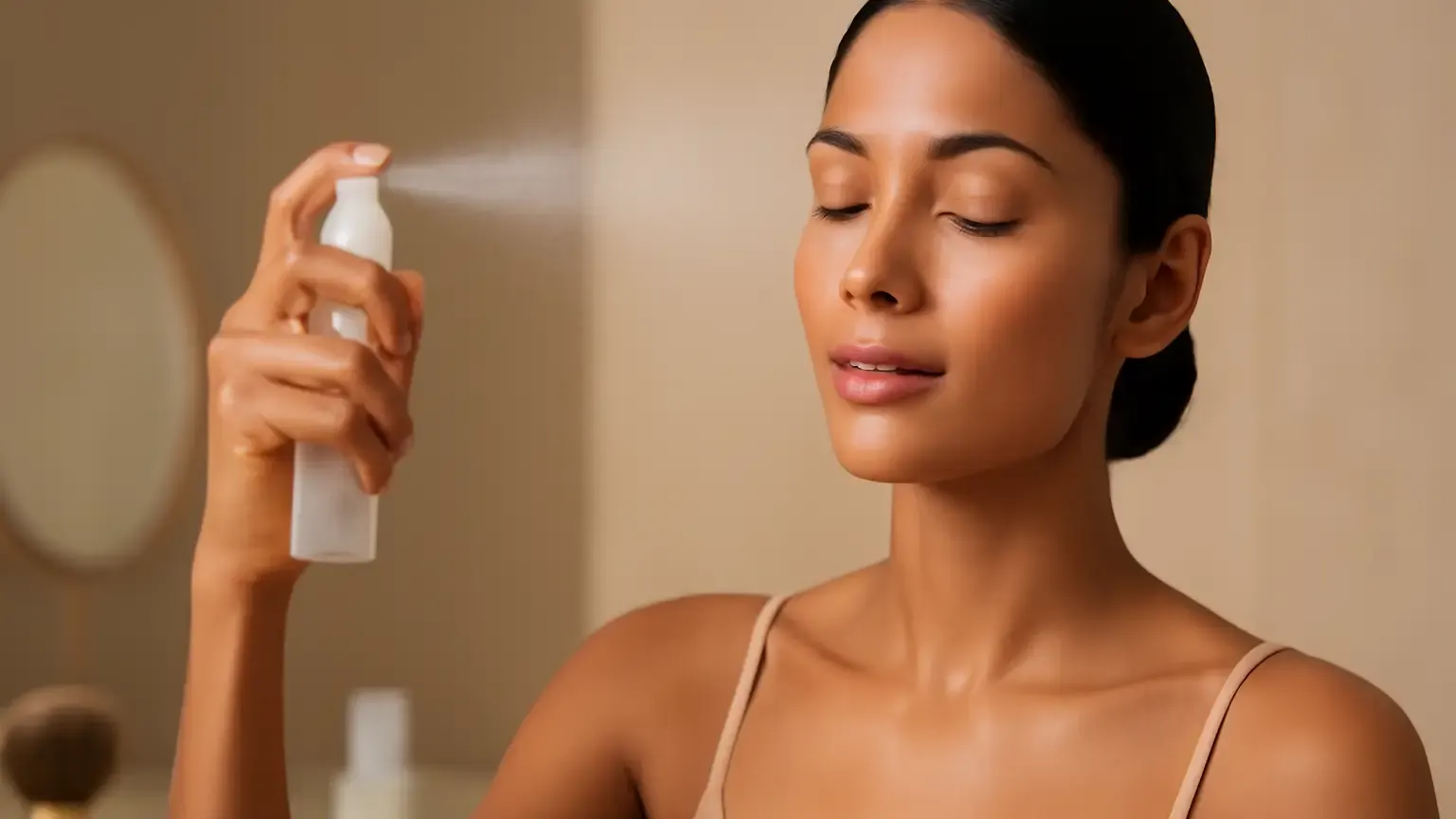
- Hold it at the right distance. Keep the bottle roughly 20–30 centimetres from your face, or follow the product’s label. This setting spray application distance helps the liquid fall as a fine mist instead of wet droplets.
- Close your eyes and mouth. Spray in a loose X shape, followed by a T shape if needed. Keep the bottle moving rather than concentrating mist on one spot.
- Let it dry naturally. Do not rub, fan aggressively or press a sponge into the face while the film is drying. Touching too soon can lift foundation.
For most everyday looks, two to four light passes are enough, depending on the bottle’s spray pattern and the size of your face. The goal is an even veil, not a wet surface.
Setting spray or powder makeup: which comes first?
The answer depends on your finish and how much oil control you need. Powder absorbs some surface oil and sets creamy products, while spray helps unify the layers and can improve the look of powder. In many routines, the most dependable order is cream products, a small amount of powder where necessary, then setting spray.
When powder followed by spray works best
This order suits combination or oily skin, full-coverage makeup and long days. Apply loose or pressed powder selectively, especially under the eyes and across the T-zone. Then mist lightly to reduce a dry, chalky appearance and help the layers look more connected. This is the practical answer to setting spray or powder makeup for many beginners: they do different jobs and can be used together.
When spray before powder can help
A light spray before powder may give a slightly tacky surface that helps certain products grip, but it is not essential. Let the mist dry fully before applying powder. Spraying onto a wet face and immediately pressing powder over it can create clumps, texture and uneven coverage.
For a light, natural base, you may not need both products. If your makeup already looks smooth and your skin is not becoming shiny, use the smallest routine that gives the finish you want.
A simple routine for longer-lasting makeup
Start with clean, comfortable skin and apply moisturiser appropriate to your skin type. Give skincare a few minutes to settle, then use a thin layer of primer only where it adds value. Apply foundation in small amounts, concentrating coverage on areas that need it. Add concealer, cream colour and then powder only in crease-prone or shiny areas.
At this point, inspect the base in natural light. If it looks heavy before the spray, it will usually still look heavy afterwards. Remove excess product with a clean, damp sponge or lightly press with a tissue. Apply the spray from the recommended distance and allow it to dry.
For a long event, carry blotting paper rather than adding repeated coats of spray. Press—do not rub—over shiny areas, and touch up with a small amount of powder if required. This protects long-lasting makeup from becoming layered and thick.
Common over-spraying mistakes
- Holding the bottle too close: Large droplets can leave spots, streaks or a damp-looking finish.
- Using too much product: More spray does not equal more hold. Excess liquid can disturb blush, dissolve powder and encourage makeup separation.
- Spraying one area repeatedly: Keep your hand moving so the mist is distributed evenly.
- Spraying before blending: Once the film sets, correcting an unblended edge can be harder.
- Confusing facial mist with setting spray: A refreshing mist may add comfort but may not be formulated to improve makeup wear.
- Applying over a visibly oily face: Blot first. Spraying directly over excess oil can leave the surface slippery.
- Using a strongly fragranced or uncomfortable formula: A product that stings or causes ongoing irritation is not worth keeping in the routine.
How to decide what suits your makeup
Choose a matte formula when shine control is the priority, a hydrating or natural-finish formula when powderiness is the concern, and a dewy formula when you deliberately want luminosity. Consider the occasion too: a lightweight natural mist may be enough for office makeup, while a more durable formula can be useful for a wedding or outdoor event.
Check the spray nozzle before applying it to your face. A fine, even cloud is easier to control than a jet that lands in droplets. If the nozzle becomes uneven, clean its exterior according to the product instructions rather than forcing extra sprays onto the skin.
Takeaway: use less, spray evenly and layer with purpose
The most useful makeup basics for setting spray are simple: match the finish to your skin, keep the bottle about 20–30 centimetres away, use a light moving mist and let it dry untouched. Powder and setting spray can work together, but neither should compensate for excessive foundation or unsuitable skin prep. For most people, a measured spray at the end of a balanced routine creates a fresher, more durable base than repeated soaking.
Products that may help with this routine
Choose only what fits your skin, hair or personal needs. Use the links below to view current options on Amazon India.
Frequently Asked Questions
How do you use setting spray makeup without making it wet?
Hold the bottle about 20–30 centimetres away, keep it moving and apply two to four light passes in an X or T pattern. Let the mist dry naturally instead of rubbing or adding more while the face is damp.
Setting spray or powder makeup: which should you use first?
Usually apply powder selectively after cream products and finish with setting spray. Powder helps control shine and set creamy layers, while spray helps unify the finish. Spray before powder only when a product specifically suits that technique, and let it dry first.
How far away should you spray setting spray?
Start at approximately 20–30 centimetres from the face, unless the label gives different instructions. This distance helps create a fine, even mist rather than concentrated droplets.
What setting spray is best for oily skin?
A lightweight matte or natural-finish formula may suit oily skin, especially when paired with targeted powder on the T-zone. Blot excess oil before spraying and avoid applying multiple wet layers.
Can you use setting spray before powder?
Yes, but it is optional. Apply a very light mist, allow it to dry completely and then use a small amount of powder. Applying powder over wet spray can cause clumping or patchiness.
How many sprays of setting spray should you use?
For most everyday makeup, two to four light passes are sufficient. The correct amount depends on the nozzle, face size and formula; the skin should look evenly misted, not wet.