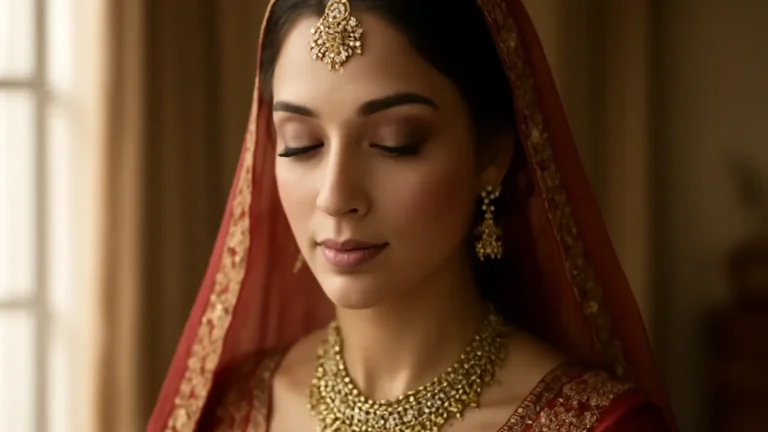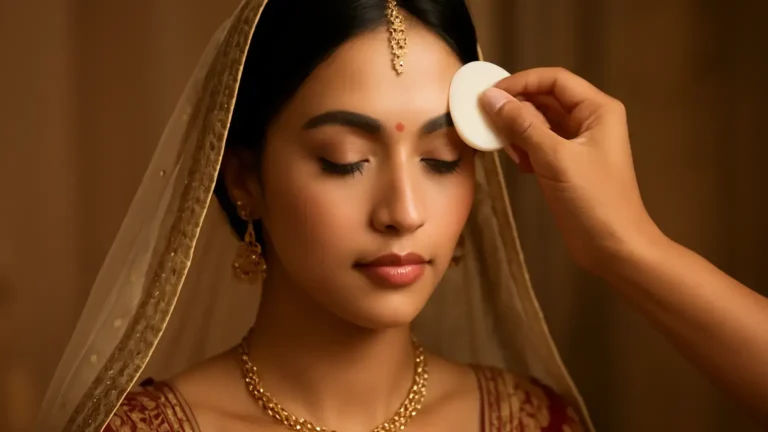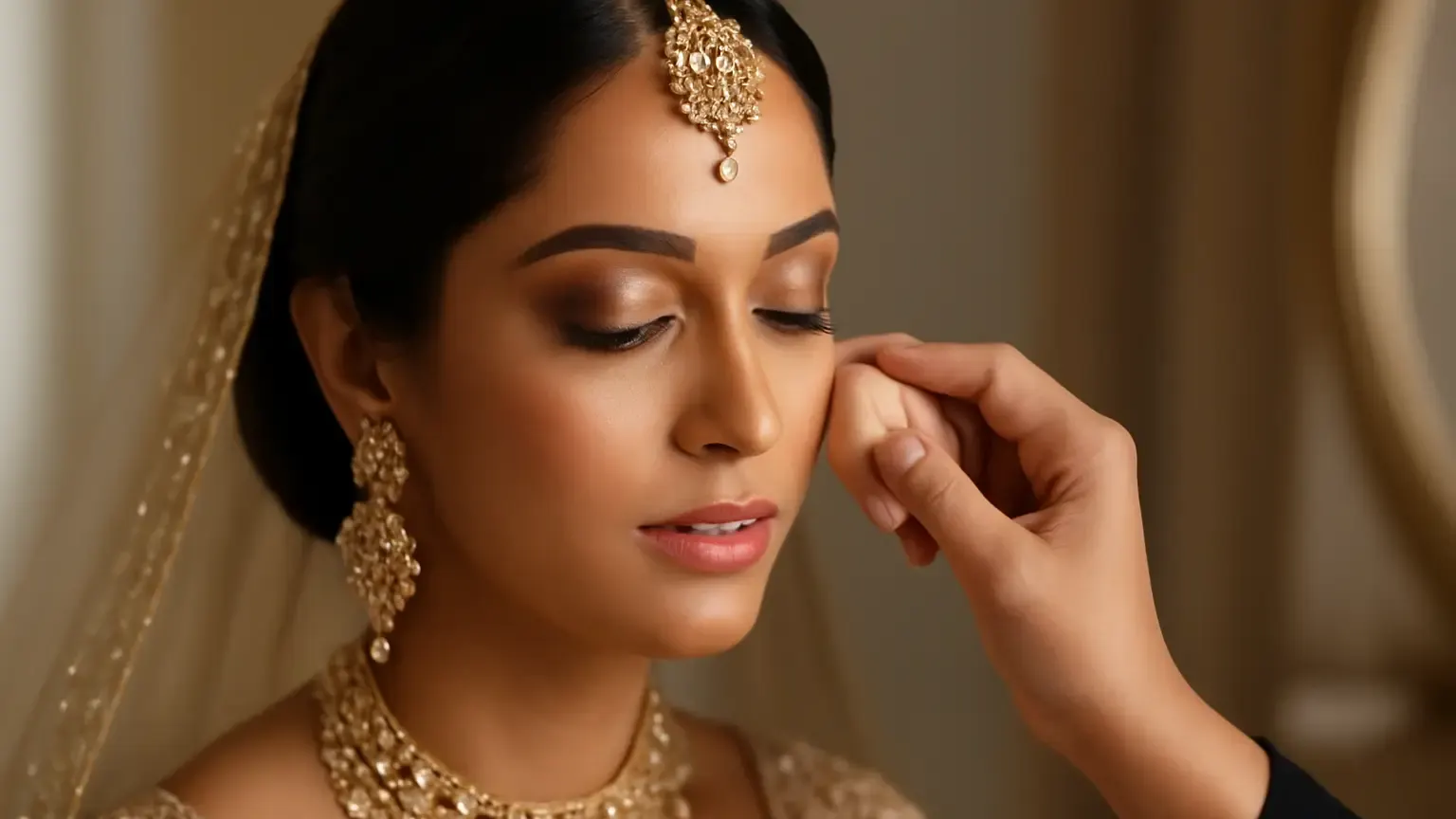
Bridal makeup for winter weddings needs flexible hydration, not a thick coat of cream. Brides marrying in cold, dry or air-conditioned venues should prep the skin early, use thin moisturising layers, choose a comfortable base and reserve powder for strategic areas. This approach helps reduce flaking, cracking and patchiness while keeping makeup camera-ready through the ceremony, photographs, reception and travel between venues.
Winter weddings can be beautiful, but cold air, low humidity, indoor heating and long hours in air-conditioned venues can make a carefully applied base look tight or uneven. The most reliable solution is not automatically a heavier foundation. It is a balanced routine that gives the skin enough comfort while allowing makeup to move naturally with facial expressions.
Why winter makeup becomes dry, cracked or patchy
Cold weather often reduces moisture in the surrounding air. Cleansing, hot showers, frequent face wiping and indoor heating can add to that feeling of tightness. When the surface of the skin is already flaky or dehydrated, foundation may catch on uneven areas instead of spreading smoothly. Repeated powdering can then make the texture more visible.
There is also a difference between dry skin and temporarily dehydrated skin. Dry skin may naturally produce less oil, while dehydration is a lack of water at the surface and can affect many skin types. A bride with combination or oily skin can still experience tight cheeks and a patchy base in winter. The right routine should therefore respond to how the skin feels and behaves, rather than relying only on its usual category.
India’s winter conditions vary widely. A North Indian morning wedding may involve genuinely cold, dry air, while a coastal celebration may feel humid. Venue air-conditioning, outdoor photography and the length of the event matter just as much as the calendar season.
Start with winter skin prep several days before the event
The best skincare before winter wedding makeup is consistent and calm. Avoid introducing a new active, facial, scrub or peel close to the wedding. Even a product that sounds gentle can cause unexpected dryness or sensitivity when the skin is already under stress.
- Cleanse gently: Use a mild cleanser that removes sunscreen and daily residue without leaving the face squeaky or tight. In the morning, a water rinse may be enough for some brides.
- Moisturise while the skin is slightly damp: Apply a barrier-friendly moisturiser soon after cleansing. Look for a texture that feels comfortable and settles without a slippery film.
- Protect during the day: Sunscreen remains important for outdoor ceremonies and photography. Allow it to settle before applying makeup.
- Keep the evening routine simple: Remove makeup gently after each function, then moisturise. Do not scrub away every visible flake the night before the main ceremony.
If a bride already has persistent redness, painful cracking, swelling, oozing or severe irritation, a dermatologist can offer appropriate advice. A makeup routine should not be used to conceal a concerning or worsening skin problem.
How to prep dry skin on the wedding morning
On the wedding morning, use familiar products in a thin sequence: gentle cleanse, optional hydrating serum if already tolerated, moisturiser and sunscreen where appropriate. Give each layer a few minutes to settle. Too many rich products can cause pilling, sliding or poor foundation adhesion.
Pay special attention to the corners of the nose, around the mouth and the upper cheeks, where makeup commonly breaks up. Use a little extra moisturiser on those areas, but remove any excess with clean fingertips or a soft tissue before the primer step. The goal is cushioned skin, not a visibly greasy surface.
Choose a flexible base instead of maximum coverage everywhere
For winter wedding bridal makeup, base selection should be guided by finish, comfort and the coverage required for the actual event. A dewy foundation can give a fresh appearance, but very reflective formulas may become too shiny under strong lights. A fully matte formula can look polished on some skin, yet emphasise flakes if applied heavily. A natural or satin finish is often a useful middle ground.
Coverage does not need to be identical across the face. Apply a thin layer where the skin is even, then build only over areas that need more evening out. This flexible layering keeps the face from looking thick and reduces the chance of cracking as the day progresses.
- For visibly dry areas: Use a moisturising base and press it into the skin with a damp sponge or suitable brush rather than rubbing repeatedly.
- For combination skin: Keep the cheeks comfortable while using a smaller amount of product on the forehead, nose and chin.
- For pigmentation or blemishes: Use a small amount of cream concealer locally after foundation instead of increasing coverage across the entire face.
Test the full complexion combination during the makeup trial, including moisturiser, primer, foundation, concealer and setting products. Check the face in daylight, venue-style indoor lighting and photographs. The most attractive finish in person may need slight adjustment for flash or strong LED lighting.
Use primer and powder strategically
A hydrating primer can help create a more comfortable surface, but it should not be treated as a replacement for moisturiser. Choose one that works with the foundation’s texture and use a modest amount. Applying several slippery layers may make makeup separate rather than last.
Powder makeup is not automatically unsuitable in winter. The question is where and how much to use. A light dusting can reduce unwanted shine and help makeup stay in place, while applying a thick layer over dry cheeks may make texture more obvious. This is why the answer to “should brides use powder makeup in winter?” depends on the product, skin condition, finish and photography needs.
Set the areas that genuinely crease or become shiny, such as the sides of the nose, centre of the forehead, under-eye area or chin. Leave comfortable cheeks less powdered when possible. A fine setting powder pressed with a small puff can offer more control than sweeping a large brush across the whole face.
A setting spray may help join the layers and reduce a visibly powdery appearance. Use it according to the product directions and allow it to dry without repeatedly touching the face. No setting product can compensate for an unsuitable base or badly prepared flaky skin.
Give blush, lips and eyes a comfort-first finish
Cream blush is often useful in a dry winter routine because it adds colour without placing another dry powder layer over the cheeks. It can be set lightly if needed, especially for an outdoor ceremony or a long reception. Test whether the cream product lifts the foundation underneath; tapping is usually gentler than vigorous blending.
Lip preparation deserves its own plan. Begin with a comfortable lip balm and allow it time to soften the surface. Before lipstick, blot away excess balm so the colour can adhere. Avoid aggressively peeling or scrubbing chapped lips, which can leave them more tender and uneven. A creamy or satin lip colour may feel more comfortable than an extremely dry matte formula, although the final choice should suit the bride’s desired transfer resistance.
For long-wear makeup, comfort and durability need to be balanced. Layering a long-wear lip colour over unprepared, flaky lips rarely creates a better result. A lip liner can help define the shape and extend wear, while a small amount of lipstick kept for touch-ups can restore comfort after meals.
Eye makeup can also feel tight in cold weather. Avoid applying excessive powder beneath the eyes if the area already looks dry. Waterproof or water-resistant products may be sensible for emotional ceremonies, but they should still be removed gently after the event.
Plan the makeup touch-up kit before the wedding day
A winter wedding may last from early morning rituals to late-night celebrations. Even a well-prepped base can shift from tears, food, masks, dupatta friction, facial movement and weather changes. A small makeup touch-up kit is more practical than carrying the entire vanity.
- Clean tissues or blotting papers for pressing away moisture and shine
- The exact lip colour and lip balm used during the makeup application
- A small concealer or foundation sample for local repairs
- A compact powder for the T-zone only, if required
- Cotton buds for correcting lipstick edges or smudged liner
- A small mirror and any setting product approved by the makeup artist
Touch up by pressing, not rubbing. First remove excess oil, tears or food residue. Then add a tiny amount of base only where it has worn away. Applying a fresh layer over a wet or flaky patch can make the area heavier and more visible.
Ask the makeup artist or a trusted member of the bridal party to check the face before key photographs. A five-minute check after the ceremony and before the reception is usually more useful than repeatedly adding powder throughout the day.
Common winter bridal makeup mistakes to avoid
Using a thick layer of moisturiser immediately before foundation
More product is not always more hydration. A heavy, unsettled layer can cause pilling and make the foundation slide. Use enough moisturiser for comfort, then allow it to absorb.
Trying a new facial or active ingredient just before the wedding
Last-minute experimentation can create dryness, redness or an unfamiliar texture. Keep the pre-wedding routine steady and patch-test new products well in advance.
Powdering the whole face repeatedly
Repeated full-face powdering can build texture, especially on the cheeks and around the mouth. Blot first and powder only where shine or creasing needs attention.
Ignoring the lips until lipstick is applied
Dry lips show through colour and may make a comfortable formula feel tight. Include lip balm in the wedding-week routine and carry it during the event.
Skipping a realistic trial
The trial should reflect the actual wedding requirements: expected weather, outfit, jewellery, photography, ceremony length and preferred finish. It is the right time to decide whether the bride needs more coverage, less powder or a different lip texture.
A simple decision guide for a smooth winter base
If the skin feels tight immediately after cleansing, prioritise gentle cleansing and a richer but well-absorbed moisturiser. If the cheeks flake after foundation, reduce powder there and reconsider the base texture. If the T-zone becomes shiny while the cheeks feel dry, use targeted preparation instead of one product across the whole face. If makeup separates, check whether too many skincare or primer layers were applied and whether each layer had time to settle.
Brides should also consider the timing of makeup. Applying foundation too early may allow the surface to lose comfort before the ceremony, while applying it too close to departure can leave layers unsettled. Your makeup artist can set a schedule that includes skincare, hair, dressing, jewellery and a final complexion check.
Takeaway
The key to bridal makeup for winter weddings is a comfortable, well-prepared surface followed by thin, flexible layers. Use a barrier-friendly moisturiser, choose a base that suits the bride’s finish and coverage needs, keep powder targeted, prepare the lips separately and carry a small touch-up kit. A trial in realistic lighting and weather conditions will help turn these decisions into a reliable wedding-day plan.
Products that may help with this routine
Choose only what fits your skin, hair or personal needs. Use the links below to view current options on Amazon India.
Frequently Asked Questions
How do you stop bridal makeup from cracking in winter?
Start with gentle winter skin prep, apply a barrier-friendly moisturiser to slightly damp skin, let each layer settle and use thin foundation layers. Keep powder mainly to areas that crease or become shiny, and press rather than rub during touch-ups.
What is the best skincare before winter wedding makeup?
Use a familiar gentle cleanser, a comfortable moisturiser and daytime sunscreen where needed. Avoid new facials, scrubs, peels or active ingredients close to the wedding, and give every skincare layer time to settle before makeup.
How do you prep dry skin for bridal makeup?
Cleanse gently, moisturise while the skin is slightly damp and give extra attention to the cheeks, nose corners and mouth area. At the makeup trial, test the complete skincare, primer, foundation and setting combination.
Should brides use powder makeup in winter?
Yes, if needed, but use it selectively. Lightly set the T-zone, under-eye area or other crease-prone zones while avoiding heavy powder on visibly dry cheeks. The right amount depends on skin texture, foundation finish and the event conditions.
How can you keep lipstick from drying out at a wedding?
Prepare the lips with a comfortable balm, blot away excess before applying colour and avoid harsh scrubbing. Carry the same lip colour and balm for small touch-ups after meals, rituals or photographs.
What should be in a bridal makeup touch-up kit for a winter wedding?
Pack the lip colour, lip balm, tissues or blotting papers, a small concealer or foundation sample, compact powder for targeted use, cotton buds and a small mirror. Press away moisture before adding any new makeup.