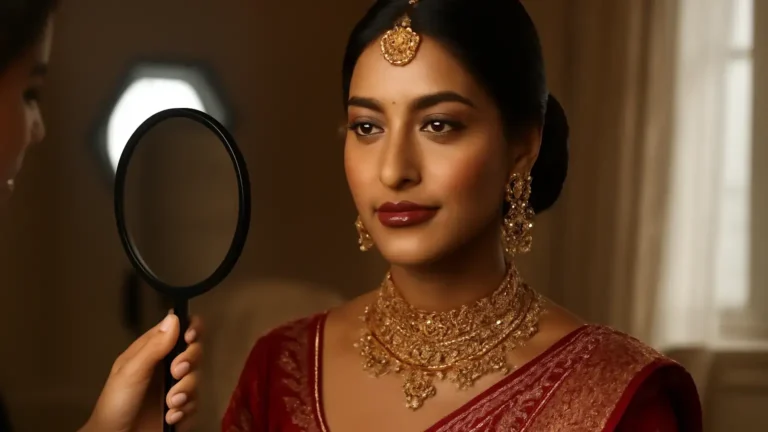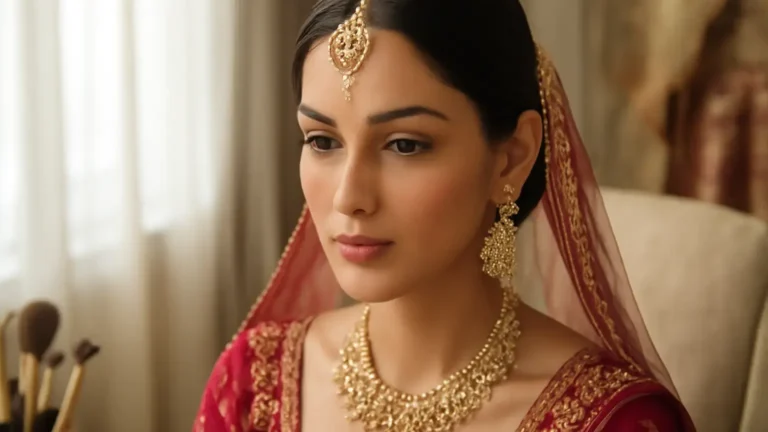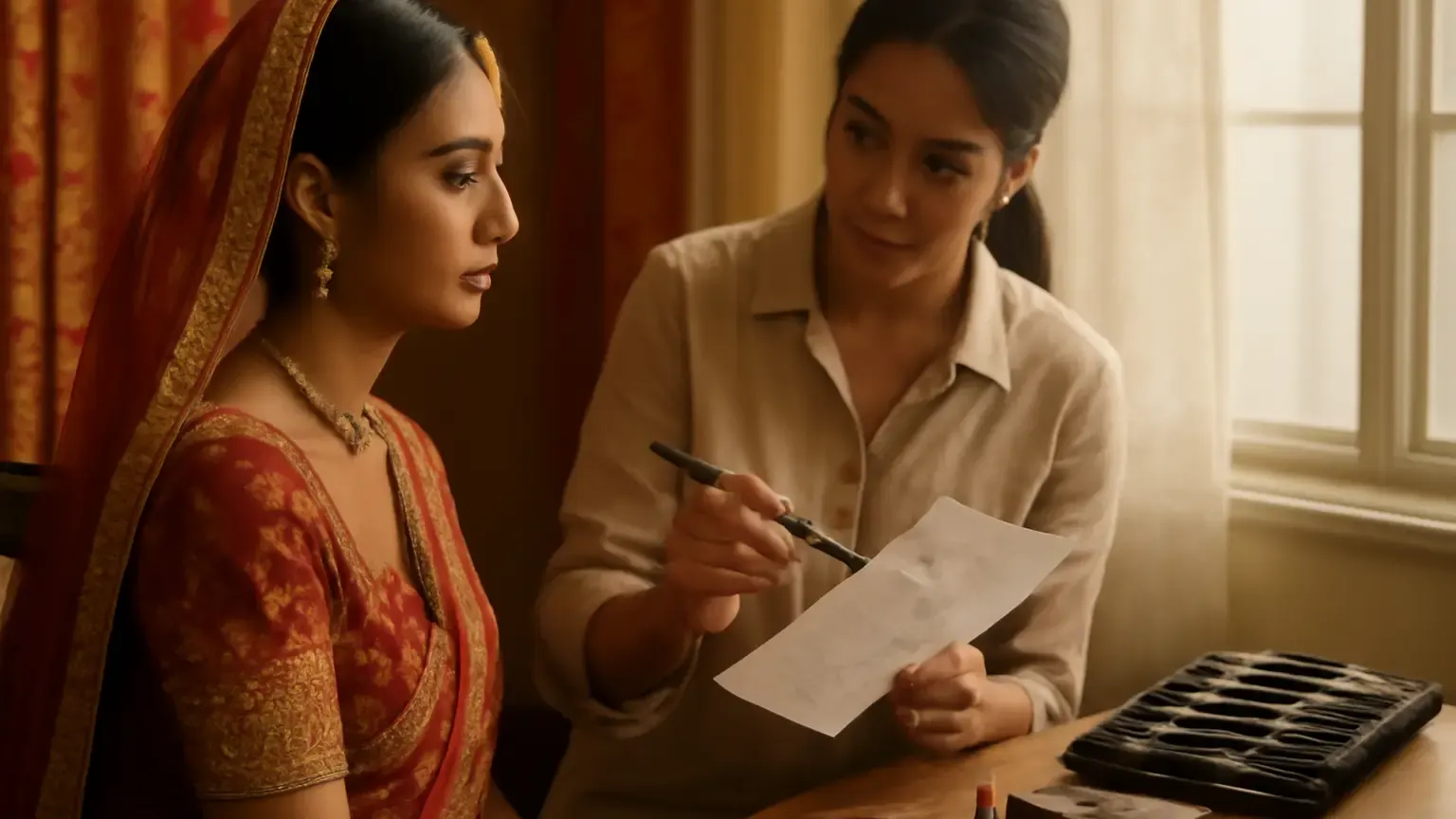
An Indian bridal makeup checklist helps brides, family members and makeup artists turn scattered beauty tasks into seven clear decisions: test the look, prepare the skin gently, confirm products, plan the timeline, match makeup with the outfit, assemble touch-ups and check the kit. Start early enough to adjust shades or techniques, but keep every change familiar and practical for your wedding rituals, venue, climate and photography needs.
A wedding makeup plan is more than choosing a lipstick shade. Indian celebrations may include several events, changing outfits, jewellery, mehendi, tears, heat, travel and long photography sessions. A useful checklist should therefore answer three questions: what needs testing, what needs packing and what needs confirming with the artist?
Use the seven checks below as a shared planning document. Add your event times, outfit references and product preferences so that your makeup artist, dresser and one trusted person can work from the same information.
1. Book and document a proper bridal makeup trial
A bridal makeup trial is a planning appointment, not a promise that every product must be used on the wedding day. Its purpose is to test the overall direction: base coverage, finish, eye intensity, blush, lipstick, lashes, hairline blending and how the look works with your outfit.
Before the appointment, collect clear photographs of your wedding outfit, jewellery, dupatta or veil and preferred makeup references. Tell the artist about the ceremony time, venue, expected weather, photography schedule and whether you will need the same look to last through rituals. Ask which parts of the trial can be photographed in daylight and under indoor lighting.
During the trial, check the makeup from normal conversation distance, not only in a close-up phone selfie. Notice whether the base shade blends into the face and neck, whether the eye look competes with the jewellery and whether the lipstick feels comfortable when speaking or eating. If you dislike something, describe the change clearly: softer liner, less shimmer, more visible blush or a different bridal lipstick shade.
2. Create a calm pre-wedding skincare routine
A sensible pre-wedding skincare routine should be familiar, gentle and easy to repeat. In the weeks before the event, list the cleanser, moisturiser, sunscreen and other products you already tolerate. Avoid making several major changes immediately before the wedding simply because they are marketed as quick fixes.
On the trial day, arrive with clean skin unless your artist gives different instructions. Tell the artist about dryness, oiliness, sensitivity or any product that tends to feel uncomfortable under makeup. This helps them choose a suitable moisturising and bridal base makeup approach without guessing.
For waxing, threading, facials or exfoliation, follow a schedule that gives your skin time to settle and use a professional you already trust. Do not pick at spots or attempt an unfamiliar peel before the ceremony. If you have persistent, painful or concerning skin symptoms, speak with a dermatologist rather than trying to manage them through makeup advice alone.
3. Confirm the artist, products and hygiene standards
Your consultation should cover more than the artist’s portfolio. Confirm the services, number of events, start and finish times, travel arrangements, assistant support, advance payment terms and cancellation conditions. Ask what is included in the quoted service and what you need to supply, such as lashes, hair accessories or a particular lipstick.
Discuss bridal makeup products in terms of finish and suitability rather than insisting on a long list of brands. You can ask whether the artist will carry complexion shades that can be adjusted, how cream and powder products will be layered, and which products are suitable for your comfort preferences. If you have known sensitivities, share them early.
Makeup brush hygiene is another reasonable part of the conversation. Brushes, sponges and reusable tools should be clean, and products should be handled in a way that avoids unnecessary cross-contamination. A professional should be able to explain their routine without making medical promises about the products.
4. Check the look against outfits, jewellery and photography
Makeup and outfit coordination means creating balance, not matching every colour exactly. A heavily embellished lehenga may work with a defined eye and controlled glow, while a simpler silk saree may allow a stronger lip or more visible blush. The right choice also depends on the neckline, jewellery scale, veil placement and the colour temperature of the outfit.
Bring fabric swatches or outfit photographs to the trial. Check the makeup with your bindi, earrings, necklace and headpiece if possible. Warm gold jewellery, silver-toned details, red bridal wear and pastel outfits can each change how a lipstick or eyeshadow appears, but personal preference still matters more than a rigid colour rule.
Ask for photographs in daylight and in the venue’s likely indoor lighting. Strong flash can make small details appear flatter, while very reflective products may look more noticeable in close-up images. The goal is a comfortable look that reads well in person and on camera—not a heavily edited effect.
5. Build a realistic wedding day makeup timeline
Write down the time you must be dressed, when the photographer arrives, the ceremony start, travel time and any hair, draping or jewellery appointments. Then work backwards to set the wedding day makeup timeline. Leave a buffer for late arrivals, outfit adjustments, bathroom breaks and family photographs.
Ask your artist how long the complete service usually takes for your selected look. A simple guest-style application and a multi-step bridal look are not the same appointment. Hair styling, saree draping and veil placement can also affect the order, so coordinate with those suppliers rather than treating makeup as an isolated task.
For an early ceremony, prepare your skincare basics, jewellery and reference photos the previous evening. Keep breakfast, water and a comfortable robe or front-opening garment in the plan. Avoid scheduling another demanding beauty appointment so close to makeup that a delay could affect the ceremony.
6. Pack a focused bridal touch-up kit
A bridal touch-up kit should solve small, predictable problems without duplicating your whole makeup case. Assign it to a trusted person who will remain nearby. Useful items may include the lipstick or lip colour used for the look, a compact mirror, tissues, cotton buds, a few cotton pads, blotting sheets, a small comb, hair pins and any approved setting product.
If you wear waterproof eye makeup, confirm how to handle smudges without rubbing the delicate eye area. Waterproof does not mean indestructible, and tears, humidity, contact with fabric or repeated touching can still move makeup. A clean cotton bud and a little patience are usually more useful than adding many layers.
Label products and keep liquids in a secure pouch. Add a small snack and water separately if the day will be long. Do not introduce a completely new foundation, adhesive or skincare item during a rushed touch-up; the kit is for maintenance, not experimentation.
7. Do a final kit and comfort check the day before
Use the final evening to confirm the appointment message, venue address, contact numbers, outfit sequence and payment arrangements. Place your reference photos where the artist can access them. Check that your outfit, blouse, jewellery, veil, bindi, hair accessories and footwear are ready and that the dressing area has adequate light and seating.
Open the kit and verify the practical details: complexion products, lip colour, lash supplies if required, makeup sponges, brushes, tissues and remover for end-of-day use. If you use contact lenses, follow your usual safe handling routine and tell the artist before application. Keep a clean top or robe available so the makeup is not transferred while dressing.
Finally, protect your sleep and avoid last-minute beauty experiments. The aim is not to control every detail; it is to remove preventable decisions from a busy morning.
Common mistakes this checklist prevents
- Choosing a reference without checking the outfit: A look that suits one neckline, jewellery set or lighting setup may not suit another.
- Leaving the trial too late: There may be little time to adjust the finish, artist or schedule.
- Changing skincare suddenly: Familiar, consistent care is easier to assess than several new products at once.
- Ignoring the neck and hairline: Ask how the complexion will be blended naturally across visible areas.
- Overpacking the touch-up bag: Too many products create confusion. Carry only what supports the agreed look.
- Forgetting the event sequence: Mehendi, haldi, wedding rituals and reception makeup may require different levels of intensity and timing.
Quick decision guide for brides
If you prefer a fresh, low-maintenance look, prioritise comfortable skin preparation, a tested base and a reliable lip product. If you want dramatic eyes or fuller coverage, allow extra trial time and test the look with your jewellery and photography lighting. If the venue is humid or the day includes extensive travel, ask the artist about layering and touch-up planning rather than assuming any product can remain perfect indefinitely.
The best plan also respects your comfort. You can request less shimmer, lighter coverage, softer lashes or a different lip colour. A makeup artist’s experience is valuable, but the final choices should be clear to you before the wedding morning.
Takeaway
The Indian bridal makeup checklist is complete when your trial, skin routine, products, hygiene questions, outfit coordination, timeline, touch-up kit and final packing check are all documented. Share the plan with one trusted helper and make only familiar, considered changes close to the event. That preparation leaves more attention for the ceremony, photographs and people around you.
Products that may help with this routine
Choose products based on your skin, hair or personal needs rather than buying every item in a routine.
- Bridal Makeup Touch Up Kit
(paid link) See relevant options on Amazon - Makeup Blotting Sheets Compact Mirror
(paid link) See relevant options on Amazon - Makeup Brush Cleaning Kit Amazon India
(paid link) See relevant options on Amazon - Bridal Lipstick Transfer Resistant
(paid link) See relevant options on Amazon
Frequently Asked Questions
What should be included in an Indian bridal makeup checklist?
Include a makeup trial, gentle pre-wedding skincare routine, artist and hygiene checks, product preferences, outfit and jewellery coordination, a wedding day timeline, a touch-up kit and a final packing review.
When should a bride do her makeup trial?
A bride should schedule the trial early enough to adjust the look, products or artist if needed. Bring outfit and jewellery references, and avoid leaving the only trial immediately before the wedding.
How should you prepare skin before bridal makeup?
Use familiar, gentle skincare and avoid several new products or aggressive treatments close to the event. Arrive with clean skin according to the artist’s instructions and seek professional advice for persistent or concerning symptoms.
What should be in a bridal touch-up kit?
Pack the agreed lip colour, compact mirror, tissues, blotting sheets, cotton buds, hair pins and a small comb. Add only products you have already discussed or used for the planned look.
How do you choose bridal makeup to match the outfit?
Compare the makeup with the outfit fabric, jewellery, bindi, veil, neckline and expected lighting. Aim for balance rather than an exact colour match, and test the complete combination during the trial.