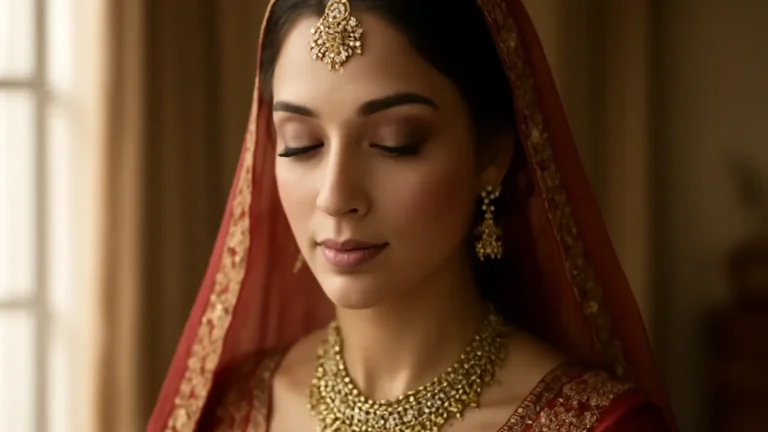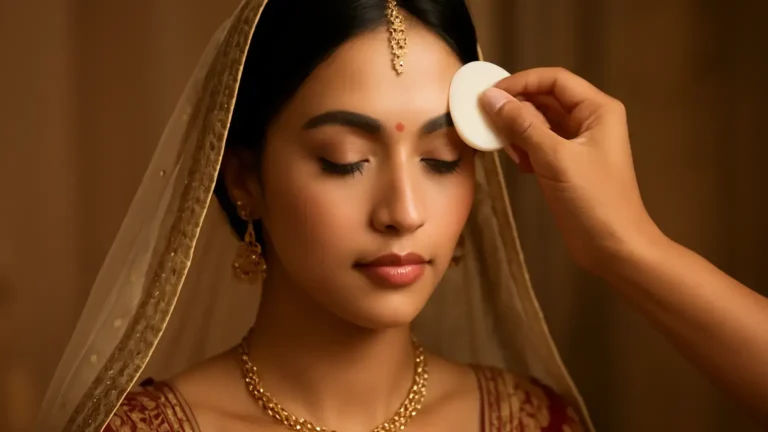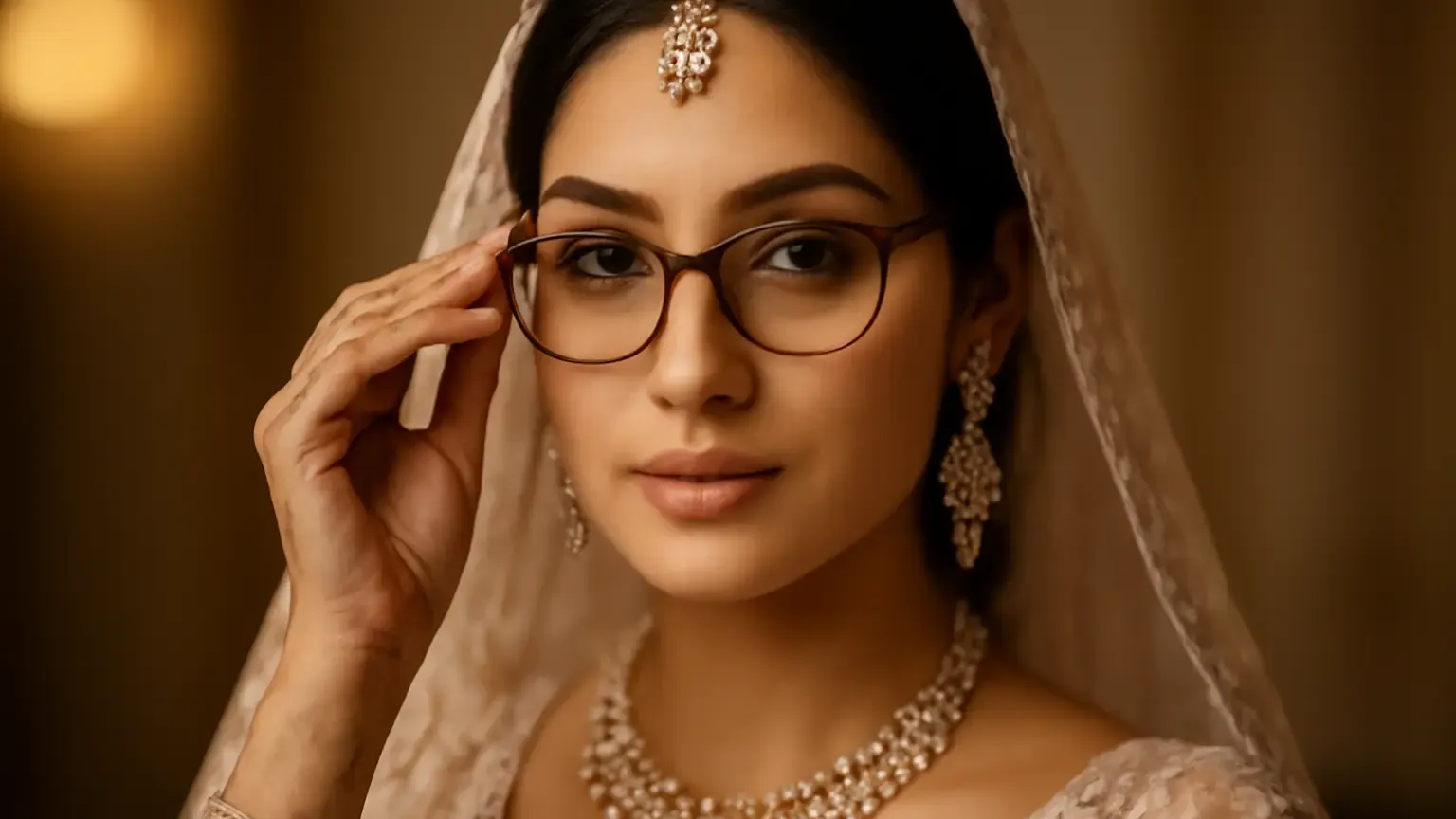
Bridal makeup for glasses should keep your frame comfortable, your lenses clear and your features visible in close-up photographs. This guide is for brides who plan to wear spectacles throughout the ceremony, reception or both. Choose a thin, well-set base around the nose, define the eyes without crowding the lenses, and test reflection, lashes and frame pressure during your makeup trial—not for the first time on the wedding morning.
Start with the frame, not the foundation
The most photo-ready wedding makeup is built around how your spectacles sit on your face. Before choosing shades or finishes, note the frame’s width, colour, bridge, lens height and overall shape. A bold frame already adds definition, while a fine metal frame may need slightly stronger brows or liner to keep the face balanced.
Clean the frames and lenses before makeup, then keep a soft microfibre cloth nearby. Ask your makeup artist to check where the nose pads, bridge and temples touch your skin. Those contact points are where oil, sweat and repeated adjustment can move makeup fastest. A pair that slides down can also change the position of your eyeliner and create uneven photographs.
For a round frame, softly lifted outer-corner definition can add visual length. For a rectangular or angular frame, a diffused shadow and curved brow shape can soften the overall look. This is not a strict face-shape rule; comfort and your personal style matter more than following a formula.
Seven choices for glasses-friendly bridal makeup
1. Use a thin, transfer-resistant base
Apply a light layer of transfer-resistant foundation, especially across the bridge and upper cheeks. A heavy layer may look smooth at first but is more likely to collect on the nose pads and leave marks when the frame moves. Press the product into the skin with a damp sponge or a small brush, then allow it to settle before putting on the glasses.
Use a long-wear concealer only where you need extra coverage. Set the bridge, sides of the nose and any area beneath the frame with a small amount of finely milled powder. The goal is controlled shine, not a dry mask. In warm or humid Indian wedding conditions, thin layers usually touch up more neatly than one thick layer.
2. Choose frame-friendly eyeliner
Frame-friendly eyeliner should be visible through the lens without occupying the entire lid. If the frame is thick or dark, a clean upper lash line and a softly smudged outer corner may be enough. If the frame is delicate, a little more definition can prevent the eyes from disappearing in distance photographs.
Keep the lower waterline understated if your eyes tend to water or if you dislike a crowded look. Instead, use a neutral brown or deep plum shadow close to the lower lashes. Waterproof eye makeup is useful for ceremonies, but remove it gently after the event rather than scrubbing the delicate eye area.
3. Pick eyeshadow that stays put
Cream-to-powder eyeshadow can provide a smooth base with less loose fallout than a very powdery formula. Apply a small amount, blend the edges and add shimmer only after checking how it reflects through your lenses. Strong glitter particles may create scattered highlights in flash photography, while satin or finely milled shimmer tends to look more controlled.
For most frames, a medium-depth shade in the crease and a slightly brighter inner corner give definition without competing with the glasses. Take one photograph in daylight and one with the likely indoor lighting. The eye look should remain visible when you are looking straight ahead, not only when your eyes are closed.
4. Match lashes to lens space
When deciding how to choose false lashes for glasses, measure the distance between your natural lashes and the lenses while wearing the frame. Very long, stiff lashes can brush against the glass, transfer mascara or feel distracting every time you blink. Shorter, lightweight clusters placed mainly at the outer corners are often more comfortable.
If strip lashes feel crowded, use tubing mascara on the upper lashes for separation and length with less smudging risk. Curl the lashes first, let mascara dry fully and check the frame before adding another coat. False lashes for glasses should be flexible, trimmed to your eye shape and tested with the actual spectacles—not just held near the face.
5. Make brows hold their shape
Brows provide structure above the frame, so keep them groomed but not dramatically darker than your hair and frame. Fill sparse areas with fine strokes, then use brow gel to hold the hairs without creating a stiff, painted effect. A strong frame may suit a softly defined brow; a very light or rimless frame may benefit from a little more polish.
Do not schedule a new brow shape or unfamiliar tint immediately before the wedding. If you usually remove facial hair, leave enough time for redness to settle and use only products you have already tolerated.
6. Protect the nose bridge and lens area
Nose bridge makeup needs a different approach from the rest of the face because the frame repeatedly presses and moves there. Keep skincare beneath this area lightweight on the wedding day, allow it to absorb and blot excess moisture before foundation. Apply a thin veil of base, set it lightly and avoid layering highlighter directly under the bridge.
At the end of the makeup application, put on the glasses carefully by holding both temples rather than dragging the bridge across the nose. Ask the artist to inspect the contact points after ten to fifteen minutes. If makeup has already shifted, remove the excess and reset the area before leaving for the venue.
7. Control reflection without losing glow
Anti-reflective lenses can reduce distracting glare, but they do not remove every reflection from flash, stage lights or bright windows. Clean lenses make a meaningful difference. Use a proper lens cloth and, if needed, the cleaning method recommended for your spectacles rather than a rough tissue that may leave fibres or scratches.
Keep luminous products on the high points of the cheeks, away from the lens edges and bridge. A soft satin finish often photographs more reliably than wet-looking shine. Ask the photographer for a few test images with the exact frame, lighting direction and makeup. A tiny chin or head adjustment may reduce glare without changing your expression.
How to run a useful bridal makeup trial
A makeup trial is essential for wedding makeup for brides with glasses because the frame changes how colour, scale and reflection appear. Bring the exact spectacles you expect to wear, plus any backup pair. Wear the frame for at least an hour during the trial and move through ordinary actions: smile, look down, blink, adjust the glasses and turn toward a window.
- Test the base: check the bridge, cheeks and temples after wearing the frame, then photograph the skin in natural light and with flash.
- Test the eyes: look straight ahead and confirm that liner, lashes and shadow remain visible through the lenses.
- Test comfort: confirm that lashes do not touch the lenses and that the glasses do not feel tighter after makeup.
- Test movement: walk, greet people and make expressions; a bridal look should survive normal ceremony activity, not only a still pose.
- Record the plan: photograph the finished look, note product textures and pack the same touch-up items for the wedding day.
What to keep in the touch-up kit
Pack blotting papers, a small pressed powder, cotton buds, a clean lens cloth, a miniature setting spray if suitable for your routine, lipstick and a tiny concealer or base product. A small mirror helps you check transfer without repeatedly touching the lenses. Ask a trusted person to carry the kit so you are not searching for it during photographs.
Setting spray can help the overall makeup wear more evenly, but it cannot replace correct placement, thin layers or a well-fitted frame. Spray with eyes closed and follow the product directions. Do not spray directly onto lenses, and allow the face to dry before putting the spectacles back on.
Common mistakes to avoid
- Trying contacts for the first time: contacts may be an option for some brides, but do not make a last-minute switch if you are unfamiliar or uncomfortable with them.
- Applying too much powder: excess powder around the nose can look textured and still transfer when the frame moves.
- Choosing lashes by drama alone: extra length is not useful if it touches the lenses or makes blinking uncomfortable.
- Ignoring the photographer: lens glare depends on light direction, camera angle and the coating on the lenses, so test actual conditions where possible.
- Changing frames late: a new bridge, width or nose-pad position can alter both comfort and makeup transfer.
Concise takeaway
The best bridal makeup for glasses is not about hiding the spectacles. It balances the frame with visible eye definition, a thin set base and comfortable lashes, then verifies the result in real photographs. Bring the exact frame to your makeup trial, test contact points and reflection, and keep a simple touch-up kit ready. If your eyes become persistently irritated, painful or unusually watery, pause cosmetic use and seek advice from an eye-care professional.
Products that may help with this routine
Choose only what fits your skin, hair or personal needs. Use the links below to view current options on Amazon India.
Frequently Asked Questions
What is the best bridal makeup for glasses in photos?
Use a thin transfer-resistant base, softly defined brows, visible upper-lash definition, comfortable lashes and controlled glow. Test the complete look with the actual frame in daylight and flash before the wedding.
How can I stop bridal makeup transferring onto glasses?
Use lightweight skincare, apply a thin foundation layer around the bridge, set the nose pads and upper cheeks lightly, let the makeup settle, and avoid repeatedly sliding the frame across the skin.
What eye makeup looks best with glasses for a wedding?
A defined upper lash line, softly blended crease shade and restrained inner-corner brightness usually work well. Adjust the intensity to the frame: bold frames may need less liner, while delicate frames can take more definition.
How should I choose false lashes for glasses?
Choose flexible, lightweight lashes that stay clear of the lenses. Trim them to the eye, place extra emphasis at the outer corner if comfortable, and test blinking while wearing the actual spectacles.
Should brides wear glasses or contacts for wedding photos?
Wear whichever option is familiar, comfortable and safe for you. If you are considering contacts, discuss suitability with an eye-care professional and test them well before the wedding rather than switching on the day.
How should I prepare my glasses for bridal makeup?
Clean the lenses with a suitable lens cloth, check that the frame fits securely, bring a backup pair if available and include the spectacles in the makeup trial and lighting tests.