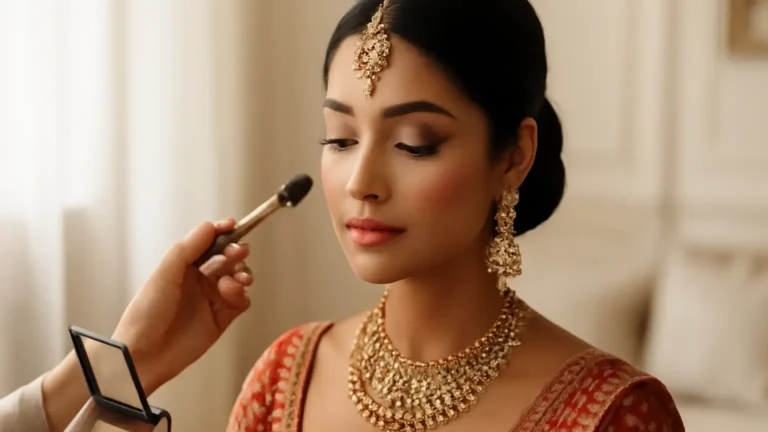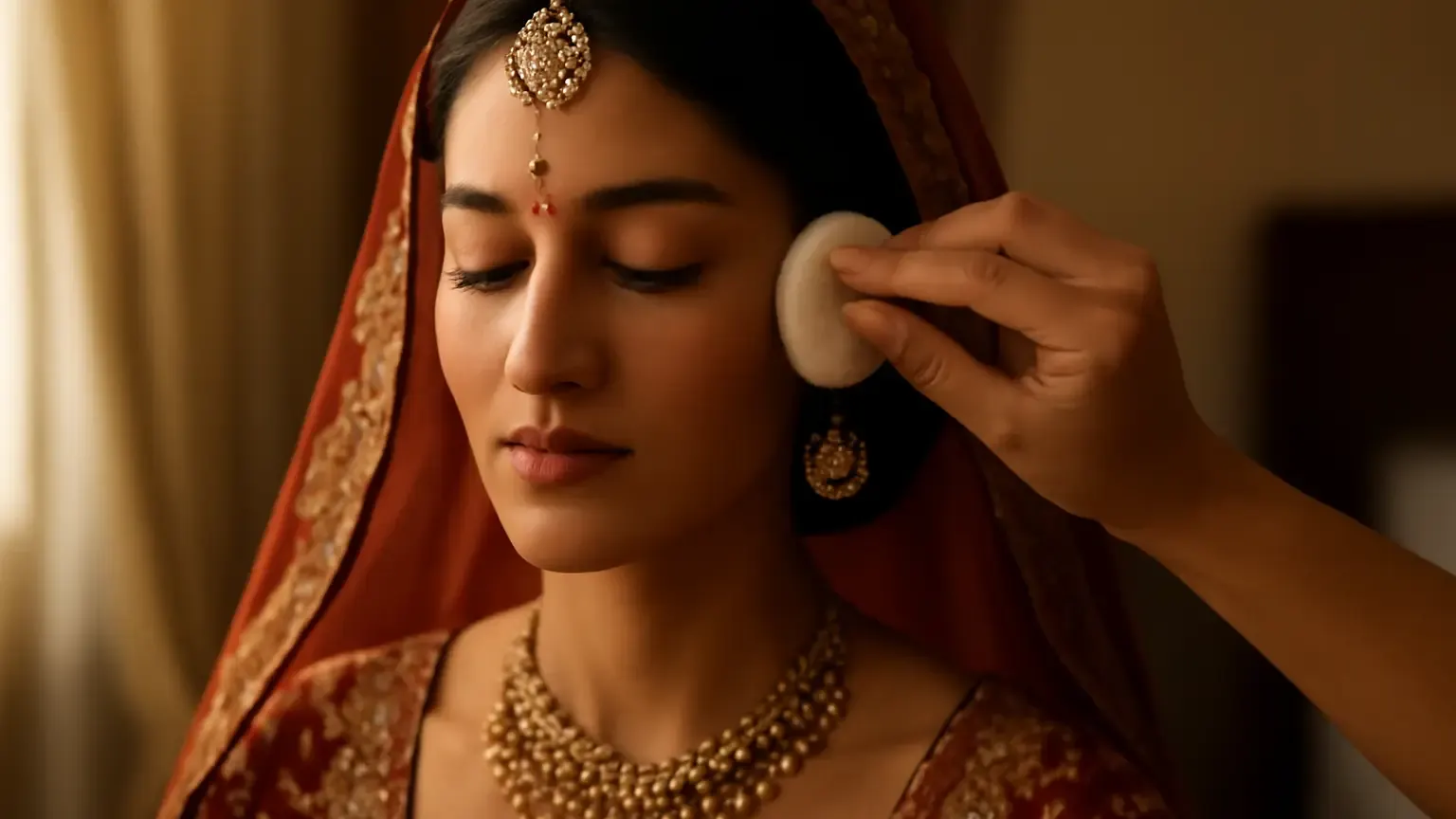
Bridal makeup for oily skin works best when shine control begins with balanced skincare, not layers of heavy powder. This guide is for brides marrying in warm, humid or long-ceremony conditions who want a fresh base through pheras, photographs and celebrations. Choose thin, compatible layers: lightweight moisturiser, mattifying primer where needed, oil-control foundation, targeted powder and a setting spray, then test the complete routine during your bridal makeup trial.
Start with skin preparation, not aggressive oil removal
The goal of preparation is to reduce excess shine while keeping the skin comfortable. Over-cleansing, scrubbing or skipping moisturiser can leave the surface tight, which may encourage more visible oiliness and make foundation sit unevenly. A calm, balanced base is especially important for a long Indian wedding day involving heat, lights, travel and several hours of photographs.
A simple morning routine
- Cleanse gently: Use a familiar cleanser that removes overnight oil without leaving the face squeaky or dry.
- Hydrate lightly: Apply a thin gel moisturiser and allow it to settle. Oily skin still benefits from hydration.
- Use sunscreen when appropriate: For a daytime event, choose a sunscreen you have already tested. Avoid introducing an unfamiliar product on the wedding morning.
- Give each layer time: Waiting a few minutes between skincare steps reduces pilling and helps makeup grip.
If you are managing persistent irritation, sudden breakouts or severe oiliness, ask a dermatologist for personalised advice well before the wedding. Do not experiment with strong new products immediately before the ceremony.
Choose a base that controls shine without looking flat
For oily skin wedding makeup, a medium-to-full buildable foundation is often more practical than an extremely thick formula. It lets the artist add coverage only where needed, keeping the complexion more natural in close-up photographs. A soft-matte or natural-matte finish usually gives a useful balance: less visible shine, but not a dry, mask-like appearance.
Primer and foundation decisions
A mattifying primer is best used selectively. Press it into the T-zone, around the nose and on areas that usually become shiny first rather than automatically applying a thick layer across the entire face. If the cheeks feel normal or dry, a lighter hydrating base may perform better there.
When comparing an oil-control foundation, look for a formula that matches the desired coverage, undertone and finish. The “best” foundation is not one universal product; it is the one that remains comfortable, photographs evenly and works with the primer, concealer and powder selected by your artist. Test it in daylight and under flash if possible.
For Indian bridal makeup for oily skin, shade matching should account for the face, neck and the colours in the bridal outfit. Ask for a thin first layer, allow it to settle, and add coverage only to areas that need it. This reduces separation and makes later touch-ups easier.
Layer cream and powder products strategically
Long-lasting makeup is usually built through compatible, thin layers rather than one heavy application. After foundation and concealer, use colour products in a way that supports longevity without removing the skin’s dimension.
- Blush: A small amount of cream blush beneath a matching powder blush can create depth, but avoid excessive cream product on the oiliest parts of the face.
- Highlight: Place glow on the high points of the cheeks rather than the centre of the forehead, nose or chin, where natural oil may already look reflective.
- Concealer: Use enough to even out the under-eye area, then set only the crease-prone sections. Too much powder can make the eyes look dry in photographs.
- Contour: Powder contour is often easier to control on a warm, humid day, while a cream product may need careful setting.
A cream-to-powder blush can be useful for brides who want colour that settles without remaining overly emollient. Whichever texture you choose, test it over the exact foundation and primer combination rather than judging it alone.
Place powder where it solves a problem
Translucent setting powder should support the base, not cover it completely. Use a small brush or puff to press powder into the sides of the nose, forehead, chin, upper lip and any area where foundation tends to move. A light veil may be enough on the cheeks.
Pressing powder is generally more controlled than repeatedly sweeping it across the face. It also helps preserve coverage. If you use a flash photograph, check that the powder does not create a pale cast under the eyes or on the centre of the face. Your makeup artist can test this before the wedding.
Do not keep adding powder whenever shine appears. First remove surface oil with a clean tissue or blotting papers, then apply a very small amount of powder only if needed. Oil and powder layered repeatedly can turn a fresh base into a thick, uneven one.
Make the eyes, lips and bridal details last
A reliable bridal look needs more than a stable complexion. Tears, humidity, perspiration and frequent greetings can affect eye and lip makeup quickly.
For waterproof bridal makeup, prioritise products that are specifically labelled for water resistance and that your artist has tested for comfort. Waterproof mascara and a suitable eyeliner can help during emotional ceremonies, but waterproof does not mean impossible to remove. Arrange a gentle evening cleansing routine and avoid rubbing the delicate eye area.
Eye primer can reduce creasing, particularly on the lids. Apply shadow in thin layers and keep the deepest colour close to the lash line. If you wear contact lenses or have sensitive eyes, test the complete eye routine before the event and stop using anything that causes discomfort.
For lips, begin with comfortable hydration earlier in the routine, then remove excess balm before colour application. A lip liner can define the edges and improve transfer resistance. A long-wear lipstick may last longer, but it should still be comfortable enough for speaking, eating and drinking. Keep the exact lipstick, liner and a small mirror in the getting-ready area for quick corrections.
Adapt the routine for heat and humidity
The best bridal makeup for oily skin in humidity is not necessarily the most matte formula available. In a humid city, a very dry base can crack or look textured while the skin underneath becomes warm and shiny. The better strategy is targeted control, thin layers and realistic maintenance.
Plan a short cooling break before the main photography session if possible. Keep the face away from direct heat while getting dressed, and ask attendants to handle the veil or jewellery without repeatedly touching the complexion. If the wedding includes an outdoor baraat, daytime rituals or a monsoon setting, allow extra time for blotting and inspection between events.
A setting spray for oily skin can help fuse layers and reduce a powdery appearance. Spray according to the product directions, hold it at a sensible distance and let it dry without fanning aggressively. It should complement, not replace, good prep and powder placement.
Use the bridal makeup trial as a wear test
A bridal makeup trial is a decision-making appointment, not only a chance to choose colours. Schedule it early enough to change the base, artist or application plan if the finish does not suit you.
At the trial, ask the artist to record the products, shades and application order. Wear the makeup for several hours and observe the T-zone, under-eyes, nose creases and areas that touch the dupatta or veil. Take photographs in daylight, indoor lighting and flash. Notice whether the foundation separates, whether the powder looks heavy and whether the lip colour remains comfortable.
Also test the full skincare routine beneath the makeup. If a product pills, stings or creates unusual redness, do not assume it will improve on the wedding day. Replace it with a familiar alternative after discussing the change with your artist.
Pack a small, useful touch-up kit
A practical makeup touch-up kit keeps maintenance simple. Include blotting papers, the lipstick and liner, a cotton bud, a small mirror, tissues and any powder selected by your artist. If you wear a veil or heavy jewellery, add a few clean cotton pads so an attendant can help without using bare fingers.
To refresh the base, gently press a tissue or blotting paper onto shiny areas. Do not rub. Inspect the face in natural light, correct only the spot that needs it, and leave intact areas alone. This method answers the common question of how to touch up oily bridal makeup without caking: remove oil first, then add minimal product.
Common mistakes to avoid
- Skipping moisturiser: Dehydrated-feeling skin can make foundation look rough and uneven.
- Applying primer everywhere: Targeted use is often more comfortable and more natural.
- Choosing a foundation only by finish: Shade, undertone, wear time and compatibility matter just as much.
- Over-powdering before leaving: The face may look flat in person and heavy in close-up photographs.
- Trying a new active or facial treatment just before the event: Give the skin time to settle and consult a professional for concerns.
- Ignoring the neck and hairline: Blend carefully so the complexion looks cohesive with the bridal outfit.
Concise takeaway
Successful bridal makeup for oily skin depends on controlled preparation, a compatible buildable base, targeted powder and a planned touch-up routine. Test everything during the trial, especially if your wedding is outdoors, humid or spread across many hours. The aim is not to remove every trace of natural skin dimension; it is to keep shine intentional, coverage even and the bride comfortable from the first photograph to the final ceremony.
Products that may help with this routine
Choose only what fits your skin, hair or personal needs. Use the links below to view current options on Amazon India.
Frequently Asked Questions
How should I prep oily skin before bridal makeup?
Cleanse gently, apply a lightweight gel moisturiser, use a familiar sunscreen for daytime events, and allow each layer to settle. Apply mattifying primer only to areas that become shiny, such as the T-zone. Avoid aggressive scrubbing and unfamiliar strong products close to the wedding.
Which foundation is best for oily skin bridal makeup?
A buildable medium-to-full coverage foundation with a natural-matte or soft-matte finish is often a practical choice. The best option depends on your undertone, desired coverage, climate and compatibility with the primer and powder. Test it during a bridal makeup trial in daylight and flash.
How can I make bridal makeup last all day on oily skin?
Use balanced skincare, thin compatible layers, targeted mattifying primer, an oil-control foundation and carefully placed powder. Set the finished look with a suitable setting spray, then blot oil before adding any more powder during the day.
What powder is best for oily skin bridal makeup?
A finely milled translucent or shade-matched setting powder can work well when pressed lightly onto the T-zone, nose, chin and crease-prone areas. Test it for flash photography first, and avoid repeatedly layering powder over unblotted oil.
How do I touch up oily bridal makeup without caking?
Press blotting papers or a clean tissue onto shiny areas without rubbing. Inspect the base, then add a tiny amount of the chosen powder only where coverage has moved or shine remains. Avoid powdering the whole face each time.