Festive fashion for winter weddings works best when warmth is added in deliberate, slim layers rather than bulky pieces. This guide is for wedding guests and family members choosing sarees, lehengas, suits or Indo-western sets for chilly Indian celebrations. Start with a fitted base, add one defined outer layer—such as a cape, cropped jacket or elegant shawl—and finish with coordinated accessories so your silhouette stays clear, comfortable and occasion-ready.
Winter weddings bring a useful styling opportunity: richer fabrics, deeper colours and more interesting layers. The challenge is keeping those layers refined. A heavy sweater under a draped saree or an oversized coat over a voluminous lehenga can hide the very shape that makes festive clothing feel special.
The most reliable formula is simple: keep the base close to the body, let only one layer provide volume, and repeat one colour or finish in your accessories. This approach creates warmth without making an outfit look like everyday winter dressing.
Begin with the outfit’s natural silhouette
Before choosing a cover-up, identify the shape of the outfit. A saree usually benefits from definition at the shoulder or waist. A lehenga already has volume at the skirt, so its upper layer should be shorter or more streamlined. A suit can accommodate a longer jacket, while an Indo-western outfit often looks strongest when its traditional and contemporary elements are balanced.
For layered wedding guest outfits, use this quick proportion check:
- Fluid base, structured layer: Pair a soft saree or slip dress with a tailored cape, cropped jacket or fitted longline vest.
- Full skirt, neat upper half: With lehengas for cold weather, choose a fitted blouse and a short jacket, narrow cape or neatly pinned shawl.
- Tailored base, softer finish: A sharara, pantsuit or kurta set can take a draped shawl or embroidered stole without losing polish.
Try the complete combination at home, including footwear. Sit, walk and raise your arms. If the hem catches, the sleeve pulls or the outer layer slides repeatedly, it needs adjusting before the event.
Choose the right layer for sarees, lehengas and suits
Caped sarees and cropped jackets
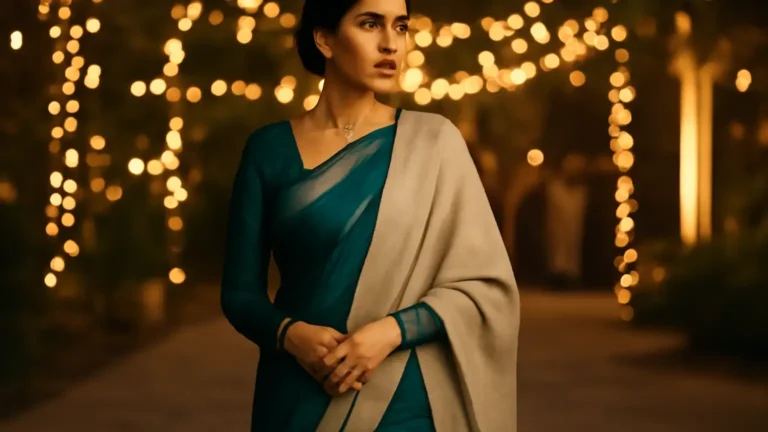
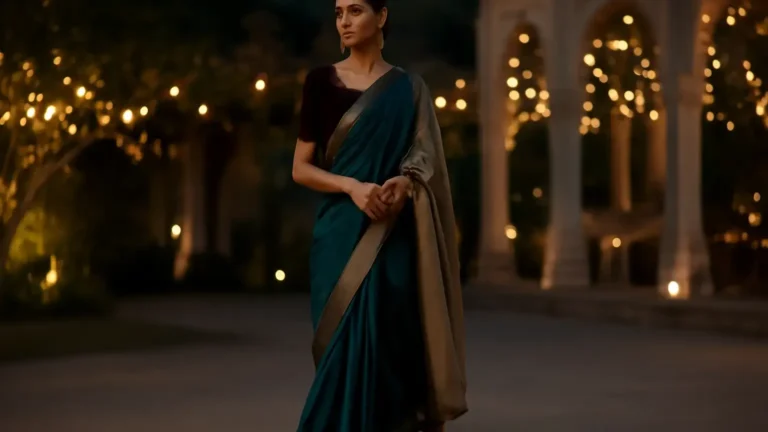
A saree with cape is one of the easiest winter formulas because it frames the shoulders while keeping the pleats visible. Select a cape that ends around the hip or just below it; a very long, loose cape can compete with the drape. Sheer embroidered capes suit indoor receptions, while velvet or silk-blend capes are more useful for outdoor ceremonies.
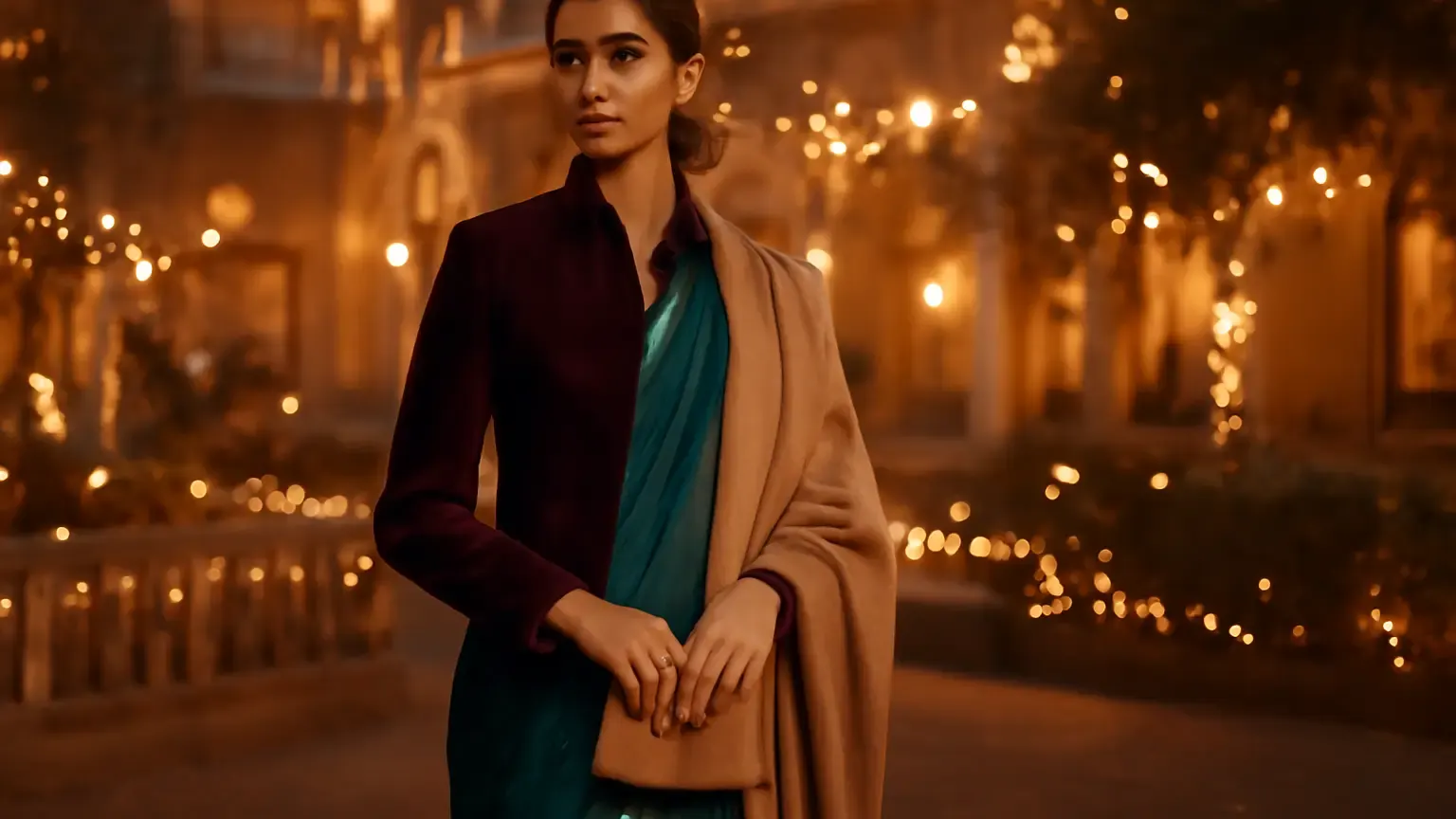
A cropped jacket offers more structure. Wear it open over a plain saree, or button a fitted style over a lightweight blouse when the pallu is kept narrow. A collarless jacket feels softer and more traditional; a sharp lapel gives a contemporary finish. Avoid adding a large necklace if the jacket already has heavy embroidery at the neckline.
Lehengas with shawls and short jackets
For lehengas for cold weather, a shawl should be styled with intention rather than loosely placed over both shoulders. Drape it over one shoulder and secure it discreetly near the blouse, or fold it into a narrow stole that follows the line of the dupatta. The first method is warmer; the second preserves more of the blouse and jewellery.
Short velvet jackets are particularly effective over a simple lehenga. Keep the jacket fitted through the shoulder and avoid adding a bulky dupatta on top. If the lehenga is already embellished, choose a solid jacket in a related jewel tone instead of introducing another print.
Suited sets and Indo-western combinations
Long jackets, angrakha-style layers and tailored bandhgalas work well with shararas, cigarette pants and straight kurtas. These are practical Indo-western wedding looks for guests who want movement and coverage without a traditional dupatta.
For an evening function, a brocade or velvet jacket can replace a shawl. For a daytime event, silk, jacquard or a lighter woven fabric will look less heavy. Keep the inner kurta or top relatively clean so the jacket remains the focal point.
Use velvet, shawls and texture strategically
Velvet adds warmth visually as well as physically, but it can become overwhelming when used in every part of an outfit. A velvet blouse for wedding dressing works best with a lighter saree in satin, georgette or tissue. Alternatively, keep the blouse simple and use velvet on a cropped jacket, clutch or shoes.
When considering wedding shawl styling, check three details:
- Weight: A light stole is easier with a delicate saree; a denser shawl is better with structured tailoring or a plain lehenga.
- Finish: Matte wool and pashmina-like textures soften sequins, while silk and satin reflect light for a more formal effect.
- Placement: Pin the shawl at one shoulder or wrap it once around the upper arms. Repeatedly clutching it in both hands makes the outfit look less finished.
If you are attending an outdoor pheras ceremony, prioritise coverage at the shoulders and upper back. A shawl that can be secured with a brooch is more practical than one that constantly slips. Choose a brooch with a smooth back so it does not snag delicate fabric.
Stay warm underneath without adding bulk
The best thermal wear under ethnic clothes is thin, close-fitting and invisible at the neckline, sleeves and waist. A lightweight camisole or base layer can work under a blouse, while slim full-length leggings can sit beneath a lehenga or anarkali. Test the base layer beneath the actual outfit: a visible neckline, uneven hem or bunching at the waist can affect the final drape.
Do not automatically layer a thick knit under festive clothing. It may distort the blouse fit, make sleeves tight and create creases beneath a saree. Instead, add warmth at the outer layer, feet and hands, where it is easier to remove or adjust.
Coordinate colour and accessories
Colour coordination festive wear does not require every piece to match. Choose one anchor colour from the outfit and repeat it once in the outer layer or accessories. For example, an emerald blouse can be echoed in earrings or a velvet jacket, while gold embroidery can be picked up in a clutch and sandals.
For a heavily embellished outfit, select one or two polished accents:
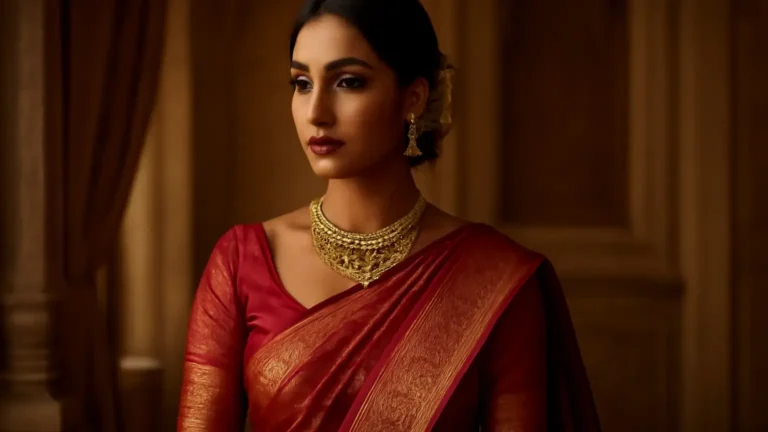
- Statement earrings with a clean neckline and a decorated cape.
- A slim necklace with a plain blouse and embroidered shawl.
- A metallic clutch that connects warm gold or cool silver details across the look.
- A narrow belt over a long jacket or saree drape when the waist needs definition.
Winter accessories can be elegant rather than purely functional. Choose a satin-lined clutch, embellished brooch or textured potli instead of adding multiple competing pieces. If the outer layer is patterned, keep the bag and footwear quieter.
Plan footwear for the venue and weather
Comfort should be part of the outfit decision, not an afterthought. Comfortable wedding footwear includes block heels, padded sandals, dressy juttis and low wedges, depending on the venue. Grass, gravel and uneven palace floors are difficult in narrow stilettos, especially when a heavy lehenga requires careful movement.
Wear the footwear while checking the lehenga or saree length. The fabric should clear the ground without revealing too much of the shoe. If you expect to move between an outdoor ceremony and an indoor reception, carry discreet foldable flats or a second pair in a small bag.
A practical decision guide for the event
Use the venue, time and outfit fabric to decide how much layering is needed:
| Event condition | Most useful layer | Styling priority |
|---|---|---|
| Daytime garden wedding | Light shawl or silk-blend cape | Sun-friendly colour and easy movement |
| Cold outdoor pheras | Secured shawl or velvet jacket | Shoulder and back coverage |
| Indoor evening reception | Cropped jacket or embellished cape | Defined waist and controlled shine |
| Travel-heavy celebration | Tailored Indo-western layer | Comfort, crease resistance and rewearing |
Common winter wedding styling mistakes
- Adding volume everywhere: A full lehenga, oversized shawl and loose jacket can erase the waist and overwhelm the wearer. Keep at least two elements streamlined.
- Ignoring sleeve proportions: Long sleeves under a fitted jacket can bunch at the wrist. Choose a smooth base or a three-quarter outer sleeve.
- Mixing too many finishes: Velvet, sequins, brocade and metallic accessories can compete. Choose one dominant texture and one supporting texture.
- Leaving the shawl unsecured: Use a hidden pin or brooch for ceremonies where you need both hands free.
- Choosing warmth over movement: If you cannot sit comfortably or walk safely, the outfit needs a lighter base layer or a better-fitting cover-up.
Final takeaway
The smartest festive fashion for winter weddings is built around proportion: a fitted base, one purposeful warm layer and accessories that repeat the outfit’s colour or finish. Use a cape or cropped jacket to define a saree, a short velvet layer to balance a lehenga, and a tailored jacket or shawl to make suits and Indo-western sets event-ready. Try everything together before the wedding so warmth, movement and shape are resolved in advance.
Products that may help with this routine
Choose only what fits your skin, hair or personal needs. Use the links below to view current options on Amazon India.
Frequently Asked Questions
How do you layer a saree for a winter wedding?
Start with a slim, invisible base layer, then add a fitted blouse, cape, cropped jacket or secured shawl. Keep the pallu visible and choose only one voluminous outer layer so the waist and pleats remain defined.
What should you wear to an Indian winter wedding?
Choose a saree, lehenga, suit or Indo-western set in silk, velvet, brocade or another occasion fabric, then add a tailored jacket, cape or shawl. Finish with venue-appropriate footwear and coordinated jewellery.
What are the best winter wedding outfits for women?
The best option depends on the venue and silhouette. Sarees with capes, lehengas with short velvet jackets, and suits with tailored long jackets all offer warmth while keeping festive proportions polished.
How do you style a shawl with a lehenga?
Drape the shawl over one shoulder and secure it discreetly near the blouse, or fold it into a narrow stole that follows the dupatta line. Select a lighter shawl for an embellished lehenga and a richer one for a plain outfit.
Can you wear a jacket over a saree?
Yes. A cropped, fitted or collarless jacket can be worn over a saree, especially when the drape is neat and the jacket does not cover all the pleats. Keep the blouse and accessories simpler if the jacket is embroidered.
What should you wear under ethnic clothes in winter?
Use thin, close-fitting thermal layers or camisoles that do not show at the neckline, sleeve or hem. Test them under the complete outfit to prevent bunching and fit issues.