Festive fashion for winter wedding guests works best when warmth is built into the outfit rather than added as an afterthought. This guide is for anyone dressing for an Indian wedding in cool weather, from a daytime haldi to a late-night reception. Use one refined outer layer, choose a fabric with enough structure, and match your footwear to the venue so your saree, suit, lehenga or fusion look stays elegant, mobile and genuinely comfortable.
Winter weddings invite richer colours, tactile fabrics and more interesting styling than summer ceremonies, but they also create a practical problem: the layer that keeps you warm can easily hide your outfit or make it look bulky. The most reliable approach is to treat the outer layer as part of the look from the beginning. Consider the ceremony time, venue, wind exposure, amount of walking and whether you will need to sit on the floor before choosing your formula.
How to choose a winter wedding layer
A good layer should do three jobs: retain warmth, preserve the silhouette of the base outfit and look intentional in photographs. For warm fabrics for Indian weddings, velvet, wool-silk blends, brocade, heavier raw silk and lined jacquard are useful choices. Pashmina or a fine cashmere blend is lighter and easier to drape, while a cotton-silk layer suits a mild daytime function.
- For a cold outdoor venue: choose a lined velvet jacket, a dense shawl or a long structured coat.
- For a mildly cool daytime event: choose silk, brocade, chanderi with a substantial stole or a light cape.
- For a polished indoor reception: prioritise a neat shoulder layer that can be removed without disturbing the outfit.
Colour balance matters. If the base is heavily embroidered, select a solid layer in one of its quieter tones. If the outfit is plain, let the shawl, jacket or cape introduce texture. A warm neutral such as wine, camel, deep navy, charcoal or antique gold can work across multiple festive outfits without looking repetitive.
Festive fashion for winter wedding guests: six layering formulas
1. Silk saree with a draped shawl
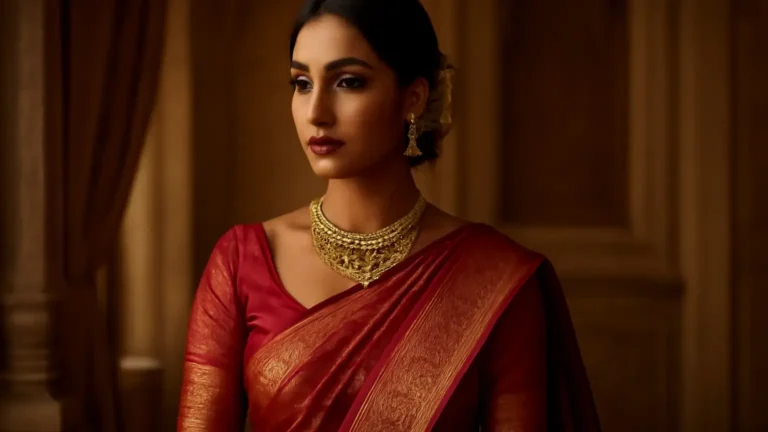
A saree with shawl styling is one of the easiest ways to add warmth without changing the traditional character of the outfit. Start with a silk, brocade or heavier satin saree rather than a very fluid chiffon. Drape the saree normally, then place a fine pashmina or cashmere-blend shawl over both shoulders. Let one end fall behind the elbow and secure the other lightly at the waist with a discreet brooch or a hidden safety pin.
Keep the blouse slightly more substantial for an evening wedding: full sleeves, a high back or a jewel neckline will feel more balanced than a very light blouse. If the shawl has a border, align it with the saree pallu rather than letting several competing borders cross at the front. Wear pointed block heels or embellished closed-back sandals, especially if the venue has grass or uneven flooring.
Best for: receptions, pheras and guests who want a classic silhouette with a removable layer.
2. Velvet jacket over a saree
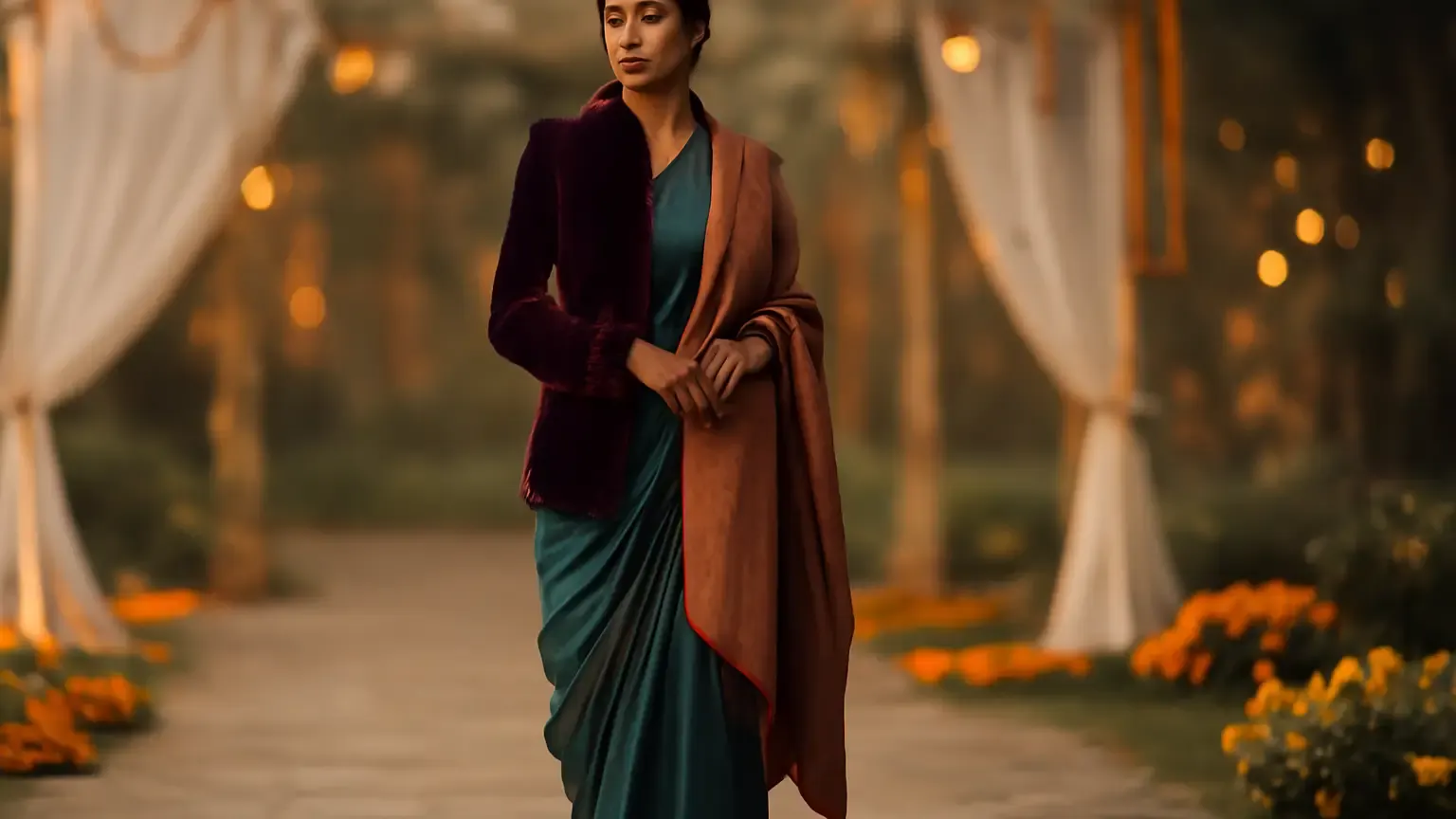
A velvet wedding guest outfit offers warmth and visual richness, particularly for a night function. Choose a cropped velvet jacket if the saree is high-waisted and neatly pleated; this keeps the legs and pallu visible. A hip-length or longline jacket works better with a simpler saree because it creates a clean column rather than competing with heavy draping.
Look for a jacket with a smooth lining, comfortable armholes and enough room to move. A fitted piece that pulls across the bust or shoulders will become uncomfortable during dinner and photographs. Keep jewellery focused: long earrings or a single necklace usually work better than a complete set when the jacket already has embroidery.
For a modern contrast, pair a jewel-toned saree with a deep brown, black, ivory or muted metallic jacket. For a more coordinated result, match the jacket to the blouse and let the saree provide the colour.
3. Silk suit with a long coat or bandhgala
A silk suit wedding look is practical for guests who want coverage, easy movement and a polished finish. Choose a straight kurta with tapered trousers or a softly flared suit, then add a long coat, brocade overlay or bandhgala-inspired jacket. The outer piece should ideally end above the widest point of the calf or fall close to the ankle; an awkward mid-calf hem can make the outfit look shortened.
This formula is especially useful for an evening wedding guest outfit. Velvet, textured jacquard and brocade create depth under low evening light, while silk or satin panels add a festive reflection. If the coat is embellished, keep the kurta comparatively clean. If the suit is richly worked, select a plain coat with a strong cut.
Choose embroidered mojaris, low block heels or dressy loafers depending on the venue. A pointed shoe creates a longer line under straight trousers, while a rounded mojari feels more traditional with a flared kurta.
4. Lehenga with an embroidered jacket
When deciding what to wear over a lehenga in winter, an embroidered jacket is often more useful than a second dupatta. A waist-length jacket shows the blouse and keeps the lehenga’s flare visible. A longer, open-front jacket gives more coverage and works well when the blouse is minimal or the skirt has a simple finish.
For lehengas for cold weather, consider a heavier skirt fabric such as brocade, velvet, raw silk or layered organza. Add a fitted thermal vest beneath the blouse only if it does not alter the neckline or create visible lines. A thin, skin-toned base layer can be more discreet than a bulky garment, but test the full outfit while sitting and raising your arms before the wedding.
Keep the dupatta purposeful. Drape it over one shoulder if the jacket is open, or skip it when the jacket already has a strong collar and the outfit feels visually complete. Closed-toe block heels are safer than delicate stilettos on lawns and pathways.
5. Suit or sharara with a cape
A cape creates movement and coverage without the visual weight of a coat. It suits shararas, ghararas, anarkalis and slim trousers particularly well. Choose a lined cape in velvet, silk, brocade or a dense georgette, and make sure the arm openings allow you to eat, greet guests and carry a small bag.
This is an effective option for a daytime function that may continue into the evening. A shorter cape in a soft neutral can sit over a bright suit, while a dramatic floor-skimming cape is best reserved for a formal reception. Avoid pairing a very flared cape with a voluminous sharara unless you want a deliberately theatrical shape; otherwise, the combined volume can overwhelm your frame.
For jewellery with layered outfits, choose one clear focal point: chandelier earrings, a choker or stacked bangles. A cape with a high neckline usually needs less neck jewellery.
6. Fusion dress with a tailored jacket and boots
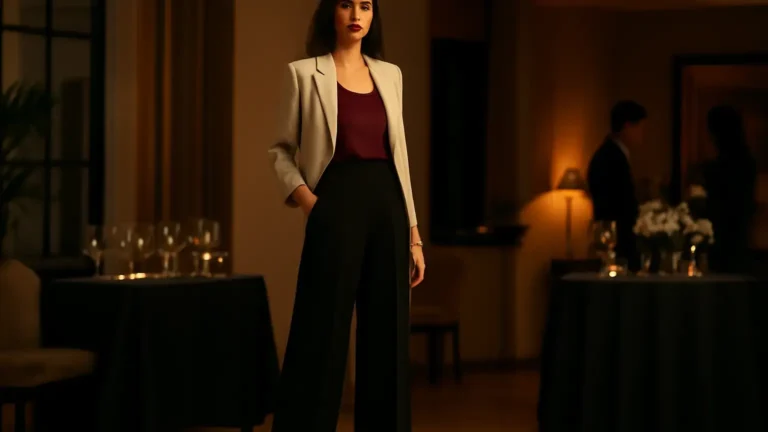
A midi dress, draped skirt or contemporary kurta can become wedding-ready with a tailored brocade jacket, a velvet blazer or a long structured waistcoat. This formula is suitable for guests who prefer a modern wardrobe but still want festive texture. Keep one element distinctly Indian—such as zari, a brocade weave, a statement dupatta or handcrafted earrings—so the styling feels appropriate for the celebration.
Boots can work with a lehenga or fusion skirt when the hem is high enough to show the ankle or when the skirt has enough volume to move over the boot. Select sleek ankle boots in suede or leather-look material rather than bulky winter boots. The heel should be stable and low enough for prolonged standing. This answers the common question, “Can I wear boots with a lehenga to a wedding?” Yes, provided the boot looks intentional, the hem does not catch and the overall styling remains dressy.
Footwear decisions that prevent discomfort
The best festive footwear for winter weddings depends on the surface more than the outfit. For grass, gravel or uneven courtyards, choose block heels, wedges, embellished flats or dressy mojaris. For a ballroom, slim block heels or pointed pumps can look sharper. If you need height, a platform or wider heel is generally easier to manage than a narrow stiletto over several hours.
Break in new footwear at home with the socks or stockings you expect to wear. Carry discreet blister plasters and, if the outfit permits, foldable flats for the journey home. Check the trouser or lehenga hem with the final shoes on; a small adjustment can prevent dragging, stepping on the fabric or losing balance.
How to layer without hiding the outfit
- Build from the inside out: wear a comfortable base layer, then the festive outfit, then the outer layer. This makes it easier to judge warmth and bulk.
- Match proportions: a cropped jacket usually suits a high-waisted saree or lehenga, while a long coat balances a narrow trouser or column silhouette.
- Limit competing detail: combine one ornate layer with one quieter layer. Embroidery, shine, fringe and a heavy border do not all need to appear together.
- Secure moving pieces: use small pins, fashion tape where suitable and a brooch for a shawl that keeps slipping. Test them on the actual fabric first.
- Plan for removal: choose layers that can be taken off cleanly once you move indoors, without unpinning the saree or disturbing the dupatta.
Common winter wedding styling mistakes
The most frequent mistake is adding a casual sweater over a formal outfit without adjusting the rest of the look. If warmth is essential, choose a refined knit under a jacket or a coordinated shawl instead. Another mistake is relying on a very thin, slippery layer that moves throughout the event. A textured pashmina, lined cape or shawl with a small brooch will sit more securely.
Do not ignore the blouse or inner layer just because it will be covered. Tight armholes, scratchy seams and excessive layers become noticeable during long ceremonies. Likewise, avoid wearing a brand-new heel for the first time at a wedding. Comfort is part of polish, not a compromise to it.
A simple decision guide for the wedding schedule
| Event or setting | Recommended formula | Practical priority |
|---|---|---|
| Daytime haldi or mehendi | Silk suit with a light cape or shawl | Breathable fabric and easy movement |
| Outdoor pheras | Saree with a pashmina or velvet jacket | Secure drape and closed-back footwear |
| Night reception | Lehenga with an embroidered jacket | Warmth, structure and controlled sparkle |
| Modern cocktail function | Fusion dress with a tailored jacket and boots | Clean proportions and stable shoes |
Takeaway
The strongest festive fashion for winter wedding guests starts with a base outfit suited to the weather, then adds one deliberate layer rather than several random ones. Use a shawl for a saree, velvet or a tailored jacket for structure, a cape for lighter coverage and practical closed-toe footwear when the venue is outdoors. When warmth, proportions and movement are considered together, winter dressing looks celebratory instead of merely protective.
Products that may help with this routine
Choose only what fits your skin, hair or personal needs. Use the links below to view current options on Amazon India.
Frequently Asked Questions
How do you layer a saree for a winter wedding?
Wear a silk or brocade saree with a full-sleeve blouse, then add a pashmina, cashmere-blend shawl or tailored velvet jacket. Secure the layer discreetly and choose closed-back block heels for outdoor venues.
What should you wear over a lehenga in winter?
An embroidered velvet, brocade or silk-blend jacket is the most practical option. Choose a cropped jacket to show the blouse and waist, or a long open-front jacket for more coverage. A fine base layer can be worn underneath if it does not distort the fit.
What are the best fabrics for winter wedding guest outfits in India?
Velvet, brocade, raw silk, heavier satin, wool-silk blends, pashmina and fine cashmere blends provide useful warmth while still looking festive. For mild daytime weather, cotton-silk and lined chanderi can be more comfortable.
Can you wear boots with a lehenga to a wedding?
Yes. Sleek ankle boots can work with a shorter or fuller lehenga when the hem does not catch and the boot looks dressy. Choose a stable low heel and avoid bulky soles that compete with delicate embroidery.
How can you keep warm in Indian wedding guest outfits?
Use a substantial base fabric, add one lined jacket, cape or shawl, and consider a discreet thermal layer under the outfit if the fit allows it. Also choose covered footwear and plan a removable layer for heated indoor spaces.