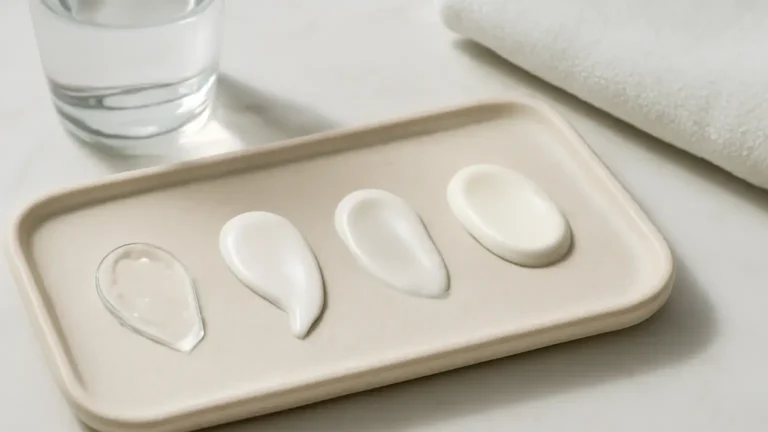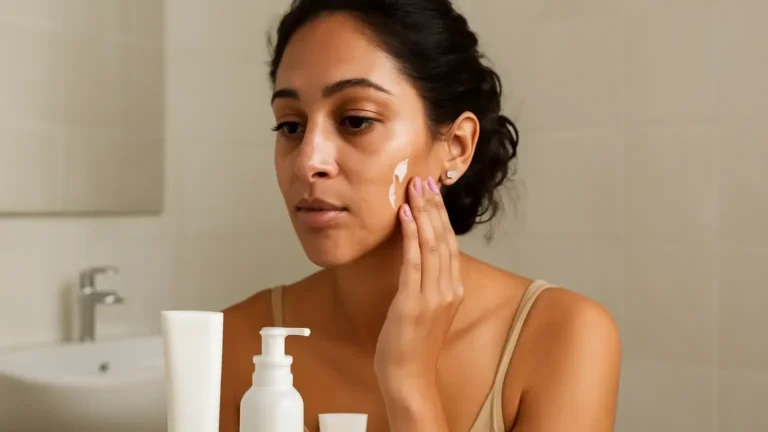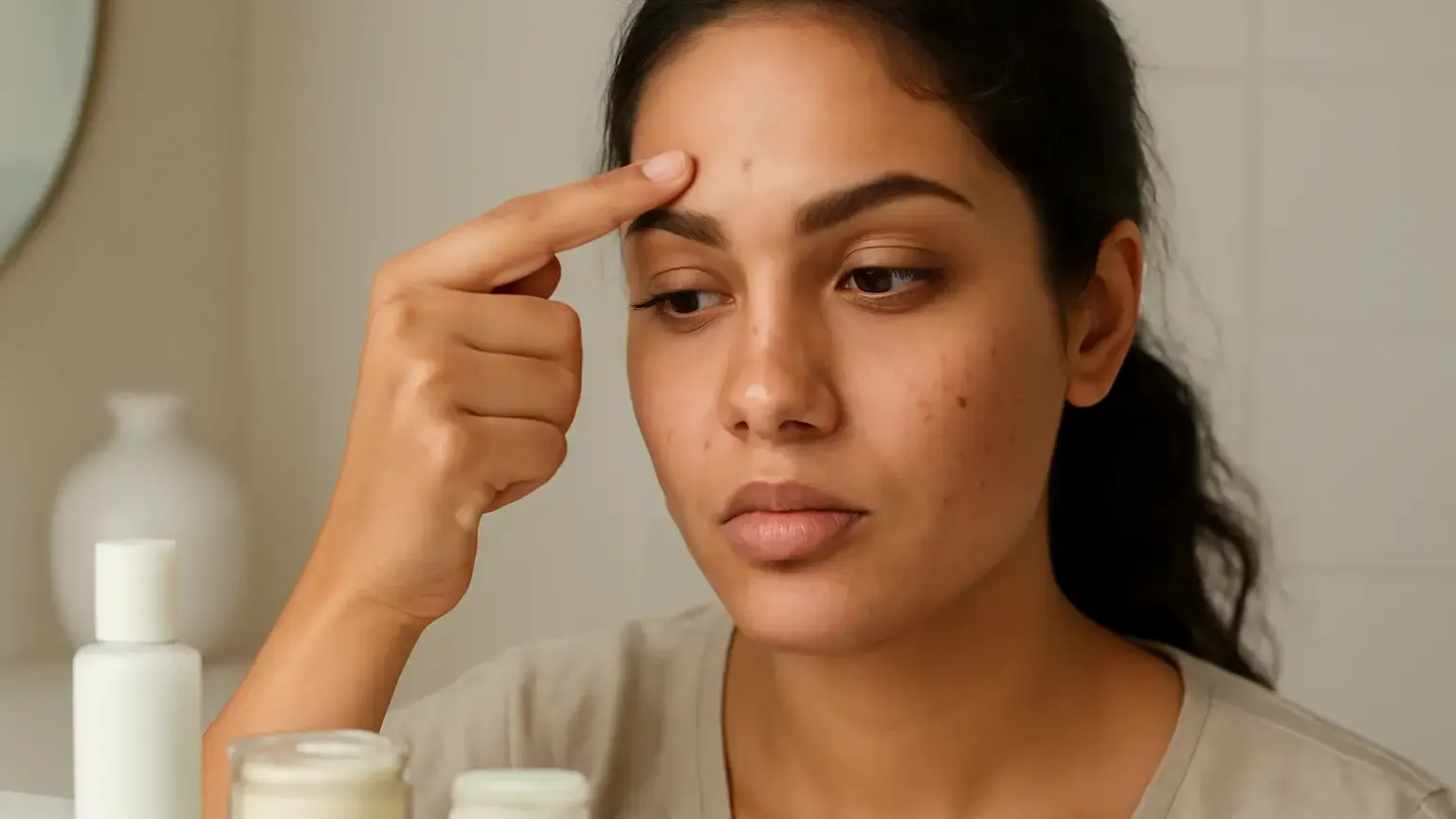
Acne-prone skin and makeup primer choices come down to your skin’s current needs: use a pore-blurring formula for visible texture, a hydrating primer for tight or flaky areas, or a mattifying primer for excess shine. This guide is for anyone who wants smoother makeup without treating primer as acne care. You’ll learn how to check ingredients, apply only where needed and remove base makeup thoroughly at the end of the day.
Primer can make foundation sit more evenly, reduce the look of pores and help makeup last through a warm, humid day. It is not a treatment for acne, however, and the most expensive or heavily marketed formula is not automatically the best choice for blemish-prone skin. The right product depends on oiliness, dehydration, visible texture and how much makeup you wear.
What should a primer do for acne-prone skin?
A good primer creates a more even surface between skincare and foundation. It may soften the appearance of pores, reduce shine, add slip or prevent makeup from gathering around dry patches. It should feel comfortable, spread without excessive rubbing and work with the rest of your routine.
Look for a formula that supports your specific concern rather than applying a thick layer across your entire face. Someone with an oily T-zone may need shine control around the nose and forehead but a lighter, more comfortable formula on the cheeks. Similarly, a person with dry, flaky areas may benefit from hydration without wanting a dewy product over every blemish.
“Non-comedogenic” can be a useful selection clue, but it is not a universal guarantee. People can react differently to the same cosmetic, and a primer may also seem unsuitable because it pills with sunscreen or foundation. Consider the whole routine, not only one label on the tube.
Choose by finish: pore-blurring, hydrating or mattifying
Pore-blurring primer for texture
A pore-blurring primer is usually designed to give the skin a soft-focus appearance. Many use lightweight silicones or powder-like ingredients to fill the look of enlarged pores temporarily and help foundation glide over uneven texture. This can be useful around the nose, inner cheeks and forehead.
Apply a small amount by pressing and smoothing gently over texture rather than massaging repeatedly. Too much product can make foundation slide, pill or look heavy. A silicone-based primer is not automatically unsuitable for blemish-prone skin; the formula, your individual tolerance and removal habits matter more than the ingredient category alone.
Hydrating primer for tight or flaky areas
A hydrating primer suits skin that feels tight after cleansing, looks dull or shows dry patches beneath foundation. It can improve the appearance of makeup sitting on dehydration, but it should not replace a moisturiser or sunscreen. Give your skincare a little time to settle before adding makeup.
A water-based primer may feel lighter, especially if you dislike a slippery finish. Check whether it works with your foundation: products with very different textures can separate or ball up when layered. Test the combination on the jaw or one side of the face before a long day or special occasion.
Mattifying primer for shine
A mattifying primer is aimed at excess shine, commonly across the forehead, nose and chin. It can be helpful if foundation breaks down quickly in these areas, but an intensely mattifying product may make dry patches more noticeable or leave skin feeling tight.
Use it selectively instead of coating the whole face by default. If your skin is combination, pair mattifying primer on the T-zone with a lighter hydrating product on the cheeks, or skip primer where your foundation already wears well.
Ingredient checks before buying a primer
Ingredient lists are worth reviewing, particularly when your skin is easily congested or reactive. They cannot predict every individual response, but they can help you avoid known personal triggers and choose a more comfortable texture.
- Consider the base: silicone-based formulas often offer slip and blurring, while water-based formulas may feel fresh and light. Neither category is automatically better for acne-prone skin.
- Look at the finish: powders and oil-absorbing ingredients can support shine control, while humectants may make a hydrating formula feel more comfortable.
- Review fragrance: added fragrance is not a problem for everyone, but it may be worth avoiding if your skin is sensitive or frequently stings.
- Check your personal history: if a particular oil, botanical extract, pigment or preservative has caused irritation before, compare it with the new product’s ingredient list.
- Do not rely on “natural” claims: botanical ingredients can still irritate some people, and “clean” is not a medical or performance guarantee.
When researching primer ingredients to avoid, focus on ingredients that you personally know cause congestion or irritation rather than following a universal blacklist from social media. Patch testing a small area for several days can be sensible, although it cannot perfectly predict how a full-face application will behave.
How to apply primer on acne-prone skin
The best makeup application for acne-prone skin is usually light, targeted and low-friction. Follow this practical sequence:
- Start with clean hands and a gentle cleanse. Remove overnight sweat and residue without scrubbing. Pat dry with a clean towel.
- Complete skin prep before makeup. Apply a suitable moisturiser and broad-spectrum sunscreen during the day. Allow each layer to settle so the primer does not mix with wet skincare.
- Use less than you expect. Begin with a pea-sized amount for the areas that need it. Add only if necessary.
- Target the formula. Press pore-blurring primer into visible texture, mattifying primer onto shiny zones and hydrating primer over areas that look dry.
- Give it a moment. Wait briefly before applying foundation. If the base rolls into small flakes, reduce the amount or change the product pairing.
- Apply foundation without rubbing. Use a clean brush, sponge or fingertips and build coverage gradually. For a single raised blemish, spot concealing often looks more natural than adding more primer everywhere.
Never use primer to seal, pick at or cover an open wound. Avoid applying makeup over skin that is actively cracked, bleeding or unusually painful. Clean tools regularly, and do not share complexion products or applicators.
Common primer mistakes that can worsen the finish
Applying a thick layer everywhere
More primer does not necessarily mean smoother makeup. A heavy layer can trap warmth and sweat, increase pilling and make foundation look textured. Targeted placement is usually more comfortable and easier to remove.
Using mattifying products on dehydrated skin
Shine can sometimes be mistaken for a need to mattify the entire face. If your skin feels tight but looks shiny, focus first on gentle cleansing, moisturising and a suitable sunscreen. Primer can improve the finish, but it cannot correct an unsuitable skin-prep routine.
Layering too many new products at once
Introducing a new cleanser, moisturiser, sunscreen, primer and foundation together makes it difficult to identify the source of irritation or congestion. Change one product at a time when possible and test the complete makeup combination before wearing it for several hours.
Ignoring brushes, sponges and expiry guidance
Dirty tools transfer oil, old product and environmental debris back onto the skin. Wash reusable tools according to their material and the product instructions, let them dry fully and replace them when they become difficult to clean. Follow the product’s period-after-opening guidance rather than keeping it indefinitely.
Removal matters as much as the primer choice
Thorough removal is especially important when you wear silicone-rich, long-wearing or mattifying base products. Begin with a makeup remover, cleansing balm or micellar product suited to your skin, then follow with a gentle cleanser if that fits your routine. Rinse without hot water or aggressive rubbing.
Double cleansing can be useful for removing persistent makeup and sunscreen, but it should not leave your face tight, squeaky or stinging. If one cleanse removes everything comfortably, adding more steps is not automatically better. After cleansing, apply your usual moisturiser and avoid picking at any remaining bumps or marks.
If a new primer consistently causes burning, itching, swelling or a pattern of worsening bumps, stop using that cosmetic and seek professional advice if symptoms do not settle. Persistent, painful or severe acne should be discussed with a dermatologist; primer is a makeup product, not a substitute for prescribed care.
A simple decision guide
| Your main concern | Try first | How to use it |
|---|---|---|
| Visible pores or uneven texture | Pore-blurring primer | Press a thin layer onto textured zones. |
| Tightness or flaky foundation | Hydrating primer | Use after moisturiser, mainly on dry areas. |
| Shine through the T-zone | Mattifying primer | Apply only where makeup breaks down. |
| Combination concerns | Targeted combination | Use different finishes on different zones or skip primer where unnecessary. |
Takeaway
The most useful approach to acne-prone skin and makeup primer is to choose by need, apply sparingly and remove carefully. A pore-blurring formula can soften texture, a hydrating primer can improve dry-looking makeup and a mattifying primer can manage shine. Check the full formula, patch test when practical, keep tools clean and remember that targeted application is often better than a thick full-face layer.
Products that may help with this routine
Choose only what fits your skin, hair or personal needs. Use the links below to view current options on Amazon India.
Frequently Asked Questions
What is the best primer for acne-prone skin in India?
The best primer depends on your finish and skin needs rather than location alone. Choose a lightweight, comfortable non-comedogenic formula from a reputable seller, then select pore-blurring for texture, hydrating for tight areas or mattifying for excess shine. Patch test when practical and check that it works with your sunscreen and foundation.
Is silicone primer bad for acne-prone skin?
Not necessarily. A silicone-based primer can temporarily smooth the look of pores and help makeup glide. Silicone itself does not determine whether a product suits you; review the complete formula, watch for personal irritation or congestion and remove the product thoroughly.
How do you apply primer on acne-prone skin?
Cleanse gently, apply moisturiser and sunscreen, let skincare settle, then press a small amount of primer only onto the areas that need it. Use pore-blurring product on texture, mattifying product on shiny zones and hydrating product on dry areas. Avoid rubbing over irritated or open skin.
Can primer clog pores and cause breakouts?
Any cosmetic may be unsuitable for an individual, and a primer can contribute to congestion if its formula does not agree with your skin or if makeup is not removed well. Look for a non-comedogenic option, introduce one new product at a time and discontinue it if you notice a consistent reaction.
What primer is best for oily acne-prone skin?
A lightweight mattifying primer can suit oily skin, particularly on the forehead, nose and chin. Apply it selectively rather than across dry areas, and do not assume stronger oil control is better if it leaves your skin tight or makes foundation look patchy.