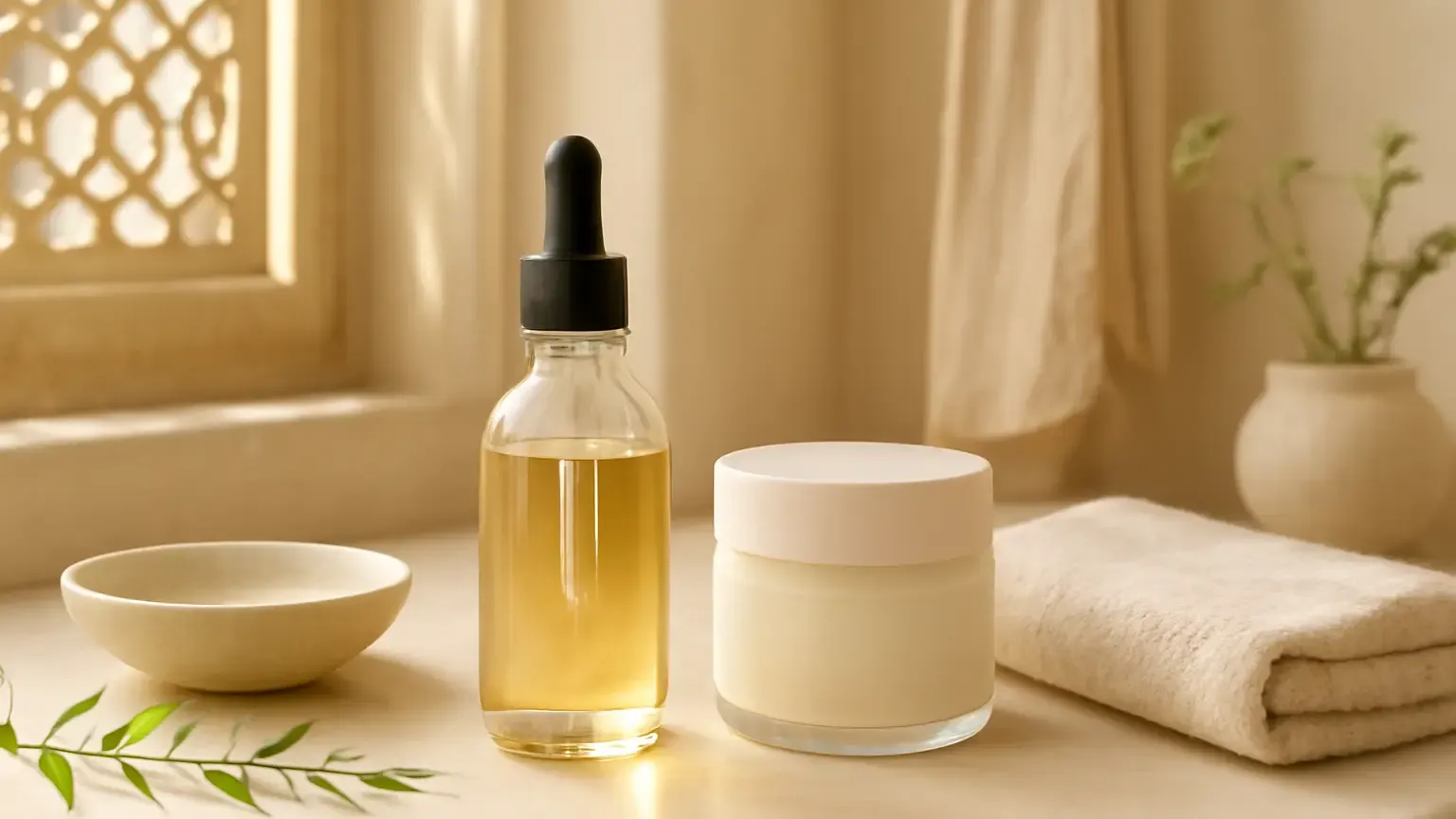
Dry skin and face oils work best when the oil is treated as a comfort-sealing step, not the main source of water. This guide is for anyone whose skin feels tight, rough or easily stripped, and it explains when to choose a lightweight or richer texture, how to place it after a hydrating serum and moisturiser, and when an oil may be too heavy. The practical outcome: softer-feeling skin with less shine and fewer layering mistakes.
Face oils can make dry skin feel smoother, more supple and less exposed to a dry environment. They do not, however, replace water-based hydration. An oil is mainly an emollient and occlusive step: it helps soften the surface and can slow the escape of water already present in the skin. That distinction matters when choosing a routine.
What face oil can—and cannot—do for dry skin
Dryness usually feels like a lack of comfort, softness or flexibility. Dehydrated skin refers to a lack of water and can occur alongside many skin types. A face oil adds lipids rather than water, so it may improve the feel of dryness without being a complete hydrating treatment.
Water-based products such as a hydrating serum for dry skin often contain humectants, which attract water to the outer layers of skin. A cream or lotion then supplies a mix of humectants, emollients and barrier-supportive ingredients. The oil comes later when you want a more cushioned finish or an extra layer that reduces water loss.
That is why a simple sequence often works better than applying oil alone:
- Cleanse gently, or rinse with water in the morning if your skin does not need a full cleanse.
- Apply a hydrating serum or essence to slightly damp skin, if desired.
- Use your dry skin moisturiser to provide the main comfort and hydration step.
- Press one to three drops of face oil over the moisturiser, especially on areas that feel rough.
- Apply sunscreen in the morning as the final skincare step before makeup.
The number of drops is only a starting point. Your face should feel comfortable, not slick or coated.
Dry skin and face oils: choosing a texture
Texture is often more useful than a long ingredient list when deciding whether an oil belongs in your routine. A lighter formula may suit daytime use or combination skin, while a richer formula can feel more protective at night. Neither category is automatically better.
Lightweight face oil
A lightweight face oil spreads quickly and usually leaves less surface slip. Squalane is a popular option for this type of finish; squalane oil for dry skin can be considered when you want softness without a strongly oily feel. A light texture may work well under makeup, in warm or humid weather, or for people who dislike a heavy layer.
Even a light oil can look shiny if too much is used. Start with one drop mixed into your moisturiser or pressed over it, then adjust after a few uses.
Rich face oil
A rich face oil tends to feel more cushioning and can be appealing during winter, in air-conditioned rooms or when the skin surface feels rough. Some people enjoy richer botanical blends at night because they reduce the sensation of tightness while sleeping.
Richer does not mean more hydrating. It means the formula feels more substantial and may form a stronger occlusive layer. If you wake up greasy, notice congestion, or find that your pillow and hair pick up product, reduce the amount or switch to a lighter texture.
How to use facial oil for dry skin without overdoing it
A useful facial oil layering method is to apply products from more watery to more protective, while allowing each layer to settle. Here is a practical evening routine:
- Cleanse without over-stripping. Use lukewarm rather than hot water and avoid scrubbing dry areas.
- Add water-based hydration. Apply a serum or essence if your skin enjoys it. A few drops of water or dampness on the skin can make this layer feel more comfortable, but do not leave the face dripping.
- Seal with moisturiser. Choose a lotion, cream or balm according to your level of dryness and preference.
- Finish with oil selectively. Press it onto the cheeks, around the mouth or other dry-feeling zones rather than automatically covering the whole face.
For a simpler routine, mix one drop of oil into your moisturiser in your palm immediately before applying. This can make a cream feel richer, though it is better to keep the products separate if you are trying to identify what is causing irritation.
In the morning, oil is optional. If you use it as part of dry skin makeup prep, keep the amount very small and allow the moisturiser to settle before sunscreen and foundation. Too much slip can cause makeup to move or separate.
When an oil feels helpful—and when it may be too heavy
Face oil may be worth considering when your skin feels tight after cleansing, looks flaky from surface dryness, or needs extra comfort in a dry climate. It can also be useful when your existing moisturiser feels almost right but lacks a soft, protective finish. In these situations, the oil is an optional finishing layer rather than the centre of the routine.
It may be less suitable when your skin already feels greasy, when multiple rich products cause clogged-feeling pores, or when you dislike any residue. People with easily reactive skin should be especially careful with fragranced oils and complex essential-oil blends. “Natural” does not automatically mean non-irritating.
A non-comedogenic face oil label may help narrow a purchase, but it is not an absolute guarantee that a product will suit every person. Skin response depends on the whole formula, how much you apply and your individual tolerance. Use patch testing facial oils as a sensible precaution: apply a small amount to a discreet area for several days before using it broadly, and stop if you develop persistent irritation.
How to choose a face oil for your routine
Instead of choosing by trend, match the oil to the problem you are actually trying to solve.
- Want less tightness without a glossy finish? Start with a lightweight oil and one drop at night.
- Need a more protective feel in cold or dry weather? Consider a richer formula, but place it over a dependable cream.
- Prefer a short ingredient list? A simple oil such as jojoba oil for face use may be easier to evaluate than a blend containing many fragrant botanicals.
- Wear makeup regularly? Choose a fast-spreading texture and use it only on dry patches, not as a thick all-over layer.
- Already use several active products? Keep the oil routine simple while you assess comfort. Do not add several new products at once.
Look for clear ingredient information, a packaging format that limits unnecessary exposure to air and light, and a texture you will realistically use. Cost alone does not determine whether an oil will be comfortable or appropriate.
Common mistakes with face oils
Using oil instead of moisturiser
This is the most common misunderstanding. Oil can reduce surface water loss, but it does not provide the same blend of water-binding and barrier-supportive ingredients found in a well-formulated moisturiser. If your skin still feels tight after oil, reassess the hydration and cream steps first.
Applying too much
More product can mean more shine, transfer and heaviness rather than more comfort. Begin with one drop, warm it between clean fingertips and press it gently onto the skin. Add another drop only if needed.
Layering incompatible-feeling finishes
A rich cream, balm and heavy oil may be too much together, particularly in humid Indian weather. Try one protective product at a time and adjust according to climate, time of day and how your skin feels several hours later.
Ignoring irritation
Stinging, persistent redness, swelling or a worsening rash is not a sign that an oil is “working”. Stop using the new product and seek advice from a dermatologist or doctor if symptoms are severe, persistent or concerning. Do not use an oil to replace prescribed care.
A simple decision guide
If your skin feels dry and tight but not oily, use a hydrating layer, moisturiser and a small amount of oil at night. If it feels comfortable with moisturiser alone, you may not need an oil every day. If it feels shiny or congested, reduce the amount, restrict application to dry zones or skip the oil.
For most people, the best face oil for dry skin routine is flexible: lighter in the morning, richer only when needed, and always built on water-based hydration plus moisturiser. Reassess the routine when the weather, products or your skin’s comfort changes.
Takeaway
Dry skin and face oils are a useful pairing when the oil is used as a final comfort layer rather than a substitute for hydration. Choose a lightweight or rich texture based on finish, climate and tolerance; apply it after a hydrating product and moisturiser; and keep the amount small. If it feels heavy or irritating, your skin is giving you useful feedback—simplify the routine instead of adding more.
Products that may help with this routine
Choose only what fits your skin, hair or personal needs. Use the links below to view current options on Amazon India.
Frequently Asked Questions
How do you layer face oil for dry skin?
Apply a hydrating serum or essence first, follow with moisturiser, and press one to three drops of face oil over the top. Use less in the morning or under makeup.
Can I use face oil after moisturiser?
Yes. Using face oil after moisturiser is often the most comfortable order because the moisturiser supplies hydration while the oil adds emollient and occlusive comfort.
Is facial oil enough for dry skin?
Usually not on its own. Facial oil mainly adds softness and helps reduce water loss; a moisturiser and, when useful, a water-based hydrating product provide a more complete routine.
What is the best lightweight face oil for dry skin?
A lightweight squalane-based formula may suit people who want softness with less residue, while jojoba-based options can appeal to those who prefer a simple oil. Patch test any new product and judge it by your skin’s response.
How often should you use face oil for dry skin?
Start two or three nights a week, using one or two drops. Increase to daily use only if your skin feels comfortable and the finish is not too heavy.