Hair care for breakage works best when it removes small, repeated stresses rather than adding a shelf of heavy products. This guide is for anyone with dry, wavy, curly, coily or long Indian hair who notices snapping during detangling, washing or styling. Six lightweight habits—gentler handling, smarter washing, targeted conditioner, heat protection, looser styles and less friction—can help preserve length. They cannot rejoin a broken strand, but they can reduce avoidable mechanical damage as new hair grows.
Breakage is a weak point in the hair shaft that snaps, leaving shorter pieces, uneven ends or tiny broken hairs. It is different from normal shedding, where a complete strand comes away from the root. Hair care for breakage therefore focuses on reducing friction, pulling, tangling and heat exposure. Once a strand has broken, no conditioner can permanently fuse it back together; the practical goal is to limit further damage and protect the length you still have.
First, identify where the avoidable stress happens
Look for a pattern before changing your routine. Breakage concentrated around the crown or hairline may follow tight ponytails, clips, buns or repeated parting. Snapping mostly at the ends often points to dryness, tangling, rough towel drying or heat. Short hairs around the whole head can be normal regrowth, but irregular lengths with split or white-looking tips are more consistent with damage.
Indian hair is not one texture. Fine straight hair may become overloaded or limp quickly, while thick, wavy, curly and coily hair can experience more tangling and surface friction. Hard water, strong sun, humidity, frequent oiling followed by vigorous washing, and regular heat styling can also influence how much handling the hair receives. Choose the lightest change that addresses your actual stress point.
1. Detangle with less pulling
Hair is more elastic when wet, but it is also easier to stretch and snap if you rake through a knot aggressively. A gentle detangling method is one of the simplest ways to prevent hair breakage.
- Separate hair into two to four sections, depending on density.
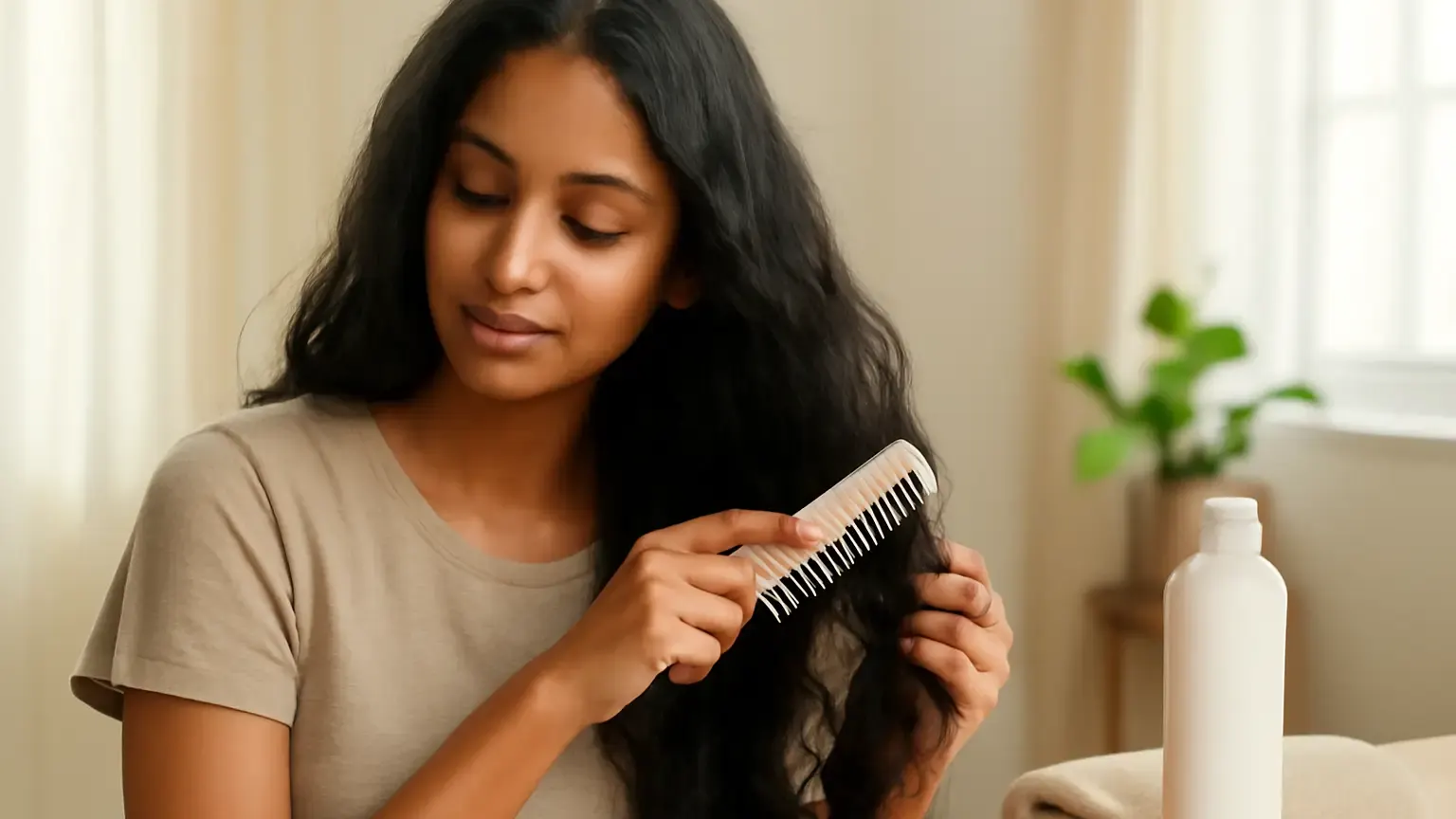
- Use your fingers first to loosen large knots, then use a wide-tooth comb or a flexible detangling brush.
- Work from the ends upwards, holding the section above the knot so the tug does not transfer to the roots.
- On curly or coily hair, detangle when damp and coated with conditioner if that gives better slip. For fine, straight hair, a light leave-in on the ends may be enough.
- Stop and add more slip rather than forcing a comb through resistance.
Dry-brushing can work for some straight hair, but it is not automatically gentler. If your hair is wavy, curly, very dry or prone to frizz, brushing it dry may separate the pattern and increase snagging. The right test is whether the method reduces pulling and visible snapping.
2. Improve your hair wash technique
Shampoo cleans the scalp; it does not need to be scrubbed through every centimetre of the lengths. A practical hair wash technique is to apply shampoo mainly to the scalp, massage with the pads of your fingers, and let the lather travel down as you rinse. Avoid piling the lengths on top of the head, twisting them into a tight bundle or rubbing them together.
A lower-stress wash sequence
- Loosen tangles gently before showering, particularly if your hair mats easily.
- Use lukewarm water and fully wet the scalp and lengths.
- Clean the scalp without scratching or using fingernails.
- Apply conditioner to the mid-lengths and ends, then detangle with your fingers if needed.
- Rinse without wringing. Press water out with open hands instead.
Wash frequency depends on scalp oil, sweat, workouts, climate and styling products—not on a universal number. Washing too infrequently can leave buildup that encourages rough handling later; washing too aggressively can make the lengths feel dry. Adjust the routine so cleansing is comfortable and the ends remain manageable.
3. Put conditioner where the hair needs it
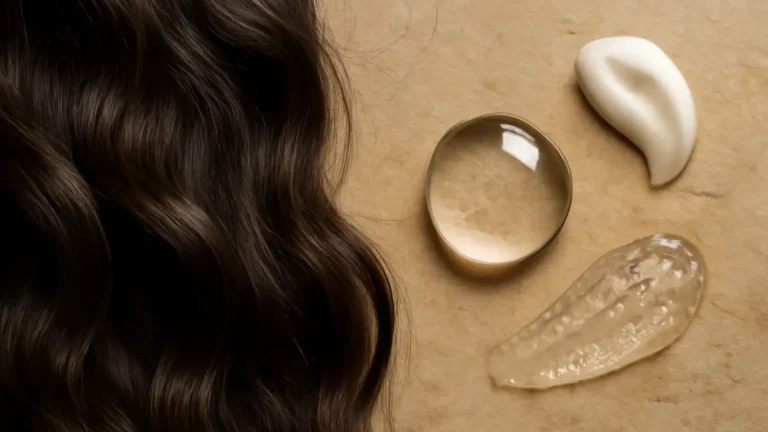
Conditioner helps reduce surface friction, so placement matters more than using a large amount. Apply a small amount of a conditioner for dry ends from around the ears or mid-lengths downward. Concentrate on the oldest, most weathered sections and rinse thoroughly enough that fine hair does not feel coated.
For thick, curly or coily Indian hair, you may need more conditioner and a longer pause to create slip. For fine or oily hair, start with less and keep it away from the scalp unless the product is specifically intended for that area. A lightweight leave-in can be useful on dry ends, but more product is not a substitute for gentle handling.
Once or twice weekly, a richer mask may suit very dry or chemically treated lengths, while other hair types may prefer regular conditioner alone. Make the decision by feel: persistent tangling and roughness suggest more conditioning support; limp, sticky or quickly greasy hair suggests reducing the amount.
4. Use heat protection and reduce thermal stress
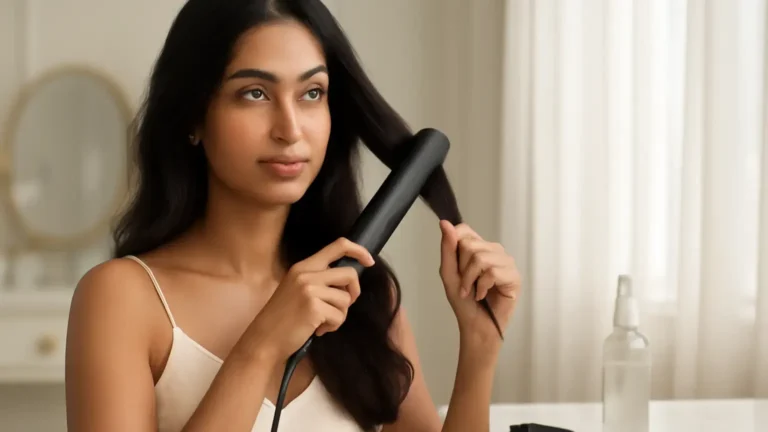
A heat protectant for hair can reduce the impact of blow-drying, straightening or curling, but it does not make unlimited heat safe. Apply the product evenly to damp or dry hair as directed on its label, then allow the hair to dry appropriately before using a hot tool. Keep the tool moving, use the lowest effective temperature and avoid repeated passes over the same section.
Air-drying is not always automatically gentler if hair is left soaking wet for hours, handled repeatedly or tied tightly while damp. A balanced approach works better: blot gently, allow some air-drying, and use a dryer on a moderate setting when needed. Never use a straightener or curling iron on wet hair. If you heat-style several times a week, reducing frequency is often more useful than adding another product.
5. Choose looser styles with less traction
Low-tension hairstyles are useful when you regularly wear ponytails, braids, buns or clips. A style that feels tight, causes tenderness, leaves a strong dent or pulls at the temples is creating more traction than your hair needs. Alternate your parting and the position of ponytails so the same area is not stressed every day.
Try a loose braid, low ponytail, soft bun or relaxed claw-clip style, using fabric-covered ties without exposed metal. Do not secure wet hair tightly, and release the style before sleeping. Protective hairstyles for Indian hair can help keep ends contained, but only if the base is comfortable and the style is not heavy, tight or installed for too long.
Extensions, very tight braids and heavy accessories deserve extra caution because added weight increases tension. If a style causes ongoing pain, scalp soreness or visible thinning around the edges, stop wearing it and seek professional advice rather than trying to tolerate it.
6. Reduce friction during drying and sleep
Rough towels, cotton pillowcases, backpack straps, helmet edges and repeated contact with collars can all contribute to surface friction. You do not need a complete lifestyle overhaul. Start with the contact point that repeatedly catches or tangles your hair.
- Replace vigorous towel rubbing with a microfiber hair towel or a soft cotton T-shirt. Wrap briefly, then let the hair dry.
- Use a silk pillowcase for hair or a smooth satin alternative if overnight tangling is a recurring problem.
- Loosely braid or tie long hair with a soft fabric scrunchie before bed; avoid tight overnight styles.
- Keep rough backpack straps and helmet adjustments from repeatedly scraping the same section.
- Detangle gently after removing a scarf, helmet or high-friction accessory rather than yanking through compressed knots.
A silk or satin surface can reduce rubbing, but it will not compensate for tight tying or rough brushing. Wash pillowcases regularly, especially in hot and humid weather, and choose a material you can maintain comfortably.
A simple hair breakage care routine
For a low-weight routine, start with three changes for two to four weeks: sectioned detangling from the ends, shampoo focused on the scalp, and conditioner placed on the lengths. Add heat protection whenever you use thermal tools, then swap one tight hairstyle for a loose option. Finally, address overnight friction if you wake with knots.
Take a quick photo of your ends in similar lighting rather than judging day to day. Less snapping during combing, fewer knots and better-retained length are more useful signs than instant shine. Trim visibly split ends when needed for a neater finish, but remember that trimming removes damage; it does not prevent new damage unless the handling habits also change.
Common mistakes to avoid
- Brushing through a major knot: divide it into smaller sections and add slip.
- Rubbing hair dry: press and blot instead of twisting it in a towel.
- Applying conditioner only to the scalp: place it where friction and dryness are greatest—the lengths and ends.
- Assuming oil prevents all breakage: oil may improve feel and reduce some friction, but heavy oiling followed by forceful shampooing can add handling.
- Calling every short hair breakage: texture, new growth and natural variation can look similar; examine the ends and the pattern.
Takeaway
Effective hair care for breakage is mostly about lowering repeated mechanical stress: detangle with slip, wash without scrubbing the lengths, condition the ends, protect from heat, choose looser styles and reduce friction at night. These habits cannot repair broken strands, but they can help protect existing length while new hair grows. If breakage is sudden, extensive, accompanied by scalp symptoms or continues despite gentle care, consult a dermatologist or doctor for individual assessment.
Products that may help with this routine
Choose only what fits your skin, hair or personal needs. Use the links below to view current options on Amazon India.
Frequently Asked Questions
How can I prevent hair breakage without heavy products?
Use low-product habits first: detangle in sections from the ends upward, shampoo mainly the scalp, condition the mid-lengths and ends, blot instead of rubbing, use lower heat, choose loose hairstyles and reduce overnight friction. These steps reduce mechanical stress without weighing the hair down.
What is the best hair breakage care routine?
A useful routine includes gentle pre-wash or damp detangling, scalp-focused cleansing, conditioner on the lengths, careful drying, heat protection when styling, and loose hairstyles. Adapt the amount of conditioner and frequency of washing to your hair density, texture, scalp oil and climate.
How do I detangle hair without causing breakage?
Divide the hair into sections, loosen knots with your fingers, add conditioner or a lightweight leave-in for slip, and work from the ends towards the roots with a wide-tooth comb. Hold the section above the knot so pulling does not reach the scalp.
How often should I use heat protectant on my hair?
Use heat protectant whenever you use a blow-dryer, straightener or curling tool, following the product label. It does not remove all thermal risk, so also use the lowest effective temperature, avoid repeated passes and reduce styling frequency where possible.
Are loose hairstyles better for hair breakage?
Usually, yes, when they reduce pulling and weight at the hairline. Loose braids, low ponytails and relaxed buns are generally gentler than tight styles, but any style that causes pain, scalp tenderness, strong dents or edge pulling should be loosened or removed.
How can I protect Indian hair from friction at night?
Use a smooth silk or satin pillowcase, loosely braid or tie long hair with a soft scrunchie, and avoid sleeping with tight wet styles. If hair is curly or coily, preserve the pattern in a loose style that does not tug at the roots.