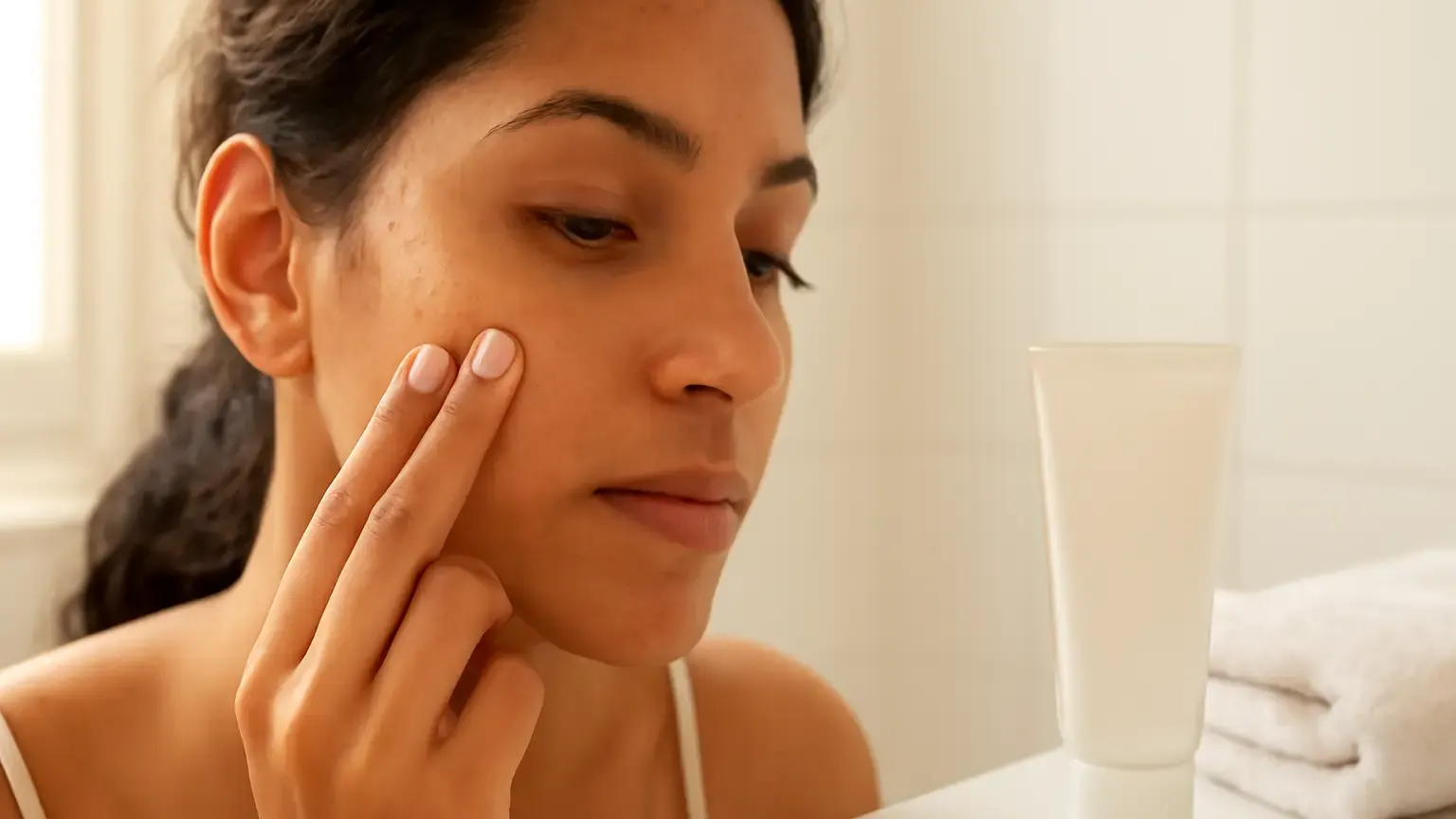
Acne prone skin and sunscreen can work together when you choose a fluid or gel texture, apply enough broad-spectrum SPF 30 or higher, and remove it gently at night. This guide is for people dealing with oiliness, recurring breakouts or post-acne marks who want daily UV protection without a heavy, congested feel. The key decision is not whether to skip sunscreen, but which formula, quantity and layering method your skin can comfortably follow every day.
Sunscreen is especially useful when acne-prone skin is also developing dark marks after spots. UVA and UVB exposure can deepen the appearance of post-acne marks and make uneven tone seem more persistent. At the same time, a thick, greasy product or aggressive cleansing routine may feel uncomfortable and can make daily use harder.
A workable routine therefore has four parts: a compatible sunscreen texture, a reliable amount, sensible layering with other skincare, and thorough but non-scrubbing removal. “Non-comedogenic” can be a helpful label, but it is not a guarantee that every formula will suit every person. Your skin’s response, the climate and the amount you apply all matter.
Choose a sunscreen texture you can wear consistently
The best sunscreen for acne-prone skin is usually the one that gives dependable broad-spectrum protection without leaving you so oily, sticky or uncomfortable that you avoid reapplying it. Look for lightweight lotions, fluids, gels or gel-creams rather than choosing by marketing language alone.
- For oily or humid-weather skin: an oil-free sunscreen or a gel sunscreen for oily skin may feel easier under makeup and through a warm Indian day.
- For easily irritated skin: a fragrance-free skincare routine can reduce the number of potential irritants. A simple mineral sunscreen for sensitive skin may suit some people, although mineral filters can leave a white cast.
- For a comfortable invisible finish: a chemical sunscreen for acne-prone skin may spread easily and avoid visible residue. It can still cause individual irritation, so patch testing is sensible.
- For outdoor activity: consider a sweat-resistant sunscreen, but remember that “water-resistant” does not mean permanent. Sweating, towel drying and swimming all reduce the film on the skin.
Choose broad-spectrum protection and, for regular daytime use, SPF 30 or higher. A broad-spectrum SPF 50 product can be a practical choice for strong sun, long commutes, outdoor work or when post-acne marks are a major concern. SPF is only one part of protection: shade, sunglasses, a hat and limiting intense midday exposure also help.
How much sunscreen should you use?
Using too little is one of the most common reasons sunscreen does not provide the protection people expect. For the face, the two-finger sunscreen rule is a convenient guide: dispense sunscreen in two lines along the length of your index and middle fingers. This is generally intended for the face and neck together, although the exact amount can vary with finger size and product consistency.
If two fingers feels difficult to spread without pilling, apply it in two thin passes rather than cutting down the total amount. Divide the product across the forehead, cheeks, nose, chin, ears and neck, then spread gently. Do not forget the hairline, jawline and ears when those areas are exposed.
Give the sunscreen a little time to settle before applying makeup or putting on a mask. If the formula rolls into crumbs, review the layers underneath first. Too many serums, a heavy moisturiser, rubbing during application or incompatible textures can all contribute to pilling.
Build a non-comedogenic sunscreen routine
A simple morning sequence is often more sustainable than a crowded routine:
- Cleanse only as much as your skin needs. In the morning, a gentle rinse may be enough for some people, while others prefer a mild cleanser.
- Apply a lightweight moisturiser if your skin feels tight, flaky or uncomfortable. Oily skin can still become dehydrated, and skipping moisturiser is not automatically better.
- Use any acne treatment or treatment product according to its label or your clinician’s instructions. Allow leave-on layers to settle rather than immediately rubbing over them.
- Apply the full sunscreen amount as the final skincare step. Makeup, if used, goes afterwards.
A non-comedogenic sunscreen routine should be light enough to repeat but not so stripped back that your skin feels irritated. If your moisturiser is rich and your sunscreen is already emollient, try using less moisturiser or selecting a lighter formula—not less sunscreen.
Can you apply sunscreen over acne treatment?
Yes, in many routines sunscreen is applied over acne treatment and moisturiser in the morning. The important qualification is to follow the directions for your specific treatment. Some leave-on products can increase dryness or sensitivity, so combining them with a comfortable moisturiser and daily UV protection may make the routine easier to tolerate.
Use a thin layer of treatment on clean, dry skin if that is how it has been directed. Once it has settled, apply moisturiser if needed and then sunscreen. Avoid mixing several potentially irritating actives in your palm just to save time. If a prescribed product has specific instructions, those instructions take priority; do not stop or alter prescribed care without speaking to the prescribing professional.
When introducing a new sunscreen, patch test it on a small area for several days where practical. A few small bumps, burning, itching or a rash can have different causes, and persistent or concerning reactions deserve medical advice rather than repeated product switching.
Make sunscreen reapplication realistic
Sunscreen reapplication depends on exposure, sweating and friction. If you are outdoors, sweating, swimming or wiping your face, reapply according to the product directions and after towel drying. For a mostly indoor day away from direct windows and outdoor exposure, your initial morning application may be the main priority, but reapply before a later commute or time outside.
For acne-prone skin, reapplication does not have to mean adding a thick layer over oil and sweat. First blot gently with a clean tissue or soft cloth—do not scrub. If the surface is visibly dirty or sweaty, cleanse or rinse when possible, pat dry and then reapply the proper amount. A sunscreen stick or powder may be convenient for small touch-ups, but these formats can be difficult to apply in a quantity that matches face-level protection. Treat them as convenience tools, not a reason to under-apply.
When makeup is part of the routine
Apply sunscreen underneath makeup whenever possible. For touch-ups, press rather than drag the product across the face, and expect some movement of foundation. If you spend significant time outdoors, practical protection is more important than preserving a perfectly untouched makeup finish.
Remove sunscreen thoroughly without attacking the skin
Night-time removal should take away sunscreen, sweat, makeup and everyday grime without leaving the skin squeaky or sore. Start with a gentle cleanser for acne-prone skin that suits your sunscreen and makeup load. If one cleanse removes everything comfortably, there is no requirement to double cleanse.
When sunscreen is water-resistant, layered or worn with makeup, you may prefer micellar water, a cleansing balm or an oil cleanser followed by a mild water-based cleanser. If using micellar water, saturate a cotton pad and press briefly before wiping lightly; repeated vigorous swipes can create friction. If using a balm or oil, massage with light pressure and rinse as directed, then follow with a gentle cleanser if needed.
After cleansing, pat dry and apply a simple moisturiser. Avoid face scrubs, rough cleansing brushes and very hot water as a response to breakouts. A clean-feeling face should not feel burning, tight or stripped. If your skin remains uncomfortable, simplify the routine and consider professional advice.
Common mistakes that make sunscreen harder to use
- Choosing only by “matte” claims: a very dry finish can emphasise flakes or encourage over-cleansing. Comfort and adequate application matter more than a powdery feel.
- Applying too little to prevent shine: reduce the number of extra layers or use blotting later, but keep the sunscreen amount adequate.
- Skipping the neck and ears: these exposed areas need protection too.
- Reapplying over sweat without preparation: gently blot or cleanse first when possible to reduce dragging residue across the skin.
- Assuming every breakout is caused by sunscreen: reactions can reflect another product, friction, hormones, heat or a treatment. Track timing and seek advice if breakouts are persistent or severe.
- Using harsh removal: scrubbing off sunscreen can compromise the skin barrier and make the routine less comfortable.
A practical routine to start with
Morning: gentle cleanse or rinse, lightweight moisturiser if needed, acne treatment as directed, then broad-spectrum SPF 30 or higher in a generous face-and-neck amount. Add a hat or shade for prolonged outdoor exposure.
During the day: reapply after sweating, swimming, towel drying or extended outdoor exposure. Blot first if needed, and do not rely on a small stick or powder application as your only full-face layer.
Night: remove makeup and sunscreen with the least abrasive method that works, cleanse gently, pat dry and moisturise. Keep the rest of the routine consistent long enough to judge comfort, while responding promptly to burning, rash or worsening irritation.
Takeaway: acne prone skin and sunscreen do not require a complicated routine. Pick a comfortable broad-spectrum formula, use enough, layer it after morning skincare, reapply when exposure demands it and remove it gently at night. If breakouts are painful, widespread, scarring or not improving, a dermatologist can help assess the situation and your current products.
Products that may help with this routine
Choose only what fits your skin, hair or personal needs. Use the links below to view current options on Amazon India.
Frequently Asked Questions
What is the best sunscreen for acne-prone skin?
The best option is a broad-spectrum SPF 30 or higher sunscreen with a texture you can apply generously and reapply comfortably. Lightweight fluid, gel or gel-cream formulas may suit oily skin, while fragrance-free or mineral options may be preferable for some sensitive users. Non-comedogenic labelling can help, but individual tolerance still matters.
How much sunscreen should I use on my face?
Use a generous amount; the two-finger sunscreen rule is a practical guide for the face and neck together. If spreading that amount is difficult, apply it in two thin passes rather than reducing the total quantity.
Can I apply sunscreen over acne treatment?
Usually, sunscreen is applied after morning acne treatment and moisturiser, provided this matches the treatment directions. Let thin treatment layers settle, avoid mixing irritating actives together, and follow specific instructions from your doctor or the product label.
How often should I reapply sunscreen on oily skin?
Reapply after sweating, swimming, towel drying or extended outdoor exposure, following the product directions. For a mainly indoor day, the morning application may be the main priority, but apply again before significant later sun exposure.
How do I remove sunscreen without irritating acne?
Use the gentlest method that fully removes your sunscreen. A mild cleanser may be enough; water-resistant sunscreen or makeup may need micellar water, cleansing balm or oil followed by a gentle cleanser. Avoid scrubbing, rough tools and very hot water.


