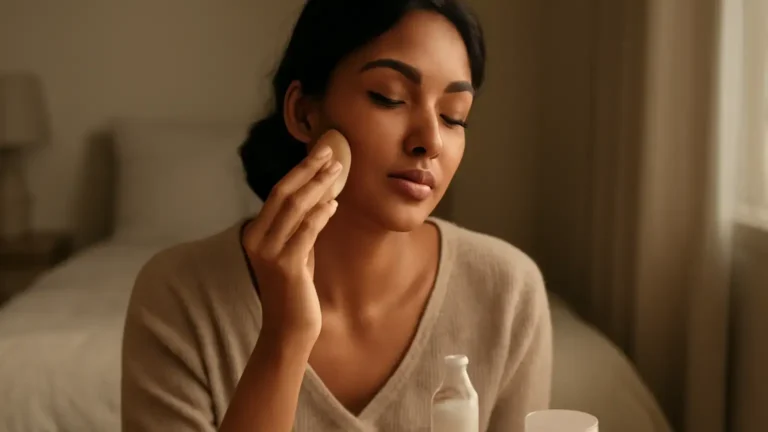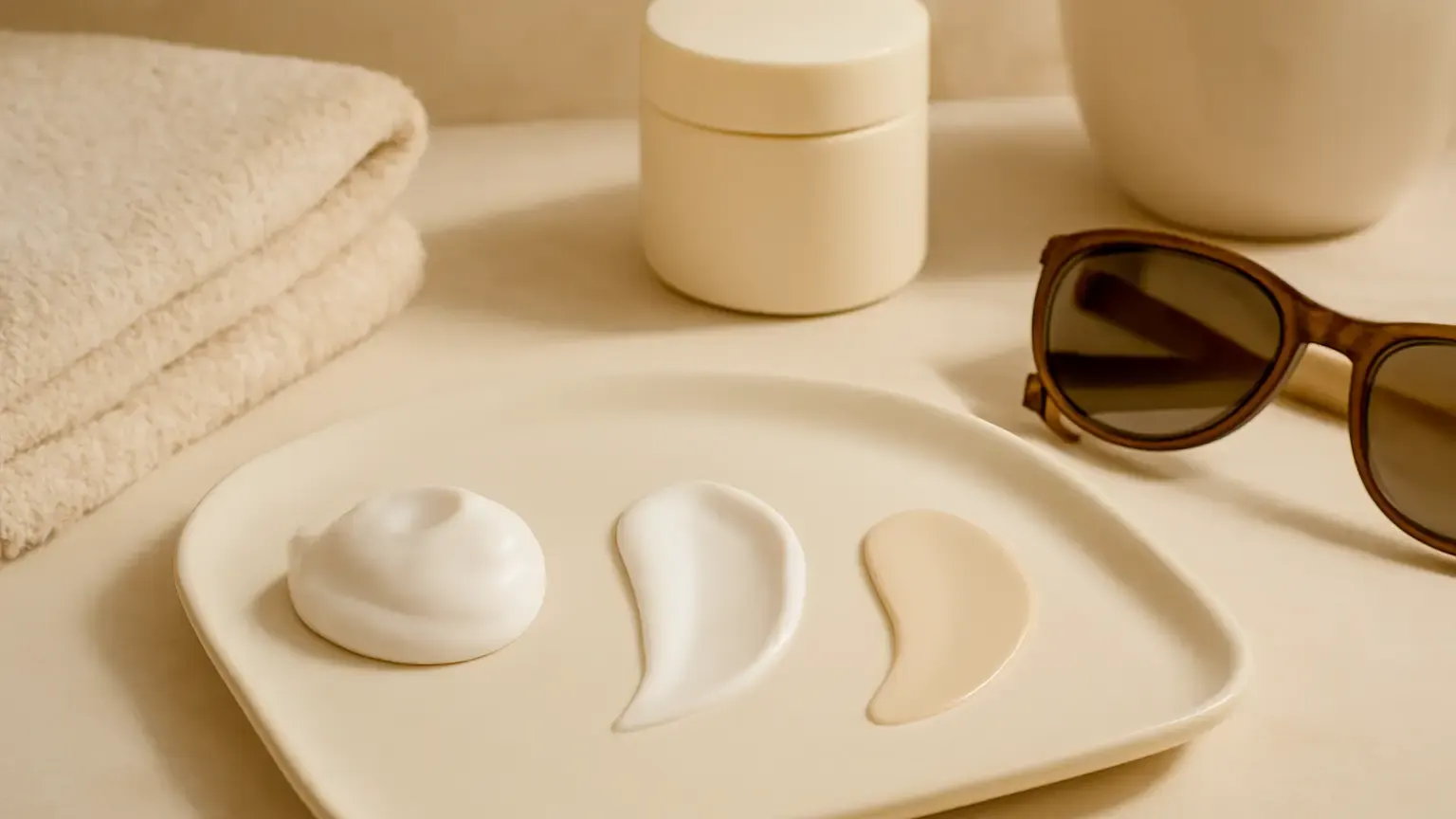
A dry skin sunscreen should protect without leaving your cheeks tight, flaky or overloaded. For dry and dehydrated skin, cream is usually the richest choice, lotion offers the most balanced everyday feel, and a hydrating fluid works well when you dislike heaviness or wear makeup. This guide helps Indian shoppers choose by moisturising comfort, finish, layering and reapplication—not just the SPF number—so the right formula fits your actual routine.
First, match the finish to your skin’s needs
The best formula is the one you can apply generously every morning and reapply when needed. “Dry skin” can mean a skin type that generally lacks oil, while dehydration refers to a temporary lack of water. Both can feel tight, but they do not always need the same texture. A richer cream may suit persistently dry cheeks, whereas a light hydrating fluid can be enough for mildly dry skin in humid weather.
Look for a broad-spectrum sunscreen that protects against UVA and UVB rays. SPF primarily indicates UVB protection, while the PA rating communicates UVA protection on many products sold in India. SPF 30 can be useful, but SPF 50 is often a practical daily choice for strong Indian sunlight, outdoor commuting and beach or holiday exposure. A higher number does not compensate for applying too little or skipping reapplication.
- Choose cream when comfort, softness and reduced tightness matter most.
- Choose lotion when you want moisturising support without a very rich finish.
- Choose fluid when you prefer quick spreading, a lighter film or easy sunscreen under makeup.
Dry skin sunscreen finishes compared
Cream: the cushioniest option
Cream sunscreens usually feel dense, smooth and protective. Their richer base can be helpful for dry patches, cooler months, air-conditioned offices and evening events when you want a comfortable, dewy sunscreen finish. Ingredients such as ceramides, squalane, glycerin and fatty alcohols may support a softer-feeling skin surface, although the entire formula matters more than one ingredient on its label.
The trade-off is weight. A cream may feel too warm or shiny in a humid city, and applying makeup immediately can cause movement or pilling. Give it a few minutes to settle, use a thin moisturiser underneath, and avoid layering several heavy products in the same routine.
Lotion: the most versatile middle ground
A lotion often spreads more easily than a cream but supplies more comfort than an ultra-light fluid. It is a strong default for combination-dry skin, normal-to-dry skin and people who want a moisturising sunscreen without a strongly glossy finish. Many lotion textures work well as a daily face sunscreen because they can be applied in a generous, even layer without feeling overly occlusive.
Its finish varies widely: some lotions are satin, some dewy and some nearly matte. If your forehead becomes shiny but your cheeks feel tight, apply your regular moisturiser mainly to the drier areas and choose a balanced lotion across the face.
Hydrating fluid: light, flexible and layer-friendly
A fluid sunscreen is thinner and often designed to spread quickly. It may suit people who dislike cream textures, live in hot or humid conditions, or want a reliable sunscreen under makeup. A fluid can still be hydrating when it contains humectants such as glycerin or hyaluronic acid, but “fluid” does not automatically mean moisturising.
Very dry skin may need a moisturiser underneath, especially around the nose and cheeks. Shake a two-phase product if its instructions say to do so, dispense enough for the whole face and neck, then allow it to settle. If the finish feels tight after an hour, the formula may be too light for your skin or your base routine may need more barrier-supporting moisture.
How to choose a hydrating sunscreen for dry skin
Use these decision points instead of choosing by texture alone:
- Assess the tightness. If your skin feels uncomfortable soon after cleansing, start with a cream or a lotion plus moisturiser. If it feels comfortable but looks dull, a hydrating fluid may be sufficient.
- Consider your climate. In humid Indian weather, a lotion or fluid may be easier to tolerate. In dry winter air, a cream or richer lotion can feel more comfortable.
- Check your base makeup. Silicone-rich makeup may sit better over a fully settled fluid, while a dewy lotion can complement a fresh, minimal base. Always test the combination on one side of the face.
- Think about reapplication. A sunscreen you can comfortably reapply is more useful than a theoretically perfect formula that feels sticky after the first layer.
- Review potential irritants. If you have sunscreen for sensitive dry skin needs, consider a fragrance-free option and patch test new products. Stinging, persistent redness or worsening discomfort deserves professional advice.
Ingredients that can improve comfort
A moisturising sunscreen may combine several types of ingredients. Humectants, including glycerin and hyaluronic acid, attract water to the skin’s surface and can give a fresher feel. Emollients, such as squalane and certain plant oils, help smooth rough-feeling areas. Occlusive ingredients help reduce water loss by forming a protective film. A cream commonly contains more emollient or occlusive support than a fluid, but there are exceptions.
A ceramide sunscreen can be appealing when your routine already focuses on supporting the skin barrier. Ceramides are naturally occurring skin lipids used in many moisturisers and sunscreens, but the word alone does not guarantee that a product will suit you. Read the full ingredient list and judge the finish on your skin.
Do not assume that a non-greasy sunscreen is unsuitable for dry skin. “Non-greasy” can simply mean a lighter, less oily film. If the product remains comfortable and your moisturiser supplies enough cushion, it may be an excellent daily option.
Layering sunscreen with moisturiser and makeup
In the morning, cleanse gently if needed, apply a moisturiser suited to your dryness, and finish with sunscreen as the last skincare step. Use enough to cover the face, ears and exposed neck; many beauty professionals use the two-finger guide for face and neck, but follow the product directions and adjust for the area being covered. Let layers settle rather than rubbing repeatedly.
For sunscreen under makeup, start with thin layers. A heavy cream, rich moisturiser and full-coverage base can collectively create too much slip. Try one of these combinations:
- Very dry skin: gentle moisturiser on dry zones, cream sunscreen, then makeup after it settles.
- Moderately dry skin: light lotion, lotion sunscreen and a flexible base.
- Dry skin with makeup preference: a hydrating fluid over moisturiser, followed by a small amount of makeup.
If pilling occurs, the cause may be too much product, incompatible film-forming ingredients, vigorous rubbing or insufficient settling time. It does not automatically mean the sunscreen is defective. Remove the layers, use less of the product underneath, and press rather than rub as you apply the next step.
Reapplication without making dry skin uncomfortable
Sunscreen reapplication matters after sweating, swimming, towel drying or extended outdoor exposure. During a normal workday, reapply according to the product directions and your exposure. If your skin is dry, avoid repeatedly wiping the face with tissues or cleansing between applications unless necessary, as that can increase discomfort.
For a clean reapplication, gently blot excess oil or sweat, add a small amount of moisturiser only where you feel tight, and apply a fresh sunscreen layer. A lotion or fluid is often easier to spread over an earlier layer than a very rich cream. If makeup is present, you may need to touch up strategically, but cosmetic powders or sprays should not be treated as a substitute for an adequately applied sunscreen layer unless the product instructions support that use.
Remember that no texture can make prolonged sun exposure risk-free. Use shade, sunglasses, protective clothing and a hat when outdoors, especially between stronger sunlight hours.
Common mistakes to avoid
- Choosing only by “glow”. A glossy finish may look moisturised but can feel uncomfortable or encourage you to apply less.
- Skipping moisturiser automatically. Some hydrating sunscreens are enough on their own; very dry skin may still need a separate moisturiser.
- Applying too little to avoid heaviness. Select a lighter texture instead of reducing the protective layer.
- Ignoring the neck and ears. These areas are commonly exposed and need the same attention as the face.
- Changing several products at once. Introduce one new sunscreen so you can identify whether the texture or another ingredient causes discomfort.
- Assuming winter means no sunscreen. Winter sunscreen remains relevant when you spend time outdoors or near daylight, even if the air feels cool.
A simple final decision
Pick a cream if your priority is maximum cushion for very dry skin. Pick a lotion if you want a dependable, adaptable finish for everyday use. Pick a hydrating fluid if lightness, quick layering and makeup compatibility matter most. In every case, choose broad-spectrum protection, apply a generous even layer and reapply when exposure calls for it.
The best dry skin sunscreen is not necessarily the richest or the most expensive one. It is the formula that keeps your skin comfortable enough for consistent use while fitting your climate, makeup habits and real reapplication routine.
If dryness is persistent, painful, intensely itchy, cracked, swollen or accompanied by a concerning rash, consult a dermatologist or doctor rather than relying only on cosmetic product changes.
Products that may help with this routine
Choose only what fits your skin, hair or personal needs. Use the links below to view current options on Amazon India.
Frequently Asked Questions
Which sunscreen finish is best for dry skin?
Cream is usually best for very dry skin because it feels richer and more cushioning. Lotion is a versatile middle option, while a hydrating fluid suits mildly dry skin or anyone who prefers a lighter finish. Climate, moisturiser use and makeup also affect the choice.
Is cream sunscreen better for very dry skin?
Often, yes, because cream textures commonly provide more emollient comfort and can reduce a tight-feeling finish. However, a rich lotion may be more comfortable in humid weather, and the product should still offer broad-spectrum protection and be easy to apply generously.
What is the best sunscreen for dry skin under makeup?
A settled lotion or hydrating fluid is often easiest under makeup because it spreads evenly without excessive weight. Apply moisturiser only where needed, allow sunscreen to settle, and test it with your specific makeup to check for pilling.
How should you reapply sunscreen on dry skin?
Blot sweat gently, avoid unnecessary wiping, and apply a fresh layer according to the product directions. If some areas feel tight, use a small amount of moisturiser before reapplying. A lotion or fluid may layer more comfortably than a heavy cream.
Can dry skin use a fluid sunscreen?
Yes. A fluid sunscreen can work for dry skin when it contains comfortable moisturising ingredients or is layered over a suitable moisturiser. If your skin feels tight soon after application, choose a richer lotion or cream instead.
What SPF should dry skin use in India?
Choose a broad-spectrum sunscreen that suits your routine; SPF 50 is a practical everyday option for strong sunlight and outdoor exposure. Apply enough product and reapply after sweating, swimming, towel drying or extended time outdoors.