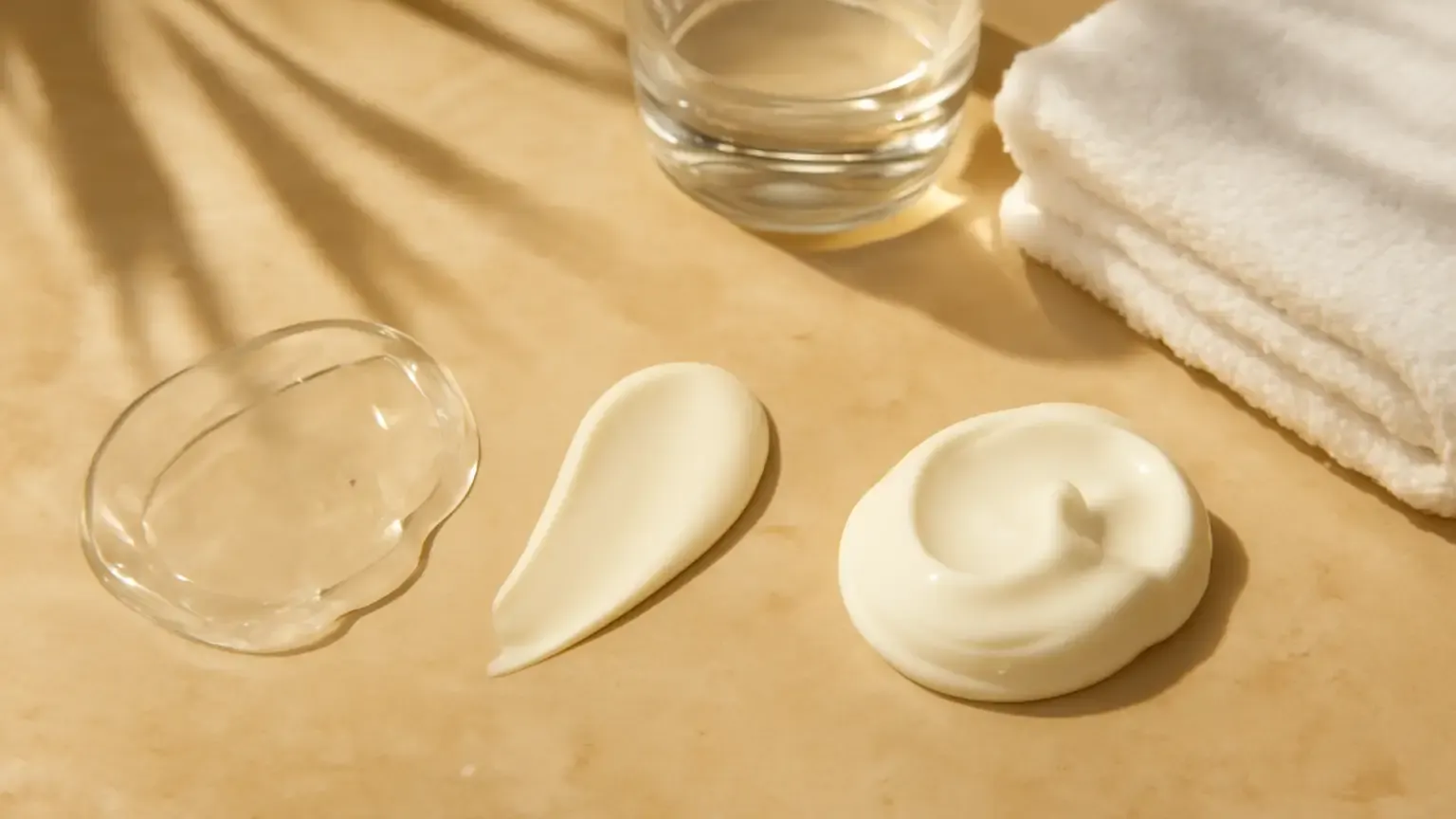
An oily skin sunscreen should feel comfortable enough for daily use without making shine the enemy. For people in hot, humid Indian cities, gel is usually the lightest choice, fluid works well when you want quick layering, and cream can be better when your skin also feels dehydrated or sensitive. The best decision depends on sweat, makeup, outdoor exposure and reapplication—not simply how oily your face looks at noon.
What makes an oily skin sunscreen different?
An oily skin sunscreen is not a special medical category. It usually describes a sunscreen formulated or finished to feel lighter, less sticky or less shiny on skin that produces more sebum. That distinction matters: oiliness is a normal skin characteristic, not a flaw to be aggressively removed.
For Indian weather, the most useful features are reliable broad-spectrum protection, a finish you will tolerate every day, and a texture that can be reapplied. A broad-spectrum SPF 50 product helps protect against UVA and UVB exposure, while a PA++++ sunscreen is a familiar high UVA-protection rating used on many products sold in India. Neither rating makes a formula automatically comfortable, sweat-proof or suitable for every person.
Look beyond the word “matte”. Check whether the sunscreen pills over your moisturiser, stings around the eyes, leaves a visible white cast or becomes heavy after two layers. These practical details often determine whether you apply enough and remember to reapply.
Gel sunscreen: the lightest-feeling option
Gel sunscreen is often the easiest starting point for people who dislike a creamy film. It tends to spread quickly, feel fresh initially and work well in humid conditions. A gel finish can be especially useful for commuting, casual daytime errands and layered routines where you already use a hydrating serum or moisturiser.
- Comfort: Usually airy and less greasy, though some gels may feel tacky as they set.
- Layering: Often easy over lightweight skincare, but allow each layer to settle to reduce pilling.
- Reapplication: Practical when the formula does not ball up over existing sunscreen.
- White cast: Many clear or translucent gels avoid an obvious cast, but the result depends on the UV filters and your skin tone.
Choose gel when your main concern is a heavy feel or visible shine. If your skin becomes tight after cleansing, however, a very weightless gel may not provide enough comfort on its own. You can use a simple moisturiser underneath rather than forcing the sunscreen to provide all your hydration.
Fluid sunscreen: a balance for everyday layering
Fluid sunscreen has a thin, runny texture and is often designed to spread in a fine layer. It can suit people who want something lighter than a traditional cream but more substantial or refined than a gel. A fluid is a strong option for office days, travel and sunscreen under makeup, provided it sets evenly and does not conflict with foundation or concealer.
Shake a fluid if the label instructs you to do so, then dispense enough for the face and exposed neck. Because the texture is runny, apply it in measured portions rather than letting product drip away between your fingers. A fluid may leave a natural, satin or soft-matte finish; that finish can look less flat than a strongly mattifying gel while still controlling the greasy sensation many people dislike.
Fluid formulas deserve extra attention if your skin is sensitive. Fragrance, alcohol or certain filters may be comfortable for one person and irritating for another. Patch testing a new product on a small area is a sensible way to observe stinging or redness before using it widely.
Cream sunscreen: not automatically wrong for oily skin
Cream sunscreen is often dismissed by oily-skin shoppers, but a cream texture can be useful when the skin barrier feels dry, tight or easily irritated. Air conditioning, frequent cleansing, exfoliating products and strong heat can all make skin feel uncomfortable even when it becomes shiny later.
A cream may also be the better choice for prolonged outdoor exposure if you prefer its more cushioning film and can comfortably reapply it. However, richer textures may feel too warm in humid weather, move more during sweating or make makeup sit less smoothly. The right test is not whether the texture sounds “rich”; it is how the finish behaves after 20 to 30 minutes in your normal environment.
If cream is your preferred protection, look for a formula described by the brand as non-comedogenic only as a useful consideration, not a guarantee. Apply a moderate layer, observe how your skin responds over several days and avoid adding unnecessary heavy layers underneath.
Quick comparison: gel, fluid or cream?
| Finish | Best suited to | Possible drawback | Indian-heat consideration |
|---|---|---|---|
| Gel | Oily, combination or humidity-sensitive routines | May feel tacky or insufficiently moisturising | Usually comfortable for hot commutes, but test sweat and reapplication behaviour |
| Fluid | Daily layering and makeup-friendly routines | Can run, pill or sting depending on formula | Spread quickly and let it set before makeup |
| Cream | Oily skin that also feels dry, tight or sensitive | May look shiny or feel warm | Useful when comfort and barrier support matter more than a dry finish |
There is no universal winner. For a typical humid-city routine, gel is often the easiest first try, fluid is the most versatile middle ground, and cream is worth considering when your skin needs a more comfortable film.
How to choose sunscreen for oily skin in India
Match the finish to your day
For short indoor periods and a naturally shiny T-zone, choose a light gel or soft-matte fluid. For long walks, driving, sports or beach exposure, prioritise adequate protection and a water-resistant sunscreen where appropriate, while remembering that water resistance does not mean permanent protection. Sweat, rubbing and water still reduce the layer.
Consider your full routine
Keep the layers underneath compatible. A watery serum, light moisturiser and sunscreen may work better than several silicone-heavy or rich products stacked together. If you use an oil-control skincare routine, avoid turning every step into a drying or mattifying product; excessive tightness can make the routine unpleasant and harder to maintain.
Think about colour and cast
To avoid white cast from sunscreen, select a formula that blends transparently or explore a suitable tinted option. Mineral filters can sometimes appear more visible, particularly on deeper skin tones, though formulation and tint make a significant difference. Do not rub aggressively to remove a cast, as friction can irritate skin. Instead, assess the product in daylight before committing to daily use.
A practical morning routine for hot, humid weather
- Cleanse gently: Remove overnight sweat without leaving skin squeaky or tight.
- Use only needed layers: Apply a lightweight moisturiser if your skin feels dry; oily skin does not have to skip hydration.
- Apply sunscreen generously: Follow the product label and use a consistent face-and-neck amount. Two-finger guidance is a commonly used estimate, but the important point is not to apply a token thin smear.
- Let it settle: Give the sunscreen a few minutes before makeup, a helmet strap or close-fitting mask when possible.
- Reapply by exposure: Reapply after heavy sweating, swimming, towel-drying or prolonged outdoor time. For desk days, use your planned exposure and product instructions as a guide.
Sunscreen reapplication is often the hardest step for oily skin because adding layers can increase shine. Blot sweat or excess oil gently with tissue or a clean soft cloth first; do not scrub. Then apply a fresh layer of sunscreen. A compact, stick or powder product may be convenient for some touch-ups, but do not assume a small swipe provides the same coverage as a proper liquid or cream application.
Common mistakes that make sunscreen feel greasy
- Using too many rich layers underneath: Try simplifying the morning routine before blaming the sunscreen.
- Choosing an ultra-matte formula at all costs: A finish that feels tight or flaky may discourage consistent use.
- Applying a very small amount: A thin layer may feel elegant but provide less protection than intended.
- Rubbing immediately after application: Give the film time to settle and press makeup on rather than repeatedly dragging it.
- Confusing oiliness with poor hygiene: More washing will not necessarily make skin comfortable or less shiny for the whole day.
If a product repeatedly causes burning, swelling, a rash or persistent discomfort, stop using that product and seek advice from a dermatologist or doctor, especially if symptoms are severe or do not settle.
The takeaway for choosing an oily skin sunscreen
Start with gel if you want the lightest feel, choose fluid if you need easy layering and a flexible daily finish, and consider cream if your oily skin is also dry, tight or sensitive. Prioritise broad-spectrum protection, a realistic application amount and a texture you can reapply in Indian heat. The best oily skin sunscreen is the one that protects consistently without making your routine unpleasant.
Products that may help with this routine
Choose only what fits your skin, hair or personal needs. Use the links below to view current options on Amazon India.
Frequently Asked Questions
Which sunscreen is best for oily skin in Indian summer?
A lightweight gel or fluid with broad-spectrum protection is often the most comfortable choice in Indian summer. Choose based on whether you prefer a dry, natural or satin finish, and check how it behaves with sweat and reapplication.
Is gel or fluid sunscreen better for oily skin?
Gel is usually lighter and more cooling-feeling, while fluid often layers more smoothly and can look more natural under makeup. Neither is automatically better; choose the texture that remains comfortable and does not pill in your routine.
How do I reapply sunscreen on oily skin?
Gently blot sweat or excess oil without scrubbing, then apply a fresh layer according to the product instructions. Reapply after sweating, swimming, towel-drying or extended outdoor exposure.
What is the best non greasy sunscreen for oily skin in India?
Look for a broad-spectrum sunscreen labelled or described as lightweight, gel, fluid or soft-matte, then assess the actual finish on your skin. A product that feels comfortable in your climate is more useful than a finish claim alone.
Does cream sunscreen suit oily skin?
Yes. Cream sunscreen can suit oily skin that also feels dry, tight or sensitive. It may feel warmer or look shinier in humidity, so test it in your usual environment and simplify rich layers underneath.
How can I avoid white cast from sunscreen?
Choose a formula that blends transparently or a suitable tinted option, and check the finish in natural daylight. Do not scrub hard to remove a cast, as friction can irritate the skin.