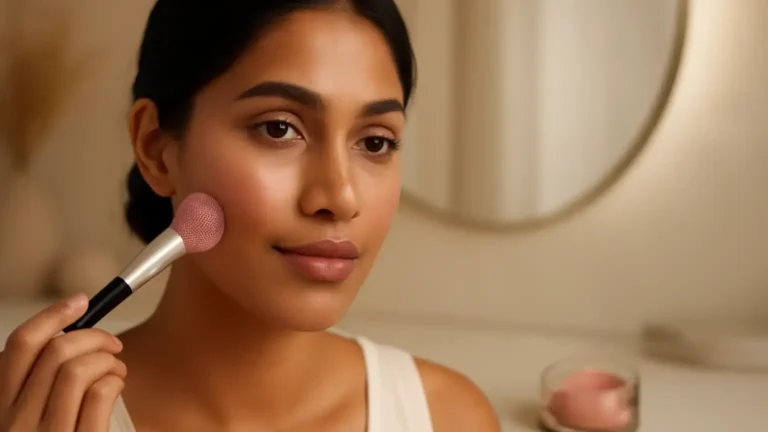
Oily skin makeup can keep cheek colour fresh in Indian heat when you control shine before blush, use thin compatible layers and place colour away from the oiliest zones. This guide is for anyone whose cream blush fades, powder blush turns patchy or base makeup separates in humidity. You will learn when to choose cream or powder, how to layer both, and how to refresh your cheeks without adding a heavy, cakey film.
Cheek products usually fail for one of four reasons: excess skincare has not settled, the base is too emollient, the blush formulas do not layer well, or touch-ups add oil and pigment together. Heat and humidity make each problem more noticeable, but a thoughtful order of application can improve wear without making the skin look flat.
Start with skin preparation, not extra powder
Fresh, clean skin is the most reliable starting point. Use a gentle cleanser suited to your skin and apply a lightweight moisturiser, even if your face becomes shiny quickly. Skipping moisturiser can leave the surface feeling tight, which may encourage you to use richer products later or make foundation sit unevenly.
In the daytime, apply broad-spectrum sunscreen and allow it to settle before makeup. If the sunscreen leaves a very glossy finish, press a tissue lightly over the cheeks and forehead rather than rubbing. This removes surface slip while leaving the protective layer in place. Do not treat powder as a replacement for sunscreen.
An oil-control primer is optional, not a requirement. Use a small amount only where shine appears first, such as the sides of the nose, centre of the forehead and inner cheeks. A silicone-feeling primer over the whole face may make a dewy cream blush slide, so targeted application is often more useful than a thick primer layer.
Build an even, thin base for better cheek colour
For a long-wearing base, apply foundation or concealer in a thin layer and add coverage only where needed. A lightweight matte foundation can be helpful in hot weather, but an extremely dry formula may grip around the cheeks and make blush look mottled. The best choice depends on your skin’s oil level, texture and the finish you prefer.
Give the base a minute to settle before adding cheek colour. If it still feels wet or tacky, gently press with a clean sponge or puff. Do not sweep across the skin, because that can lift foundation and create bare patches underneath the blush.
Look for non-comedogenic makeup if you are prone to clogged pores, but remember that this label does not guarantee that every product will suit every person. Patch-test new formulas when practical, especially if you have reacted to makeup before.
Oily skin makeup: choose cream, powder or both
When cream blush works best
Cream blush gives a natural, skin-like finish and is useful when your base is not overly powdered. It is often easiest to control with a small synthetic brush or fingertips, using tapping motions. Choose a thin, buildable texture rather than applying a large amount at once.
Cream products can be a good option for normal-to-oily cheeks that become shiny later in the day, but they may move faster over rich skincare or a dewy foundation. In very humid conditions, set the surrounding base first and keep the cream layer sheer.
When powder blush is the safer choice
Powder blush is usually the simpler option if your cheeks become oily quickly or if you need a more predictable finish during a long outdoor day. It sets the surface and can be easier to refresh without disturbing the base. A finely milled formula applied with a soft brush is less likely to create a hard stripe.
When layering makes sense
For maximum staying power, use a small amount of cream blush first, allow it to settle, and press a similar-toned powder blush over it. This cream-to-powder method gives the colour something to anchor to. It is not necessary for every day, and too much of either layer can look thick once sweat and sebum appear.
Use blush placement to protect longevity
Blush placement affects both appearance and wear. Place colour on the upper part of the cheek, beginning slightly behind the apples and blending towards the temples. This keeps the strongest pigment away from the fold beside the nose, where oil and facial movement can break it up quickly.
For a lifted effect, tap the product higher on the cheekbone and soften the edges with a clean brush. If you prefer a sun-kissed look, add only a small amount across the upper nose after the main cheek colour is balanced. Avoid placing a heavy cream layer directly over areas where your mask, glasses or hands frequently create friction.
Match the texture to the rest of the face. A satin cream blush can look more natural over a softly set base, while a matte powder blush can work well when the forehead and nose are already controlled. Blush should melt visually into the base, not sit as a separate patch.
Set strategically for Indian heat and humidity
Setting the entire face heavily can make the cheeks dull and can cause powder to collect around texture. Instead, use a clean puff to press translucent setting powder onto the areas that break down first. Keep the first layer light around the cheek colour, then add more only if the surface remains noticeably tacky.
If you are layering cream and powder, wait briefly after the cream blush, press away excess slip, and then apply powder blush with a light hand. If you are using powder blush alone, set the base before blush so the brush does not drag across a damp foundation.
A setting spray can help powders look less dusty and unify the finish. Hold it at the distance recommended on its packaging and allow it to dry without touching the face. It cannot prevent all melting in extreme heat, so think of it as a finishing step rather than a guarantee of all-day wear.
A practical daytime routine for oily skin
- Cleanse gently, then apply a light moisturiser and sunscreen.
- Wait for skincare to settle and press away obvious surface shine.
- Apply oil-control primer only to the areas that need it.
- Use a thin layer of foundation or concealer, adding coverage selectively.
- Set the nose, forehead and other oily zones, leaving the cheek area lightly set if using cream blush.
- Tap on cream blush, or apply powder blush directly to the set base.
- For a longer day, add a very sheer layer of matching powder blush over cream blush.
- Finish with setting spray if desired and let the face dry before putting on a mask or helmet.
This makeup routine for oily skin is flexible. On a short indoor day, skip the cream-to-powder layer. For a wedding, commute or outdoor event, prioritise thin layers and strategic setting rather than simply using more product.
Touch up shine without creating a cakey cheek
The best makeup touch-up starts by removing oil, not covering it. Press blotting papers or a clean single-use tissue onto the forehead, nose and shiny cheek areas. Lift the paper straight off; rubbing can remove blush and disturb the base.
Inspect the cheeks in natural light. If the colour is still present, leave it alone and apply a tiny amount of powder only to the shiny edge. If a patch has faded, use a small brush to add a little powder blush rather than applying a full new layer. A clean fingertip can soften a harsh edge, but avoid blending aggressively over broken foundation.
When the base has separated, do not pile powder over the area. Blot first, then use a barely damp sponge to press the patch together. Add a small amount of foundation or concealer only if genuinely necessary, followed by a minimal amount of cheek colour. This takes longer than one broad swipe but looks fresher.
Common mistakes that make blush fade faster
- Applying blush over unsettled skincare: wait until the surface is comfortable and no longer slippery.
- Using too much cream product: sheer layers are easier to set and correct.
- Mixing incompatible textures: a wet, balmy cream over a very powdery base may skip, while powder over a sticky base may turn patchy.
- Over-powdering the cheeks: this can make later touch-ups look thick and can mute the original colour.
- Rubbing during touch-ups: press and lift instead of dragging tissue or a brush.
- Ignoring friction: masks, helmet straps, spectacles and frequent face-touching can remove even well-set makeup.
How to choose for your day and skin finish
Choose cream blush when you want a fresh finish, your cheek area is not especially oily, and you can apply it over a lightly set base. Choose powder blush when humidity is high, you need simple maintenance, or your skin develops oil quickly. Choose both for events when you want stronger colour longevity and are comfortable applying two restrained layers.
For makeup for oily skin India, climate matters as much as product category. A formula that wears comfortably in a dry, air-conditioned room may move more quickly during a humid commute. Carry blotting papers and a small blush brush rather than a large collection of extra products.
Quick takeaway
Fresh cheek colour in hot weather comes from controlling slip before blush, keeping every layer thin, choosing cream or powder according to your finish and schedule, and blotting before you reapply. If you use both textures, apply cream first and a light matching powder second. With this approach, oily skin makeup can remain polished without relying on heavy powder or constant reapplication.
If persistent irritation, painful breakouts or a significant reaction develops after using makeup, stop using the suspected product and seek advice from a qualified dermatologist or doctor.
Products that may help with this routine
Choose only what fits your skin, hair or personal needs. Use the links below to view current options on Amazon India.
Frequently Asked Questions
How do I stop cream blush from melting in Indian heat?
Start with settled skincare, use a thin base, apply a small amount of cream blush and set it with a light layer of matching powder blush. Blot oil before touching up instead of adding powder directly over shine.
Is cream or powder blush better for oily skin?
Powder blush is generally easier to control when the cheeks become oily quickly or the weather is very humid. Cream blush can work well for a natural finish when applied sparingly over a settled, lightly set base.
What is the best makeup routine for oily skin in humidity?
Use lightweight moisturiser and sunscreen, targeted oil-control primer, a thin base, strategic translucent powder and a restrained layer of cream or powder blush. Finish with setting spray if you like, then blot before reapplying.
How do I touch up oily skin makeup without looking cakey?
Press blotting papers onto oily areas first. Then add powder only where shine remains or replace colour on a faded patch with a small brush. Avoid layering fresh makeup over unremoved oil.
Can I use setting spray with powder blush?
Yes. Setting spray can help powder products look more integrated and less dusty, but let it dry naturally and remember that it does not prevent all makeup movement in extreme heat.
How can I make blush last all day on oily skin?
Prepare the skin carefully, use thin compatible layers, place blush higher on the cheek, set oily zones strategically and carry blotting papers for maintenance. A cream-to-powder layer can improve longevity for long events.