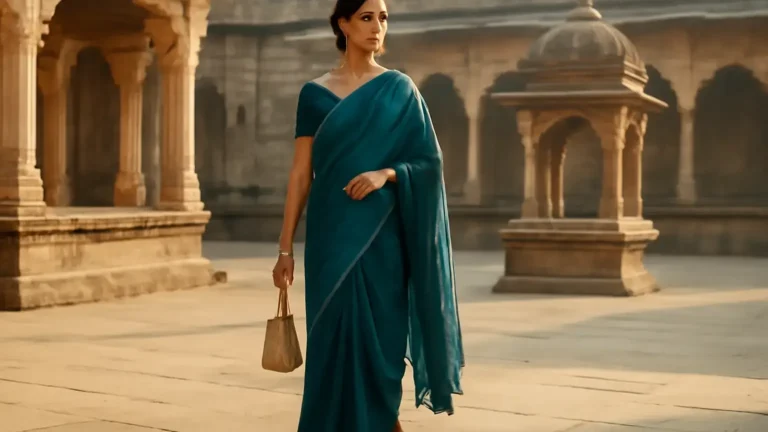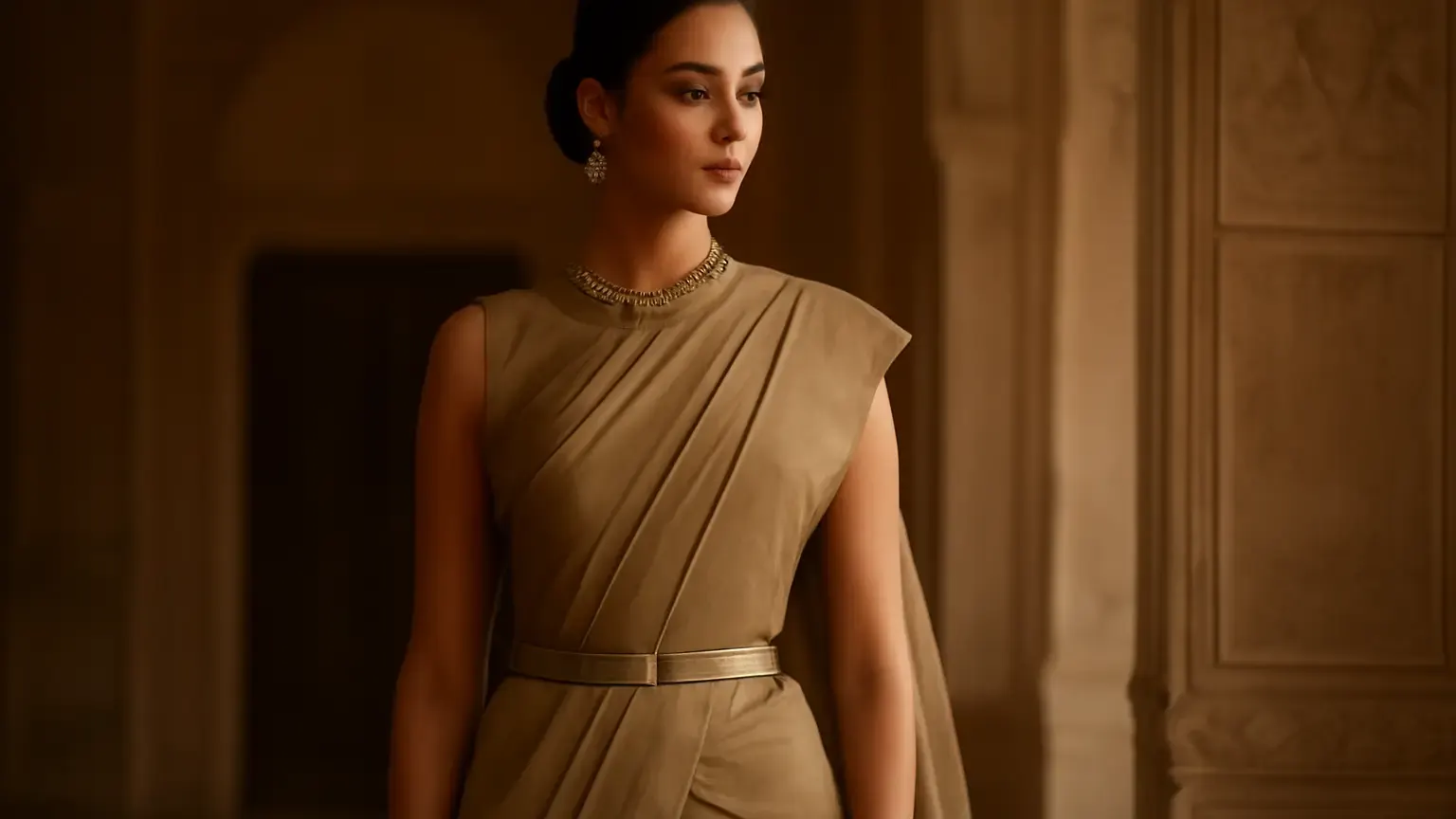
Saree styling with belt works best when the belt secures the pleats without flattening the drape: choose a slim belt for delicate fabrics, a medium-width belt for most cottons and silks, and place it at the natural waist or just below the ribcage. This guide is for anyone dressing for a festive lunch, reception or evening event and wants a polished silhouette with a comfortable, intentional hold.
Why a belt can improve a saree drape
A belt is more than a decorative waist accessory. Used thoughtfully, it can hold the pleats in place, keep the pallu from shifting and create a clear waistline beneath a fluid saree. It is particularly useful when you want a neat outfit that remains comfortable while moving, greeting guests or sitting through a long celebration.
The most flattering result comes from balance. The belt should support the saree rather than divide the outfit into two harsh sections. Its width, finish and position need to work with the blouse, fabric and jewellery. A narrow metallic belt may look elegant with an organza saree, while a broader textile belt can feel more natural with a handloom cotton or a heavier silk.
Before draping, decide whether the belt is functional, decorative or both. A soft, secure belt can help with saree pleat control. A structured belt with a noticeable buckle is primarily a styling feature and should be treated as the focal point of the outfit.
Saree styling with belt: choose the right width
The correct belt width for saree depends on the fabric weight, your blouse length and the visual scale of the border. There is no single measurement that works for every drape, but these proportions are a useful starting point:
- Thin belts, around 1–2 cm: Best for chiffon, georgette, satin and organza. They secure the waist discreetly and suit a delicate border or a minimal blouse.
- Medium belts, around 2–4 cm: The most versatile choice for cotton, linen blends, crepe and medium-weight silk. They offer support without overpowering the saree.
- Wide belts, around 4–6 cm: Suitable for plain sarees, bold borders and longer blouses when you want a stronger waist-defining effect. They need careful placement to avoid shortening the torso visually.
Match the belt scale to the saree’s visual weight. A narrow belt can disappear against a richly woven Kanchipuram silk, while a wide, heavily embellished belt may compete with a small floral print. When in doubt, begin with a medium-width belt in a quiet finish.
Five graceful ways to wear a belt with a saree
1. Place a slim belt over a soft, everyday drape
For a festive lunch or daytime gathering, pair a lightweight saree with a simple leather-look, fabric or muted metallic belt. Drape the saree in a comfortable nivi style, arrange the pleats evenly and bring the pallu over the shoulder before fastening the belt. This keeps the look relaxed while giving the waist a clean outline.
Keep the belt close to the saree’s colour family if the fabric has a print. For a solid saree, a contrasting belt can add interest, but keep the buckle understated. This is one of the easiest saree belt ideas for a first attempt because it does not require a dramatic change to your usual drape.
2. Use a medium belt to frame a plain saree
A plain crepe, chiffon or satin saree gives a statement belt room to stand out. Choose a medium-width belt with a clean buckle, textured finish or subtle metallic surface. Keep the pallu broad and smooth so the belt becomes a deliberate frame rather than an isolated accessory.
This approach works well for an evening event, especially when the blouse has a simple neckline. Avoid piling on a large necklace, oversized belt and heavily embellished blouse at the same time. Select one dominant element and let the rest support it.
3. Define the waist over a structured silk saree
For silk saree styling, choose a belt that can visually hold its own against the fabric’s weight. A medium or wide belt in antique gold, brushed metal, velvet or a coordinated textile can work well. Fasten it only after the pleats and pallu are positioned; tightening it too early can distort the front pleats.
With a traditional silk, avoid forcing the pallu into a very narrow fold. Allow the fabric and border to remain visible, then use the belt as a neat anchor. A belt that echoes the saree border or blouse embroidery usually looks more cohesive than a random contrasting colour.
4. Layer a belt over the pallu for a contemporary reception look
For a modern reception saree look, place the belt over the saree and pallu at the waist so the shoulder drape stays secure. This creates a clean, sculptural line and can be especially useful with slippery satin or fluid georgette. Spread the pallu enough to show its border, then fasten the belt without pulling the fabric flat.
Try this with a sleek blouse, a defined shoulder or a clean neckline. If the pallu has dense sequins, use a plain belt; if the saree is minimal, a polished metallic belt can provide the evening detail.
5. Coordinate a traditional kamarband-inspired belt
A broad embellished belt or kamarband-inspired design can suit a festive saree outfit when the rest of the styling is restrained. Place it at the natural waist or slightly above it, depending on the blouse length and the saree’s border. This works particularly well with silk, brocade and other structured fabrics.
Keep the belt’s ornamentation connected to the jewellery metal. If the belt has antique-gold details, repeat that tone in the earrings or bangles rather than mixing several unrelated finishes. The result should feel intentional, not like a separate accessory placed over the drape.
Get the placement and blouse proportion right
Saree belt placement changes the apparent length of the torso, so test it while standing and sitting. The natural waist is usually the safest position: it is the narrowest point and gives the saree a balanced shape. Placing the belt too low can make the drape look heavy around the hips, while placing it too high can crowd the blouse and shorten the upper body.
Your blouse also determines how much belt is visually comfortable. A cropped blouse with a visible midriff usually pairs well with a narrow or medium belt. A longer blouse may support a wider belt, but leave enough blouse visible to show its neckline, sleeve detail or embroidery. This is the key principle of blouse proportion for saree: neither the belt nor the blouse should hide the other completely.
Do a five-minute movement check before leaving. Walk, sit, lift your arms slightly and turn sideways. If the belt twists, digs in or pushes the pleats out of alignment, loosen it or add a discreet saree pin underneath for support.
Balance fabric weight, colour and texture
Light fabrics need light handling. With organza, chiffon and georgette, avoid a stiff belt with sharp edges that may catch or crease the saree. A slim smooth belt or soft fabric style is safer for the drape. For heavier silk, brocade and cotton, a structured belt is less likely to look visually lost.
Colour matching can be exact, tonal or intentionally contrasting. A belt matching the blouse creates a continuous line and is an easy choice for beginners. A belt matching the saree border looks refined for traditional occasions. A contrasting belt suits a plain saree, but repeat its colour subtly in the blouse, clutch or footwear so the look does not feel disconnected.
Remember that texture matters as much as colour. A polished metal belt next to a matte handloom saree creates a noticeable contrast, whereas a woven belt feels softer and more integrated. Consider the venue and time: subdued finishes suit a festive lunch, while metallic or embellished finishes can work for a reception or evening celebration.
Balance jewellery with the belt
The belt occupies the visual centre of the outfit, so jewellery should support it rather than compete with it. If the belt has a large buckle, choose earrings and bangles over a heavy layered necklace. If the belt is barely visible, you have more freedom to wear a necklace or longer earrings.
For statement jewellery with saree, use a simple belt in a matching metal or a quiet fabric. A broad choker, dramatic jhumkas and an ornate belt can all look beautiful individually, but together they may overwhelm the blouse and pallu. Select two statement areas at most: for example, an embellished belt and earrings, or a necklace and bangles.
- Gold-toned belts pair naturally with warm silk, maroon, green, mustard and ivory palettes.
- Silver or gunmetal belts suit cool pastels, monochrome sarees and contemporary evening looks.
- Pearl, velvet or fabric belts soften heavily metallic jewellery and work well for daytime dressing.
Common mistakes and quick fixes
The belt is too tight
A belt should hold the saree, not restrict breathing or create a visible indentation. Fasten it firmly over the layers, then check comfort while seated. If the saree slips, use hidden pins or a discreet waist attachment rather than tightening the belt excessively.
The pallu looks flattened
Loosen the belt slightly and pull the pallu upward from the shoulder before spreading it again. A belt should secure the lower part of the drape while allowing the pallu to retain movement.
The outfit looks divided into two blocks
This usually happens when the belt contrasts sharply with both the saree and blouse. Try a belt that matches the blouse, reduce the width or repeat the belt colour in one small accessory.
The blouse and belt compete
When both have heavy embroidery, reduce the scale of one. A plain belt can calm a decorative blouse, while a simple blouse can carry a more detailed waist accessory.
A practical dressing routine before the event
- Wear the blouse, footwear and intended underlayer before beginning the drape.
- Make the pleats even and secure them discreetly at the waist.
- Arrange the pallu for the final width and shoulder position.
- Place the belt at the natural waist, then adjust it by a few millimetres rather than making a dramatic shift.
- Check the front, side and back views in natural light.
- Complete jewellery only after confirming that the belt is comfortable and visually balanced.
This routine prevents last-minute tightening and helps you see whether the belt is genuinely improving the saree. For delicate or expensive fabrics, avoid rough buckles, sharp hooks and adhesive accessories that may snag the weave.
Takeaway
Successful saree styling with belt is about proportion and restraint. Start with a narrow belt for lightweight fabrics, choose a medium width for versatile everyday and festive drapes, and reserve wider or embellished styles for structured sarees and simpler blouses. Place it at a comfortable waist position, keep the pallu visible and let the belt’s finish guide your jewellery choices. When the belt supports the drape instead of overpowering it, the result looks secure, graceful and event-appropriate.
Products that may help with this routine
Choose only what fits your skin, hair or personal needs. Use the links below to view current options on Amazon India.
Frequently Asked Questions
What is the best belt width for saree styling?
A 1–2 cm belt suits lightweight chiffon, georgette and organza. A 2–4 cm belt is the most versatile choice for cotton, crepe and medium-weight silk. Use a 4–6 cm belt with structured or plain sarees only when the blouse and border can support its scale.
How to wear a belt with saree for a wedding?
Drape and arrange the saree fully first, including the pleats and pallu. Place a medium or embellished belt at the natural waist, secure it comfortably and coordinate its metal or fabric finish with the blouse and jewellery. Keep the pallu broad enough to remain visible.
How do you style a saree with a belt for a reception?
Choose a fluid saree such as satin, crepe or georgette with a sleek blouse. Use a polished metallic or clean medium-width belt over the saree and pallu, then keep the necklace or other jewellery relatively simple so the waist remains the focal point.
Can you wear a belt with a silk saree?
Yes. A medium or structured belt works well with silk, especially when it echoes the saree border, blouse or jewellery metal. Arrange the pleats before fastening the belt and avoid pulling the pallu so tightly that the silk loses its natural shape.
Where should a belt sit on a saree?
The natural waist is usually the most balanced position. Depending on the blouse length and body proportions, it can sit slightly above or below that point, but it should not dig in, crowd the blouse or flatten the pallu.